
Entertainment
The Netflix Film That Proves What’s Wrong With Modern Children’s Movies

By Chris Snellgrove
| Published

Growing up as an ‘80s kid, I had a fairly awesome childhood (thanks, mom and dad!). My nostalgia for that era is quite strong, which is why I’m typing this while surrounded by a small army of GI Joes, Transformers, and Ninja Turtles. It’s no surprise, then, that when friends ask me what movies they should show their children, I typically recommend films from the decade that brought us everything from the Ghostbusters to Big Trouble in Little China.
When a friend recently asked what she should show her two kids, I didn’t hesitate to recommend Labyrinth. Cute songs, wacky muppets, wacky David Bowie, and Jennifer Connelly in a breakout role; what’s not to love? Soon, she reported that her kids were having nightmares about the Goblin King and his monstrous minions. I felt bad for about two seconds before realizing the problem: Jim Henson’s Labyrinth is still a perfect children’s movie. Unfortunately, Hollywood has transformed modern kids’ movies into vibes-based screensavers that no longer allow children to safely explore crunchy concepts like love, death, and even human mortality.
Ziggy Stardust And The Goblins From Mars

After my friend chided me about my recommendation, I had to be honest with myself: Labyrinth is a pretty scary movie. The central plot involves a mysterious man kidnapping a small child, and poor Jennifer Connelly must navigate a world of increasingly nightmarish Muppets in order to rescue him. The titular labyrinth often feels like a prison with no way out, and things like the “Helping Hands” scene and the masked ball are the stuff of fever-dream nightmares. Hovering over all of this is the fact that the Goblin King is a middle-aged menace trying to secure a child bride, one played by a girl who wasn’t even old enough to get her learner’s permit.
Despite all of that, though, I still think Labyrinth is a great film to share with children. To me, the scary aspects mentioned above are a feature, not a bug. It may be “only” a kids’ movie, but these frightening features infuse Labyrinth with a sense of genuine tension from beginning to end. Tension is, of course, the secret ingredient of any good story because it provides the narrative with real stakes for the characters that we care about. Those characters grow through tension and conflict, but most modern children’s movies have surgically removed everything scary and tense in an effort to make their films less offensive and more palatable.
A Star Is Born

In A Minecraft Movie, for example, no kid thinks the malevolent Malgosha is going to take over the world; they understand the plot is just window dressing for a film trying to squeeze in as many game references as possible into the runtime. Similarly, no youngsters watching Sonic the Hedgehog think Dr. Robotnik will win the day. They’re just here for the in-jokes and slick special effects that precede the inevitable happy ending. Furthermore, no children think Bowser, Jr. is going to conquer the universe in Super Mario Galaxy; they’re just here to appreciate the parade of Nintendo memes onscreen and hope their favorite Smash Bros. characters pop up.
These movies are not designed to challenge children; instead, they serve as two-hour distractions for parents who need some peace and quiet. Unfortunately, the concerted Hollywood effort to make these films inoffensive has also made them bland and creatively bankrupt. It’s functionally impossible for children to enjoy these works as films: instead, they are designed as just another bit of colorful stimuli for an ADHD generation raised more by their iPads than their parents. But Labyrinth is proof that it doesn’t have to be this way and that we can (and should) be giving our children plenty of substance to go with their spectacle.
The World’s Creepiest Muppets

Why, specifically, do I think children should watch Labyrinth? The first reason is that, at the risk of sounding overly blunt, fear is something that everyone must deal with every single day. Watching a spookier children’s movie allows kids to microdose fear and learn to process it within the context of a story that ultimately offers an inevitably happy ending. You know how some people are so nervous that a loud noise can ruin their entire day? That’s what happens when you lead a sheltered childhood protected from all things scary. Conversely, a regular diet of mildly frightening kids’ movies can help the audience grow into well-adjusted adults.
On a related note, movies like Labyrinth are a safe, controlled way to introduce kids to important real-world topics that might just save their lives. This is a film about child abduction, extortion, power imbalances, and so many other ‘dark’ topics, but it’s all wrapped in a shiny wrapper that includes cute songs and cuter creatures. Take it from a parent: you’ll eventually have to talk with your children about how all of this works in the real world to keep them safe. That conversation will be a lot easier for you (and more believable for them) if they have had time to process these scary ideas within a fictional context.
Teaching Kids Lessons (One Scream At A Time)

Finally, if you actually watch the movie with your kiddo instead of just using the TV as a babysitter, you can help teach them the most elusive skill of all: critical thinking. Every moment that makes them cover their eyes in fright is an opportunity for an open and honest conversation, with leading questions like “why did that scare you?” and “what do you think that character should have done instead?” This teaches children to actually engage with and learn from media, all while improving their self-confidence by helping them get over their fears. Not for nothing, they’ll also feel a sense of pride for emerging from a scary movie, stronger than ever.
Want to teach your own child a few important lessons? Or want to relive the glory days of weird ‘80s cinema? Heck, do you just want to jam out to the Goblin King’s impossibly catchy tunes? No matter your motivation, you’re in luck: Labyrinth is streaming on Netflix today. It’s a scary good time that, regardless of what my friend might tell you, is fun for the whole family. Fair warning, though: you might want to make sure nobody’s around before you start dancing your own magic dance in the living room!
Entertainment
Cordless power tool deals are already live at Amazon before Prime Day starts
Best early Prime Day deals on cordless power tools:


Summer is the ideal time to tackle home DIY projects. The paint will dry quicker, there’s more hours of daylight, and maybe some friends around to help out. If you have a list of home and yard projects to take care of this summer, make sure you have the necessary tools. Nothing sidelines a weekend project quite like realizing you need to run to the hardware store.
Lucky for us, early Amazon Prime Day deals already have great discounts on cordless power tools. Of course, we expect to see more as we get closer to the June 23 official start of the sale. But for now, here are the top deals worth shopping.
Best DeWalt deal
$169
at Amazon
$249
Save $80
Why we like it
Perfect for anyone building a new tool collection, the DeWalt 20V MAX Cordless Drill and Impact Driver Combo Kit is on sale for $80 off before Prime Day. The kit comes with the 20V compact drill/driver, 20V impact driver, two 20V batteries, a battery charger, and a durable carrying case. Both tools have a built-in LED light so you’ll get a better view for optimal accuracy. The comfort grip with ergonomic design is also a major plus.
Best Craftsman deal
$299
at Amazon
$369
Save $70
Why we like it
Packing in seven tools, the Craftsman V20 Power Tool Combo Kit is an upgraded starter pack. It comes with a drill/driver, oscillating tool, impact driver, grinder, reciprocating saw, circular saw, and even more. You also get two 20V batteries and a battery charger.
Before Prime Day kicks off, the Craftsman Power Tool Combo Kit is on sale for $229, down from the normal price of $369.
Mashable Deals
Best Hoto deal
$79.99
at Amazon
$99.99
Save $20
Why we like it
Hoto makes some excellent cordless tools that are useful to have around any home, even if you’re not taking on DIY projects soon. The Hoto SNAPBLOQ S-A01 3.7V Electric Screwdriver is the perfect example given that it comes with 56 bits to cover every possible scenario. It also has three torque settings and an LED light. Use it to repair your glasses or sunglasses, get access to tiny screws in a watch or your laptop, while still having access to more standard bits.
Hoto says you’ll get about 60 minutes of runtime before the cordless electric screwdriver needs to recharge its 800 mAh battery.
More cordless tool deals to shop before Prime Day
Entertainment
The Decade's Funniest Sci-Fi Series Is Finally Complete On Netflix
By Jonathan Klotz
| Published

Comedy is hard to do right. Science fiction is hard to do right. A sci-fi comedy is nearly impossible. That’s what makes Resident Alien one of the best series of the decade. It’s a funny, well-written sci-fi comedy allowed to tell a complete story from beginning to end. After originally airing on SyFy, the series went to Netflix, and now, the final season has arrived for you to easily binge Alan Tudyk’s greatest performance.
The Perfect Role For Alan Tudyk

Tuidyk plays “Harry Vanderspeigle,” or rather, the alien with a name humans can’t pronounce, impersonating the town doctor (also played by Alan Tudyk in flashbacks), whom he accidentally killed when landing in Patience, Colorado. Harry learns medicine by watching Law & Order, and slowly picks up on human emotions, customs, and social cues as the series goes on, all to further his mission to exterminate the human race. Early on, he realizes that a young boy, Judah, can see his true alien form. He tries to exterminate the witness, but fails, and ends up befriending him instead. Be a different series if the bone saw had worked.
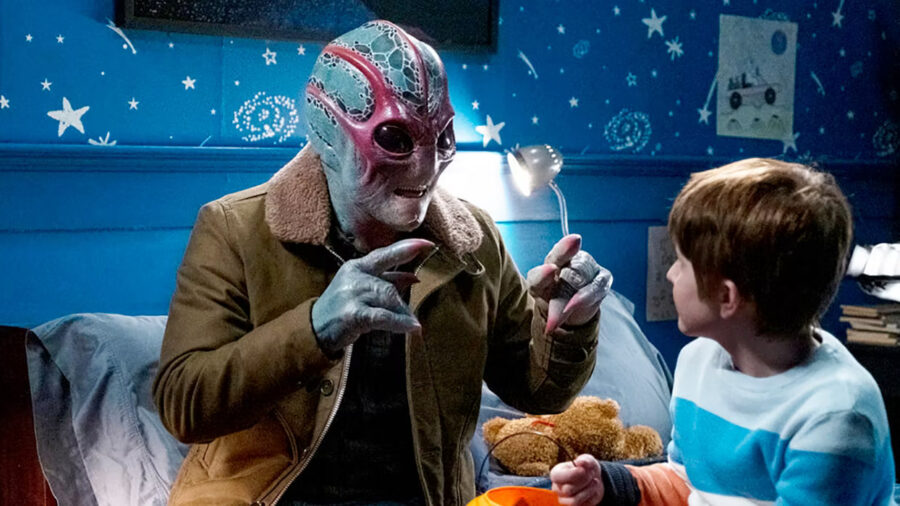
The first few episodes have the other residents of Patience playing the straight man to Harry’s quasi-murderous antics, before Resident Alien finds its groove and settles in. As the seasons go on, Harry finds an ally in Judah’s mom, Asta (Sara Tomko), and a new enemy when the government moves into Patience, which, as with Stranger Things, is represented by Linda Hamilton as a no-nonsense extraterrestrial hunting General. Hamilton isn’t the only sci-fi cameo. Resident Alien is filled with familiar names and faces having the time of their life on the show.
Alan Tudyk’s Firefly co-stars, Nathan Fillion and Jewel Staite, turn up as a telepathic octopus and an FBI Agent respectively. Clancy Brown, Terry O’Quinn, George Takei, and Stephen Root all drop by while behind the camera, Star Trek Voyager’s Robert Duncan McNeill is often directing the big episode of the season. When the star of the show is one of the most beloved performers in Hollywood, it’s easy to get everyone to show up.
Resident Alien Is The Decade’s Best Sci-Fi Series
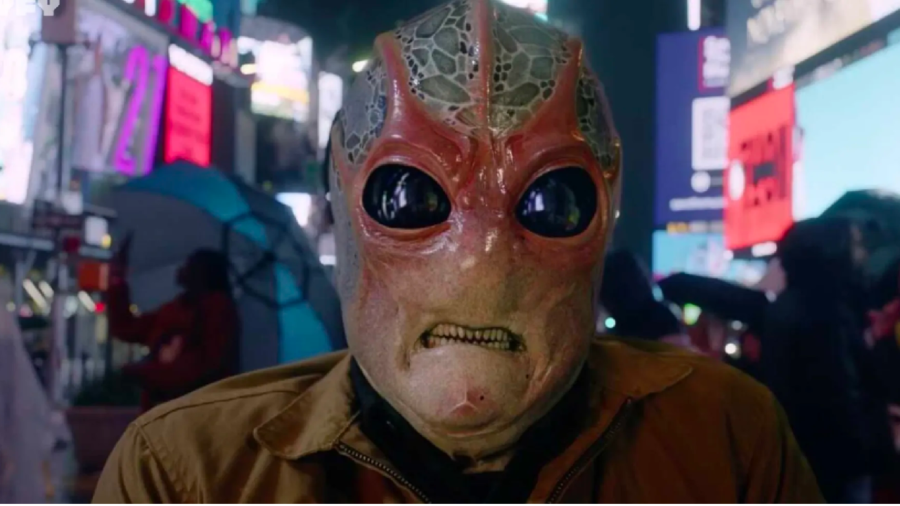
Resident Alien is an absolute blast of a series. It’s a throwback to the old SyFy slate of Eureka and Warehouse 13, and the only show this decade to nail that vibe. It took a while to catch on. Season 1 flew under the radar with barely a million viewers for each episode. Once it was available on streaming, it became a social media hit, and viewership boomed. Now that it’s complete on Netflix, expect it to again experience a new surge in popularity.
There’s a lesson to be learned here by studios about producing original sci-fi, or well, almost original, since it does adapt the comic book series by Peter Hogan and Steven Parkhouse, and then giving them room to grow, develop, and find their audience. Too often, sci-fi shows are canceled after one season before anyone even knows how great it is. Resident Alien did everything right, barely survived for four seasons, and is now going to be your new favorite series
Entertainment
The best early Prime Day air fryer deals you can shop right now
Best early Prime Day air fryer deals at a glance:


Prime Day is almost here — and Amazon isn’t waiting for the official start to roll out discounts. This year’s sale kicks off on June 23, but early deals on small kitchen appliances are already live, and air fryers are among the standouts.
Whether you’re after a compact basket-style fryer for weeknight meals or a larger oven model that can roast a whole chicken, brands like Ninja, Instant Pot, and Chefman are already seeing price cuts. Here are the best early Prime Day air fryer deals worth grabbing now.
Mashable Trend Report
Best mini air fryer deal

$64.99
at Amazon
$129.99
Save $65.00
Why we like it
If you live alone, like making apps or quick side dishes, or just want an air fryer that won’t take up your entire counter, the Instant Pot Vortex Plus 6-in-1 Mini Air Fryer (4QT) is on sale for $64.99 at Amazon, down from $129.99. This little air fryer can bake, roast, broil, dehydrate, reheat, and air fry small meals in minutes. Just press the preset button, and it does the rest.
Best large air fryer deal

$89.99
at Amazon
$149.99
Save $60.00
Why we like it
For households with more mouths to feed, the Chefman XL 6-in-1 Air Fryer (14QT) can make family-sized meals in no time. (There’s also a Hi-Fry button for those who prefer an extra crispy finish.) It comes with three removable wire racks, a rotisserie spit, a fetch tool to remove the rotisserie, and a dip tray/baking pan. And right now, you can get it for $89.99 — the lowest price we’ve tracked on this model to date!
More air fryer deals
Topics
Kitchen
Air Fryers

Cordless power tool deals are already live at Amazon before Prime Day starts
SoFi workers reach agreement to avoid strike ahead of World Cup


