
Entertainment
The LG 75-inch 85A QNED Mini-LED TV is under $900 — its best price ever

SAVE $703: As of Feb. 18, the LG 75-inch 85A QNED Mini-LED 4K TV is on sale for only $896.99 at Amazon. That’s around 44% in savings and matches its best price on record.
$896.99
at Amazon
$1,599.99
Save $703
While it’s not traditionally the best time to buy a TV, it is a pretty great time to buy one specific TV: the LG QNED85A.
As of Feb. 18, the LG 75-inch 85A QNED Mini-LED 4K TV is on sale at Amazon for only $896.99. While Amazon’s listing might make it look like a price drop of only $500 or so, it’s actually a savings of over $700 (about 44%). The actual list price is between $1,599.99 and $1,799.99 — as seen at Best Buy and LG’s own website — so Amazon cuts itself short. This price matches its lowest on record.
The Class 85A series from LG, one of our favorite TV brands, debuted at CES 2025. It’s a mid-range Mini-LED option that uses AI to enhance your picture and audio in real time. Its Alpha 8 AI Processor Gen2 can find the perfect HDR and brightness settings for whatever you’re watching, while giving the dialogue a boost over background noise and refining the sound to suit your preferences. The AI Magic Remote can also give you content recommendations, picture and audio customizations, and even a generative AI gallery of images to transform your TV into art.
The gaming specs are stacked as well. A 120Hz native refresh rate and VRR 144Hz refresh rate, paired with AMD FreeSync Premium and LG’s Game Optimizer, make for a smooth gaming experience. Meanwhile, GeForce NOW and Xbox Cloud Gaming allow for quick game streaming.
Mashable Deals
If a big screen with stunning picture quality that won’t put a huge dent in your wallet is what you’re after, the mid-range LG 75-inch 85A Mini-LED 4K TV is a great pick — especially when it’s at its best price ever.
Entertainment
Charlize Theron Is Hunted For Sport In Relentless, R-Rated Netflix Thriller

By Robert Scucci
| Published

Confession time: ever since Mad Max: Fury Road came out in 2015, the fantasy of getting beaten up by Charlize Theron was born. Just two years later, Atomic Blonde hit theaters, and all bets were off. While I’ve always appreciated Theron’s dramatic range, with 2003’s Monster showing her menace and 2011’s Young Adult showing how brilliantly she could portray a woman’s ongoing mental health crisis and alcoholism, I will check out any action thriller she ever stars in because, like Keanu Reeves with the John Wick films, she’s clearly put in the work to be a total badass on screen.
Which brings us to her latest outing, a Netflix Original action thriller that dropped April 24, 2026, called Apex. After watching, the fantasy still stands. I would love to get into a fistfight with Charlize Theron and lose. I’m not a masochist, and this isn’t normal territory for me, but if I found out I only had six months to live, I’d make it a bucket list item and go out on my own terms by encouraging her to fight me on top of a skyscraper or a moving train.
You may say that I’m a dreamer, but I’m not the only one.

As for the movie itself, Apex is solid. It’s a chase thriller. It’s The Most Dangerous Game for a modern audience. Charlize Theron plays a grieving widow who is hunted for sport in the Australian wilderness by a total psycho with a home-field advantage, and she has to rely on grit and intuition to survive. If you’ve seen one of these movies, you’ve basically seen them all, but the performances here cannot be overstated.
Like The Ice-T Movie, But In The Forest
One of my favorite “hunting humans for sport” plots can be found in 1994’s Surviving the Game, starring Ice-T, Rutger Hauer, and Gary Busey. In this film, Ice-T’s Jack Mason is hunted by a group of wealthy men who regularly get together to let a human loose on their sprawling property designed for exactly this kind of activity. They give him a head start, then roll out on their ATVs, armed to the teeth and ready to kill.

It’s an inherently ridiculous premise, but it’s totally unhinged and worth your time because everybody knows the assignment.
Apex takes a more grounded approach while still exploring that same familiar territory. Context is everything, though, and it plays out as a much more serious film. Here, Sasha (Charlize Theron) takes a solo trip to the Grand Isle Narrows just months after her husband Tommy (Eric Bana) fell to his death during a climbing expedition in Norway.

During her travels, she has an unwholesome run-in with a couple of hunters, as well as a kindly stranger named Ben (Taron Egerton). While briefly talking shop at a petrol station, Ben tells her to start her trip at Blackwater Bay if she really wants to experience next-level hiking and kayaking. She takes his advice, but quickly learns she shouldn’t have when she crosses paths with him again the following day. This happens after she’s harassed by the same hunters from earlier and has her supplies stolen while sleeping in her tent.
At first, Ben is hospitable. He offers her warmth by the fire, food, and water. Sasha quickly realizes he’s the one who stole her bag, and his demeanor shifts immediately. He pulls out a crossbow and a boombox and tells her that her head start will only last as long as the song he’s currently playing. From here on out, the chase is on. Ben is the hunter, and Sasha has to move fast if she wants to avoid getting executed in the middle of nowhere by somebody who’s clearly engaged in this kind of activity before.
Far From Original, But Beyond Adequate

Apex does not offer anything new in this subgenre, but it’s still worth your time if you like movies with this setup. Plot-wise, there’s not much to it. You get some drama leading up to the hunt, and from that point forward it’s Sasha versus nature versus Ben. The real tension comes from the fact that Ben knows the terrain and Sasha doesn’t, while the fun comes from watching Sasha adapt and prove she knows how to survive in harsh environments.
The third act tension is palpable when things stop going according to plan for either of them, forcing a fragile truce when options run out. It’s a small twist on a tired setup that I appreciated. Add in some beautiful nature shots, and you almost forget this is a Netflix Original because the lighting actually holds up.

If you’re a fan of the tried-and-true chase thriller formula, you’ll likely find Apex satisfying. It’s in and out in 95 minutes, establishes its conflict quickly, and doesn’t overstay its welcome. Charlize Theron and Taron Egerton have strong chemistry as things escalate toward the inevitable breaking point.

Truth be told, if you’ve seen one movie like this, you’ve seen them all. But that applies to most subgenres that are this hyperspecific. If you know what you like and this is your lane, Apex should be your next Netflix watch, and you won’t be disappointed.

Entertainment
The Buffy Reboot Disaster Proves Oscar Winners Should Stay In Their Lane
By Chris Snellgrove
| Published

Buffy the Vampire Slayer fans are still reeling from the bad news that Hulu canceled the reboot of this iconic ‘90s show. The streamer had ordered a pilot, and things seemed to be going well: not only was Sarah Michelle Gellar returning to star in the new series, but the showrunner was going to be Oscar-winning director Chloe Zhao. The fandom had visions of Buffy returning as a prestige TV show, but Hulu’s cancellation put a stake through those dreams, leaving us only with dust.
As usual, battle lines were quickly drawn when it came to discourse about this show’s failure. Some (including Gellar herself) thought this was just a matter of out-of-touch executives not getting what Buffy was all about. Hulu, meanwhile, reportedly claimed the problem was that the show was too small, too focused on younger audiences, and (perhaps most importantly) didn’t have enough Gellar in it. Personally, I tend to believe Hulu, as they wouldn’t throw away a golden IP for no reason. With respect to Zhao (who has done some excellent work), the cancellation of the Buffy reboot clearly proves why Oscar-winning directors should stay in their own lane.
High “Stakes” Drama

What was the Buffy reboot about? While official details are relatively minimal, the show was reportedly going to focus primarily on a new Slayer played by Ryan Kiera Armstrong. She was going to have to deal with a new vampire menace that popped up in a very familiar location: Sunnydale. Like Buffy, this new Slayer named Nova was going to have a hard time learning the ins and outs of dusting vamps. Fortunately, Buffy herself was going to serve as this young warrior’s mentor, helping her keep the forces of darkness at bay.
Hulu didn’t like the initial pilot, believing that it was too small for an IP this big and that it had too much kiddie stuff and not enough Sarah Michelle Gellar. They demanded reshoots, but those weren’t enough to save this ambitious reboot. The streamer ended up canceling the new Buffy show, which Gellar ultimately blamed on an unnamed executive. As she told People, this exec “was not only not a fan of the original, but was proud to constantly remind us that he had never seen the entirety of the series and how it wasn’t for him.”
Getting The Bad News

Part of why Gellar is so upset with the cancellation is that she had worked with director Chloe Zhao for years to develop this reboot. To the Buffy actor, bringing the show back was a real no-brainer. One of the most beloved IPs of all time getting rebooted by an Oscar-winning director; what could go wrong? However, Hulu’s cancellation of the series (and, make no mistake, they wouldn’t cancel the show if they thought it would make money) reveals a simple truth: like most Oscar winners, Zhao is good at making a particular type of film, and her skills don’t necessarily transfer to the small screen.
Chloe Zhao is an excellent director of such films as The Rider, Nomadland (which won Oscars for Best Picture and Best Director), and Hamnet (which was nominated for a whopping eight Oscars, including Best Picture and Best Director). But Zhao is best when making indie films that focus on relatively unknown actors (Hamnet turned rising star Jessie Buckley into a Best Actress Oscar winner). But she seems to struggle when it comes to creating bigger films with more mainstream actors. This is most evident in The Eternals, her Marvel movie that ended up being a wall-to-wall snooze fest.
Eternals Was Our Warning
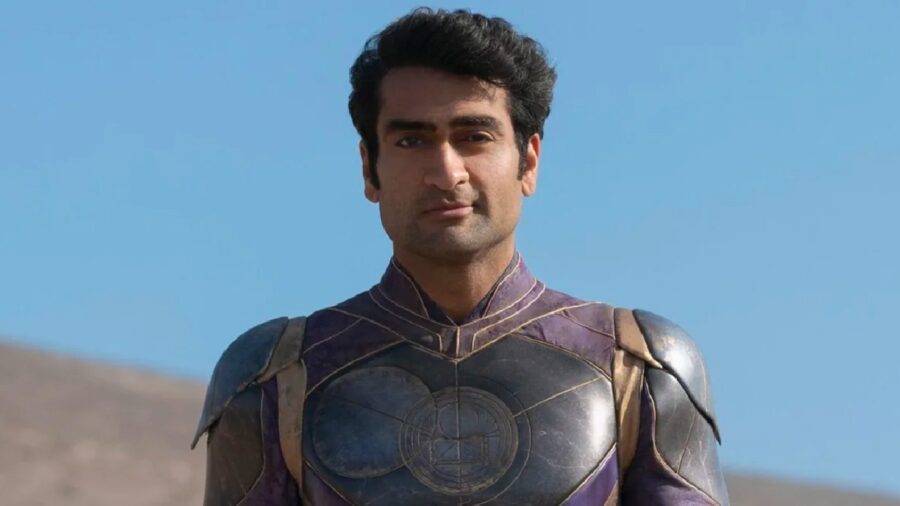
Obviously, hindsight is 20/20, but it seems like the failure of The Eternals effectively foretold the failure of the Buffy the Vampire Slayer reboot. Audiences hated this film because it lacked the mainstream appeal of the MCU. The pace was slow instead of brisk, the writing was serious instead of funny, and the villains were abstract rather than clearly defined. It just didn’t feel like a superhero movie for most of its runtime. Instead, it felt like a typical Chloe Zhao joint: an introspective indie film that just didn’t fly with fans of tights-and-flights films.
The exact same thing happened with the Buffy reboot on Hulu. Executives reportedly thought the show wasn’t “mainstream enough” for the audience. Those same execs worried the new show was trying to chase too much of a youth demographic compared to the original Buffy the Vampire Slayer, which appealed to both children and adults. Finally, they worried about the relative lack of Sarah Michelle Gellar, who reportedly had only one line of dialogue in the original pilot.
Letting The Past Die

To sum it up, the show was going to be a Buffy reboot that had hardly any Buffy in it. No other legacy cast members were in the pilot, so fans weren’t going to get to see any reunions between the Slayer and fan-favorite characters like Willow or Spike. That means most of the show would focus on the new Slayer and her new Scoobies, which is (let’s be honest) a bit like making an entire show out of Dawn’s Season 7 adventures with her forgettable Sunnydale High clique.
Left to her own devices, Chloe Zhao creates breathtaking works of cinematic art, the kind of awesome indies that remind you why you fell in love with movies in the first place. But she is clearly a poor choice when it comes to genre entertainment. The Eternals was dead on arrival, and the Buffy reboot died before it streamed a single episode. Ironically, Zhao found out the reboot was canceled on the same weekend that she attended the Oscars to see how many awards Hamnet would take home. It’s a juxtaposition that drives home a simple, stake-like point: this Oscar winner should stay in her own indie darling lane and stop dabbling in genre entertainment she clearly doesn’t understand.
Entertainment
Streaming Found A Way To Ruin Sports Too
By Jennifer Asencio
| Published

Basketball season is winding down and at the time of this writing is in the first round of its playoff tournament. Before that could begin, there was also a play-in tournament meant to fill out the rest of the playoff brackets through one-game matches whose winners would continue to the next round. The games have been frenetic, with most of them decided in the last minutes. Basically, basketball is hurtling down the canyon, about to drop the torpedo into the Death Star.
Imagine you are watching Luke Skywalker just about to use the force to make his shot, when all of a sudden the streaming service you are watching it on interrupts the action for “technical difficulties.” That is exactly what happened to basketball fans on not one but two streaming services.
Peacock and Amazon Prime are splitting the duty of airing the NBA postseason. Amazon Prime aired the play-in tournament, while the two networks are swapping the playoff games back and forth. During three different games, both within the final minute of very close matches, both streamers suffered technical difficulties that interrupted the broadcast.
Technical Interruptions Interfere With Gameplay

On April 14, 2026, the Orlando Magic and Charlotte Hornets were in a match-up for all the marbles. The winner would go on to the next round of the play-in tournament, while the loser went home. With 30 seconds left in the game, the score was 123-120, which, if you know basketball, means the Hornets only needed one shot from the right part of the court to tie the game, and they had the ball. Suddenly, Prime, which aired that game, put up a “technical difficulties” card, during which the Hornets did score another basket, making the score 123-122 while no one could see on television. The contentious game ended with the Magic winning, 127-126, but fans only got to see it because the teams called a time-out while Prime fixed its issue.
A week later, on April 20, 2026, the New York Knicks played the Atlanta Hawks on Peacock. The game ended with the Knicks losing 107-106, but once again, the final minute was interrupted by a “technical difficulties” card. This time, the difficulties were offset by a time out and viewers didn’t miss any of the action, but the Knicks-Hawks game wasn’t the only difficulty Peacock had that night.

Also playing that night after the Knicks-Hawks game were the Denver Nuggets and the Minnesota Timberwolves. For most of the game, the teams traded the lead, ending halftime tied. But in the last quarter (12 minutes of active game time), the ‘Wolves started a major comeback. In the final minute, it was anyone’s game, with both teams bringing their best play to the match … and then technical difficulties struck again.
To the credit of the NBA teams playing these games, all three called time-outs when the technical difficulties overtook the broadcast. Often, interruptions like this cause viewers to miss the action, and the broadcast usually just resumes when it is fixed rather than showing viewers what they missed. The rules of basketball serendipitously offset this with time-outs and frequent breaks for players who are literally running at full speed for minutes at a time, but a lot of live broadcasts do not have breaks like that.
The Streaming Blob Absorption Conundrum

Paramount+ also suffers issues with its streaming services often lagging, and the live TV function on that service is also often inaccessible. Survivor 50 fans lost 15 minutes of the premiere episode because the live TV feature was frozen for many viewers as numerous people tried to watch the show. MLB.TV bills itself as the home of all things baseball, but it also lags and freezes during live broadcasts of games.
With more live broadcasts getting absorbed by the streaming blob, interruptions like this mark an infuriating turn. It is bad enough that many services have interruptions to movies or demand high prices to eliminate commercials from their content. As streaming services become ubiquitous, they are also demonstrating that they can’t handle the load brought on by live television events.

The Balkanization of streaming services has made subscribing to them similar to subscribing to each cable channel individually (can you imagine having to pay separately for CNN, TNT, AMC, USA, and TBS, on top of premium channels like ESPN, HBO or Showtime?). As it is, to watch post-season basketball out of market requires two different premium streaming services (the Peacock games are also aired on NBC, but only regionally). Watching the NFL postseason this past winter required four. Watching the Oscars is going to require a YouTube subscription starting in 2028.
Past Is Prologue, But We Still Haven’t Learned
Interruptions in the middle of live events are so unpardonable from any channel that it was made official policy to show the entirety of a game and preempt the shows following after the infamous “Heidi Bowl” incident in 1968. During this New York Jets NFL home game, the then-Oakland Raiders were dominating the field of play, so the network decided to switch to a made-for-TV version of the German folk story “Heidi.” The Jets came back to win the game in an exciting upset that only fans in the stadium got to see. While this was a bad network decision and not a technical difficulty, it set a precedent for live broadcasting that existed all the way until the Prime-Peacock NBA postseason broadcasts.

What streaming customers are getting isn’t as consistent as what we got from comparable cable channels. The more broadcasting, live or not, that moves over to streaming, the more the services are going to have to address these problems. Streaming was supposed to be a superior alternative to television. Instead, as the NBA playoffs debacle has demonstrated, they are becoming more of a monster than cable and can’t even provide the same level of service.

Penguins look to ride momentum, stave off elimination in Game 6
Charlize Theron Is Hunted For Sport In Relentless, R-Rated Netflix Thriller


