
Entertainment
The Buffy Reboot Disaster Proves Oscar Winners Should Stay In Their Lane

By Chris Snellgrove
| Published

Buffy the Vampire Slayer fans are still reeling from the bad news that Hulu canceled the reboot of this iconic ‘90s show. The streamer had ordered a pilot, and things seemed to be going well: not only was Sarah Michelle Gellar returning to star in the new series, but the showrunner was going to be Oscar-winning director Chloe Zhao. The fandom had visions of Buffy returning as a prestige TV show, but Hulu’s cancellation put a stake through those dreams, leaving us only with dust.
As usual, battle lines were quickly drawn when it came to discourse about this show’s failure. Some (including Gellar herself) thought this was just a matter of out-of-touch executives not getting what Buffy was all about. Hulu, meanwhile, reportedly claimed the problem was that the show was too small, too focused on younger audiences, and (perhaps most importantly) didn’t have enough Gellar in it. Personally, I tend to believe Hulu, as they wouldn’t throw away a golden IP for no reason. With respect to Zhao (who has done some excellent work), the cancellation of the Buffy reboot clearly proves why Oscar-winning directors should stay in their own lane.
High “Stakes” Drama

What was the Buffy reboot about? While official details are relatively minimal, the show was reportedly going to focus primarily on a new Slayer played by Ryan Kiera Armstrong. She was going to have to deal with a new vampire menace that popped up in a very familiar location: Sunnydale. Like Buffy, this new Slayer named Nova was going to have a hard time learning the ins and outs of dusting vamps. Fortunately, Buffy herself was going to serve as this young warrior’s mentor, helping her keep the forces of darkness at bay.
Hulu didn’t like the initial pilot, believing that it was too small for an IP this big and that it had too much kiddie stuff and not enough Sarah Michelle Gellar. They demanded reshoots, but those weren’t enough to save this ambitious reboot. The streamer ended up canceling the new Buffy show, which Gellar ultimately blamed on an unnamed executive. As she told People, this exec “was not only not a fan of the original, but was proud to constantly remind us that he had never seen the entirety of the series and how it wasn’t for him.”
Getting The Bad News

Part of why Gellar is so upset with the cancellation is that she had worked with director Chloe Zhao for years to develop this reboot. To the Buffy actor, bringing the show back was a real no-brainer. One of the most beloved IPs of all time getting rebooted by an Oscar-winning director; what could go wrong? However, Hulu’s cancellation of the series (and, make no mistake, they wouldn’t cancel the show if they thought it would make money) reveals a simple truth: like most Oscar winners, Zhao is good at making a particular type of film, and her skills don’t necessarily transfer to the small screen.
Chloe Zhao is an excellent director of such films as The Rider, Nomadland (which won Oscars for Best Picture and Best Director), and Hamnet (which was nominated for a whopping eight Oscars, including Best Picture and Best Director). But Zhao is best when making indie films that focus on relatively unknown actors (Hamnet turned rising star Jessie Buckley into a Best Actress Oscar winner). But she seems to struggle when it comes to creating bigger films with more mainstream actors. This is most evident in The Eternals, her Marvel movie that ended up being a wall-to-wall snooze fest.
Eternals Was Our Warning
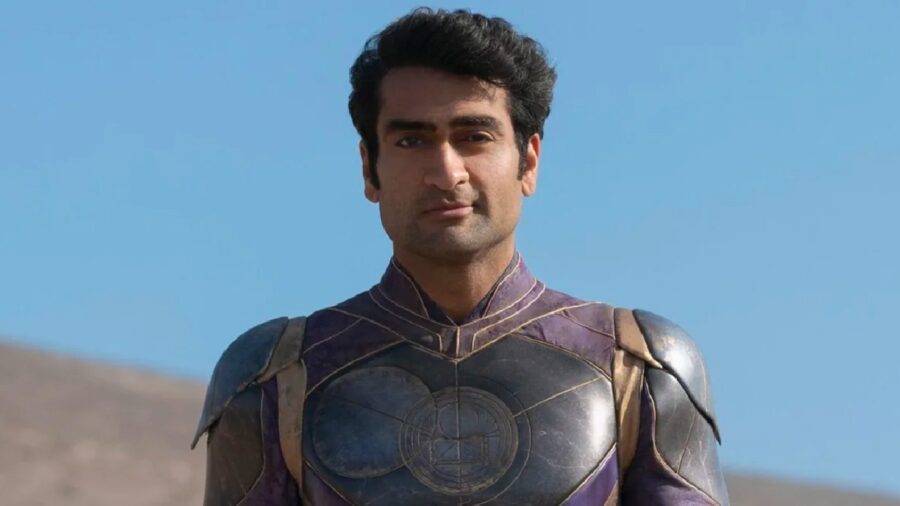
Obviously, hindsight is 20/20, but it seems like the failure of The Eternals effectively foretold the failure of the Buffy the Vampire Slayer reboot. Audiences hated this film because it lacked the mainstream appeal of the MCU. The pace was slow instead of brisk, the writing was serious instead of funny, and the villains were abstract rather than clearly defined. It just didn’t feel like a superhero movie for most of its runtime. Instead, it felt like a typical Chloe Zhao joint: an introspective indie film that just didn’t fly with fans of tights-and-flights films.
The exact same thing happened with the Buffy reboot on Hulu. Executives reportedly thought the show wasn’t “mainstream enough” for the audience. Those same execs worried the new show was trying to chase too much of a youth demographic compared to the original Buffy the Vampire Slayer, which appealed to both children and adults. Finally, they worried about the relative lack of Sarah Michelle Gellar, who reportedly had only one line of dialogue in the original pilot.
Letting The Past Die

To sum it up, the show was going to be a Buffy reboot that had hardly any Buffy in it. No other legacy cast members were in the pilot, so fans weren’t going to get to see any reunions between the Slayer and fan-favorite characters like Willow or Spike. That means most of the show would focus on the new Slayer and her new Scoobies, which is (let’s be honest) a bit like making an entire show out of Dawn’s Season 7 adventures with her forgettable Sunnydale High clique.
Left to her own devices, Chloe Zhao creates breathtaking works of cinematic art, the kind of awesome indies that remind you why you fell in love with movies in the first place. But she is clearly a poor choice when it comes to genre entertainment. The Eternals was dead on arrival, and the Buffy reboot died before it streamed a single episode. Ironically, Zhao found out the reboot was canceled on the same weekend that she attended the Oscars to see how many awards Hamnet would take home. It’s a juxtaposition that drives home a simple, stake-like point: this Oscar winner should stay in her own indie darling lane and stop dabbling in genre entertainment she clearly doesn’t understand.
Entertainment
The best Dyson vacuums actually make vacuuming fun: See my favorites for 2026
Read my full review of the Dyson PencilVac.
The Dyson PencilVac Fluffycones takes the small space vacuum to a whole new level. It’s unbelievably slim and lightweight, and seamlessly scoots into tight crevices near furniture that don’t get dusted often enough. If there are certain spots in your home that you avoid cleaning just because it’s too tight of a squeeze, the PencilVac is about to change your life.
“Fluffy” references the ultra-soft material cushioning the four brush rolls, which provide a gloriously glide on hardwood you don’t want to scratch. The PencilVac’s short battery life and limited suction power wouldn’t be ideal in homes with more than just a few rooms or lots of carpeting.
No stick vacuum takes “stick” as literally as the Dyson PencilVac Fluffycones. It doesn’t have a main body with a battery pack, handle, or dustbin like any other traditional cordless vacuum. It’s just a wand and a funky cleaning head with four microfiber cones as brush rolls — the coolest little vacuum that’s truly grab and go.
The whole vacuum can fit just about anywhere, and tight squeezes are even more accessible with a cleaning head that can spin a full 360 degrees. The agile design led me to so many awkward dusty spots that other cordless vacuums can’t comfortably reach: the small chunks of floor between furniture and the wall, between island and bar stool legs, beside the toilet, or under the low-hanging credenza. The PencilVac had commendable hard floor performance in my apartment, offering near-perfect pickup of daily debris like cat hair and long human hair, kitchen crumbs, multiple types of cat litter, and dust.
Oh yeah, the Fluffycones cleaning head has two dust-detecting lasers. One laser projects out the front to point out the hair and tiny flecks lying ahead, and one laser projects out the back to illuminate anything that you just missed. It’s so satisfying that you’ll accidentally end up cleaning for much longer than you meant to, only to be cut off by the pitiful battery life.
With the precision nozzle wand attached, the PencilVac weighs in at just 2.9 pounds. This uniquely compact design makes cleaning cobwebs out of ceiling corners or dusting baseboards so much less of a pain. The wand’s diameter is just 1.5 inches the entire way down, which made it possible to vacuum behind my dresser without pulling it out a foot from the wall.
Entertainment
RAMageddon is making it harder to find the best Windows laptops. These 10 are actually worth it.
I highly recommend the Acer Swift X 14 for creatives who need a Windows laptop with a discrete GPU for running the most demanding sorts of apps. That includes photo and video editors, graphic designers, and animators.
Most professional creatives need a Windows laptop with a dedicated graphics card to handle their intensive workloads. I like the $2,000 Acer Swift X 14 with a top-end Intel Core Ultra 9 285H CPU and RTX 5070 graphics because it’s super powerful, fairly priced, equipped with a glorious OLED screen, and long-lasting, relatively speaking. You can go with a gaming laptop instead, but most aren’t nearly as compact.
This 14-inch desktop replacement is just as fast as an M5 MacBook Pro when it comes to demanding multi-core scenarios (i.e., most creative tasks). In my testing, its RTX 5070 GPU was more than capable of running graphically taxing games like Cyberpunk 2077 at over 100fps at 1080p resolution without the help of any AI upscaling technology, so it’s very well-suited for the likes of Adobe After Effects and Premiere Pro. (And other AAA games, obviously.)
For what it’s worth, I also tried a $1,700 Acer Swift X 14 AI with an AMD processor and RTX 5060 graphics, and the Intel/RTX 5070 version performed much better. The AMD/RTX 5060 one had 17 percent worse multi-core performance, so it couldn’t compete with the MacBook Pro, and it could barely run Cyberpunk at its 60fps minimum without upscaling tech. It also had a much worse battery life of about 6.5 hours per charge. My go-to RTX 5070 model lasted just over 10 hours, which is fantastic for a laptop with a dedicated GPU.
Note that the Swift X 14 is not a Copilot+ PC, meaning it doesn’t have a super-powerful NPU for running on-device AI tasks. This isn’t a deal-breaker for creatives, but it is for serious machine learning engineers and software developers.
The Swift X 14 comes with plenty of creator-forward ports (like a microSD card slot) as well as a crisp, vivid 120Hz OLED touchscreen. It’s a real attention-getter on an otherwise plain laptop. You can’t draw on it with the included stylus, but you can do so on its haptic trackpad. It functions kind of like a built-in drawing pad.
Entertainment
I tested the top MacBook alternatives: See which Windows PCs actually beat Apple
The 2026 Dell XPS 14 is a stylish investment for aesthetic-forward power users — I’m thinking content creators who might also be occasional gamers. You’re probably wishing the 14-inch MacBook Pro was even sleeker and a little more portable, and you may be getting impatient waiting for Apple’s touchscreen OLED upgrade. You’re definitely open to carrying around dongles.
I tested two configurations of the handsome XPS 14. The one I recommend as the best MacBook Pro alternative is an upper mid-tier model with an Intel Core Ultra X7 358H processor and a dazzling tandem OLED touchscreen (an optional upgrade). It’s no battery life champ, but it keeps pace with the base Pro in multi-core workloads, and its integrated GPU is excellent for demanding creative software and casual gaming.
The XPS 14 is easily one of the most elegant laptops I’ve ever encountered. Dell trimmed down its all-aluminum design for 2026, making it a touch thinner and nearly half a pound lighter than a 14-inch Pro. It’s available in two MacBook-y finishes: graphite and shimmer (coming later this year). Its lattice keyboard takes some adjusting to if you’re used to regular island-style keyboards, but it translates to a modern, minimalist look. Its seamless glass haptic touchpad looks equally clean. Its speakers are above-average for a Windows laptop — they’re just a little more echoey than a MacBook’s.
The XPS 14’s 2.8K OLED display is a $150 upcharge that I can endorse. It’s not as bright or crisp as a MacBook Pro’s Liquid Retina XDR display, but it’s more vibrant and just as smooth. (The standard IPS version is much duller in comparison.) Keep in mind that OLED won’t be a thing on a Mac until late 2026 at the soonest.
The Core Ultra X7 chip is a close rival of Apple’s M5 chip when you work it hard. It doesn’t feel as snappy in single-core scenarios, but trails the current MacBook Pro by only four percent when used for multi-core tasks. (That’s nothing.) What’s more, the Core Ultra X7’s Intel Arc B390 iGPU is comparable to an entry-level discrete graphics card. It’s perfectly capable of running graphically taxing titles like Cyberpunk 2077 with the help of games’ AI upscaling tech.
The XPS 14’s stamina is lacking compared to the M5 MacBook Pro, though it really depends on what you’re using it for. It held out for 10 hours and 19 minutes in our video rundown test, which is a full workday at least, but not great. (Its Apple counterpart ran for over 21 hours in the same test.) That said, its 120Hz OLED display dips down to just 20Hz when you’re viewing static content, so it should last much longer when it’s not looping a video.
If you want an XPS 14 with MacBook-beating battery life in almost any scenario, look into the $1,999.99 base model with a Core Ultra 5 325 chip. It lasted 22 hours on the dot in our video rundown test, and its refresh rate can drop to a mere 1Hz for static content. Just know that you’ll sacrifice a good chunk of power: It offers 35 percent worse multi-core performance than the Core Ultra X7 version. Speed-wise, it’s most akin to an M2 MacBook Air from 2022. (The cheaper Dell 14S with the Core Ultra 7 355 chip performs slightly better and lasts even longer, FWIW.)

Trade talk circling as Tigers open series vs. Athletics
Giants rookie Daniel Susac hopes to find HR stroke again vs. Padres


