
Entertainment
The Buffy Reboot Disaster Proves Oscar Winners Should Stay In Their Lane

By Chris Snellgrove
| Published

Buffy the Vampire Slayer fans are still reeling from the bad news that Hulu canceled the reboot of this iconic ‘90s show. The streamer had ordered a pilot, and things seemed to be going well: not only was Sarah Michelle Gellar returning to star in the new series, but the showrunner was going to be Oscar-winning director Chloe Zhao. The fandom had visions of Buffy returning as a prestige TV show, but Hulu’s cancellation put a stake through those dreams, leaving us only with dust.
As usual, battle lines were quickly drawn when it came to discourse about this show’s failure. Some (including Gellar herself) thought this was just a matter of out-of-touch executives not getting what Buffy was all about. Hulu, meanwhile, reportedly claimed the problem was that the show was too small, too focused on younger audiences, and (perhaps most importantly) didn’t have enough Gellar in it. Personally, I tend to believe Hulu, as they wouldn’t throw away a golden IP for no reason. With respect to Zhao (who has done some excellent work), the cancellation of the Buffy reboot clearly proves why Oscar-winning directors should stay in their own lane.
High “Stakes” Drama

What was the Buffy reboot about? While official details are relatively minimal, the show was reportedly going to focus primarily on a new Slayer played by Ryan Kiera Armstrong. She was going to have to deal with a new vampire menace that popped up in a very familiar location: Sunnydale. Like Buffy, this new Slayer named Nova was going to have a hard time learning the ins and outs of dusting vamps. Fortunately, Buffy herself was going to serve as this young warrior’s mentor, helping her keep the forces of darkness at bay.
Hulu didn’t like the initial pilot, believing that it was too small for an IP this big and that it had too much kiddie stuff and not enough Sarah Michelle Gellar. They demanded reshoots, but those weren’t enough to save this ambitious reboot. The streamer ended up canceling the new Buffy show, which Gellar ultimately blamed on an unnamed executive. As she told People, this exec “was not only not a fan of the original, but was proud to constantly remind us that he had never seen the entirety of the series and how it wasn’t for him.”
Getting The Bad News

Part of why Gellar is so upset with the cancellation is that she had worked with director Chloe Zhao for years to develop this reboot. To the Buffy actor, bringing the show back was a real no-brainer. One of the most beloved IPs of all time getting rebooted by an Oscar-winning director; what could go wrong? However, Hulu’s cancellation of the series (and, make no mistake, they wouldn’t cancel the show if they thought it would make money) reveals a simple truth: like most Oscar winners, Zhao is good at making a particular type of film, and her skills don’t necessarily transfer to the small screen.
Chloe Zhao is an excellent director of such films as The Rider, Nomadland (which won Oscars for Best Picture and Best Director), and Hamnet (which was nominated for a whopping eight Oscars, including Best Picture and Best Director). But Zhao is best when making indie films that focus on relatively unknown actors (Hamnet turned rising star Jessie Buckley into a Best Actress Oscar winner). But she seems to struggle when it comes to creating bigger films with more mainstream actors. This is most evident in The Eternals, her Marvel movie that ended up being a wall-to-wall snooze fest.
Eternals Was Our Warning
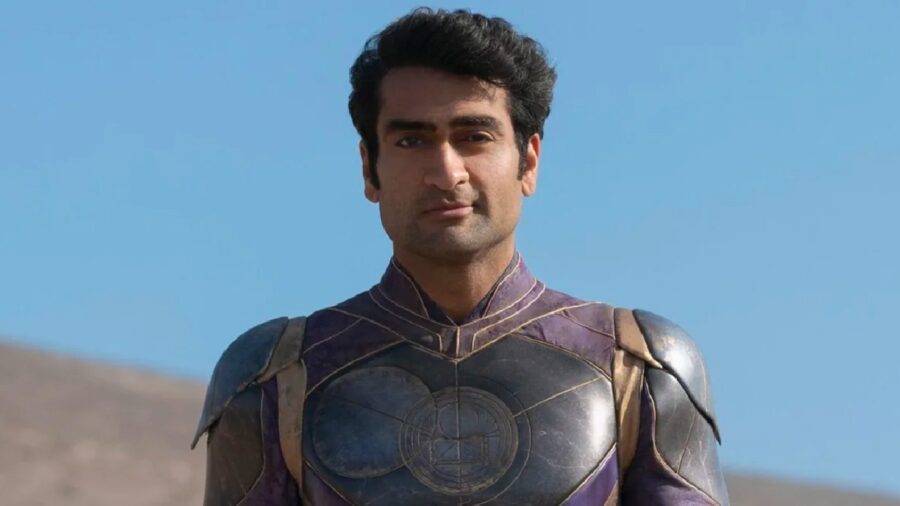
Obviously, hindsight is 20/20, but it seems like the failure of The Eternals effectively foretold the failure of the Buffy the Vampire Slayer reboot. Audiences hated this film because it lacked the mainstream appeal of the MCU. The pace was slow instead of brisk, the writing was serious instead of funny, and the villains were abstract rather than clearly defined. It just didn’t feel like a superhero movie for most of its runtime. Instead, it felt like a typical Chloe Zhao joint: an introspective indie film that just didn’t fly with fans of tights-and-flights films.
The exact same thing happened with the Buffy reboot on Hulu. Executives reportedly thought the show wasn’t “mainstream enough” for the audience. Those same execs worried the new show was trying to chase too much of a youth demographic compared to the original Buffy the Vampire Slayer, which appealed to both children and adults. Finally, they worried about the relative lack of Sarah Michelle Gellar, who reportedly had only one line of dialogue in the original pilot.
Letting The Past Die

To sum it up, the show was going to be a Buffy reboot that had hardly any Buffy in it. No other legacy cast members were in the pilot, so fans weren’t going to get to see any reunions between the Slayer and fan-favorite characters like Willow or Spike. That means most of the show would focus on the new Slayer and her new Scoobies, which is (let’s be honest) a bit like making an entire show out of Dawn’s Season 7 adventures with her forgettable Sunnydale High clique.
Left to her own devices, Chloe Zhao creates breathtaking works of cinematic art, the kind of awesome indies that remind you why you fell in love with movies in the first place. But she is clearly a poor choice when it comes to genre entertainment. The Eternals was dead on arrival, and the Buffy reboot died before it streamed a single episode. Ironically, Zhao found out the reboot was canceled on the same weekend that she attended the Oscars to see how many awards Hamnet would take home. It’s a juxtaposition that drives home a simple, stake-like point: this Oscar winner should stay in her own indie darling lane and stop dabbling in genre entertainment she clearly doesn’t understand.
Entertainment
Owalas Back-to-School Sale is live — 20% off bottles, bags, accessories, and more
SAVE 20%: From Aug. 2-8, Owala’s Back-to-School Sale takes 20% off sitewide, including bottles, bags, and accessories.
20% off bottles, bags, and accessories until Aug. 8
Owala’s Back-to-School Sale isn’t just about the bottles you already own — the whole lineup is included, so it’s worth looking beyond the FreeSip.
The sale covers everything from hydration essentials like water bottles and tumblers to insulated bags, totes, and crossbodies, plus accessories like lids, straws, and other add-ons. The original FreeSip is still the bestseller for a reason, and the FreeSip Sway is a solid pick if you want something more cupholder-friendly for the car. If coffee’s more your thing, the SmoothSip Slider is built specifically for hot drinks on the go.
Mashable Trend Report
Mashable Deals
And if you need something bigger than a bottle, the Sun-Day Tote is a collapsible bag that packs flat yet holds a lot, making it easy to toss in a backpack or bag during the actual back-to-school rush. They’ve also got a few small essentials — a Bottle Boot, cleaning accessories, stickers, and matching pet bowls.
With 20% off sitewide, this is a good time to stock up across categories rather than just grabbing one bottle — especially if you’ve got a household that goes through water bottles, lunch bags, or travel mugs regularly.
Shop Owala’s Back-to-School Sale until Aug. 8 — stock is bound to run out.
Entertainment
Final days to lock in your favorite Microsoft Office apps for life for just $33
TL;DR: Get a Microsoft Office Professional 2021 for Windows lifetime license for $32.97 through Aug. 9 and enjoy Word, Excel, PowerPoint, Outlook, Access, Publisher, OneNote, and Teams with a one-time purchase.
$32.97
$219.99
Save $187.02
This is your last chance to ditch Microsoft 365’s subscription fees for good. Through Aug. 9, you can grab a lifetime license to Microsoft Office 2021 for much less than its usual retail price. Simply pay once, download the full software suite, and never worry about renewals again.
We know what you’re thinking, but rest assured, this isn’t some stripped-down lite version either. It’s the real deal. Whether you’re writing reports, crunching numbers, building presentations, managing emails, or wrangling databases, the lifetime version of Microsoft Office has you covered.
Mashable Deals
It’s a one-time download for one Windows PC, so once it’s yours, it’s yours. The full pro-level toolkit, minus the stress of a subscription. Plus, with instant license delivery and free customer support, getting started is as painless as your new spreadsheet workflow.
No more “trial expired” pop-ups. No more surprise charges. Just the latest versions of Microsoft’s best apps, ready to support all of your work and personal needs.
Mashable Deals
Download Microsoft Office for Windows while it’s on sale for $32.97 (reg. $219.99) until Aug. 9 at 11:59 p.m. PT. No coupon is needed.
StackSocial prices subject to change.
Entertainment
One dashboard, 20+ AI models — get ChatGPT, Claude, Gemini, and more for $79
TL;DR: Pay $79 once (reg. $619) for ChatPlayground AI Unlimited Lifetime and compare 20+ leading AI models side by side, chat with PDFs and images, and generate AI art.
Credit: ChatPlayground AI
If you’ve ever copied the same prompt into three different AI tools just to see which one gives the best answer, you’re not alone. Different models excel at different things — but juggling tabs and subscriptions gets old fast.
ChatPlayground AI puts the top AI models in one place, so you can compare responses side by side without the back-and-forth. For a limited time, a lifetime subscription is on sale for $79 (reg. $619).
GPT-4o, Claude Sonnet, Gemini, DeepSeek, Llama, Perplexity, and more — all in one clean interface. It’s built for people who iterate fast, test variations, and actually care about optimizing results.
Beyond comparisons, ChatPlayground AI includes prompt engineering tools to refine outputs, image and PDF chat for context-aware responses, saved chat history for ongoing projects, and AI image generation powered by leading models. There’s even a Chrome extension to integrate it directly into your browsing workflow.
The Unlimited Plan means unlimited messages per month, making it ideal for startups, product teams, marketers, and prompt engineers who run experiments nonstop. You also get priority support and early access to new features and future models.
If you’re already paying for multiple AI tools — or constantly switching between them — this consolidates everything into one streamlined platform.
Mashable Deals
Grab lifetime access to ChatPlayground AI Unlimited for $79 (reg. $619) and stop juggling models for good.
StackSocial prices subject to change.
Topics
Artificial Intelligence

ATP roundup: Arthur Gea wins 1st ATP title in Los Cabos
MLB roundup: Brewers down Angels, move atop MLB standings


