
Entertainment
The Beloved Sci-Fi Series Destroyed By Battlestar Galactica

By Joshua Tyler
| Updated

The 1990s were a golden age for science fiction, but even in the decade of infinite space awesomeness, no one in 1994 thought that the year’s 15th biggest movie would become the foundation for decades of sci-fi shows. But that’s exactly what happened with Stargate.
For a time, Stargate seemed on the verge of challenging Star Trek and Star Wars for geek franchise supremacy, until it was ripped apart by Hollywood executives determined to turn it into something else. When fans revolted, it ended everything, and it’s only now, 15 years later, that this legendary sci-fi franchise might finally make a return.
This is why Stargate Atlantis failed.
The Perfect Spinoff

Set during and after the events of Stargate SG-1, Stargate Atlantis follows an international expedition that discovers the lost city of Atlantis. The myth is real, but the city isn’t on Earth. Instead, it’s an outpost built and long ago abandoned by the powerful Ancients in the distant Pegasus Galaxy.
Colonel John Sheppard (Joe Flanigan) and scientist Dr. Elizabeth Weir (Tori Higginson) lead a team through the stargate to explore the city and restore it to working order. Along with the team is Dr. Rodney McKay (David Hewlett) and a big ensemble, which would in season 2, even include a pre-fame Jason Momoa.
Rodney McKay Is One Of Sci-Fi’s Best Characters

We need to pause here to talk about just how great David Hewlett’s performance as Rodney is. He is, without question, the best character in Stargate, but also one of the best characters in science fiction. If Stargate Atlantis were given the respect it deserves, it would be mentioned alongside top-tier science fiction characters like The Doctor, Garak, Data, and maybe even Spock.
Rodney McKay is arrogant, impatient, and openly dismissive of anyone he considers less intelligent, but he’s also the person everyone relies on when things go wrong, which is constantly. Despite his abrasive personality, he evolves over the course of the series, showing loyalty, courage, and flashes of genuine humility. The core of the character is contradiction: he’s self-centered but dependable, cowardly but repeatedly heroic, and deeply insecure beneath the arrogance.
Every second Rodney’s on screen in the show is instant fun. If every episode were just David Hewlett on screen for 41 minutes, that would probably work, but the cast is a big ensemble.
Stagate Atlantis Was Killed While Succeeding

The Stargate franchise was firing on all cylinders, doing everything it could to feel like a cohesive, connected universe. It was working, and fans were loving it.
Stargate Atlantis was a hit for The Sci-Fi Channel, back in the days before it changed its name to the inferior “SYFY” with two Y’s. It was getting critical recognition too, in the form of four Emmy nominations.
Stargate’s flagship series, Stargate SG-1, was, by this point, off the air, but the franchise seemed to be in good hands with Stargate Atlantis. Then, out of nowhere, it was canceled at the end of season 5.
Amazingly, for a cable sci-fi series, the crew was allowed to end the show on their own terms, delivering a satisfying conclusion. It’s important that Atlantis does have a clear ending, so for any new viewers worried about yet another sci-fi classic cut short, don’t worry about it. However, ending it after five seasons was not the original plan for the show, and it’s not what the show’s producers really wanted.
Laying Blame For The Show’s Cancellation

The show’s early ending is partly my fault, and partly the fault of people like me. It’s only in the last few years that I’ve gone back to the world of Stargate. I watched SG-1 religiously when it aired, but to my shame, when Stargate Atlantis was first around, I didn’t pay any attention to it; I was too busy with Battlestar Galactica. In the days before easy streaming, catching everything on TV was difficult, and sometimes viewing habits were shaped by when you were available to watch. Many chose Battlestar Galactica.
The people in charge noticed. Execs at the SyFy Channel and Stargate’s production company, MGM, were apparently doing the same thing. They chose Battlestar Galactica, too. In fact, they became so obsessed with BSG that they decided to turn Stargate into it.
Never mind that Stargate had almost nothing in common with Battlestar Galactica, the higher-ups decided that was their direction. So, in 2009, SyFy and MGM canceled Stargate Atlantis after five seasons.
Turning Stargate Into Battlestar Galactica

The show’s ratings were still strong, and so was the response. But the network execs didn’t want Stargate Atlantis anymore, so the series was shut down, and all those resources were shifted to development on a new show called Stargate Universe.
Stargate Universe would basically abandon everything Stargate’s shows had spent decades establishing. It was set aboard a lost alien ship, with no connection to the larger Stargate world.

It didn’t work. Stargate fans were outraged at the cancellation of a beloved show in its prime and even more outraged when it was replaced by something that seemed like exactly what it was: a cheap attempt to cash in on the success of a totally different science fiction franchise.
While there was talk of a Stargate Atlantis direct-to-DVD movie, similar to those produced for Stargate SG-1, it never happened. Those plans were canceled when MGM entered bankruptcy in 2010, killing funding for further productions.
Why Stargate Fans Quit

These many broken promises and tonal changes caused Stargate fans to give up on Stargate as a franchise. Many refused to give the new show, Stargate Universe, a chance. While it did improve over time, the series never received enough support from former Stargate Atlantis viewers to match that show’s ratings. The Stargate Atlantis audience felt they’d been stabbed in the back, and, understandably, did not show back up.
Stargate Universe lasted two seasons before it too was canceled. The Stargate TV franchise, which had been going strong for decades and for a while seemed on the verge of supplanting Star Trek as the biggest geek universe, died with it. All because greedy Hollywood executives refused to embrace the success of Stargate Atlantis.
Stargate Rises From The Ashes Of Atlantis
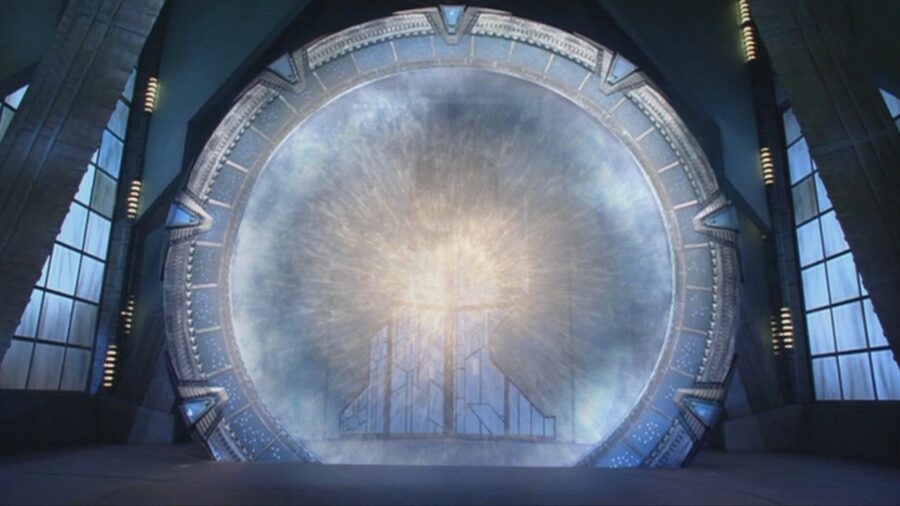
Now, fifteen years later, work has begun on bringing Stargate back, with a new streaming series. It’s not a reboot, but a continuation. Joseph Mallozzi, along with much of the original Stargate Atlantis creative team, is involved.
It’s a tacit admission by Hollywood that Stargate Atlantis never should have been canceled in the first place. Maybe it’s not too late to right that wrong. In an era where scripted sci-fi television is floundering, it may be up to Stargate to save us all.
Entertainment
Pre-order the Samsung Galaxy Z Flip 8, walk away with an extra $200 — how to claim this free offer
TL;DR: Get the Samsung Galaxy Z Flip 8 (256GB, unlocked) for $1,199.99 at Amazon and a free $200 gift card bundled in — no trade-in required.
Samsung didn’t ease into its Unpacked event — phones, watches, and smartglasses were all unveiled in one go, which means there’s a lot to sort through if you’re trying to find the one deal that’s actually worth your money.
And here’s one worth grabbing: Amazon is currently bundling the Samsung Galaxy Z Flip 8 with a free $200 gift card — no trade-in, no discount code, just the phone at $1,199.99 with a $200 gift card to use later.
The whole point of a flip phone is the cover screen, and Samsung’s built around that here — FlexWindow lets you handle a range of AI tasks without opening the phone, so quick checks don’t require unfolding it. When you’re shooting photos, you can go hands-free for creative angles, or hold it steady and rely on Super Steady Video to keep the footage smooth.
The Flip 8 runs on the Snapdragon 8 Elite Gen 5, the same chip powering the Fold8, which means gaming and multitasking should hold up even on this smaller form factor.
Battery life is built to last through a full day, and when it runs low, Super Fast Charging gets you back up quickly. If you’re switching from an iPhone, Samsung’s made that transfer easier, too — your photos, contacts, alarms, and passwords come with you, and your messages stay encrypted the whole way.
Mashable Deals
The gift card isn’t an instant perk, though — Samsung sends an email once it’s ready to claim, and that only happens after the phone ships. The offer ends Aug. 6, so the earlier you pre-order, the safer you are before that window shuts.
Grab the Samsung Galaxy Z Flip 8 before Aug. 6, and the $200 gift card is on its way to you.
Topics
Samsung
Samsung Unpacked
Entertainment
Owalas Back-to-School Sale is live — 20% off bottles, bags, accessories, and more
SAVE 20%: From Aug. 2-8, Owala’s Back-to-School Sale takes 20% off sitewide, including bottles, bags, and accessories.
20% off bottles, bags, and accessories until Aug. 8
Owala’s Back-to-School Sale isn’t just about the bottles you already own — the whole lineup is included, so it’s worth looking beyond the FreeSip.
The sale covers everything from hydration essentials like water bottles and tumblers to insulated bags, totes, and crossbodies, plus accessories like lids, straws, and other add-ons. The original FreeSip is still the bestseller for a reason, and the FreeSip Sway is a solid pick if you want something more cupholder-friendly for the car. If coffee’s more your thing, the SmoothSip Slider is built specifically for hot drinks on the go.
Mashable Trend Report
Mashable Deals
And if you need something bigger than a bottle, the Sun-Day Tote is a collapsible bag that packs flat yet holds a lot, making it easy to toss in a backpack or bag during the actual back-to-school rush. They’ve also got a few small essentials — a Bottle Boot, cleaning accessories, stickers, and matching pet bowls.
With 20% off sitewide, this is a good time to stock up across categories rather than just grabbing one bottle — especially if you’ve got a household that goes through water bottles, lunch bags, or travel mugs regularly.
Shop Owala’s Back-to-School Sale until Aug. 8 — stock is bound to run out.
Entertainment
Final days to lock in your favorite Microsoft Office apps for life for just $33
TL;DR: Get a Microsoft Office Professional 2021 for Windows lifetime license for $32.97 through Aug. 9 and enjoy Word, Excel, PowerPoint, Outlook, Access, Publisher, OneNote, and Teams with a one-time purchase.
$32.97
$219.99
Save $187.02
This is your last chance to ditch Microsoft 365’s subscription fees for good. Through Aug. 9, you can grab a lifetime license to Microsoft Office 2021 for much less than its usual retail price. Simply pay once, download the full software suite, and never worry about renewals again.
We know what you’re thinking, but rest assured, this isn’t some stripped-down lite version either. It’s the real deal. Whether you’re writing reports, crunching numbers, building presentations, managing emails, or wrangling databases, the lifetime version of Microsoft Office has you covered.
Mashable Deals
It’s a one-time download for one Windows PC, so once it’s yours, it’s yours. The full pro-level toolkit, minus the stress of a subscription. Plus, with instant license delivery and free customer support, getting started is as painless as your new spreadsheet workflow.
No more “trial expired” pop-ups. No more surprise charges. Just the latest versions of Microsoft’s best apps, ready to support all of your work and personal needs.
Mashable Deals
Download Microsoft Office for Windows while it’s on sale for $32.97 (reg. $219.99) until Aug. 9 at 11:59 p.m. PT. No coupon is needed.
StackSocial prices subject to change.

TechCrunch Mobility: Two roads diverged — for robotaxis
Rafael Navarro's late penalty kick lifts Rapids past Austin FC


