
Entertainment
Unrated, Unauthorized Netflix Rockumentary Is Equal Parts Trippy, Triumphant, And Tragic

By Robert Scucci
| Published

Before John Frusciante joined the Red Hot Chili Peppers and solidified the “classic lineup,” quit the band in 1992, was replaced by Dave Navarro for One Hot Minute, rejoined in 1998, quit again in 2009, was replaced by Josh Klinghoffer, and returned yet again in 2019, the band’s sound had already been molded by another guitar genius: Hillel Slovak. Netflix’s latest rockumentary, The Rise of the Red Hot Chili Peppers: Our Brother, Hillel, looks back at those early days when Anthony Kiedis and Michael “Flea” Balzary were just kids from broken homes, and how their best friend and spiritual brother Hillel offered them a lifeline through art, music, and, most tragically, drugs.
The Rise of the Red Hot Chili Peppers tells a heartbreaking story about the band’s early, turbulent years as kids running amok through Los Angeles in the 1980s, shaped by their environment and an unbreakable friendship. Through beautifully composed segments featuring archival photos brought to life with striking animation, the documentary feels kaleidoscopic at times, like a drug-induced fever dream, and brutally sobering at others. We hear from band members past and present as they reflect on their soul brother Hillel Slovak and how instrumental he was in shaping them into the musicians they became.

While a healthy amount of time is spent on the thrill of starting a punk-funk hybrid band in 1980s Los Angeles, Slovak’s life, impact, and lasting legacy takes center stage, doing the impossible by making an ending fans already know still land like a gut punch that makes you want to call up an old friend and check in.
From Triumph To Tragedy
While I’m fighting every urge to wax poetic about the band whose frontman once sang “Say what? You got a pumpkin in yo pants,” I can’t understate the emotional weight of The Rise of the Red Hot Chili Peppers. It’s a look at the band’s early days, when both Flea and Kiedis felt completely lost as teenagers. They abused drugs, got into all sorts of trouble, and, thanks to unstable home lives, were mostly unsupervised and searching for something to hold onto.

They went from lost to found when they met Hillel Slovak in high school, not yet realizing how chaotic their lives would become as they bonded over art, music, and their freewheeling youth, something that they thought would last forever.
Flea spends a healthy amount of time talking about how he might never have picked up a bass if Hillel hadn’t needed someone to play for one of his earlier projects, Anthym. Around this time, the Red Hot Chili Peppers were conceptualized, though scheduling conflicts created tension between Flea, Kiedis, then-drummer Jack Irons, and Slovak, who was committed to his other band, What Is This?

Their debut album featured Jack Sherman on guitar, but things didn’t click. By the time they were preparing to record their 1985 sophomore effort, Freaky Styley, Slovak had returned to the fold, and everything started to take shape on an almost cosmic level. That momentum carried into 1986’s The Uplift Mofo Party Plan, but by then, things were already starting to spiral.
Drugs had taken hold of both Kiedis and Slovak. Flea managed to stay relatively grounded, but the band dynamic was constantly on the verge of collapse just as they were finding their footing. Kiedis got sober, for the first time of many in the band’s documented history, but Slovak couldn’t escape his heroin addiction, which ultimately claimed his life in 1988.

Known as a constant source of positivity and inspiration, it almost feels like Slovak gave his light to the people who mattered most while his inner darkness slowly closed in.
The documentary closes on a somber but reflective note. John Frusciante speaks about Slovak’s legacy and how it shaped his own early playing with the band. Flea and Kiedis get visibly emotional as they remember their best friend, taken far too soon, even after all these years. A true artist and a deeply sensitive soul, Hillel Slovak was one of those rare musicians who radiated authenticity without ever trying. With his life cut short just as the band was beginning to take off, there’s no telling how differently things might have turned out if he had overcome his demons.
It’s A Great Watch, Even If You’re Not A Fan

Listen, whenever I talk about how much I love the Red Hot Chili Peppers, the first thing people bring up is how Anthony Kiedis openly discusses some pretty troubling behavior in his 2004 memoir, Scar Tissue. And yes, that book has aged terribly, and yes, Kiedis probably has some explaining to do when he arrives at the pearly gates. But that’s not what The Rise of the Red Hot Chili Peppers is about.
This documentary is focused on the life and legacy of Hillel Slovak.
For casual fans, that might seem like an odd choice, especially since most of the band’s classic albums feature Frusciante’s guitar work. But it’s worth remembering that Frusciante was only 18 when he joined the band, and Slovak was already his biggest influence. Slovak ran so Frusciante could sprint.

What makes the documentary especially compelling is how it uses archival material to tell its story. As someone who nerds out over old band photos and music history, I was genuinely surprised by how many images from those early days I’d never seen before. They capture the band at their youngest and most naive and explosive, and then those same images are brought to life through trippy, psychedelic animation that makes them jump off the screen and straight into your living room.
It’s a visually visceral way to show youth running wild, and the early days of a band that would eventually take over the world at a time when they were still figuring out where their next meal was coming from.

It’s heavy, heartfelt, and feels like it could be the first chapter of something larger. Maybe I’m reading too much into the title, but I’d love to see a follow-up documentary that picks up around the Mother’s Milk era, when Frusciante’s first stint with the band propelled them into superstardom. Until that happens, this is more than enough to keep me at bay.
In the meantime, I’ll be spending the weekend slapping the bass and revisiting those early records, because if nothing else, this documentary is a reminder of where it all started for a band that shaped my own early musical identity in more ways than I could ever reasonably articulate.


The Rise of the Red Hot Chili Peppers: Our Brother, Hillel SCORE
The Rise of the Red Hot Chili Peppers: Our Brother, Hillel is a Netflix Original and is available to stream with an active subscription.
Entertainment
Cordless power tool deals are already live at Amazon before Prime Day starts
Best early Prime Day deals on cordless power tools:


Summer is the ideal time to tackle home DIY projects. The paint will dry quicker, there’s more hours of daylight, and maybe some friends around to help out. If you have a list of home and yard projects to take care of this summer, make sure you have the necessary tools. Nothing sidelines a weekend project quite like realizing you need to run to the hardware store.
Lucky for us, early Amazon Prime Day deals already have great discounts on cordless power tools. Of course, we expect to see more as we get closer to the June 23 official start of the sale. But for now, here are the top deals worth shopping.
Best DeWalt deal
$169
at Amazon
$249
Save $80
Why we like it
Perfect for anyone building a new tool collection, the DeWalt 20V MAX Cordless Drill and Impact Driver Combo Kit is on sale for $80 off before Prime Day. The kit comes with the 20V compact drill/driver, 20V impact driver, two 20V batteries, a battery charger, and a durable carrying case. Both tools have a built-in LED light so you’ll get a better view for optimal accuracy. The comfort grip with ergonomic design is also a major plus.
Best Craftsman deal
$299
at Amazon
$369
Save $70
Why we like it
Packing in seven tools, the Craftsman V20 Power Tool Combo Kit is an upgraded starter pack. It comes with a drill/driver, oscillating tool, impact driver, grinder, reciprocating saw, circular saw, and even more. You also get two 20V batteries and a battery charger.
Before Prime Day kicks off, the Craftsman Power Tool Combo Kit is on sale for $229, down from the normal price of $369.
Mashable Deals
Best Hoto deal
$79.99
at Amazon
$99.99
Save $20
Why we like it
Hoto makes some excellent cordless tools that are useful to have around any home, even if you’re not taking on DIY projects soon. The Hoto SNAPBLOQ S-A01 3.7V Electric Screwdriver is the perfect example given that it comes with 56 bits to cover every possible scenario. It also has three torque settings and an LED light. Use it to repair your glasses or sunglasses, get access to tiny screws in a watch or your laptop, while still having access to more standard bits.
Hoto says you’ll get about 60 minutes of runtime before the cordless electric screwdriver needs to recharge its 800 mAh battery.
More cordless tool deals to shop before Prime Day
Entertainment
The Decade's Funniest Sci-Fi Series Is Finally Complete On Netflix
By Jonathan Klotz
| Published

Comedy is hard to do right. Science fiction is hard to do right. A sci-fi comedy is nearly impossible. That’s what makes Resident Alien one of the best series of the decade. It’s a funny, well-written sci-fi comedy allowed to tell a complete story from beginning to end. After originally airing on SyFy, the series went to Netflix, and now, the final season has arrived for you to easily binge Alan Tudyk’s greatest performance.
The Perfect Role For Alan Tudyk

Tuidyk plays “Harry Vanderspeigle,” or rather, the alien with a name humans can’t pronounce, impersonating the town doctor (also played by Alan Tudyk in flashbacks), whom he accidentally killed when landing in Patience, Colorado. Harry learns medicine by watching Law & Order, and slowly picks up on human emotions, customs, and social cues as the series goes on, all to further his mission to exterminate the human race. Early on, he realizes that a young boy, Judah, can see his true alien form. He tries to exterminate the witness, but fails, and ends up befriending him instead. Be a different series if the bone saw had worked.
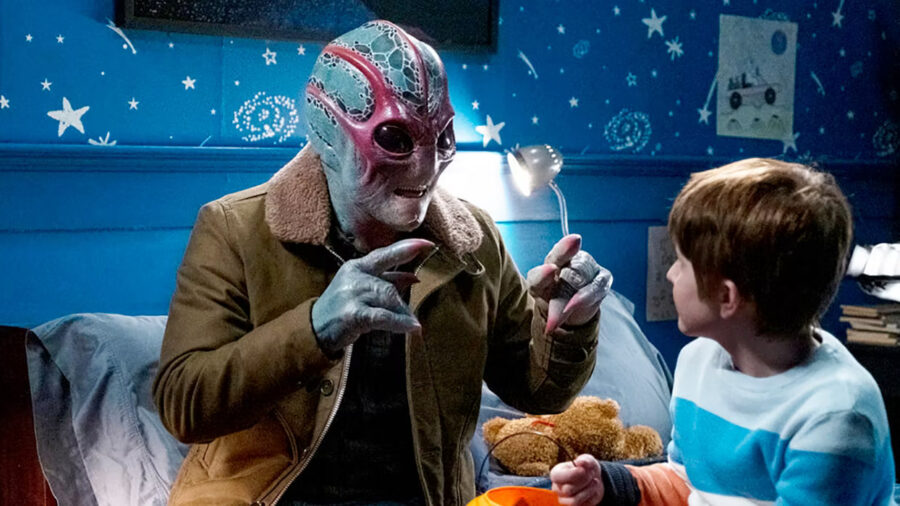
The first few episodes have the other residents of Patience playing the straight man to Harry’s quasi-murderous antics, before Resident Alien finds its groove and settles in. As the seasons go on, Harry finds an ally in Judah’s mom, Asta (Sara Tomko), and a new enemy when the government moves into Patience, which, as with Stranger Things, is represented by Linda Hamilton as a no-nonsense extraterrestrial hunting General. Hamilton isn’t the only sci-fi cameo. Resident Alien is filled with familiar names and faces having the time of their life on the show.
Alan Tudyk’s Firefly co-stars, Nathan Fillion and Jewel Staite, turn up as a telepathic octopus and an FBI Agent respectively. Clancy Brown, Terry O’Quinn, George Takei, and Stephen Root all drop by while behind the camera, Star Trek Voyager’s Robert Duncan McNeill is often directing the big episode of the season. When the star of the show is one of the most beloved performers in Hollywood, it’s easy to get everyone to show up.
Resident Alien Is The Decade’s Best Sci-Fi Series
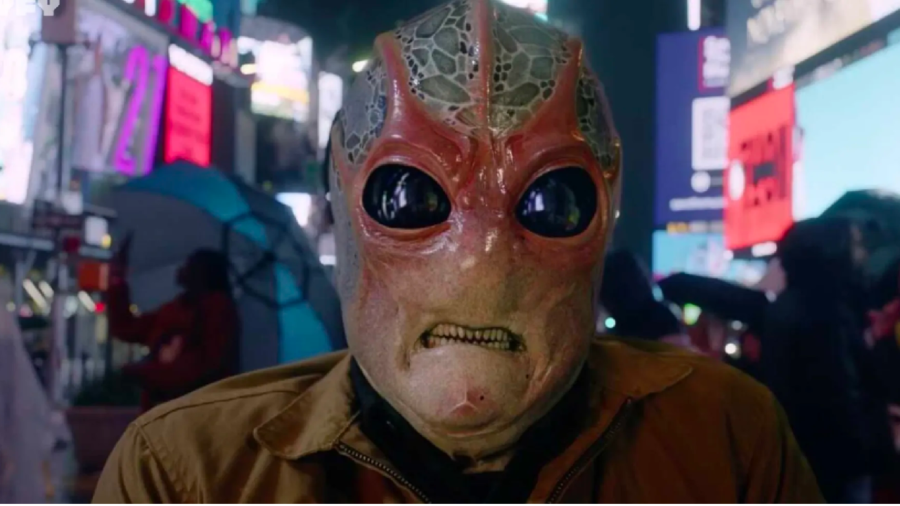
Resident Alien is an absolute blast of a series. It’s a throwback to the old SyFy slate of Eureka and Warehouse 13, and the only show this decade to nail that vibe. It took a while to catch on. Season 1 flew under the radar with barely a million viewers for each episode. Once it was available on streaming, it became a social media hit, and viewership boomed. Now that it’s complete on Netflix, expect it to again experience a new surge in popularity.
There’s a lesson to be learned here by studios about producing original sci-fi, or well, almost original, since it does adapt the comic book series by Peter Hogan and Steven Parkhouse, and then giving them room to grow, develop, and find their audience. Too often, sci-fi shows are canceled after one season before anyone even knows how great it is. Resident Alien did everything right, barely survived for four seasons, and is now going to be your new favorite series
Entertainment
The best early Prime Day air fryer deals you can shop right now
Best early Prime Day air fryer deals at a glance:


Prime Day is almost here — and Amazon isn’t waiting for the official start to roll out discounts. This year’s sale kicks off on June 23, but early deals on small kitchen appliances are already live, and air fryers are among the standouts.
Whether you’re after a compact basket-style fryer for weeknight meals or a larger oven model that can roast a whole chicken, brands like Ninja, Instant Pot, and Chefman are already seeing price cuts. Here are the best early Prime Day air fryer deals worth grabbing now.
Mashable Trend Report
Best mini air fryer deal

$64.99
at Amazon
$129.99
Save $65.00
Why we like it
If you live alone, like making apps or quick side dishes, or just want an air fryer that won’t take up your entire counter, the Instant Pot Vortex Plus 6-in-1 Mini Air Fryer (4QT) is on sale for $64.99 at Amazon, down from $129.99. This little air fryer can bake, roast, broil, dehydrate, reheat, and air fry small meals in minutes. Just press the preset button, and it does the rest.
Best large air fryer deal

$89.99
at Amazon
$149.99
Save $60.00
Why we like it
For households with more mouths to feed, the Chefman XL 6-in-1 Air Fryer (14QT) can make family-sized meals in no time. (There’s also a Hi-Fry button for those who prefer an extra crispy finish.) It comes with three removable wire racks, a rotisserie spit, a fetch tool to remove the rotisserie, and a dip tray/baking pan. And right now, you can get it for $89.99 — the lowest price we’ve tracked on this model to date!
More air fryer deals
Topics
Kitchen
Air Fryers

Cordless power tool deals are already live at Amazon before Prime Day starts
SoFi workers reach agreement to avoid strike ahead of World Cup


