
Entertainment
The R-Rated 90s Sci-Fi Made To Teach Hollywood A Lesson
By Jonathan Klotz & Joshua Tyler | Published

Tim Burton’s Batman lit the box office on fire in 1989, setting off a rush by studios to push out the next big superhero film. Unlike the early 2000s superhero rush, those earlier studio executives went back to the pulp heroes of the 1930s.
Dick Tracy, The Shadow, and The Phantom hit theaters, bringing classic radio serials and comic books to life. In parallel with producing The Shadow, Universal Studios also launched a more straightforward approach to the problem of trying to duplicate Batman’s success by making their own, modern-day superhero franchise, just like Batman.
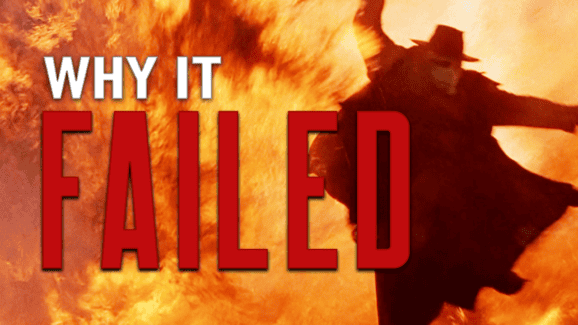
To do it, they hired a man who’d established himself as an up-and-coming genius in the horror space. Sam Raimi was the right man for the job, but he was too far ahead of his time. His big superhero success wouldn’t come until 12 years after the release of his Universal film.
Sam Raimi Makes His Own Superhero After Being Denied By Hollywood

Sam Raimi was coming off Evil Dead 2, still considered by many to be his best movie, and Hollywood studios were starting to take notice of the offbeat filmmaker. Sadly, Universal Pictures, the rights holders to The Shadow, passed on Raimi helming their Alec Baldwin pulp hero film.
Dejected, Raimi instead wrote a screenplay around a character called Darkman, a superhero he created in a short story years earlier. With that, he captured Universal’s attention.
Played by Liam Neeson, Darkman begins life as Dr. Peyton Westlake, a scientist working on synthetic skin who becomes disfigured when his lab is ransacked by thugs looking for proof their boss is engaged in white-collar crime.

Westlake is left horribly burned, but an experimental surgery gives him superhuman strength, which he puts to use alongside the synthetic skin that lets him disguise himself as anyone, so long as he stays out of the light, to dismantle the criminal network. On the surface, it’s a standard superhero revenge story, but Sam Raimi puts focus on Westlake’s changing emotional state as he embraces life as a monster, turning his back on his girlfriend Julie after she expresses her love for him.
Darkman is equal parts pulp heroic fisticuffs and gothic tragedy, but it proved Sam Raimi knows what makes a superhero movie work. Unfortunately, it didn’t give Universal what they wanted.
Darkman’s Sequels Get Dumped In The Bargain Bin

Darkman is one of those movies people like to retroactively call a success because it didn’t lose money. That’s a very low bar. Universal didn’t make Darkman to turn a modest profit; they made it to create a franchise that could ride the post-Batman superhero wave.

On that front, it absolutely failed. A true success gets sequels that people actually see in theaters. Darkman got dumped into the straight-to-video bin with a recast lead, which is Hollywood code for “we’re embarrassed but not quite done squeezing the IP.”
The warning signs were there immediately. Yes, Darkman opened at number one, but it did so with numbers that were already disappointing in a market recalibrated by Tim Burton. This was 1990, when studios were hunting the next pop-culture monster, not celebrating “pretty good.”
Darkman didn’t dominate the summer conversation, didn’t generate a cultural footprint, and didn’t turn Liam Neeson into a genre icon. Instead, it quietly exited theaters while Batman knockoffs and Teenage Mutant Ninja Turtles ate its lunch.
Why Darkman Failed

Part of what makes Darkman a great movie is also what made it a tough sell for audiences. Darkman isn’t weird enough to be a cult midnight classic, and it isn’t clean enough to be a four-quadrant hit.
It’s grotesque, mean, occasionally brilliant, and completely unsellable to kids, who were the actual money engine of Batman and early-’90s genre filmmaking. You can’t build an empire on a hero whose face melts, whose rage is chemically induced, and whose romance ends in a parking lot goodbye.
Darkman was quickly forgotten by the mainstream in the early 90s, overshadowed even by inferior box office failures like The Shadow, and is rarely talked about now outside of hardcore Raimi fan circles.
That happened not because it’s bad, but because it missed the moment it was built for. It arrived just early enough to look experimental, and just late enough to feel overshadowed. Universal wanted its own Batman. What they got was a cult favorite, a director calling card for Sam Raimi, and a franchise that limped off to VHS hell.
Sam Raimi Proves Everyone Wrong With Spider-Man
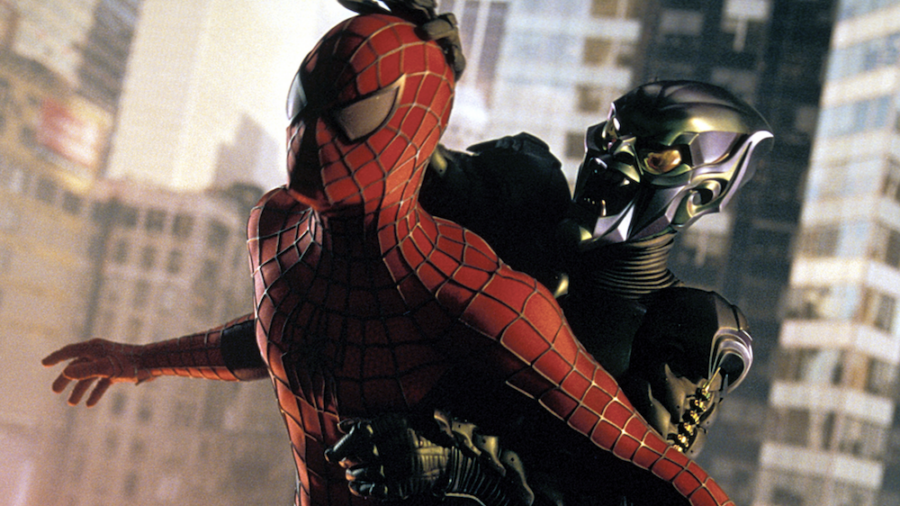
Sam Raimi would, of course, go on to direct one of the most influential superhero movies of all time, 12 years later, when he made Spider-Man. Drawing on his experience with Darkman, Raimi wanted to approach the story of Peter Parker from a different angle, opting to bring in Green Goblin as the villain and embrace the loose father/son dynamic between the two.
Amazingly, you can catch a brief glimpse of Darkman in Spider-Man during Peter’s dream sequence right after he’s been bitten.
If you’re looking for the true origin of modern superhero movies, that’s where it all started. With a genius filmmaker being denied the job he wanted, and then making it happen his way, anyway.
Entertainment
R-Rated, 80s Heist Thriller Is James Caan's Most Overlooked Masterpiece

By Robert Scucci
| Published

Though writer-director Michael Mann is best known for 1995’s Heat, there’s another film in his catalog that is just as daring, and a little rougher around the edges. 1981’s Thief, his feature film debut, is now considered a classic, proving its staying power over the decades. It tells a slow-burn story involving the planning and execution of an elaborate diamond heist, but its tension comes from the inner workings of the crime syndicate orchestrating it, and the man trying to pull off one last big score before going legit.
In 2026, Thief sounds like any other heist flick, but it endures because it’s not beating you over the head with the heist itself. Vaults get broken into, and loyalties are betrayed, but what really makes this such an engaging watch is witnessing the planning more than the execution. The buildup is just as strong as the payoff, and that’s what makes you want to stick around.
Kind Of A True Story

Based loosely on Frank Hohimer’s 1975 memoir The Home Invaders: Confessions of a Cat Burglar, Thief centers on Frank (James Caan), a safe-cracking expert and ex-con who uses his “legitimate” business ventures as a front for his criminal activities. He’s in love with Jessie (Tuesday Weld), and plans to settle down with her after explaining the true nature of his work. As luck would have it, his most recent score gets ripped off when his accomplice, Gags (Hal Frank), is thrown out of a window, and the money is stolen. After some investigating, Frank traces Gags’ murder to Attaglia (Tom Signorelli), a plating company executive who operates similarly to Frank, but at a much higher level.
As it turns out, Attaglia works for another crime lord named Leo (Robert Prosky), who has seemingly limitless resources thanks to his organized crime ring. In so many words, Leo’s racket is essentially a union for criminals who carry out heists, report their earnings, and wait for their cut. Leo, who benefits most from this operation, provides protection by supplying the infrastructure they need to get the job done. Basically, he operates like any other company ever made. Wealth is generated by frontline employees, and then they fight over the scraps their boss is kind enough to toss their way.

Frank, wanting to settle down and start a family, reluctantly teams up with Leo because he has needs that can’t be fulfilled through conventional means. Jessie cannot conceive a child, and Frank’s criminal record prevents them from adopting. Leo, with his deep pockets and endless connections, can get him a baby off the black market, along with a home, a car, and just about anything he could imagine needing. The problem is that Frank is a lone wolf, and he doesn’t want to continue this lifestyle if he can score big and move on.
As Frank tries to distance himself from Leo, he also does what he does best: cracking safes. The best moments in Thief aren’t the heists themselves; it’s the biblical amount of planning that goes into them. The film goes deep into safe-cracking semantics, supply lists, timing, and getaway logistics, and this is where it really shines. Watching a group of guys plan a diamond heist while Frank suspects the police are tailing him is just as compelling as the heist itself.
Heists Are Loud As Hell In Thief

While I’m far from a credible expert in diamond thievery, I couldn’t stop laughing at the actual safe-cracking sequences in Thief. The opening sequence that establishes how seasoned Frank is, as well as the final score, are louder than God himself as he hammers and blowtorches his way through massive vaults to secure the goods.
While this is probably how cracking a safe actually works in real life, my notes while watching this movie describe Frank as “An expert safecracker who’s also the loudest one. It’s a montage meant to showcase how good he is, but he’s so f****** loud that it becomes really funny if you think about it in bad faith.” That said, given how well-connected Leo is and how skilled Frank’s team is, it’s easy to suspend disbelief.

What’s even more impressive is that Frank is incredibly smart, but he doesn’t have to be the smartest guy in the room. He knows what supplies he needs, travels light, and gets straight to work. For a heist movie, it’s a simple operation that benefits the storytelling, since you don’t get lost in junk science or technical jargon about CCTV and security systems. What you get instead is a group of smart criminals executing at a high level, and the fallout when they get too big for their britches.
Thief has earned its place as one of the best neo-noir films ever made, thanks to its realism and its willingness to show how far one man is willing to go to achieve what he believes is the American dream.


As of this writing, you can stream Thief for free on Tubi.
Entertainment
The 1990s Best Supernatural Horror Series Was Too Violent For CBS
By Jonathan Klotz
| Published

In 1995, CBS had a problem on its hands. The network was losing ground against the rise of NBC’s “Must See Television,” and old stalwarts Murder, She Wrote, Rescue 911, and Murphy Brown were losing to the rise of the 90s edgier, grittier content.
CBS greenlit the most creative, daring show of the 1995 television season in its bid to fight back, but American Gothic was too dark, too gritty, and too much for the future America’s Most Watched Network. Turns out, a dark series about a corrupt small-town sheriff engaged in devil-worship was a hard sell to the American public, but today, it’s an incredible one-season cult classic.
What If The Devil Was The Law?

The star of American Gothic is the villain, Sheriff Buck (he likes to remind people it’s with a “B”), played by future NCIS leading man Gary Cole. Charismatic and charming when he wanted to be, Buck would walk around town coercing citizens into performing small favors for him, little deals here and there, that would help solidify his control over the town of Trinity. The only thing he can’t get is the only thing he truly wants: the young boy, Caleb Temple, played by Fast and Furious: Tokyo Drift star Lucas Black, as his heir.
Standing in Buck’s way is Caleb’s dead sister, Merlyn, played by a young Sarah Paulson, but she’s still Sarah Paulson and is both incredibly creepy (she’s a ghost) and sweet (she’s a friendly ghost). Alongside his cousin, Gail (Teenage Mutant Ninja Turtles II’s April O’Neil, Paige Turco) and the new town doctor, Dr. Crower (Medium’s Matt Weber), they try to fight against the growing darkness of Buck. Notably absent are Caleb’s parents, both dead due to Buck, and his sister becomes a ghost after she’s strangled to death by Buck. In Episode 1.

American Gothic embraces a combination of episodic storytelling, with the one about the junkyard owner in too deep with Buck as a standout, and the mythology arc of Buck’s influence spreading, festering, and making everything a little bit worse for the residents of Trinity. “Strong Arm of the Law” shows why some residents accept the obviously evil Sheriff when he puts an end to criminal out-of-towners raising chaos. It also includes the single most evil act of Buck’s: he pours out Dr. Crower’s coffee.
American Gothic Was 30 Years Too Early
As dark and disturbing as American Gothic would get, with the assaults and child murder and all, the show was clearly heavily influenced by Twin Peaks and includes small moments of bizarre, tonally off humor. Buck himself is basically Ray Wise’s Leland Palmer dialed up to 11, Big Jim from Stephen King’s Under the Dome done right, or Andy Griffith’s intrusive thoughts. In 1995, there was nothing like this.

Unlike most early cancellations of promising, high-concept shows, American Gothic wasn’t undone by studio interference. CBS was hands-off, allowing executive producer Sam Raimi (now it all makes sense, right?) to run with every crazy idea he had.
Proof of that is the assault, the murders, the entire Satanism undercurrent throughout the whole series, any one of which would make a show a hard sell to the general audience. CBS played up Paulson’s performance as Merlyn, using her creepy line-reading of “Someone’s at the door” in ads, but that was a little too effective and terrified an audience in love with Murder, She Wrote and Touched by an Angel.

American Gothic never had a chance to finish the story. Attempts at turning it into a movie fell apart over the years, and today, it’s fondly remembered by those who gave it a chance but too often overlooked.
Over 30 years after its cancellation, the dark story of greed, lust, murder, and the occult would be an immediate hit. You can purchase the complete series today on both YouTube and Amazon Prime to see how audiences in the 90s didn’t appreciate how good they had it.

Entertainment
Lego is giving away N-1 Starfighter models for free ahead of Star Wars Day — how to claim yours this weekend
TL;DR: Build a Lego Star Wars N-1 Starfighter and take it home with you for free on May 3.
Lego regularly runs make and take events, providing an opportunity for participants to walk away with an exclusive build for free. We’ve made noise about a number of these free giveaways over the years, but nothing gets the people going like free Star Wars Lego.
Lego is once again celebrating Star Wars Day by offering an exclusive mini build for free. Visitors to select Lego Stores around the world can build and bring home a model Star Wars N-1 Starfighter for free. This event is intended for participants aged 10+ years, and the model is available on a first-come-first-serve basis, at participating locations, while supplies last. Warning: These free models are going to go quickly.
Mashable Trend Report
In the U.S. and Canada, this free giveaway will take place from 12-2 p.m. on May 3. You can then admire your free model on Star Wars Day.
Mashable Deals
The free model depicts the Mandalorian’s second ship with Grogu. You’re obviously not getting the same level of detail as the new 1,809-piece Lego Star Wars The Mandalorian’s N-1 Starfighter, but it’s a seriously fun collectible that money cannot buy. What’s not to love?
The only catch is that you are limited to one build per participant. You can’t just turn up and stock up, but that feels fair.
Celebrate Star Wars Day in style with a free N-1 Starfighter from Lego.

Kazuma Okamoto's first 2-homer game guides Blue Jays past Twins
Minnesota QB Drake Lindsey arrested on fake ID, alcohol charges


