
Entertainment
New Starfleet Academy Episode Is A Secret Homage To Star Trek's Best Movie
By Chris Snellgrove
| Published
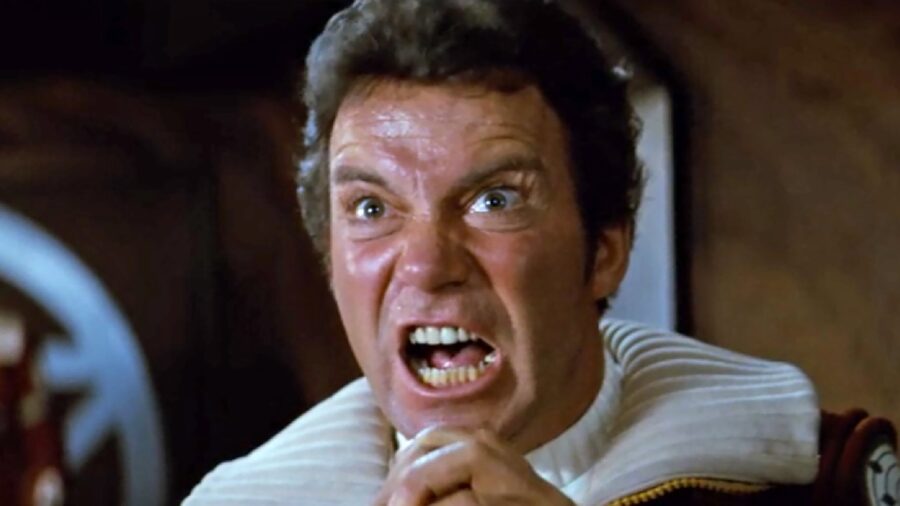
In recent weeks, the impossible has happened: Starfleet Academy, a show that had a very controversial start, has managed to deliver consistently interesting episodes. There are many reasons the show has improved, including the fact that it is finally ditching the forced humor that made earlier episodes so cringeworthy. But the series’s real secret weapon is that it isn’t afraid to shamelessly draw from the best that Star Trek has to offer.
The first example of this was “Series Acclimation Mil,” an episode in which the titular cadet does her best to discover the fate of Benjamin Sisko. That adventure channeled Deep Space Nine, serving as a love letter to the best show in the franchise. Now, the Starfleet Academy episode “Ko’Zeine” used one of its worst characters to illustrate a concept that Spock first brought up in Star Trek II: The Wrath of Khan: that for some people, Starfleet represents nothing less than their first, best destiny.
To Explore Strange New Desks
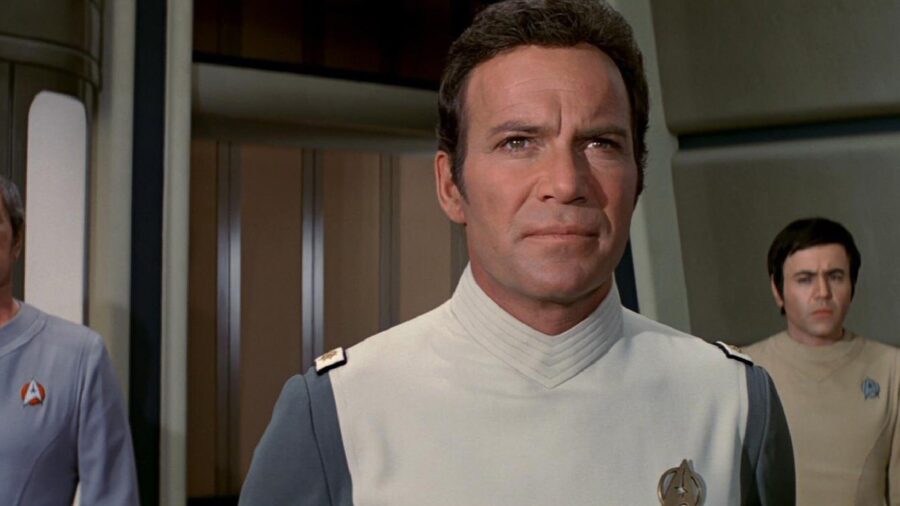
Back in Star Trek: The Motion Picture, we discover that Kirk has been rewarded for his successful five-year mission with a promotion to admiral. But he gets sick of riding a desk, and when a mysterious threat approaches the Earth, he abuses his connections to take command of the Enterprise for one last mission. By The Wrath of Khan, though, Kirk is back to desk duty, and the Enterprise is only being used for training exercises.

In that seminal sequel, Spock doesn’t mince words, telling Kirk that it was a mistake to accept that promotion to admiral. He bluntly tells Kirk that “Commanding a starship is your first, best destiny; anything else is a waste of material. Weirdly enough, the most recent episode of Starfleet Academy emphasized this theme, all while drawing on the kinds of logic that would have made Spock proud.
The Aquaboy Becomes An Aquaman

In the episode “Ko’zeine,” we discover that Darem, a cadet who has mostly been presented as a cocky bully, is Khionian royalty. He is betrothed to a young woman with whom he would eventually rule over his entire society, but they were originally planning to wed only after he graduated from Starfleet Academy. When she (thanks to parental pressure) calls her marker in early, Darem willingly abandons his academy life, marrying his childhood sweetheart and getting ready to be the kind of leader his planet needs him to be.
During the ceremony, Jay-Den (who followed Darem through a portal, fearing he was being kidnapped) gives a best man speech in which he hypes up Darem’s accomplishments, including walking on a hull to save the day. Later, his new wife encourages him to nullify the marriage, and she cites Jay-Den’s speech as the reason why.
The Toast With The Most

More specifically, she tells her husband that “the man [Jay-Den] described is someone I’ve never met,” noting that she never saw Darem quite so happy as he was the day he applied to Starfleet Academy. She then speculates as to why this small act pleased her betrothed so much. “Maybe it’s because you finally had a chance to be yourself in a way you never could here.”
Now, what do Darem’s newlywed woes have to do with Star Trek II: The Wrath of Khan? In that fan-favorite film, Spock opined that destiny was real and that Kirk made a mistake accepting a promotion to admiral and subsequently riding a desk. Sure, Kirk might have been able to do great things as an administrator, but as far as his best friend was concerned, he could do much more as the captain of a Starfleet vessel.
Embracing His First, Best Destiny

Darem is someone with a pretty special destiny of his own: he is supposed to rule Khionia, giving billions of people the guidance that will change their lives forever. However, his new bride clocks that this destiny effectively changed Darem, turning him into a self-sacrificing people pleaser who will always put his needs aside to help others. Only in Starfleet was Darem able to become the cocky, self-assured young warrior that he was always destined to be.
For Darem, service in Starfleet is his first, best destiny, and he would be just as unhappy running a planet as Kirk would be riding a desk. In choosing to go back to the academy, he channels the wisdom of Spock. As if to drive that point home even harder, Jay-Den asks Darem a very straightforward question: would he be a better man if he ruled Khionia, or would he be a better man if he spent life “in service to many” as a Starfleet officer?
Embracing The Needs Of The Many

Here, the Klingon Jay-Den seems to be ironically channeling the guiding ethos of the Vulcan people: “the needs of the many outweigh the needs of the few, or the one.” Sure, Darem could do good for a whole planet by staying behind to rule it. But he could do good for an entire galaxy by remaining a Starfleet officer, and he decides to stay behind and complete his training as a cadet.
Star Trek fans aren’t likely to call this the “Spock episode” the same way they call “Series Acclimation Mil” the “Sisko episode.” Nonetheless, the famous Vulcan’s wisdom echoes throughout this story, both in Darem’s decision to remain in Starfleet and his motivation for ultimately leaving a life of royalty. In this way, this Starfleet Academy episode celebrates the 60th anniversary of Star Trek with the sagacious Vulcan wisdom that helped make Star Trek II: The Wrath of Khan the best film in the franchise.
Entertainment
Network Execs Hated The Star Trek Episode That Created A Great Guest Villain

By Chris Snellgrove
| Published

Star Trek is a franchise that most fans love to watch because of its heroes. It’s genuinely thrilling to see characters like Captain Kirk overcome insurmountable odds (he doesn’t believe in the no-win scenario), or Captain Picard overcome unstoppable villains (the line must be drawn here!). However, I’d argue that the villains of Trek are actually much more compelling. Characters like Gul Dukat, Q, and even Nus Braka steal every scene and leave us quietly rooting for the bad guys to finally win.
Believe it or not, this is a franchise tradition that goes all the way back to the beginning. In addition to those recurring baddies mentioned above, Trek has always had memorable guest villains played by actors who show up and immediately blow everyone away. The Star Trek: The Original Series episode “Charlie X” was one that the network absolutely hated, but fans came to love. Of course, most of that affection is because of one man: Robert Walker, whose method acting turned a frightened 17-year-old boy into one of the scariest villains the Enterprise crew ever encountered!
Get Out My Ship, Charles!

“Charlie X” is an episode where the Enterprise crew rescues a young man named Charlie (played by Robert Walker) whose ship had crashed. The crew tries to help the kid out, including Captain Kirk, whom he sees as a father figure. However, things take a sinister turn when the crew discovers that Charlie has the powers of telepathy and transmutation, which he uses for horrific acts like making everyone who annoys him disappear. Eventually, the godlike aliens who gave this kid superpowers show up to take custody of him, reasoning that he is now too dangerous to be raised among humans.
These days, “Charlie X” is considered a fairly strong episode of Star Trek: The Original Series. At the time, though, NBC really hated the episode because they thought Charlie’s presence made the story feel too much like a teenage melodrama. Plus, everything took place aboard the Enterprise, so the episode didn’t have any of the “strange new worlds” the show would become famous for. That second factor ended up being a blessing in disguise, though: postproduction was very easy on “Charlie X” (especially after they recycled some footage), so it became the second episode of Star Trek to hit the airwaves.
Boldly Going Where No Villain Has Gone Before

Fortunately, the episode didn’t need exotic locations to be memorable when it had a killer guest star. Robert Walker played a young man with fantastic powers, and he blew the cast and crew away with his acting talent. In The Longest Trek: My Tour of the Galaxy, Janice Rand actor Grace Lee Whitney explained that Walker was a method actor who deliberately avoided interacting with the cast between shots so that he could stay in character. She claimed that “it worked” and that “You can see it in his performance, a subtle yet persistent air of estrangement from the Enterprise crew, and indeed, from the rest of humanity.”
She gushed that Walker’s “careful effort to stay in character added a convincing dimension to his performance,” which helped the actor “[capture] the perfect balance, projecting vulnerability, innocence, and horrifying menace at the same time. A lesser actor could not have handled the range and depth of the character.” In a later interview with the Television Academy Foundation, “Charlie X” writer D.C. Fontana agreed, noting that Walker “was excellent as Charlie.” She also commended the then-26-year-old actor for successfully portraying a 17-year-old character, noting that “he looked young enough to pull it off.”

“Charlie X” was a Star Trek: The Original Series episode that NBC hated but that fans loved. They wouldn’t have loved it nearly so much, though, if Robert Walker hadn’t turned in such a chillingly perfect performance. He’s one of the best guest villains in the franchise, and his method-acting talents give us a one-off villain that fans love to hate. It’s an approach that would inspire later Star Trek actors, including Michael Dorn, whose own method acting made Klingon security chief Worf one of the most beloved characters in Star Trek history.
Entertainment
Dark Psychological Anime Banned From Television Is Now Streaming
By Zack Zagranis
| Published

Paranoia Agent is the best anime you’ve never seen. The twisted, psychological thriller was originally deemed too intense for both Japanese and American broadcast standards and was eventually aired in both markets in a heavily edited format. Luckily, the entire uncut series is available to stream on anime streaming service Crunchyroll.
Paranoia Agent is the brainchild of creator Satoshi Kon. Kon was initially a feature film director responsible for such anime classics as Perfect Blue and Tokyo Godfathers. During the production of his films, however, Kon found himself with an excess of story ideas and themes that didn’t fit with any of his projects but intrigued him nonetheless. As a result, the director decided to take these discarded concepts and weave them into a television series.
Prior to the creation of Paranoia Agent, the creator had spoken at length about the filmmaking process and its rigidity, how he would work for two years on the same project, being in “the same mood” and using the same method over and over again.
The flexibility of television enticed Kon because he wanted the freedom to explore a variety of themes and topics rather than be confined to a single concept throughout a feature film. Kon was also drawn to the speed at which television animation is produced vs. movie animation because it allowed him to “Realize instantly what flashes across my mind.”
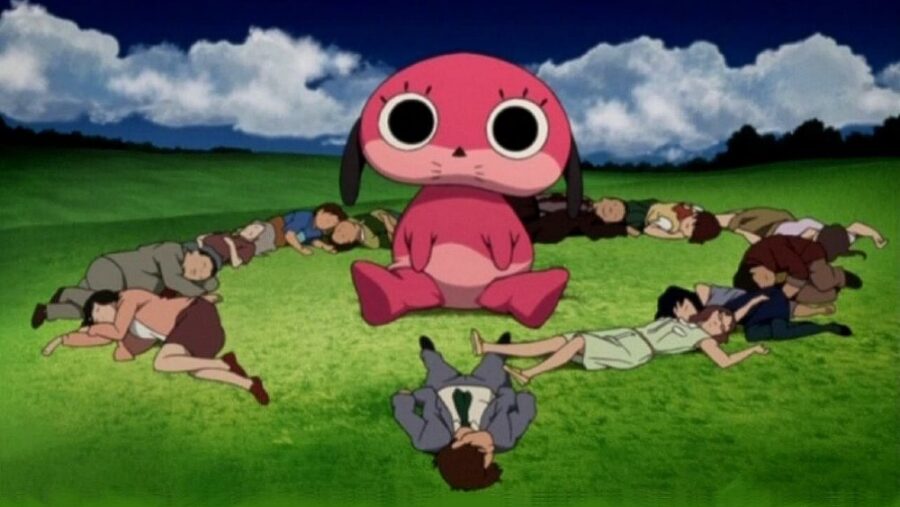
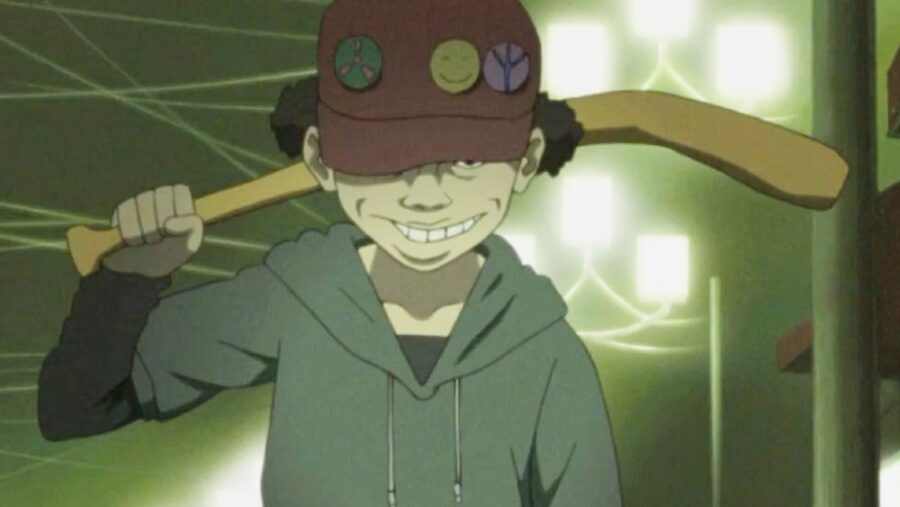
The result was 2004’s Paranoia Agent—a frightening mix of anxiety-inducing thrills and dark themes that made viewers question the sanity of the characters on screen as well as their own. Paranoia Agent revolves around a mysterious assailant known only as “Lil’ Slugger” who skates around on rollerblades attacking seemingly random victims with a dented golden baseball bat. Each episode focuses on a different victim and the detectives working to catch Lil’ Slugger.
Paranoia Agent Censored
The series features the usual adult anime tropes, plenty of nudity and profanity, but it’s Paranoia Agent‘s dark, taboo themes that got it temporarily banned in certain countries. Scenes like the one in episode 8, where a character commits suicide, caused the anime to be partially banned in Japan after being deemed “too harsh” by the Japanese government. This partial ban meant the anime had to air on Wowwow, a Japanese satellite station, rather than on the country’s regular broadcast channels.
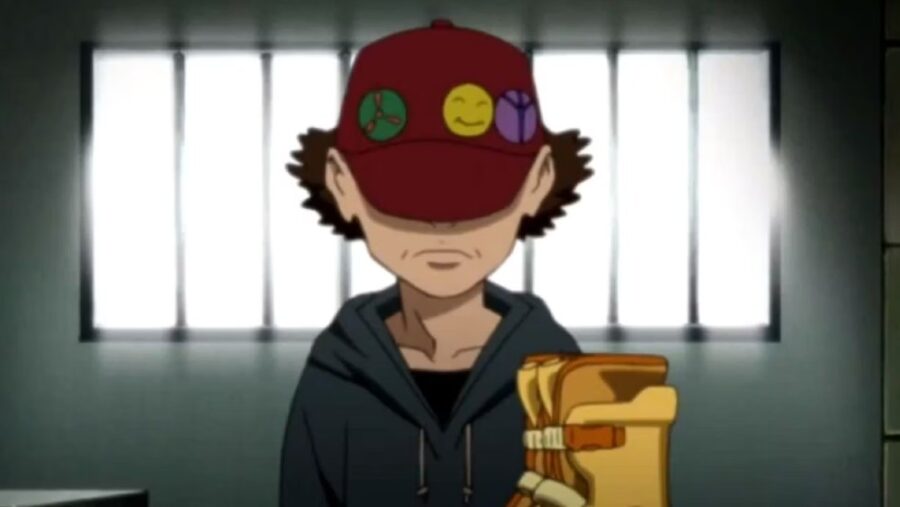
Meanwhile, in North America, the series was initially banned from airing on TV and was only available on DVD in late 2004. The following year, a censored version of Paranoia Agent began airing on Cartoon Network’s Adult Swim late-night programming block.
Along with being scrubbed of any references to suicide, this watered-down version of the series also took great pains to remove any nudity and swearing that might offend sensitive US audiences. The suicide scene was also removed before the series aired in the UK.
Paranoia Agent has been compared to the works of David Lynch for its, at times, dreamlike, surreal quality, as well as Kon’s other psychological thrillers Paprika and Perfect Blue.
In 2020, Adult Swim again aired Paranoia Agent, this time in a form closer to its original vision. This new edit included the blurring of certain body parts during nude scenes instead of cutting the scenes out completely, and an intact suicide episode, albeit with ads for suicide prevention airing before and after.
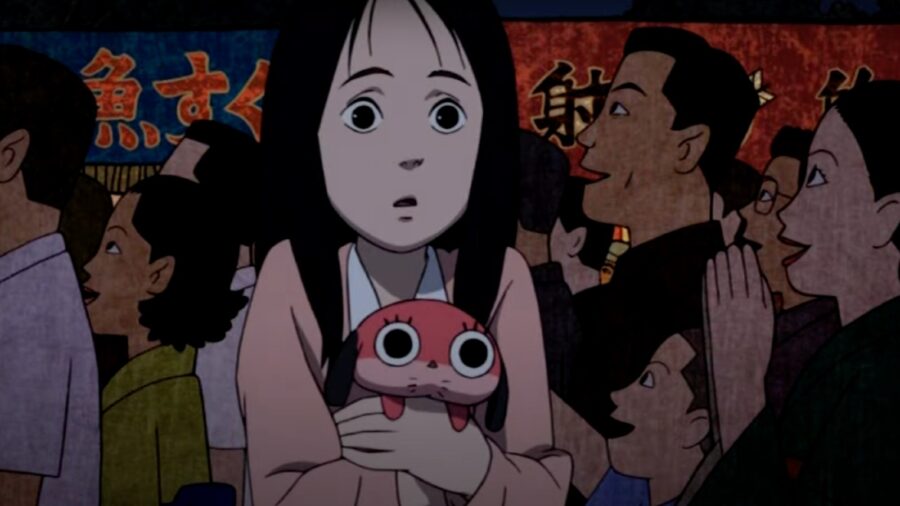
Satoshi Kon’s dementedly brilliant debut anime was unanimously praised by critics and audiences alike, despite most of those audiences being unable to experience the series as intended.
Paranoia Agent‘s Rotten Tomatoes score is as high as it can be, at an impressive 100% critic approval rating. The site’s consensus praises “Anime auteur Satoshi Kon” for bringing his “feverish vision” to television and delivering a “disturbing meditation on individual and societal anxiety.”
Paranoia Agent has been compared to the works of David Lynch for its, at times, dreamlike, surreal quality, as well as Kon’s other psychological thrillers, Paprika and Perfect Blue. The feeling among many fans is that Paranoia Agent isn’t something you turn on to zone out to, but rather a deep experience that will stick with you for a long time, whether you want it to or not.
You can check out Paranoia Agent right now courtesy of Crunchyroll , where the anime is streaming in its original format.
Entertainment
The best gaming monitor deals to shop this weekend — Alienware, LG, and ASUS on sale right now
The best gaming monitor deals at a glance:


Gaming hardware tends to come with some sticker shock. But if your current setup is feeling lifeless, this weekend is a good excuse to upgrade your monitor for less. Some major brands, including LG, Alienware, and ASUS, have previous-generation gaming monitors on sale for record-low prices and we’ve rounded up our favorites below.
Whether you’re hoping to bump up your refresh rate or enhance your visual experience, here are the best gaming monitor deals to shop this weekend.
Best curved gaming monitor deal
$649.99
at Amazon
$799.99
Save $150
Why we like it
Gaming is addicting on this 34-inch Alienware AW3425DW monitor. Thanks to a steep 1800R curved OLED panel that wraps the game around you, plus high performance specs like a 240Hz refresh rate, 0.03ms response time, and an aiming point editor called AlienVision, you’ll be fully immersed in every game and any world you choose. Combined with a stellar color range, VESA DisplayHDR TrueBlack 400, 1000 nits peak HDR brightness, and G-Sync and FreeSync Premium Pro certifications, it’s hard to believe it’s only $649.99 (reg. $799.99). At just shy of 20% off, this is its lowest price on record.
Best flat gaming monitor deal
$499.99
at Amazon
$899.99
Save $400
Why we like it
This $400 discount on the LG UltraGear 27-inch OLED gaming monitor knocks it down to its best price ever.
While it’s over a year old at this point, it still packs some solid specs. Like the Alienware model above, it features an OLED panel with a 240Hz refresh rate and 0.03ms response time for fluid gameplay, and is validated for Nvidia G-Sync and AMD FreeSync Premium Pro. It’s a bit smaller at 27 inches and isn’t curved, but some folks prefer a flat display — particularly at this size. The matte 1440p panel is VESA DisplayHDR True Black 400 certified, so colors pop and blacks are rich and deep. And as a bonus, the detachable base and stand allow for infinite adjustments to suit your gaming habits.
Mashable Deals
Best entry-level gaming monitor deal
$209
at Amazon
$289
Save $80
Why we like it
If you’re new to the gaming world or you’re just a casual player, the ASUS 32-inch TUF curved monitor is an affordable entry-level model with decent specs. Plus, it’s $80 off this weekend — its second-best price ever. It features an ultra-steep 1500R curve, 165Hz refresh rate, 1ms response time, and FreeSync Premium supported through DisplayPort and HDMI. It won’t wow you quite like the first two monitors, but at only $209, who cares?
More gaming monitor deals this weekend

Lakers romp past Rockets, seal series in 6, set date with Thunder
Ronny Mauricio, Mets pull off comeback win over Angels


