
Entertainment
The Killer Fantasy Epic That Tried To Save Us From Christopher Nolan's Odyssey

By Robert Scucci
| Published

With Christopher Nolan’s adaptation of The Odyssey fast approaching, it’s time to get back into all of the great historical epics that have come out over the years. Gladiator (2000) is always a no-brainer thanks to Russell Crowe’s magnetic performance as Maximus Decimus Meridius, and if you want to channel your inner Spartan while a single tear runs down your cheek because you’re 37 and need to accept the fact that you’re never getting the abs back, you can fire up 300 (2007) to get your fill. Between those two films, though, is a little $185 million historical epic called Troy (2004), which wasn’t exactly a critical darling upon release (53 percent on Rotten Tomatoes), but has remained a fan favorite for decades.
Here’s the thing about historical epics based on Ancient Greek mythology: they almost always lose points for not properly representing the source material. But here’s my counterpoint: this is a movie, everybody speaks American English, and our main hero’s weakness is his heel because his mother dunked him upside down in the River Styx to make him immortal, but the water didn’t touch the spot where she was holding him. In other words, let’s suspend some disbelief, watch some epic battles, and enjoy the show.
I’m No Scholar, But Troy Is Badass

I hate long movies that don’t earn their runtime, but Troy is built differently because it fully commits to spectacle. There are plenty of names being said out loud that made me think, “Oh, that’s how you pronounce that; I’ve only ever read it before,” followed immediately by enough cinematic violence to distract me from the fact that I should probably brush up on both my history and my phonics.
Here’s the short and sweet version of what happens in Troy because, if I’m being real, I’m not watching this one for the plot. I’m watching it to see thousands of extras get leveled while armies wage war against each other and burn everything to the ground.

After Paris (Orlando Bloom), a prince of Troy, sparks a forbidden romance with Helen (Diane Kruger), the wife of Spartan King Menelaus, tensions between the two kingdoms explode into all-out war. The Greek armies unite under the ambitious Agamemnon (Brian Cox), bringing along their greatest warrior, Achilles (Brad Pitt), whose legendary fighting skills are matched only by his pride and ego. As Troy braces for invasion, noble prince Hector (Eric Bana) struggles to defend his family and city from destruction. What follows is a massive clash driven by love, revenge, ambition, and the pursuit of glory during a time when nothing else really mattered.
Beyond Epic In Scope And Scale
Filmed during that sweet spot in movie history where CGI enhanced a film instead of completely replacing practical filmmaking, Troy never feels like a green screen experience. Sure, digital effects were used to fill out backgrounds with massive armies and sprawling naval fleets, but the production still relied on thousands of extras swinging rubber swords during combat sequences so everybody could safely hack away at each other with reckless, military-sanctioned abandon. It’s even been reported that Brad Pitt and Eric Bana spent days rehearsing their final duel without stunt doubles to make sure audiences got the best fight sequence money could buy.

Speaking of Brad Pitt, his portrayal of Achilles is second to none. He brings a certain level of nonchalance to the role, like he’s a party guy who just so happens to be exceptionally gifted at war. He’s untouchable and unflappable, and he commands the screen whenever he shows up while channeling serious dude-bro energy anytime somebody asks anything of him. When we’re first introduced to him, he effortlessly kills Boagrius (Nathan Jones), a giant hulk of a man, while violently hungover and not even having eaten breakfast yet. It’s poetry in sandals, and it’s ridiculously fun to watch play out.
For every bit of charisma in Troy, however, there’s also a healthy amount of corn you need to chew through. The most egregious moment, to me, is when Ajax lets out his battle cry in the middle of combat, bellowing, “I am Ajax, breaker of stones! Look upon me in despair!” Don’t get me wrong, that’s an objectively badass thing to say, but Troy is set in 1184 BC and he delivers the line like he knows there’s a camera crew behind him and he wants to sound as cool as humanly possible. Moments like that can take me out of movies like Troy, but it’s also worth mentioning that this is still an incredible quote to casually work into real life whenever the opportunity presents itself.

In 2026, Troy’s legacy has far exceeded its initial reputation, which is reflected in its much stronger 74 percent Popcornmeter score on Rotten Tomatoes. The critics may have gone hard on this movie at the time, but it’s also worth remembering that critics don’t always know how to have fun. Troy is fun. It’s pure popcorn spectacle wrapped in armor, and if you’re looking for next-level fight choreography and carnage, it really doesn’t get much better than this.

As of this writing, Troy is not available through standard streaming subscriptions, but it can be rented or purchased on demand through Amazon Prime Video, YouTube, Fandango at Home, and Apple TV+.

Entertainment
X-Men ‘97 Season 2 Proves The Past Is Still A Blast
By Chris Snellgrove
| Updated

When X-Men ‘97 premiered, it came in like the proverbial wrecking ball. At that point, superhero fatigue was bad enough that many fans were worried whether Marvel (whose live-action films had become very hit-or-miss) still had the juice to create something awesome. Throw in the fact that this was a revival of an absolutely beloved ‘90s cartoon, and we were all very nervous that the writers and animators would drop the ball and ruin an iconic part of our childhood. Fortunately, we worried for nothing. X-Men ‘97 Season 1 was the best thing Marvel made in years, providing episode after episode of nostalgic perfection.
In fact, the only bad thing about X-Men ‘97 was the wait for more. After the final episode streamed back in 2024, we had to sit back and wait a couple of years for another season. It’s been a long wait, but I’m happy to report that it was well worth it. The first three episodes of X-Men ‘97 Season 2 are now streaming on Disney+, and the show picks up right where it left off, with half the team stuck in the distant past and the other half stuck in the far future. Each episode raises the bar for superhero storytelling with ambitious plots and the best character-building on modern television.
When The Past Blasts Back

The plot of X-Men ‘97 Season 2 begins with one half of the team (including Cyclops, Jean Grey, Morph, and Wolverine) tossed into a dystopian adventure in which Apocalypse reigns supreme. There, they try to help the young Nathan Summers (who grows up to become Cable), fight the forces of Apocalypse, and make their way home. Meanwhile, the other half of the team (including Professor X, Magneto, Nightcrawler, and Beast) are tossed into ancient Egypt, where Apocalypse is a rebel fighting against a tyrant. There, Magneto gives him lessons about fighting oppressors, which may lead to either a Golden Age for mutants or a cruel, never-ending Age of Apocalypse.
As you might imagine, both groups of X-Men are very resourceful, and they make allies that help them in their struggle to get (as Bishop so memorably says) “back to the ‘90s.” But they also have a little help: Forge jumps into the future to help Cyclops and Jean’s group while Bishop jumps into the past to help Professor X and Magneto’s group. The real wild card is Cable, who assembles his own X-Force team comprised of himself, Psylocke, Archangel, Sunspot, and Jubilee. They investigate Apocalypse in the present day, but they run into an unexpected enemy: X-Factor, a government-sanctioned mutant team led by Cyclops’ brother.
Redefining Future Shock

Like X-Men ‘97 Season 1, Season 2 does an excellent job of folding various comic book storylines into the animated continuity in new and exciting ways. For example, the X-Force and X-Factor teams in this show will look familiar to any fans of ‘90s X-Men comics, but they have different origins, both being formed in response to the events of the previous season. X-Factor is the government’s response to the disappearance of the X-Men, basically filling the vacuum with their own tame group of superpowered mutants. X-Force is basically a gamble, with Cable assembling a team with the mix of knowledge and skills necessary to hit Apocalypse when he least expects it.
There are other great nods to different eras of X-Men comics, including Wolverine wearing the same awful bandana he wore in the comics after the adamantium was leached from his bones. Plenty of the young mutants introduced in Grant Morrison’s New X-Men make an appearance, including Quentin Quire and the Cuckoos. As predicted, the future scenes draw plenty of inspiration from The Adventures of Cyclops and Phoenix miniseries, and the past scenes draw heavily from the Rise of Apocalypse miniseries. Fortunately, everything onscreen makes sense in context, meaning you can easily follow along even if you’ve never read any of these comics.
When Beautiful Animation Meets Killer Voice Acting

The voice acting in X-Men ‘97 Season 2 remains top-notch. The returning cast does an excellent job, but it’s arguably the newcomers who shine brightest. For example, Michael Johnston (of Obsession fame) is excellent as Nathan Summers. Meanwhile, the new Big Bad has two perfect voice actors: Ross Marquand voices the creepier Apocalypse of the future, while Adetokumboh M’Cormack voices the younger version, who goes by En Sabah Nur. As for the returning cast, I was impressed with Chris Potter’s Cable, and I wouldn’t be much of a gamer if I didn’t give a shout-out to Jean Grey voice actor Jennifer Hale (you’ll always be my Commander Shepard).
In short, X-Men ‘97 Season 2 is more than a worthy follow-up to Season 1. It fires on all cylinders, pairing beautiful animation with writing that really respects these mutants and their tangled decades of lore. The voice acting is fantastic, and each episode leaves you wanting more. The first three episodes are out now on Disney+. Starting next week, the streamer will release one episode at a time. That may be frustrating if you’re someone who likes to binge your favorite entertainment. Trust me, though: this newest season of X-Men ‘97 is definitely worth savoring.
Entertainment
NYT Strands hints, answers for July 3, 2026
Today’s NYT Strands hints are easy if you’re stuck in your ways.
Strands, the New York Times‘ elevated word-search game, requires the player to perform a twist on the classic word search. Words can be made from linked letters — up, down, left, right, or diagonal, but words can also change direction, resulting in quirky shapes and patterns. Every single letter in the grid will be part of an answer. There’s always a theme linking every solution, along with the “spangram,” a special, word or phrase that sums up that day’s theme, and spans the entire grid horizontally or vertically.
By providing an opaque hint and not providing the word list, Strands creates a brain-teasing game that takes a little longer to play than its other games, like Wordle and Connections.
If you’re feeling stuck or just don’t have 10 or more minutes to figure out today’s puzzle, we’ve got all the NYT Strands hints for today’s puzzle you need to progress at your preferred pace.
NYT Strands hint for today’s theme: It’s like talking to a brick wall
The words are related to strength.
Mashable Top Stories
Today’s NYT Strands theme plainly explained
These words describe being unshakable.
NYT Strands spangram hint: Is it vertical or horizontal?
Today’s NYT Strands spangram is horizontal.
Meet The Mashable 101: Our list of the content creators shaping the internet today
NYT Strands spangram answer today
Today’s spangram is Not Budging.
NYT Strands word list for July 3
-
Obstinate
-
Willful
-
Headstrong
-
Firm
-
Not Budging
-
Stubborn
Looking for other daily online games? Mashable’s Games page has more hints, and if you’re looking for more puzzles, Mashable’s got games now!
Check out our games hub for Mahjong, Sudoku, free crossword, and more.
Not the day you’re after? Here’s the solution to yesterday’s Strands.
Entertainment
DC Is Now Copying Sony’s Failed Superhero Formula
By Chris Snellgrove
| Updated

Okay, confession time: long before Supergirl became a critical and commercial bomb, I lauded the DCU as a worthy successor to the MCU. Marvel’s formula had gotten tired and stale, and superhero fatigue seemed like it would be the kiss of death for the House of Mouse. By comparison, Superman seemed like a fresh take on building a cinematic universe from the ground up. Directed by DC Studios co-CEO James Gunn, Superman was a powerful counterpoint to everyone’s collective cynicism, proving that the world was downright hungry for colorful comic book movies built on a foundation of relentless hope for a better tomorrow.
Gunn kept the momentum up with Peacemaker Season 2, which proved to be a smash hit. However, Supergirl (directed by Craig Gillespie, who is clearly aping Gunn’s style) has proven to be an instant misfire for the studio: it’s been deemed “rotten” on Rotten Tomatoes, and it’s currently set to lose the studio a whopping $125 million. Now, as if doubling down on failure, DC is hard at work on a Deathstroke and Bane team-up movie. Instead of blazing their own successful trail, it seems like Gunn is content to rip off Sony’s failed supervillain formula, making multiple movies around Batman bad guys before making a Batman movie!
Somehow, Morbin’ Time Returned
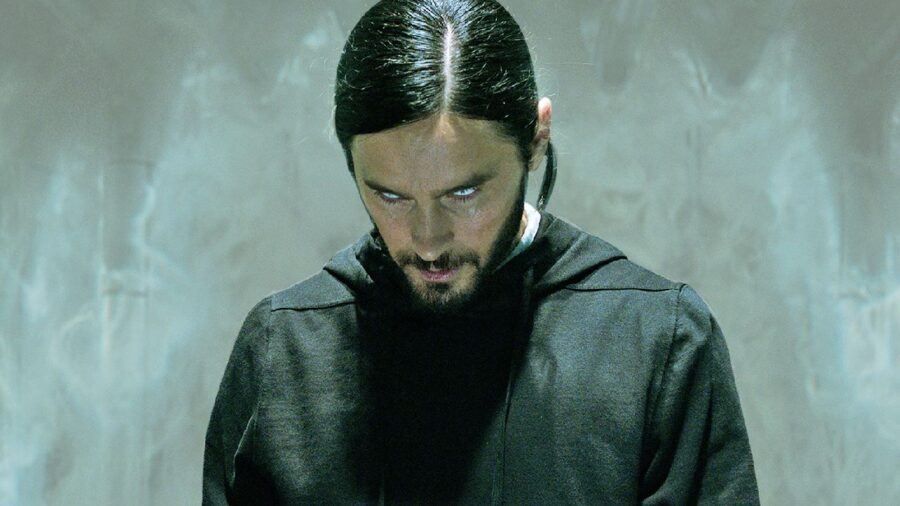
Back in the ‘90s, Marvel was going bankrupt, and the company stayed afloat by selling the film rights to some of their most popular characters. This included selling both the X-Men and the Fantastic Four rights to 20th Century Fox. After a merger, those characters are now fair game for the MCU. But they sold Spider-Man to Sony, which has clung to those film rights for dear life. Now, when the hero appears in a Marvel Studios blockbuster like Spider-Man: Brand New Day, he can only do so after extensive negotiations and complex agreements with Sony. As for Sony, they now avoid releasing live-action Spider-Man movies of their own.
Instead, they embraced the utterly insane strategy of releasing movies focusing on Spider-Man’s villains. That’s how we got films dedicated to Venom, Morbius, and Kraven the Hunter. He was similarly absent from the Madame Web movie. Notably, only the Venom movies were a success, and everything else was a critical and commercial flop. The lesson there is simple: audiences don’t want Spider-Man movies that don’t have Spider-Man in them. Simple, right? Now, however, Deadline reports that periodic Peacemaker director Greg Mottola is the frontrunner to direct Deathstroke and Bane, a film teaming up two of Batman’s villains. There’s just one problem … the DCU doesn’t have a Batman for them to fight!
It’s Happening Again

Deathstroke and Bane doesn’t yet have a release date, and no contracts have been signed. So there’s a chance it will come out after Batman has been introduced to the DCU. However, it seems bad that we have heard so few definitive announcements about The Brave and the Bold, Batman’s first film in this cinematic universe. Aside from rumors, we don’t know for sure who will be playing the Caped Crusader or who will direct the movie. However, the Clayface movie has already been filmed, and it seems like Deathstroke and Bane is about to have its director announced. That leaves one question for James Gunn: what the heck are you doing?
DC Studios co-CEO Gunn is cheerfully replicating Sony’s failed formula and trying to introduce an entire rogue’s gallery of Batman villains via movies that won’t actually have Batman in them. Before this past weekend, I would have assumed that Gunn, a fan-favorite director, had some kind of vision for his cinematic universe that I just couldn’t see or understand. But he championed Supergirl’s script and moved that film’s production up, yet it became a critical and commercial bomb. That film is set to lose $125 million, and one reason for this is that Supergirl is a less familiar character. How much worse will the box office be when freakin’ Deathstroke and Bane are the headliners?

There’s an outside chance this strategy could work. Maybe DCU fans will glom onto Bane, Clayface, and Deathstroke the way that Sony fans glommed onto Venom. But James Gunn is making an absolutely crazy roll of the dice by pairing weird, unpopular characters on the big screen. He’s doing it on the small screen, too, by greenlighting insanity like the Jimmy Olsen/Gorilla Grodd TV show. Should these projects prove successful, Gunn will be lauded as a visionary who built a winning cinematic universe, one quirk at a time. Should they bomb like Supergirl, though, his career will implode, taking all of your favorite DC film and TV projects along with it.

Nationals' Cade Cavalli, Red Sox's Willson Contreras suspended 7 games for fracas
Rivian raises EV sales forecast as Q2 production ramps up


