
Entertainment
The Captain Picard Time Loop Nobody Ever Noticed

By Chris Snellgrove
| Published
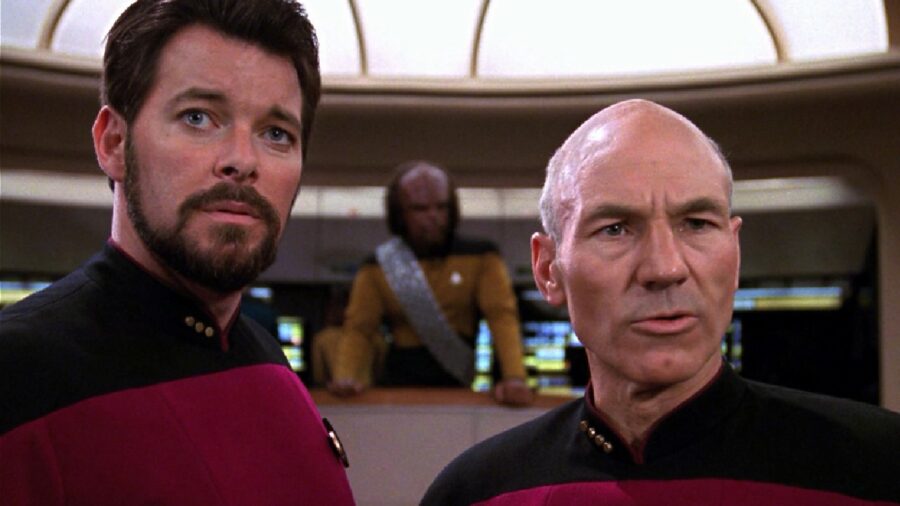
Did you know that one of the best episodes of Star Trek: The Next Generation owes its existence to one of the weirdest ones? In “Samaritan Snare,” the alien Pakleds are so memorable that it’s easy to forget the B story in which Captain Picard bonds with Wesley Crusher over many things, including the topic of Starfleet Academy. Picard mentions laughing when he got stabbed in the heart as a cadet, and the later episode “Tapestry” confirms that he has been stuck in a time loop, one that most fans have never even noticed.
All Because Of Q
The reason we know Picard is in a time loop goes back to “Samaritan Snare,” when he told young Wesley Crusher how he laughed when he was stabbed in the heart. “Tapestry” lets us see this whole incident in greater detail, including the fact that Picard is laughing because Q has effectively restored his timeline. “Tapestry” is a season 6 episode, one that retroactively clarifies that Picard is in a time loop and that Q’s restoration has effectively always been a part of his life.
Revealed In Tapestry
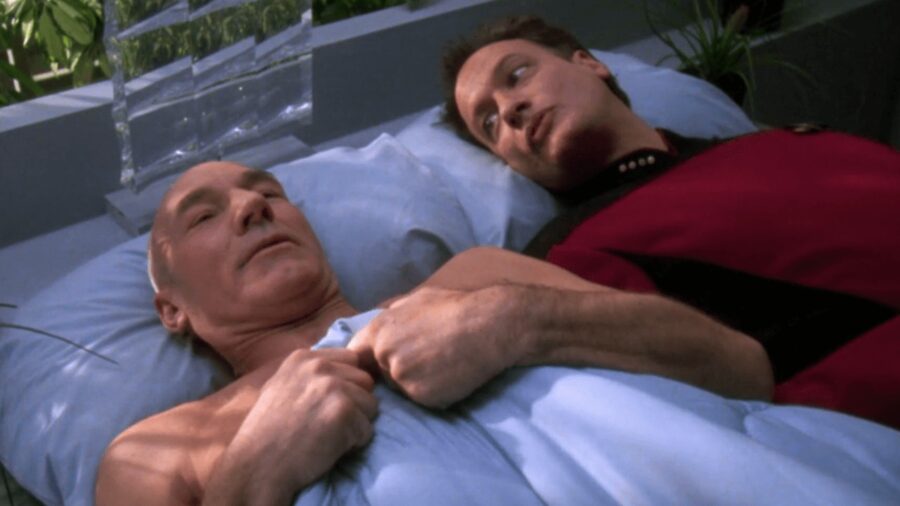
Even by Star Trek standards, this Picard time loop revelation is weird to understand, but don’t worry: we’ll break it down quicker than Geordi La Forge can fix the warp core. In “Tapestry,” the Enterprise-D captain nearly dies, and he sees Q, who claims to be God. Eventually, the alien goads Picard into admitting that he has some regrets in his life regarding his artificial heart…specifically, the irresponsible barfight where he got stabbed through the heart and made the artificial replacement necessary.
Suddenly, Picard is alive again and in his young body, and this is the beginning of our time loop. True to his word about regretting that bar fight, the future captain holds his friend back from fighting some burly Nausicaans, a move that averts conflict but shames his friends. This keeps Picard from ever getting stabbed in the heart, but when he awakes in his present day, he is no longer captain of the Enterprise-D…instead, he is an unambitious junior science officer who never really impressed Riker or Troi.
Soon, the would-be captain realizes the life lesson that Q was trying to teach him: that nearly getting killed in that bar fight taught him that he couldn’t always play it safe and that some risks (like sticking up for a friend) are worth it. Defiantly, he tells Q that he would rather die as the man he was than live as this lesser man. Picard is sent back to that night, and he goes ahead and fights, laughing as he falls to the ground after being stabbed.
Confirmed Earlier In Samaritan Snare
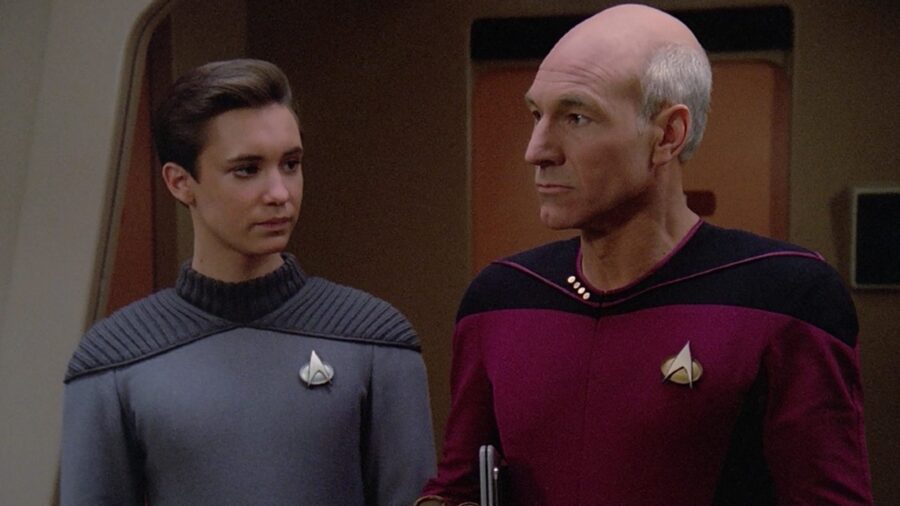
Thanks to “Tapestry,” we know that his laughter is tied to his relief that his original history has been corrected. However, the fact that he laughs at this moment was established back in season 2 with “Samaritan Snare.” That means Picard is effectively in a time loop in which he had always laughed and Q had effectively already intervened, sending his future self into his past body and prompting the uncharacteristic chuckling.
In the world of Star Trek, Picard’s adventure is a milder example of a time loop, especially compared to crazy events like the entire ship constantly reliving the same day in “Cause and Effect.” That makes the loop easy to miss on your first watch through TNG. As for us…well, we’ve lost count of how many rewatches we have done, leading to a realization that we didn’t even need a godlike alien to provide: fandom is, at the end of the day, a time loop unto itself.
Entertainment
NYT Connections hints today: Clues, answers for July 23, 2026

The NYT Connections puzzle today is not too difficult if you’re a frequent flyer.
Connections is the one of the most popular New York Times word games that’s captured the public’s attention. The game is all about finding the “common threads between words.” And just like Wordle, Connections resets after midnight and each new set of words gets trickier and trickier—so we’ve served up some hints and tips to get you over the hurdle.
If you just want to be told today’s puzzle, you can jump to the end of this article for today’s Connections solution. But if you’d rather solve it yourself, keep reading for some clues, tips, and strategies to assist you.
What is Connections?
The NYT‘s latest daily word game has become a social media hit. The Times credits associate puzzle editor Wyna Liu with helping to create the new word game and bringing it to the publications’ Games section. Connections can be played on both web browsers and mobile devices and require players to group four words that share something in common.
This Tweet is currently unavailable. It might be loading or has been removed.
Each puzzle features 16 words and each grouping of words is split into four categories. These sets could comprise of anything from book titles, software, country names, etc. Even though multiple words will seem like they fit together, there’s only one correct answer.
If a player gets all four words in a set correct, those words are removed from the board. Guess wrong and it counts as a mistake—players get up to four mistakes until the game ends.
This Tweet is currently unavailable. It might be loading or has been removed.
Players can also rearrange and shuffle the board to make spotting connections easier. Additionally, each group is color-coded with yellow being the easiest, followed by green, blue, and purple. Like Wordle, you can share the results with your friends on social media.
Mashable Top Stories
Here’s a hint for today’s Connections categories
Want a hint about the categories without being told the categories? Then give these a try:
-
Yellow: Rounded
-
Green: Nervous Nancy
-
Blue: Catch a flight
-
Purple: Math words
Meet The Mashable 101: Our list of the content creators shaping the internet today
Here are today’s Connections categories
Need a little extra help? Today’s connections fall into the following categories:
-
Yellow: Spherical things
-
Green: In an anxious state
-
Blue: Parts of an airport
-
Purple: Ending in geometry terms
Looking for Wordle today? Here’s the answer to today’s Wordle.
Ready for the answers? This is your last chance to turn back and solve today’s puzzle before we reveal the solutions.
Drumroll, please!
The solution to today’s Connections #1138 is…
What is the answer to Connections today
-
Spherical things: BASEBALL, GLOBE,
-
In an anxious state: EXCITED, FEBRILE, FRENETIC, INTENSE
-
Parts of an airport: PINS, SNAPS, TWEETS, VINES
-
Ending in geometry terms: APPOINT, DEPLANE, FELINE, JANGLE
Are you also playing NYT Strands? Get all the Strands hints you need for today’s puzzle.
If you’re looking for more puzzles, Mashable’s got games now! Check out our games hub for Mahjong, Sudoku, free crossword, and more.
Not the day you’re after? Here’s the solution to yesterday’s Connections.
Entertainment
NYT Strands hints, answers for July 23, 2026
Today’s NYT Strands hints are easy if you’re a veteran.
Strands, the New York Times‘ elevated word-search game, requires the player to perform a twist on the classic word search. Words can be made from linked letters — up, down, left, right, or diagonal, but words can also change direction, resulting in quirky shapes and patterns. Every single letter in the grid will be part of an answer. There’s always a theme linking every solution, along with the “spangram,” a special, word or phrase that sums up that day’s theme, and spans the entire grid horizontally or vertically.
By providing an opaque hint and not providing the word list, Strands creates a brain-teasing game that takes a little longer to play than its other games, like Wordle and Connections.
If you’re feeling stuck or just don’t have 10 or more minutes to figure out today’s puzzle, we’ve got all the NYT Strands hints for today’s puzzle you need to progress at your preferred pace.
NYT Strands hint for today’s theme: Hail to the chief petty officer
The words are related to the military.
Mashable Top Stories
Today’s NYT Strands theme plainly explained
These words describe military titles.
NYT Strands spangram hint: Is it vertical or horizontal?
Today’s NYT Strands spangram is vertical.
Meet The Mashable 101: Our list of the content creators shaping the internet today
NYT Strands spangram answer today
Today’s spangram is Navy Ranks.
NYT Strands word list for July 23
-
Recruit
-
Admiral
-
Ensign
-
Navy Ranks
-
Lieutenant
-
Commander
Looking for other daily online games? Mashable’s Games page has more hints, and if you’re looking for more puzzles, Mashable’s got games now!
Check out our games hub for Mahjong, Sudoku, free crossword, and more.
Not the day you’re after? Here’s the solution to yesterday’s Strands.
Entertainment
The World’s Richest Man Just Promised An AI Version Of The Odyssey, But It’s Never Going To Happen
By Chris Snellgrove
| Published

Every day, we get another reminder that the internet isn’t real life. For example, right-wing voices have been hating on Christopher Nolan’s The Odyssey for months, backlash that mysteriously began when the director cast a Black woman and a trans man in prominent roles. The haters spent plenty of time, energy, and endless social media posts trashing the film and predicting it would fail because it’s woke garbage. Of course, when the movie actually premiered, it was a critical darling that made over a quarter of a billion dollars in its first weekend.
In a sane world, that would have ended the discussion. The movie thousands of people thought would fail succeeded; end of story, right? Well, you’re not in a sane world, bucko, you’re in Hellworld. Case in point? Spurred on by comments from his loyal army of sycophantic followers, Elon Musk has now pledged to use his pet AI Grok to create a more “historically accurate” version of The Odyssey. His fans are excited, but I’ve got some bad news: not only would such a film be a critical and commercial flop, but there’s no way in hell this movie ever comes out.
The Odyssey: Video Game Cutscene Edition
Why am I so confident that Elon Musk’s Grok-powered version of The Odyssey will never come out? Simple: while Musk has achieved massive financial success (he was, for a moment there, the world’s first trillionaire), he has spent much of the last decade promising things that just never happened. Like, he previously promised SpaceX would be landing humans on Mars by 2025 at the latest; not only did that never happen, but SpaceX’s stock value is currently tumbling following several engine failures and an aborted flight.
The list goes on. Fully self-driving cars straight out of a sci-fi movie? He made the promise, but that never happened. The Hyperloop, announced in 2013? The project shut down in 2023. The pledge to have a million robotaxis on the streets by 2020? Yeah, that project died quietly amid the global COVID-19 pandemic. For all of his successes, this is who Elon Musk is: a relentless hypeman who promises more than he can deliver and tries to cover up his failures with more breathless announcements that he thinks his biggest fans will respond well to.
This AI Movie Is Its Own Trojan Horse

That’s what this AI Odyssey announcement is about. After years of being lauded by liberal fans as a real-life Tony Stark, Musk went fully right-wing, complete with pivotal endorsements of Donald Trump and a temporary role in Trump’s government. As such, Musk has become one of the most popular figures in conservative circles. While his political allegiances shifted, one thing never changed: Musk’s absolutely palpable desire for people to like him. Accordingly, he spends plenty of time on X, engaging with conservative fans and platforming both conservative thoughts and movies (like Citizen Vigilante). By and large, his fans hate Christopher Nolan’s The Odyssey, so he has pledged to give them an alternative.
Once again, Musk is telling his fans what they want to hear. Hate that “woke” movie everyone’s talking about? Well, he’ll make his own, and he’ll do it without help from Hollywood! That’s the promise, at least, and Musk’s fans are eating this up with a fork and spoon. None of them seem to think that this project, like so many others, will quietly disappear. Or that the man who has spent years running a social media platform into the ground might not actually be the best guy to deliver an actual film and not sloppy shorts that look like a PS4 cutscene.
Elon Musk’s Movie Is Already History

But let’s say, for the sake of argument, that Musk actually makes his more “historically accurate” version of The Odyssey. Why does anyone think this thing will be watchable, much less better than Christopher Nolan’s version? Not only does the proof of concept suck, but Musk’s rejection of Hollywood has seriously reduced his talent pool for things like voice acting, art design, and so on. Plus, the very announcement brings up an obvious question: why has Musk given himself until the end of the year to make this film? Nolan shot a real movie with real people in only three months, so why will it take Grok’s prompt engineers almost twice as long to make their own?
The answer is simple: this movie is never going to see the light of day. Elon Musk’s biggest fans are frothing at the mouth about Nolan’s The Odyssey right now, but soon enough, they’ll have something new to obsess over, like Spider-Man saying something too woke in Brand New Day. As they move on, the once and future (?) trillionaire will move on as well, making even more promises he never plans to keep. With any luck, all of the people demanding an AI version of The Odyssey will start clamoring for an AI adaptation of another ancient text. May I suggest The Bible, complete with a historically accurate, very brown Jesus Christ?

Jasper Philipsen wins Stage 17 of Tour de France
Inter Miami sign Brazilian superstar M Casemiro


