
Entertainment
Crispy Honey-Harissa Glazed Chickpea Bowls


There are three things to know about this bowl before making it…
The first is that it is GREAT. I always think I’m going to want rice or bread with it, but the yogurt and chickpeas join forces to deliver a highly satisfying, legitimately filling meal.
Next, you want the chickpeas to be crunchy-crispy, which means they should be almost dark brown when you take them out of the oven. To that end, make sure your chickpeas are as dry as possible before they go into the oven in the first place, whether you are using canned or from-scratch beans.
Lastly, the heat level of harissa, the North African red pepper paste that should be in everyone’s refrigerator, varies from brand to brand, so you’ll want to taste the glaze and toss into the chickpeas accordingly.
Crispy Honey-Harissa Glazed Chickpea Bowls with Yogurt & Mint
Serves 4
From The Weekday Vegetarians: Get Simple
3 cups cooked chickpeas, or 2 (15-ounce) cans, drained and rinsed, patted completely dry or air-dried for as long as possible
1⁄3 cup plus 4 tablespoons extra-virgin olive oil
Kosher salt and freshly ground black pepper to taste
3 tablespoons harissa paste
3 tablespoons honey
1 tablespoon light brown sugar
3 tablespoons unsalted butter, cut into small cubes
1 large head Bibb lettuce, torn into pieces (about 8 cups)
¼ cup fresh lemon juice (from about 1½ lemons)
Heaping ¼ cup plain Greek yogurt (any fat content, but I like at least 2%)
¼ small red onion, minced
½ cup chopped fresh mint
½ cup chopped fresh parsley
Preheat the oven to 450°F. Line a sheet pan with foil.
Spread the chickpeas on the lined pan and toss with 1⁄3 cup of the olive oil, salt and pepper. Roast until the chickpeas are crunchy-crispy, about 30 minutes, stirring every 5 to 10 minutes to prevent sticking. Meanwhile, line a medium bowl with paper towels and have near the oven.
While the chickpeas are roasting, in a small saucepan, combine the harissa, honey, brown sugar, and some salt and simmer over medium heat until the sugar has dissolved completely. Remove the pan from the heat and while the glaze is warm, stir in the butter.
When the chickpeas are done, make a “chute” out of the foil and pour the chickpeas into the towel-lined bowl, lightly blotting any excess oil. Let sit for a minute to drain, then slip the paper towel out of the bowl. Season the crispy chickpeas with salt and pepper.
Depending on how spicy your harissa is, and how spicy you like your food, start by adding 2 tablespoons of the glaze to the chickpeas, and gently tossing. (They should be glazey, not goopy.) Taste and add more glaze as desired.
Divide the lettuce among four bowls, season each with salt, pepper, about 1 tablespoon of fresh lemon juice, and 1 tablespoon olive oil, tossing to combine. Divide the glazed chickpeas among the bowls and top with dollops of yogurt, minced onion, mint, parsley, and more black pepper.
P.S. How to upgrade a regular green salad and more chickpea dinners.
(Photo by Christine Han.)
Entertainment
The Latest Poster For Avengers: Doomsday Secretly Spoils The Plot

By Chris Snellgrove
| Published

With less than five months left until the film’s release, Marvel has taken their marketing for Avengers: Doomsday to the next level. Right now, fans are mostly focused on the trailer that dropped today, which is no surprise; after all, it’s not every day that you see the reunion of Thor and Steve Rogers or, for that matter, a battle between Shang-Chi and Gambit. Amid all the breathless hype over the trailer, however, a more powerful advertisement is lurking in plain sight. At the same time Marvel launched the trailer, they also released a new Avengers: Doomsday poster.
Compared to that crowded character poster, the new poster is downright subdued. It features Doctor Doom staring at a huge tapestry with a broken world and two characters: a woman and a boy. Some comics fans think this image is Doom and his mother, a character who is eventually damned to Hell. However, other fans are convinced that this is actually an image of Doom’s wife and child; if true, this would effectively ruin the biggest plot twist. How does it do that? If you don’t mind some potential spoilers for this year’s biggest film, just keep reading!
You Can’t Spell “Painting” Without “Pain”

So, let’s start this story in reverse (just don’t let the TVA get me!): why do some fans think the woman in this poster is Doctor Doom’s mother? In the comics, she’s a big deal. To defeat an evil dictator who was ruling her country with an iron fist (an actual fist, not the kung-fu guy), she made a deal with the devil. As usual, the deal went wrong, and she lost control of the powers that she gained from Mephisto. She renounced those powers, got killed, and was then dragged into Hell. To see her again, Doom later mastered magic, visited Mephisto, and conducted an experiment that ruined his own face.
However, all of the lore behind this origin story is too dense to fit into Avengers: Doomsday, a movie which is already crowded with endless character cameos. It seems the movie is taking a different direction, as multiple reports have claimed that the two figures are actually Doom’s wife and child. An unconfirmed leak of the movie’s plot (don’t say I didn’t warn you about spoilers, kids!) claims that Doom actually lost his family to one of the incursions, which is when one reality collides with another. This motivates Doom to learn more about the incursions and to plot his revenge.
A Hero Will Be Broken

Revenge against whom, you ask? According to the leaked plot, Steve Rogers! Reportedly, Loki visits the former Captain America in the past and warns him that the TVA will prune his entire timeline because he’s not supposed to be there. In an act of seeming kindness, Loki brings Cap, Peggy, and their young son to the Fantastic Four’s universe. However, the leak claims that Steve’s presence in this universe somehow triggers an incursion and that Doom disfigured himself and killed his own wife and son trying to stop it. In a shocking twist, Doom reportedly kills Steve’s son in front of the hero in an act of vengeance.
Now, again, all of this comes from a leaked plot summary that hasn’t been confirmed, so all of this could be an Ego-sized bottle of hogwash. But it’s worth noting that the Avengers: Doomsday teasers last year prominently focused on both Captain America and Thor becoming fathers. This potentially adds credence to the idea that this is a film about family and how far someone will go to protect the ones they love. If the leaks are true, this innocuous poster featuring Doctor Doom is spoiling the motivation the villain will have to cross time and space and cross countless moral event horizons along the way.

A movie where costumed vigilantes (like Batman, Spider-Man, and so many more) are driven by the ghosts of family members they lost when they were children? Well, nobody ever accused Marvel of being all that original!
Entertainment
The Best Horror Series Ever Made Is Now Streaming For Free
By Chris Snellgrove
| Published

My absolute favorite kind of movie is the anthology. When you have a collection of short films all rolled into one, it provides the ultimate ROI for the audience. Don’t like one of the stories? You can just thug it out with the short runtime or skip ahead to the next tale. Either way is infinitely preferable to slogging through a two-hour film that started boring you to tears in the first scene. The anthology is much rarer in television, however, because networks and streamers have learned just how attached fans get to the same characters and stories, causing them to run these shows into the ground.
Heroes, Stranger Things, Star Trek: Discovery…what do all of these shows have in common? They were designed to be anthologies that would change things up each season, but their early success meant we were stuck with the same cast for years as the show got worse. Fortunately, true anthology lovers are just a click away from getting their fix. Right now, Tales From the Crypt is streaming for free on Tubi, just waiting to delight all you ghouls and boys. It’s not just the perfect anthology show; it is, in fact, the greatest horror series ever made!
Meet The Cryptkeeper
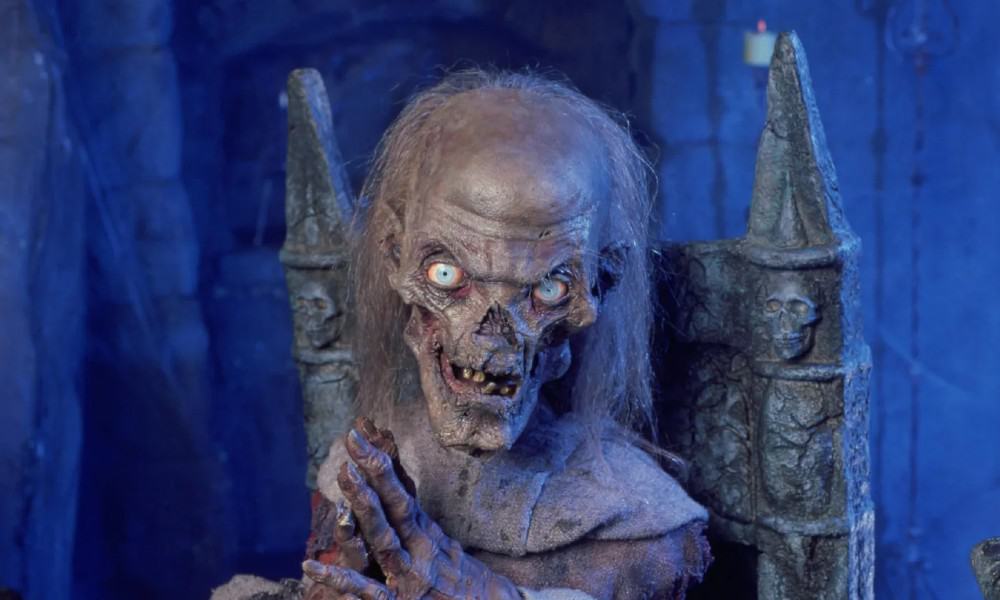
Tales From the Crypt fully embraces its anthology format, with every single episode focusing on different characters and different terrifying tales. What ties all of them together is our host, the Cryptkeeper. He’s a snarky, hilariously mean corpse of a character brought to life by a small army of puppeteers. The show originated on HBO, and its creators embraced the fact that it didn’t have to abide by any of the restrictive standards of network television. As such, episodes were filled to the brim with vulgar language, nudity, sex, and more buckets of blood than you can shake a bodybag at.
Younger horror fans should know that it’s almost impossible to overstate the popularity of Tales From the Crypt and its ghoulish host. Despite all the blood, breasts, and beasts, the show was wildly popular with kids, including my own underage self. Accordingly, it got two spinoffs aimed directly at children: Tales From the Cryptkeeper (a Saturday Morning children’s cartoon) and Secrets of the Cryptkeeper’s Haunted House (a weird gameshow). If that seems odd, this was during the same time that Kenner marketed toys based on Terminator 2 and Aliens directly to kids. What can I say? The ‘90s were weird, man!
Friends In Low Places

One compelling reason to check out Tales From the Crypt is that it had plenty of awesome guest stars, all of whom were happy to do an episode without being tied down to a long contract. Guests included Arnold Schwarzenegger, Brad Pitt, Michael J. Fox, Tom Hanks, and so many more. In most cases, these actors are performing against type, making what happens to them onscreen that much more shocking. Trust me: if you only know actors like Robert Picardo and Wil Wheaton from Star Trek, you’ll never look at them the same way after watching Tales From the Crypt.
For me, though, the single best thing about Tales From the Crypt is the show’s wicked sense of humor. With his relentless puns, wild expressions, and unhinged laughter, the Cryptkeeper sets the tone for a show that has black comedy running through its veins at all times. This adds serious entertainment value and also helps position the show as a light (but filling) bite for horror fans. Not in the mood for elevated horror and don’t have the time for a two-hour psychological thriller? You can always count on Tales From the Crypt to deliver a perfect slice of scary entertainment in under 30 minutes.

There’s not much more to say, especially without spoiling these awesome episodes. Ready to see if this early HBO success story lives up to the hype? Maybe you want to laugh and scream in equal measure, or just write down some weird new puns with which to torment your children? Whatever your reason, the best horror series ever made is just a click away. Tales From the Crypt is currently streaming for free on Tubi, which is arguably the best platform for any boils and ghouls who love a good scare!

TALES FROM THE CRYPT REVIEW SCORE
Entertainment
The Eufy E25 2-in-1 robot vacuum is $400 off at Amazon right now
SAVE 40%: As of July 20, you can get the Eufy E25 robot vacuum-mop combo for $599.99, down from $999.99, at Amazon. That’s a 40% discount or $400 in savings.

$599.99
at Amazon
$999.99
Save $400
As you’ve probably read by now, I have two beagles who love to destroy my floors (particularly right after I’ve cleaned the entire apartment). To keep my sanity intact, I own an arsenal of cleaning supplies, including the Dreame L60 Pro Ultra and the Aero Pro Steam (I call it my “Dreame Team“). But I also know that brand loyalty usually takes a backseat when a really good discount pops up. (Plus, it’s my job.)
Right now, you can get the Eufy E25 robot vacuum-mop combo for $599.99, down from $999.99, at Amazon. That’s a 40% discount or $400 in savings.
Mashable Trend Report
It features 20,000 Pa of suction, empties its own dustbin, and even washes its own mop roller. It also comes equipped with AI obstacle avoidance to dodge everyday clutter (like rogue dog toys), and an extending arm to scrub right up against your baseboards. But, according to some Amazon reviewers, there are a few minor drawbacks, including a louder-than-usual drying cycle and finicky rollers.
Even so, picking a good spot for the base or doing occasional maintenance is a small price to pay to never have to mop your own floors again.

The Xteink X4 Pro could be the tiny e-reader of your dreams
Nationals' potent offense ready to back Miles Mikolas vs. Rockies


