
Entertainment
The best TVs of 2026 so far: RGB TVs were the talk of CES, but theyre not the only exciting releases

Table of Contents
I’ve been tracking TV deals and new releases at Mashable for years. My friends and family have watched me scramble to compare the new models during CES in January, and then scramble to see which of those models got a big discount during Prime Day or Black Friday. And I always hear some iteration of this question: “How much can TVs possibly change over the years?”
That’s a valid question most of the time. If you’re not a serious gamer or someone who tests TV specs for a living, the difference between an OLED TV model from the current year vs. the same model from the year prior probably isn’t all that riveting. But I promise you, the best TVs of 2026 so far are quite literally built different.
2026 is the year of the RGB TV. What is that?
The conversation about the best TV for whatever situation has been a dichotomous battle between QLED and OLED forever. As a refresher, QLED TVs typically get brighter but sometimes struggle with black levels and blooming. OLED TVs rule the world of contrast and picture quality in dark rooms, but aren’t as vibrant in bright rooms. RGB is kind of the best of both worlds, and it was easily the biggest TV trend at CES 2026.
RGB doesn’t automatically knock OLED and QLED to second and third place. The big TV brands that dropped an RGB TV or two, like Samsung, LG, and Hisense, also unveiled new OLED or QLED models that are still highly competitive, depending on your typical streaming or gaming situation.
Halfway through the year, let’s stop to organize all of the new models before even more come out. Whether you’re watching the World Cup or a marathon of the best movies of 2026, these are the best TVs of 2026 so far that will truly do them justice.
Samsung R95H

Credit: Samsung
The Samsung R95H is the best RGB TV of 2026 so far. No, this isn’t the 115-inch Samsung RGB TV that costs $30,000. Samsung extended its Micro RGB technology into a much more palatable size and price range.
It seems like anyone who has seen the Samsung R95H in person can agree on one thing: The color palette is so vivid and so realistic, it almost feels… unreal. The R95H covers between 95 and 100 percent of the BT.2020 color spectrum, reproducing more than 2,000 Pantone-validated colors. Samsung uses artificial intelligence to adjust shades scene by scene and manages to deliver very precise contrast with virtually no blooming.
Compared to the cheaper R85H RGB line from Samsung, the R95H dishes out a clearer, more responsive picture with a native refresh rate of 165Hz and support for Samsung’s newest HDR format, HDR10+ advanced. The R95H adds to the premium experience with features like the Wireless One Connect Box and Samsung’s phenomenal glare-free coating, plus an art TV-esque No Gap Wall Mount.
The Samsung R95H only comes in four sizes. Here’s the price breakdown:
Need something smaller than 65 inches? Sony does get credit for extending its True RGB technology to some smaller sizes. You can grab the 2026 Sony Bravia 7 II in 55 inches, or 50 inches later this summer.
Samsung S95H

Credit: Samsung
The Samsung S95H is the best OLED TV of 2026 so far. Though a single letter differentiates the S95H’s title from the R95H, the S95H OLED serves a much different purpose. Due to its pixel-by-pixel dimming, OLED still provides the most elite contrast out of any type of TV backlighting.
Mashable Light Speed
The S95H’s contrast ratio is as close to infinite as you could ask for. The black levels are deep and the shadows are sharp to the point of feeling lifelike. Naturally, this is a great option for cinephiles watching in dark rooms. In lit rooms, the S95H’s peak brightness of up to 2,500 nits fares better than the vast majority of other OLEDs. (PCMag’s Will Greenwald calls it “OLED’s new benchmark breakthrough.”)
When it was released in April, I referred to the S95H as a “curiously Frame Pro-like OLED TV.” I mean, it checks off several art TV boxes: an anti-glare screen, a floating wall mount that lies flush with the wall, an artsy bezel that’s silver instead of black… oh, and it’s the first Samsung OLED to feature the Samsung Art Store.
The Samsung S95H comes in four sizes. Here’s the price breakdown:
TCL X11L

Credit: TCL
The TCL X11L Google TV is the brightest TV of 2026 so far. Released in January, TCL didn’t take the RGB route that most of its competitors did. Instead, TCL’s new SQD (Super Quantum Dot) backlight absolutely beams at up to 10,000 nits of peak brightness. That unprecedented number is fueled by thousands and thousands of acute local dimming zones: 11,520 zones in the smallest 75-inch model or up to 20,000 in the 100-inch model.
Such a high zone count allows for extremely precise darkening around bright objects, cushioning against haloing. If you don’t mess around when it comes to HDR, the TCL X11L would be a supreme choice for a heavy-duty home theater. The X11L would also fare well in rooms where the TV will be competing with lots of windows and direct sunlight.
The X11L’s size range is limited to just three options. Here’s the price breakdown:
If you need something smaller than 75 inches, TCL also dropped two more budget-friendly SQD TV tiers: The QM7L and QM8L.
Hisense U6 Pro

Credit: Hisense
The mini LED Hisense U6 Pro Fire TV is the best budget TV of 2026 so far. It was released in March, wedged comfortably between the entry-level Hisense U6 and the higher-tier Hisense U7.
The U6 Pro has quite a robust full-array local dimming setup for the price: the 65-inch model features 240 dimming zones and reaches 1,200 nits at peak brightness. Early reviewers note its vibrancy and deep black levels (for being a non-OLED TV, that is). Further adding to the U6 Pro’s visibility in the daylight or in a lit room at night, the screen is coated with an anti-glare finish to minimize reflections and preserve shadows — a nice touch not often seen on the affordable end of the spectrum.
Its native 144Hz refresh rate, VRR, AMD FreeSync Premium, and two HDMI 2.1 ports make it an unbeatable choice for gaming or watching sports.
The U6 Pro also gets points for its size range. Here’s the price breakdown:

$529.99
at Amazon
$849.99
Save $320
starting at $849.99
LG Gallery TV with Frame
The LG Gallery TV with Frame is the best art TV of 2026 so far. As a matte mini LED TV with interchangeable frames, this is the most direct competitor to The Frame or The Frame Pro that LG has ever released. If you’re a fan of LG’s Magic Remote, you finally have a true artsy non-OLED option that won’t risk burn-in if left on all day.
Granted, the LG Gallery TV makes up most of the big art TV news of the year thus far. In the spring, Samsung made negligible updates to The Frame Pro, and Hisense added a 50-inch model to the CanvasTV lineup. We know that the TCL A400 Pro, a long-awaited update to the original NXTVISION TV, exists — it just hasn’t been released in the U.S. yet.
It’s a bummer that LG only offers the Gallery TV in two sizes as of June, but at least they’re practical. Here’s the price breakdown:
Topics
Samsung
Best of 2026
Entertainment
The Greatest TV Show Just Sold Out, And It May Ruin Everything
By Chris Snellgrove
| Updated

We’re still living in the Golden Age of Television, with new must-see shows popping up all the time. However, there’s one that has yet to be dethroned as arguably the greatest series ever made: Breaking Bad. Courtesy of showrunner Vince Gilligan, Breaking Bad captivated the entire world with its tale of a cancer-ridden science teacher (Walter White) forced to sell meth in order to afford medical care. It soon went beyond this provocative premise with a tale about power, corruption, and redemption. Breaking Bad even became a cross-generational hit, appealing to Zoomers as much as it does to Millennials.
The Breaking Bad franchise continued with a movie focusing on Jesse Pinkman (El Camino) and a spinoff show about Walter’s hilariously shady lawyer (Better Call Saul). All were well-received, and the entire franchise is regarded as the standard of modern storytelling. Unfortunately, everyone’s favorite dramatic franchise just sold out. IMG Licensing and Sony Pictures Television have teamed up in order to develop an entire global licensing program dedicated to the Breaking Bad Universe.
He Is The One Who Snacks
According to The Hollywood Reporter, IMG and Sony are developing a Breaking Bad licensing program as part of a “multi-year collaboration” that “will deliver consumer products, brand partnerships and immersive fan experiences worldwide.” In conjunction with franchise creator Vince Gilligan, they hope to “identify strategic partners across key categories including premium apparel, collectibles, food and beverage, home decor, travel, publishing, and experiential activations.” The goal is simple: to appeal to existing Breaking Bad fans while bringing some new ones into the fold. What makes all of this notable is that this is “the first time Sony has appointed an external licensing agency to develop a global licensing program for the franchise.”
When I first heard this news, my heart sank a little bit. I’ve never had a problem with basic Breaking Bad merchandise; after all, as one of the most popular shows ever made, it was inevitable that the show would get its predictable bevy of t-shirts, action figures, and even blue rock candy made to look like Walter White’s signature brand of meth. However, I absolutely despised the 2023 Super Bowl commercial that brought Bryan Cranston and Aaron Paul back together to sell Popcorners. It badly recreated memorable Breaking Bad scenes and ended with Cranston uttering the cringiest line of all: “I am the one who snacks.”
Breaking Bad: The Search For More Money

Maybe I’m just old and cranky, but I hated that commercial because it cheapened the entire Breaking Bad brand, all to sell some freakin’ potato chip alternative that nobody ever has or ever will actually care about. Now, that was the kind of weird stuff that was happening before executives started working with a global licensing program. Things have the potential to get a lot worse, like Star Wars-style Happy Meals, AI-powered parody commercials, reality shows, etc. Trust me: no matter how bad you think it will be, this is ultimately going to get much, much worse.
For example, I’ve got a bad feeling about those aforementioned “immersive experiences.” Are we going to get pop-up stands where you can lie down on a huge stack of fake money for a photo opportunity? Competitions where we see how well you can land an oversized pizza frisbee on top of a house? Maybe there will be an interactive game where you can attempt to save Hank from certain death. Could some of this be fun and memorable? Maybe. But all of it would serve to further dilute the IP, making Breaking Bad more like Star Wars. That is, nothing more than an excuse to sell as much merchandise as humanly possible.

As always, I could be wrong. Maybe we’ll get plenty of tasteful merch and genuinely awesome experiences, especially since Vince Gilligan is involved. But if this licensing program produces mostly crap, it will be the worst of both worlds, keeping Gilligan from meaningfully working on anything new while lowering our general opinion about his integrity as a creator. With that said, though, we can agree on one thing: all will be forgiven if they introduce Los Pollos Hermanos as a global brand selling fried chicken. Be sure to get a side order of blue meth for the most immersive experience of them all!
Entertainment
The Numbers Are In, And Supergirl’s Word Of Mouth Is Really, Really Bad
By Chris Snellgrove
| Published

Right now, Supergirl’s box office is looking pretty grim. Things seemed bad enough when the movie was projected to earn, domestically, between $45-$55 million in the first weekend, which was less than half of what Superman earned last year ($125 million). However, those projections just kept shrinking as we got closer to the film’s official release. Now, it looks like the film will earn more like $40 million domestically, with Toy Story 5 absolutely trouncing it at the box office. At this point, Supergirl’s only real shot at box office success is if it, like Obsession, gets great word-of-mouth to get more butts in seats in the coming weeks.
Unfortunately, it looks like that’s just not going to happen. According to PostTrak (which surveys moviegoers on how they felt about a film immediately after they leave the theater), only 52 percent of those who saw Supergirl would definitely recommend that others see it. This effectively compounds the bad box office problems: only a few people showed up to see this blockbuster film, and of the ones who did turn out, only about half said they would enthusiastically recommend it. In the short-term, this is bad for Supergirl; in the long run, though, this may spell disaster for the DCU.
Really Bad Word Of Mouth

Considering that it’s a blockbuster summer tentpole and the second film of the DCU, Supergirl’s box office is looking grim. The movie was basically dead on arrival, and everyone is now conducting an autopsy on exactly what went wrong. Much of that is up for debate: many blame writer Ana Nogueira, while others blame DC Studios CEO James Gunn, who hired Nogueira and championed her script as one of the best he has ever seen. Of course, many blame Craig Gillespie, the director who transformed a beloved, buzzworthy comic (Supergirl: The Woman of Tomorrow) into a largely bland and forgettable romp through space.
Whoever deserves the most blame, one thing’s for sure: Supergirl has failed to impress about half of those who saw it. According to PostTrak, men made up 59 percent of the movie’s audience, and only 45 percent would definitely recommend that others see it. Women made up 41 percent of the audience, and 62 percent of them would definitely recommend that others see it. Crunch those numbers, and you are left with only 52 percent of those surveyed saying they would enthusiastically recommend that others watch Supergirl.
It Gets Even Worse

Supergirl getting such poor word of mouth helps to partially explain why the movie’s opening weekend projections just keep lowering. In fact, some estimate that it may earn closer to $35 million domestically in its opening weekend. Believe it or not, though, things get even worse when you compare Supergirl to other tights-and-flights films. For example, it had a CinemaScore rating of B-, which may not sound that bad. But that’s a lower rating than The Flash, which is widely considered the movie that killed the DCEU. It’s a lower rating than The Marvels, which is the first MCU film to actually lose money.
Speaking of money, The Marvels earned $47 million domestically in its opening weekend, which is at least $7 million more than Supergirl will earn. Heck, even Morbius, the internet’s favorite punchline of a movie, earned $39.1 million, making (believe it or not) a profit; Supergirl will be a loss for the studio. To put this even more in perspective, this latest DCU film is doing badly enough at the box office that it may not even earn $200 million worldwide by the time it leaves theaters. Put another way, Spider-Man: Brand New Day may earn more in its opening weekend than Supergirl does in its entire run!

Obviously, all of this spells bad news for Supergirl. But it may spell even worse news for the DCU as a whole. That’s because, among other things, this bad box office and poor word-of-mouth prove that audiences won’t necessarily show up for feature films featuring relatively minor characters. That means we might get a correspondingly terrible box office for Clayface, the movie about a Batman villain that is inexplicably coming out before Batman makes his DCU debut.
Plus, Supergirl writer Ana Nogueira is going to be writing the scripts for both Wonder Woman and Teen Titans. Unlike Supergirl, these characters are absolute fan-favorites, and in the hands of the right writer, they could be runaway successes for the DCU. But if the scripts for those films end up being as mediocre as Supergirl’s, they may similarly implode. Should those films flop, they may cause some serious collateral damage. Namely, they may destroy this cinematic universe as surely as The Flash destroyed the DCU, leaving Marvel with no real rival as the MCU reboots its entire universe with Avengers: Secret Wars.
Entertainment
Classic '80s Show Featuring Beasts, Barbarians, And Babes Now Streaming For Free
By Chris Snellgrove
| Updated

Acclaimed author William Faulkner once wrote, “The past is never dead. It’s not even past.” Certainly, the last two decades of entertainment media have proven him correct. We’ve seen the return of numerous beloved ‘80s properties, including Transformers, Ghostbusters, G.I. Joe, and so many more. Because these revivals have been so hit-or-miss, it’s easy to worry when a new one gets announced. That’s how I felt when the Masters of the Universe movie was first announced. He-Man was my absolute favorite hero when I was growing up. Were they going to screw it up? My fears notwithstanding, I got more excited the closer we got to the movie’s premiere.
As it turns out, my faith was rewarded: the new Masters of the Universe was more exciting than most MCU and DCU films, offering an absolutely brilliant reboot of this killer IP. Of course, He-Man has been rebooted many times before, but this film put me in the mood to go right back to the cartoon that started it all. If you’d like to go on this “good journey” with me, you’re in luck: He-Man and the Masters of the Universe is now streaming for free on Tubi!
He Has The Power
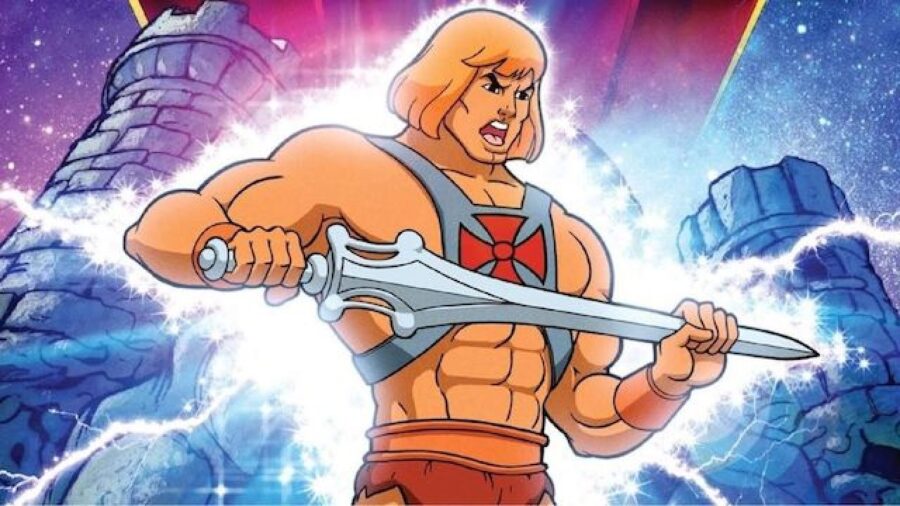
The premise of He-Man and the Masters of the Universe is that the distant planet of Eternia is constantly being threatened by Skeletor, a demonic warrior with an army of evil allies. Fortunately, the planet has its protectors, including Man-At-Arms and his warrior daughter, Teela. One of those protectors is Adam, a prince with a fabulous secret: when he holds aloft his magical sword, he transforms into He-Man, the most powerful man in the universe! He is Skeletor’s greatest enemy, and he fights to save the rest of his kingdom from certain death.
In retrospect, the most notable thing about He-Man and the Masters of the Universe is how nonviolent the show really is. It was based on toys that encouraged epic battles by including special features like battle damage. But in the show, you never really see He-Man use his sword for anything but deflecting ranged attacks. With living creatures, our hero never used his sword or even his fist; he’d just throw them out of frame. If he did punch something, it was always a robot. While all of this can be goofy or even frustrating, it does make it that much easier to share with your own children.
Helter Skeletor

In He-Man and the Masters of the Universe, the plot is a bit like the violence: borderline nonexistent. There’s not much complex lore here, and episodes are mostly a loose collection of Maguffins, toy cameos, and cheesy dialogue. Why, then, am I recommending that you revisit the cartoon? For one thing, because of the cheesy dialogue. Phrases like “I have the power” have entered our cultural lexicon as easily as Skeletor’s colorful ranting has become the source of countless memes. All of this adds up to B-movie perfection you’ll enjoy if you, like me, are a huge fan of ‘80s-style schlock.
Additionally, He-Man and the Masters of the Universe is filled with iconic designs. Both the aforementioned Skeletor and Castle Grayskull are seriously spooky, and they speak to the emo goth kid within all of us. He-Man, in turn, remains the ultimate symbol of masculinity and strength for an entire generation. Oh, and Snake Mountain is the coolest evil lair ever put onscreen. All of these characters and locations help bring to life a world where sci-fi and fantasy collide. Like, be honest: where else are you going to find a barbarian riding a speeder bike to chase down a magician with no skin?
A Really Good Journey
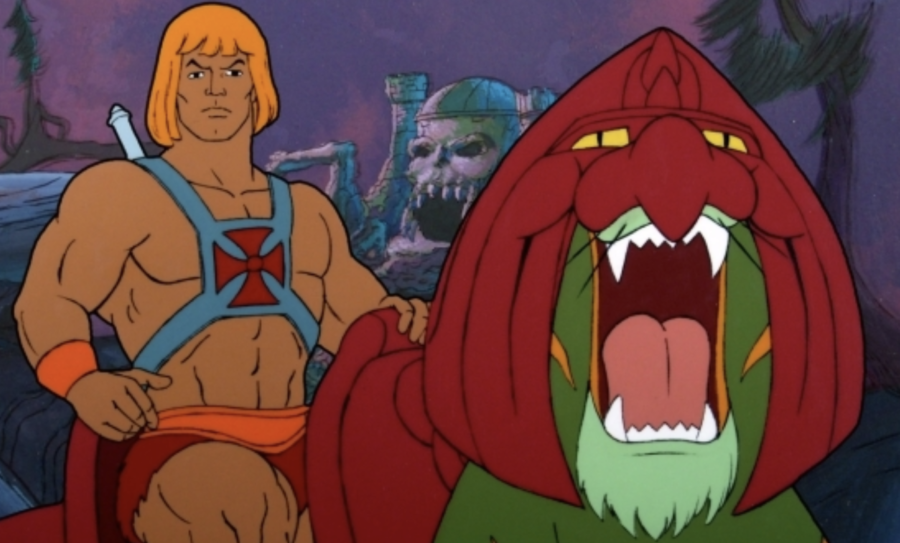
If you’re in a properly nostalgic mood, you’re likely to find He-Man and the Masters of the Universe hilarious. You can’t really keep a straight face when Skeletor is blurting out lines like, “It’s the sorceress, you boob!” On top of the cheeseball dialogue and funny character antics (Cringer and Orko are always good for laughs), one of He-Man’s funniest aspects is the public service announcement at the end of each episode. As an old-school “what’s the moral of this story?” wrap-up, each message is throwback perfection. Plus, you’ll find some standouts that range from accidentally hilarious (He-Man conflating potions and drugs) to surprisingly horrific (Orko warning kids about weirdos touching them!).
While He-Man and the Masters of the Universe is great for anyone who loves vintage, animated schlock, it will appeal the most to anyone who played with He-Man toys growing up. Seriously, rewatching some of these episodes helped unlock absolutely wonderful memories from my childhood. The result is a very nurturing nostalgia that takes us back to a wonderfully simpler time. Good always triumphs over evil, might never makes right, and every struggle is just a lesson in disguise. In our own world of instability and outright chaos, this escape to a simpler time is practically an exercise in meditation.
Ready for a little peace of mind yourself? Don’t worry: you won’t have to storm Snake Mountain or learn how to fly a hoverbike. And you won’t have to match wits with Skeletor or unlock the power of a magic sword. All you have to do is grab your remote and stream He-Man and the Masters of the Universe for free on Tubi today. With the money you save, you can make like Prince Adam and pay for a gym membership. Don’t worry; I’m sure you’ll have his physique in no time!


The Greatest TV Show Just Sold Out, And It May Ruin Everything
Marlins rout Rockies with offensive explosion


