
Entertainment
10 Sci-Fi Movies That Bombed So Hard They Bankrupted Studios

By Jonathan Klotz
| Updated
Sci-Fi movies are risky. Whey the hit, you end up with a generational hit that will make billions of dollars. When they fail, well they cost a lot of money so hundreds of people will likely lose their jobs and end up begging for loose change outside Skywalker Ranch. And these are the sci-fi movies that flopped so hard, they destroyed entire companies.
10. Pandorum (Overture Films)

John Carpenter’s The Thing was a box office flop. Ridley Scott’s Blade Runner was also a box office flop. It can take time for great sci-fi to find the right audience. That’s where Pandorum is right now. It’s destined to become a cult classic. Starring Dennis Quaid and Ben Foster, Pandorum is about humanity’s attempt to colonize another world, except everything goes horribly wrong and instead there’s generations of insane cannibals running around a massive spaceship. It’s dark and it’s disturbing. It’s too much for mainstream audiences to handle.
Pandorum crashed and burned in theaters in 2009, but thanks to a massive web of distribution deals, its impact was limited to bankrupting only one company: Overture Films. Launched by Starz in 2008, the company was gone in 2010, finding no success with Pandorum, The Crazies, Righteous Kill, and Law-Abiding Citizen among others. Pandorum was the one that launched the killing blow.
By being unable to earn back its production budget of $33 million. Sci-fi horror is always a tough sell, and you have to wonder, who did they expect to watch Pandorum? Is there an audience for sci-fi horror? Overture Films distributed Pandorum to American audiences, and if there is a fanbase for this type of horror, it’s not there.
The film had the most success in Germany, the home of production company Constantin Films, still around today, and they’re behind the next Resident Evil movie. Constantin has been in business for over 75 years. Overture didn’t even make it to 2 years. The movie business can be like that, especially when you’re making sci-fi. Some days you’re the guy stepping out of a cryopod into safety, and some days you wake up from hundreds of years of hibernation to be eaten by cannibals.
9. Final Fantasy: The Spirits Within (Squaresoft)

A full-length computer-animated feature film for adults that includes an all-star voice cast describes half a dozen movies a year at this point, but back in 2001, Final Fantasy: The Spirits Within blew everyone’s mind. The first film produced by the legendary video game company Squaresoft at their brand new, multi-million dollar Hawaiian studio turned out to be Square Studios’ last film. Final Fantasy: The Spirits Within has nothing to do with the franchise. There’s no Chocobos, no Summons, no spiky hair, and no addictive card games.
Instead of adapting the massively popular Final Fantasy 7, or the best game in the series, Final Fantasy 6, Squaresoft crafted an original story about a planet ravaged by glowing red ghosts that kill humans with a single touch. Alec Baldwin voices Captain Gray Edwards, Ming Na-Wen is Dr. Aki Ross, Donald Sutherland is Dr. Sid, the only reference to, you know, Final Fantasy. Ving Rhames, Steve Buscemi, and James Woods also lend their voices to the story four-years and $137 million dollars in the making.
Bringing in $85 million at the box office wasn’t enough to clear the immense production budget, and that’s without even talking about marketing. Squaresoft quickly changed its mind about making movies and shuttered Square Studios within months of the film’s colossal failure. Facing bankruptcy, Squaresoft was kept alive by Sony purchasing a stake, setting the stage for a merger with Enix, the company’s primary competitor. This failure at least led to one of the best video game companies today, and to be totally honest, Final Fantasy: The Spirits Within is a better movie than you remember.
8. Treasure Planet (Disney)

Robert Louis Stevenson’s Treasure Island is a classic. John Musker and Robert Clements were the directors behind the Disney Renaissance, crafting The Little Mermaid, Aladdin, and Hercules, when they asked Disney to let them make their dream project: Treasure Planet. It’s Treasure Island, but in SPPPPAAAACCCCEEEE.
Joseph Gordon-Levitt was a rising star, David Hyde Pierce was a star, and the voice cast even included the legendary creator of The Prisoner, Patrick McGoohan, in his final performance, as Billy Bones. There was no way this film was going to fail.
And then it did.
Treasure Planet barely passed the $100 million mark worldwide, not even coming close to the $140 million spent on production. Looking back, it’s a mystery why a film this fun and this gorgeous failed. Unless you look at the calendar. Treasure Planet debuted on Thanksgiving, 2002, that put it up against Harry Potter and the Chamber of Secrets from two weeks before, and then the Lord of the Rings: The Two Towers two weeks later.
Well that and, by 2002, traditional, hand-drawn animation was on the way out. CGI was the hot new thing, Treasure Planet combined both, but back in 2002, it didn’t have the visual appeal of say, Shrek. That was Disney’s take-away, leading to the studio disavowing traditional, 2D animation in favor of 3D. It was the end of an era, and technically, not the bankruptcy of a studio, but it was Disney’s biggest flop up to then, and putting the nail in the coffin of the animation style that defined countless childhoods is the worst possible outcome.
Seriously, go watch Treasure Planet.
7. Titan A.E. (Fox Animation Studios)
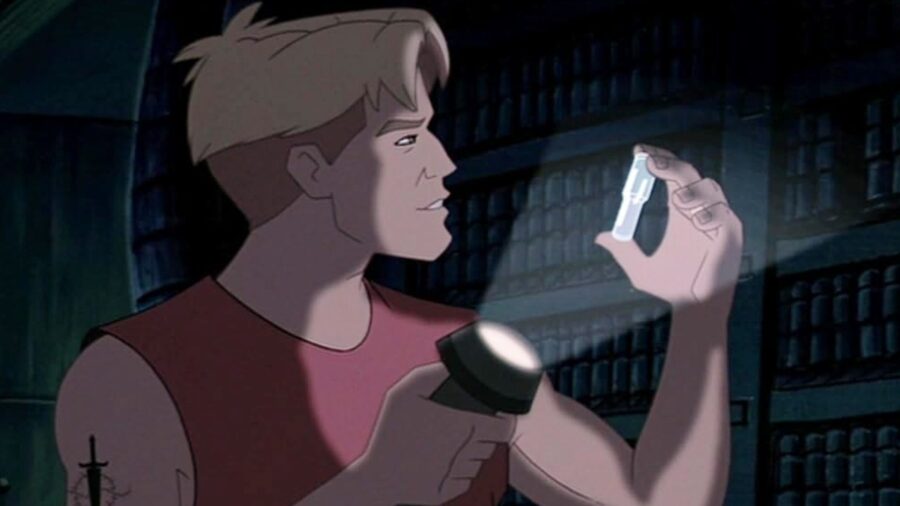
This one hurts to this day.
If you don’t know the name Don Bluth, you know his work. He’s the master animator behind Dragon’s Lair, All Dogs Go To Heaven, The Secret of NIMH, and the best non-Disney Princess movie ever, Anastasia. Bluth went on a 20 year revenge campaign against Disney following creative differences with the post-Walt Disney leadership team. That all came to an end in the year 2000 with Titan A.E.
Years after humanity is forced to wander the stars following the destruction of Earth at the hands of the Drej, Cale Tucker, the holder of a magical ring that leads to the resting place of the Titan, is recruited by the crew of the Valkyrie to find the ship, stop the Drej, and save humanity. They come across alien planets, human space stations, betrayal, and a final fight against the Drej with the fate of the galaxy at stake. And since it’s a Don Bluth movie, every single frame of Titan A.E. is a work of art from beginning to end.
The problem is that every single cent of the film’s budget is right there on camera. Fox Animation Studio brought Bluth’s vision to life, but it cost them … everything. Fox lost $100 million on Titan A.E., leading to the firing of 300 members of the studio followed soon after, by the entire studio being shuttered. This was a massive blow to Fox right before the CGI animation boom.
Sci-fi is always a tough sell to general audiences and Titan A.E. was no exception. It never found an audience during its theatrical run. The film remains Don Bluth’s last theatrical release, and the first sign of Fox’s future collapse.
6. Mars Needs Moms (Robert Zemeckis)

Who Framed Roger Rabbit? is a classic. It’s a singular achievement that will never, ever be topped. And even then it’s still behind Robert Zemeckis’ best film, Back to the Future. In the 80s, Zemeckis couldn’t fail. After 2005 though, Zemeckis discovered CGI, and he couldn’t make a hit to save his studio. 2011’s Mars Needs Moms is one of the worst movies of all time, and it caused ImageMovers Digital to lay off over 400 people and cease all operations as an independent studio.
Mars Needs Moms has a plot but really, it’s all there in the title. The Martians need human mothers to provide motherness for their nanny-bots which raise the next generation of Martians. It’s a surprisingly dark story given the animation and intended audience: kids. There’s a lot of attempted murder for a story with the message that families are important.
No one saw Mars Needs Moms in theaters. The film failed to earn even half its production budget of $150 million, becoming the single greatest box office flop for Disney, who co-produced the film with ImageMovers Digital.
That would become important, as Disney took two lessons from the failure of Mars Needs Moms: sci-fi is a hard sell, and no one wanted to see movies with Mars in the title. That would soon be a problem.
5. John Carter (Disney. Again.)
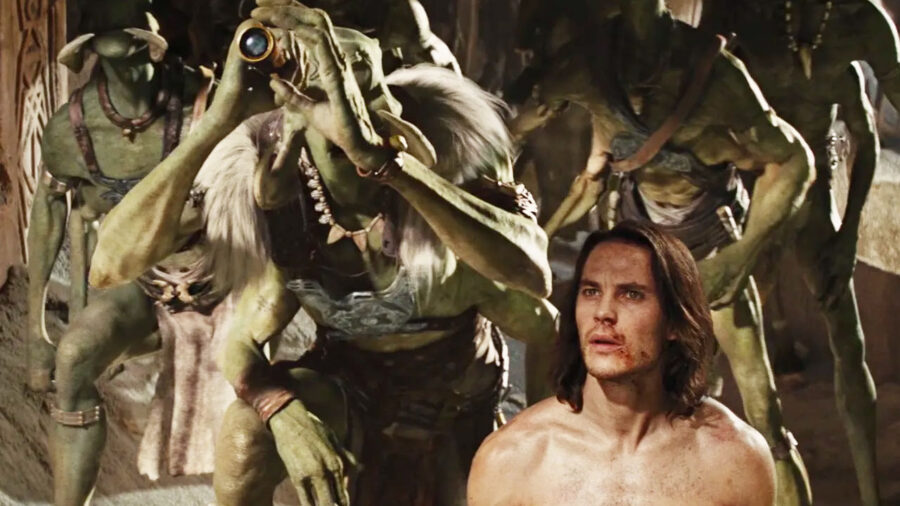
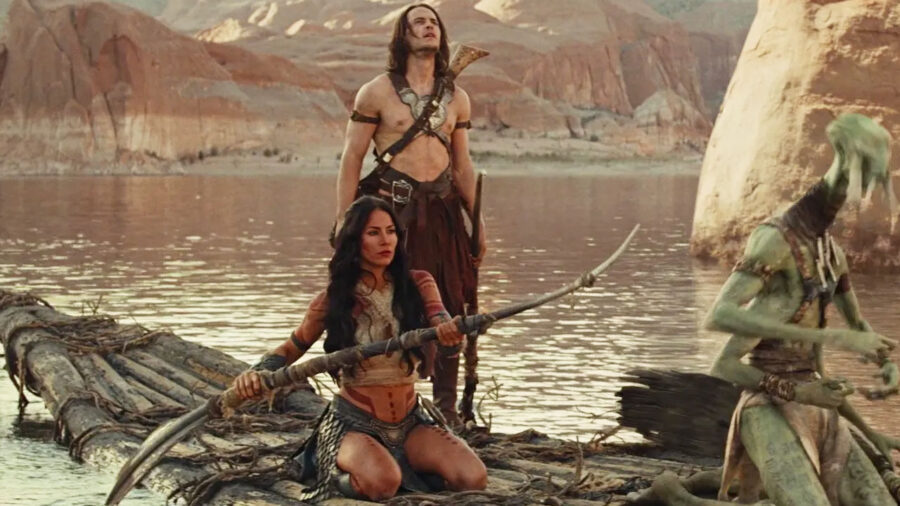
John Carter is one of the biggest What-Ifs in sci-fi history. Released in 2012, one year after Mars Needs Moms, Disney dropped “of Mars” from the title, turning it from an obvious sci-fi story into a generic name. John Carter of Mars sounds bold, adventurous, and fun. John Carter does my taxes. It’s a shame that Disney’s horrible marketing campaign sabotaged their own movie. John Carter is a lot of fun.
The Martian vista stretches on forever, the alien designs are pulled straight out of Edgar Rice Burroughs 1912 novel, Taylor Kitsch is finally the action star Hollywood wanted him to become, and the fight scenes showcase how a regular human could become the deadliest warrior Mars has ever known. There’s a sense of creativity and wonder to John Carter that’s been stripped out of most modern sci-fi.
John Carter was doomed before it ever hit theaters. At the time, total budget of $350 million made it one of the most expensive films ever made. We don’t know exactly what number it had to reach to turn a profit, but what we do know is that $284 million wasn’t enough. Pulling in 7x times of what Borderlands made in 2024 should have made the film a hit, instead, it’s the box office bomb that forever changed how Disney handles sci-fi.
Walt Disney Pictures didn’t actually go bankrupt over John Carter, but the sheer amount of money lost made the company swear off original sci-fi. From then on out, Disney was focused on milking Star Wars for every single cent and giving fans a Tron: Legacy sequel that ignored everything awesome about Tron: Legacy. What sci-fi fans lost with the failure of John Carter is the idea that a fun, campy, sci-fi adventure could be a summer blockbuster.
4. Battlefield Earth (Franchise Pictures)
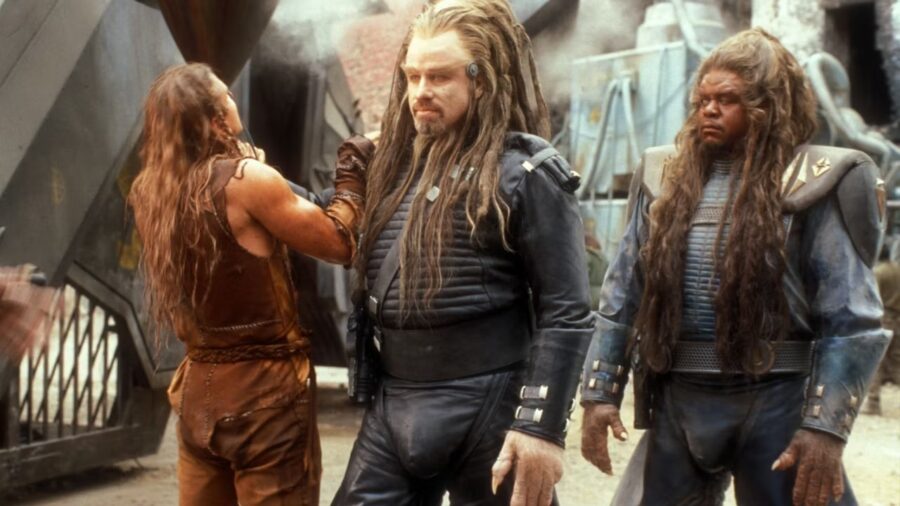
If I told you that Battlefield Earth bankrupted a production company, you’d be shocked that it was only one company. Back in the year 2000, when the first trailer hit showing John Travolta’s dreadlocked alien, everyone knew this was going to be a disaster. The only question was, how badly was it going to flop?
Battlefield Earth was a historic flop, losing over $50 million and performing so badly that the FBI investigated Franchise Pictures for fraud. The RICO charges were dismissed, but the studio wound up paying their European distribution partner over $120 million in damages after being found guilty of inflating production budgets.
Turns out, Battlefield Earth was included as part of a package offer with the Bruce Willis movie, The Whole Nine Yards, and Wesley Snipes’ Art of War. No one wanted to distribute John Travolta’s love-letter to Scientology.
This is the moment where you’d expect me to say, “but the film really isn’t that bad.” Not this time. Battlefield Earth is one of the worst films in history. Originally a novel written by the founder of Scientology, L. Ron Hubbard, this is one of those times where I can’t even say the book is better.
It’s not. The book is as bad as the movie.
Franchise Pictures did go bankrupt after the failure of Battlefield Earth, and the lawsuit that came from it, but they didn’t go out of business. Sadly, the company restructured and continued to help produce and distribute movies. Amazing classics that include Feardotcom, Ballistic: Ecks vs. Sever, 3000 Miles to Graceland, and multiple Steven Seagal “Action” movies.
Somehow, they managed to find a way to make movies worse than Battlefield Earth.
3. The Golden Compass (New Line Cinema)
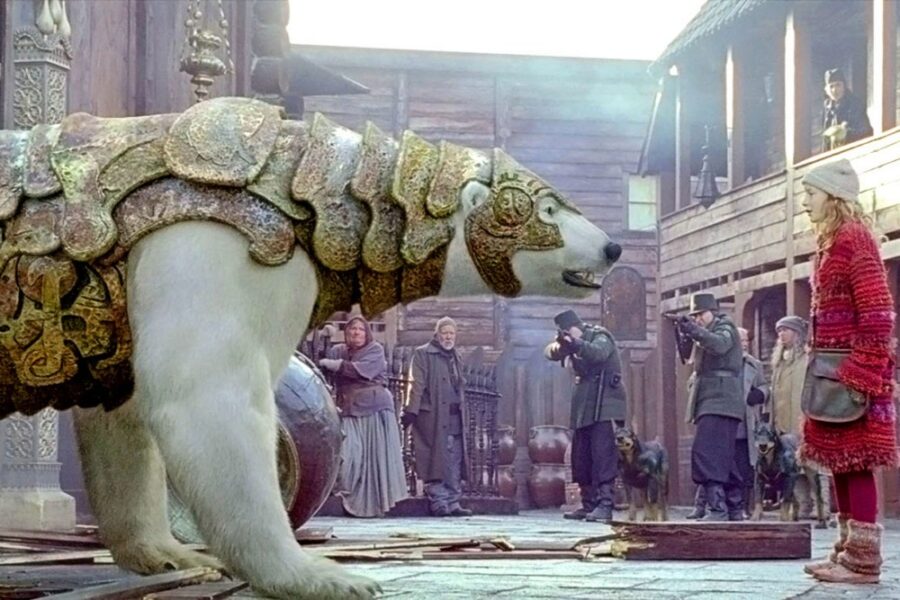
The His Dark Materials novels were a huge hit with young adults. The movie The Golden Compass, not so much. Adapting a surprisingly dark tale about the evils of religion was always going to be a challenge, which is why the only thing anyone remembers today is the giant armored bear. Talented director Chris Weitz, who created American Pie and co-wrote Rogue One, did his best, and The Golden Compass featured a stacked cast including Nicole Kidman, Daniel Craig, Christopher Lee, Eva Green, both Ian McKellen and Ian McShane, but even that wasn’t enough for New Line Cinema to turn a profit.
It would have been, except for one small problem. The Golden Compass wasn’t actually a flop. In the United States it was, but internationally, it was one of the top films of 2007. If the international distribution rights hadn’t been sold, New Line Cinema would have earned over $300 million.
That little mistake was the final nail in the coffin for New Line Cinema, and the following year, they were merged with Warner Bros. Instead of launching a trilogy, The Golden Compass was one and done. Steampunk sci-fi and fantasy are tough sells on their own, put together and it’s no wonder the general public stayed away.
The anti-religious messaging of the novels was toned down to the point of being erased which managed to annoy both fans of the books, and the Catholic church, at the same time. The movie itself is okay, there’s a lot worse on this list, but at the end of the day, it’s completely forgettable.
2. Robot Jox (Empire International)

You haven’t heard of Robot Jox? The post-apocalypse sci-fi with giant mecha? How could you have never watched Robot Jox? How about the production company it failed to save, Empire International, ring any bells? That’s right, the studio behind the amazing director Stuart Gordon’s low-budget sci-fi horror Re-animator also supported his insane take on Transformers.
Robot Jox takes place in a future where Earth has been destroyed by a nuclear apocalypse and all wars are settled by giant mech gladiator combat. It’s awesome. You don’t need to know more of the plot; giant mechs fighting it out is always awesome. It might surprise you to learn that a low-budget film about giant mechs didn’t light the box office on fire.
Before Robot Jox was even released, Empire International had gone into bankruptcy after audiences of the 80s didn’t recognize the company’s greatness with Troll and TerrorVision, delaying the release of Robot Jox for years, until 1990, when no one saw it. Empire International’s schlock is easy to make fun of, but when low-budget productions hit, the profits can be astronomical, which is why the company was able to purchase a European castle in 1985 as the studio’s headquarters.
1987 was going to be the company’s breakout year, with over 30 films hitting the United States, but like Icarus who flew too close to the sun before plummeting to his death, Empire International went too far, too fast, and by the end of the year, was millions of dollars in debt. Stuart Gordon recovered from his directorial flop and would go on to create even more low-budget horror. His frequent collaborator, Jeffrey Combs, went on to play every alien in Star Trek.
Robot Jox has been lost to time, and Empire International’s unique filmography would never, ever get made today, but you have to admit, there’s something fun about low-budget sci-fi missing from Hollywood today.
1. Superman IV (Cannon….they got better!)

Christopher Reeve is the best Superman. The first two films are incredible, but unfortunately, he made four of them. Superman III isn’t great, but it also contains one of the most traumatic scenes of the 80s, which is still better than Superman IV: The Quest for Peace. Oh boy. Where to start with this one?
If Cannon Films, producers of the film which was only distributed by Warner Bros, had stuck to the Bizarro storyline instead of turning into a parable about the Cold War, this could have been a hit. Instead, Luthor used Superman’s DNA and accidentally created….NUCLEAR MAN. He has the power of the SUN! Which he uses to rake Superman’s back with his fingernails. No really, that’s his big move. He has all the offense of NWO Hulk Hogan.
By 1987, Cannon Films didn’t have the budget of the Richard Donner films, and it showed on screen. Rapidly running out of money due to multiple flops, including Lifeforce and Masters of the Universe, Cannon Films shoved Superman IV out the door as fast as possible, hoping to get an influx of cash. Earning almost $40 million was decent compared to the barely $17 million budget, but it wasn’t enough.
Mounting lawsuits, multiple flops, and an investigation by the federal government over fraud, led to Cannon Films becoming part of MGM. Cannon bankrolled a little series you may have heard of, Walker, Texas Ranger, but even that success led to more lawsuits and again, bankruptcy.
If Superman IV was given the right budget, and a completely different storyline, Bizarro World would have been amazing back in 1987, it could have been a hit and saved the company. Refusing to spend money turned a potential hit into one of the worst superhero films ever made.
Entertainment
T-Mobile and Umbro are dropping an exclusive soccer jersey just in time for the World Cup finals
Fashion collabs are taking over the world right now; I’ve seen some partnerships that I’d never thought would happen (Naomi Osaka’s Wimbledon dress sold out within hours). But with the World Cup ending on July 19, everyone’s trying to get a piece of that soccer advertising pie, including T-Mobile.
Today, T-Mobile announced that it’s teaming up with Umbro (an iconic sportswear brand) to create limited-edition jerseys exclusively for T-Mobile members. And from the photos, they don’t look half bad (most collabs are kitschy and just short-lived fads). I could definitely see someone wearing one of these jerseys while running errands or going about their day.

Credit: Atiba Jefferson
The drop won’t happen until Tuesday, July 7, and as I mentioned above, you have to be a T-Mobile member to get one. They’ll be available exclusively through the T-Life app for $60 on a first-come, first-served basis. Once they sell out, they’re gone.
Mashable Light Speed
T-Mobile is framing the surprise collab as a way to celebrate a “record-breaking Member Month” (apparently, nearly 14 million members engaged during the first week alone).
Even if you miss out on the jersey, the other perks it’s throwing at qualifying members right now are pretty great. Along with bringing back a free year of DoorDash DashPass, T-Mobile’s basically paying for its members’ streaming subscriptions with free Netflix, Hulu, and MLB.TV. It even added Apple TV+ for $3 per month, plus free texting and high-speed data in more than 215 countries if you happen to be traveling this summer.
Topics
Sports
FIFA World Cup
Entertainment
The Greatest TV Show Just Sold Out, And It May Ruin Everything
By Chris Snellgrove
| Updated

We’re still living in the Golden Age of Television, with new must-see shows popping up all the time. However, there’s one that has yet to be dethroned as arguably the greatest series ever made: Breaking Bad. Courtesy of showrunner Vince Gilligan, Breaking Bad captivated the entire world with its tale of a cancer-ridden science teacher (Walter White) forced to sell meth in order to afford medical care. It soon went beyond this provocative premise with a tale about power, corruption, and redemption. Breaking Bad even became a cross-generational hit, appealing to Zoomers as much as it does to Millennials.
The Breaking Bad franchise continued with a movie focusing on Jesse Pinkman (El Camino) and a spinoff show about Walter’s hilariously shady lawyer (Better Call Saul). All were well-received, and the entire franchise is regarded as the standard of modern storytelling. Unfortunately, everyone’s favorite dramatic franchise just sold out. IMG Licensing and Sony Pictures Television have teamed up in order to develop an entire global licensing program dedicated to the Breaking Bad Universe.
He Is The One Who Snacks
According to The Hollywood Reporter, IMG and Sony are developing a Breaking Bad licensing program as part of a “multi-year collaboration” that “will deliver consumer products, brand partnerships and immersive fan experiences worldwide.” In conjunction with franchise creator Vince Gilligan, they hope to “identify strategic partners across key categories including premium apparel, collectibles, food and beverage, home decor, travel, publishing, and experiential activations.” The goal is simple: to appeal to existing Breaking Bad fans while bringing some new ones into the fold. What makes all of this notable is that this is “the first time Sony has appointed an external licensing agency to develop a global licensing program for the franchise.”
When I first heard this news, my heart sank a little bit. I’ve never had a problem with basic Breaking Bad merchandise; after all, as one of the most popular shows ever made, it was inevitable that the show would get its predictable bevy of t-shirts, action figures, and even blue rock candy made to look like Walter White’s signature brand of meth. However, I absolutely despised the 2023 Super Bowl commercial that brought Bryan Cranston and Aaron Paul back together to sell Popcorners. It badly recreated memorable Breaking Bad scenes and ended with Cranston uttering the cringiest line of all: “I am the one who snacks.”
Breaking Bad: The Search For More Money

Maybe I’m just old and cranky, but I hated that commercial because it cheapened the entire Breaking Bad brand, all to sell some freakin’ potato chip alternative that nobody ever has or ever will actually care about. Now, that was the kind of weird stuff that was happening before executives started working with a global licensing program. Things have the potential to get a lot worse, like Star Wars-style Happy Meals, AI-powered parody commercials, reality shows, etc. Trust me: no matter how bad you think it will be, this is ultimately going to get much, much worse.
For example, I’ve got a bad feeling about those aforementioned “immersive experiences.” Are we going to get pop-up stands where you can lie down on a huge stack of fake money for a photo opportunity? Competitions where we see how well you can land an oversized pizza frisbee on top of a house? Maybe there will be an interactive game where you can attempt to save Hank from certain death. Could some of this be fun and memorable? Maybe. But all of it would serve to further dilute the IP, making Breaking Bad more like Star Wars. That is, nothing more than an excuse to sell as much merchandise as humanly possible.

As always, I could be wrong. Maybe we’ll get plenty of tasteful merch and genuinely awesome experiences, especially since Vince Gilligan is involved. But if this licensing program produces mostly crap, it will be the worst of both worlds, keeping Gilligan from meaningfully working on anything new while lowering our general opinion about his integrity as a creator. With that said, though, we can agree on one thing: all will be forgiven if they introduce Los Pollos Hermanos as a global brand selling fried chicken. Be sure to get a side order of blue meth for the most immersive experience of them all!
Entertainment
The Numbers Are In, And Supergirl’s Word Of Mouth Is Really, Really Bad
By Chris Snellgrove
| Published

Right now, Supergirl’s box office is looking pretty grim. Things seemed bad enough when the movie was projected to earn, domestically, between $45-$55 million in the first weekend, which was less than half of what Superman earned last year ($125 million). However, those projections just kept shrinking as we got closer to the film’s official release. Now, it looks like the film will earn more like $40 million domestically, with Toy Story 5 absolutely trouncing it at the box office. At this point, Supergirl’s only real shot at box office success is if it, like Obsession, gets great word-of-mouth to get more butts in seats in the coming weeks.
Unfortunately, it looks like that’s just not going to happen. According to PostTrak (which surveys moviegoers on how they felt about a film immediately after they leave the theater), only 52 percent of those who saw Supergirl would definitely recommend that others see it. This effectively compounds the bad box office problems: only a few people showed up to see this blockbuster film, and of the ones who did turn out, only about half said they would enthusiastically recommend it. In the short-term, this is bad for Supergirl; in the long run, though, this may spell disaster for the DCU.
Really Bad Word Of Mouth

Considering that it’s a blockbuster summer tentpole and the second film of the DCU, Supergirl’s box office is looking grim. The movie was basically dead on arrival, and everyone is now conducting an autopsy on exactly what went wrong. Much of that is up for debate: many blame writer Ana Nogueira, while others blame DC Studios CEO James Gunn, who hired Nogueira and championed her script as one of the best he has ever seen. Of course, many blame Craig Gillespie, the director who transformed a beloved, buzzworthy comic (Supergirl: The Woman of Tomorrow) into a largely bland and forgettable romp through space.
Whoever deserves the most blame, one thing’s for sure: Supergirl has failed to impress about half of those who saw it. According to PostTrak, men made up 59 percent of the movie’s audience, and only 45 percent would definitely recommend that others see it. Women made up 41 percent of the audience, and 62 percent of them would definitely recommend that others see it. Crunch those numbers, and you are left with only 52 percent of those surveyed saying they would enthusiastically recommend that others watch Supergirl.
It Gets Even Worse

Supergirl getting such poor word of mouth helps to partially explain why the movie’s opening weekend projections just keep lowering. In fact, some estimate that it may earn closer to $35 million domestically in its opening weekend. Believe it or not, though, things get even worse when you compare Supergirl to other tights-and-flights films. For example, it had a CinemaScore rating of B-, which may not sound that bad. But that’s a lower rating than The Flash, which is widely considered the movie that killed the DCEU. It’s a lower rating than The Marvels, which is the first MCU film to actually lose money.
Speaking of money, The Marvels earned $47 million domestically in its opening weekend, which is at least $7 million more than Supergirl will earn. Heck, even Morbius, the internet’s favorite punchline of a movie, earned $39.1 million, making (believe it or not) a profit; Supergirl will be a loss for the studio. To put this even more in perspective, this latest DCU film is doing badly enough at the box office that it may not even earn $200 million worldwide by the time it leaves theaters. Put another way, Spider-Man: Brand New Day may earn more in its opening weekend than Supergirl does in its entire run!

Obviously, all of this spells bad news for Supergirl. But it may spell even worse news for the DCU as a whole. That’s because, among other things, this bad box office and poor word-of-mouth prove that audiences won’t necessarily show up for feature films featuring relatively minor characters. That means we might get a correspondingly terrible box office for Clayface, the movie about a Batman villain that is inexplicably coming out before Batman makes his DCU debut.
Plus, Supergirl writer Ana Nogueira is going to be writing the scripts for both Wonder Woman and Teen Titans. Unlike Supergirl, these characters are absolute fan-favorites, and in the hands of the right writer, they could be runaway successes for the DCU. But if the scripts for those films end up being as mediocre as Supergirl’s, they may similarly implode. Should those films flop, they may cause some serious collateral damage. Namely, they may destroy this cinematic universe as surely as The Flash destroyed the DCU, leaving Marvel with no real rival as the MCU reboots its entire universe with Avengers: Secret Wars.

Nathan Church ends homer drought as Cardinals top Braves
Outgoing Uruguay coach Marcelo Bielsa has his say — for 100 minutes


