
Entertainment
The #1 Thing My Mom Told Us as Preteens


The other night, one of my kids received a phone call from a girl at school…
Afterward, he came into our living room and flopped down on the sofa. “Are you okay?” I asked.
“I was so quiet on the phone,” he told me. “She probably thinks I’m boring.”
As we sat there together, my episode of The White Lotus paused on the TV, I told him something my mom told us many times growing up, something I’ve thought about for decades since, and observed and witnessed so many times, I now know it deep in my bones.
“Honey,” I said, stroking his hair, “In situations like these, everyone’s just worrying about themselves.”
It’s true, don’t you think? Have you ever come home after a party and lay awake wondering how someone else came across? Have you ever had an awkward interaction and lamented that someone else was inherently embarrassing? Have you ever hung up the phone worrying if someone else was too reserved or too chatty or too quiet or too loud? No, of course not, you think about yourself. Everyone thinks about themselves.
Cuddling on the sofa, I told my child, “If the person on the phone even noticed that you were quiet, which they probably didn’t, they wouldn’t think, ‘Why is he so quiet?’ Instead, they’d think, ‘Am I uninteresting? Should I be saying something different?’”
Now and again, I have to remind even myself of this, and I’m 46! Recently one of my best friends was quiet on text, and finally I had to ask:

(Our texts remind me of this meme)
Bottom line: We all worry! We’re all trying! We’re all harder on ourselves than anyone else ever has been or will be! And once you realize that everyone is analyzing themselves, and no one is analyzing you, you can just be kind and openhearted and human and awkward and forgiving and loving and whatever you want because you will be free. xoxoxo (Remember this other social anxiety cure-all?)
P.S. 21 completely subjective rules for raising teenage girls and teenage boys, and the best thing my mom did as a parent, overall.
(Photo of my friend Claire with her daughter and my son. xoxo)
Entertainment
The Netflix Film That Proves What’s Wrong With Modern Children’s Movies

By Chris Snellgrove
| Published

Growing up as an ‘80s kid, I had a fairly awesome childhood (thanks, mom and dad!). My nostalgia for that era is quite strong, which is why I’m typing this while surrounded by a small army of GI Joes, Transformers, and Ninja Turtles. It’s no surprise, then, that when friends ask me what movies they should show their children, I typically recommend films from the decade that brought us everything from the Ghostbusters to Big Trouble in Little China.
When a friend recently asked what she should show her two kids, I didn’t hesitate to recommend Labyrinth. Cute songs, wacky muppets, wacky David Bowie, and Jennifer Connelly in a breakout role; what’s not to love? Soon, she reported that her kids were having nightmares about the Goblin King and his monstrous minions. I felt bad for about two seconds before realizing the problem: Jim Henson’s Labyrinth is still a perfect children’s movie. Unfortunately, Hollywood has transformed modern kids’ movies into vibes-based screensavers that no longer allow children to safely explore crunchy concepts like love, death, and even human mortality.
Ziggy Stardust And The Goblins From Mars

After my friend chided me about my recommendation, I had to be honest with myself: Labyrinth is a pretty scary movie. The central plot involves a mysterious man kidnapping a small child, and poor Jennifer Connelly must navigate a world of increasingly nightmarish Muppets in order to rescue him. The titular labyrinth often feels like a prison with no way out, and things like the “Helping Hands” scene and the masked ball are the stuff of fever-dream nightmares. Hovering over all of this is the fact that the Goblin King is a middle-aged menace trying to secure a child bride, one played by a girl who wasn’t even old enough to get her learner’s permit.
Despite all of that, though, I still think Labyrinth is a great film to share with children. To me, the scary aspects mentioned above are a feature, not a bug. It may be “only” a kids’ movie, but these frightening features infuse Labyrinth with a sense of genuine tension from beginning to end. Tension is, of course, the secret ingredient of any good story because it provides the narrative with real stakes for the characters that we care about. Those characters grow through tension and conflict, but most modern children’s movies have surgically removed everything scary and tense in an effort to make their films less offensive and more palatable.
A Star Is Born

In A Minecraft Movie, for example, no kid thinks the malevolent Malgosha is going to take over the world; they understand the plot is just window dressing for a film trying to squeeze in as many game references as possible into the runtime. Similarly, no youngsters watching Sonic the Hedgehog think Dr. Robotnik will win the day. They’re just here for the in-jokes and slick special effects that precede the inevitable happy ending. Furthermore, no children think Bowser, Jr. is going to conquer the universe in Super Mario Galaxy; they’re just here to appreciate the parade of Nintendo memes onscreen and hope their favorite Smash Bros. characters pop up.
These movies are not designed to challenge children; instead, they serve as two-hour distractions for parents who need some peace and quiet. Unfortunately, the concerted Hollywood effort to make these films inoffensive has also made them bland and creatively bankrupt. It’s functionally impossible for children to enjoy these works as films: instead, they are designed as just another bit of colorful stimuli for an ADHD generation raised more by their iPads than their parents. But Labyrinth is proof that it doesn’t have to be this way and that we can (and should) be giving our children plenty of substance to go with their spectacle.
The World’s Creepiest Muppets

Why, specifically, do I think children should watch Labyrinth? The first reason is that, at the risk of sounding overly blunt, fear is something that everyone must deal with every single day. Watching a spookier children’s movie allows kids to microdose fear and learn to process it within the context of a story that ultimately offers an inevitably happy ending. You know how some people are so nervous that a loud noise can ruin their entire day? That’s what happens when you lead a sheltered childhood protected from all things scary. Conversely, a regular diet of mildly frightening kids’ movies can help the audience grow into well-adjusted adults.
On a related note, movies like Labyrinth are a safe, controlled way to introduce kids to important real-world topics that might just save their lives. This is a film about child abduction, extortion, power imbalances, and so many other ‘dark’ topics, but it’s all wrapped in a shiny wrapper that includes cute songs and cuter creatures. Take it from a parent: you’ll eventually have to talk with your children about how all of this works in the real world to keep them safe. That conversation will be a lot easier for you (and more believable for them) if they have had time to process these scary ideas within a fictional context.
Teaching Kids Lessons (One Scream At A Time)

Finally, if you actually watch the movie with your kiddo instead of just using the TV as a babysitter, you can help teach them the most elusive skill of all: critical thinking. Every moment that makes them cover their eyes in fright is an opportunity for an open and honest conversation, with leading questions like “why did that scare you?” and “what do you think that character should have done instead?” This teaches children to actually engage with and learn from media, all while improving their self-confidence by helping them get over their fears. Not for nothing, they’ll also feel a sense of pride for emerging from a scary movie, stronger than ever.
Want to teach your own child a few important lessons? Or want to relive the glory days of weird ‘80s cinema? Heck, do you just want to jam out to the Goblin King’s impossibly catchy tunes? No matter your motivation, you’re in luck: Labyrinth is streaming on Netflix today. It’s a scary good time that, regardless of what my friend might tell you, is fun for the whole family. Fair warning, though: you might want to make sure nobody’s around before you start dancing your own magic dance in the living room!
Entertainment
Prophetic Sci-Fi Docudrama On HBO Max Sets The Tone For Our Future Dystopia
By Robert Scucci
| Published

If you’re wondering why speculative, apocalyptic sci-fi thrillers aren’t often presented through a documentary framework centered on real-life world events and public figures, it’s because it leads to disasterpieces like 2073; a film with a clear message that’s delivered to is audience in the most disjointed way possible. As ambitious as this film may be, it’s incredibly difficult to watch, and highlights a unique problem: it’s not allegorical, but rather too real to handle. I wish I was as original as Rotten Tomatoes reviewer Glenn Dunks, who simply referred to this film as “Doomscrolling: The Movie,” because that’s exactly what 2073 is despite the promising thumbnail and synopsis you’ll see when looking to stream the title on Max.
I’m not mad, I’m just disappointed, because even though 2073 is categorized as a documentary and a thriller, it’s, like, 10 percent thriller, if that, and the rest is just the kind of stuff you’ll see while swiping through your Instagram feed in a panic while wondering how close we actually are to the dystopian reality that, according to the film, we’re fast approaching.
The Future Is A Bleak Place In 2073

2073 starts with promise as it follows the point of view of a lone woman simply known as “Ghost” (Samantha Morton). Living under a long-abandoned shopping mall with other condemned humans, narrations from Ghost explain just how fargone society has become, and aims to tell a story about how humanity arrived at such a bleak destination. In constant fear of getting investigated and silenced (killed) by the government, Ghost dumpster dives for food and supplies when it’s safe to do so, and retreats back underground to her dilapidated compound occupied by other survivors who are equally worse for wear.
And let me tell you, these post-apocalyptic scenes are absolutely stunning. I wanted to learn more about how society functions in the year 2073, and I would have loved to see more of this. The hierarchy of power, the desire to reeducate the masses so they can overthrow their oppressors, and the state of constant surveillance that society is living through is captivating, to say the least, and this fictional yet unfortunately believable setting is fertile ground for some next-level storytelling about a society in disrepair that hasn’t yet discovered how to pick up the pieces and start the next chapter in our collective human history.
Well, That Got Dark

The best part about 2073 is the sequences set in the dystopian future that will fill any sensible viewer with an absolute sense of dread, and then suddenly the worst possible thing ever happens: we get a documentary that’s reminiscent of the fear-mongering Zeitgeist film series that did a great job pointing out the dangers of a totalitarian government, but never even tries to reassure audiences by presenting a viable, or even realistic, solution to the problems we face so we can actually make concerted efforts to get on the right side of history and prevent such a bleak future from happening.
In other words, 2073 is trying to be two different movies: a dystopian sci-fi thriller set in a fictional not-so-distant future, and a documentary using real, archival footage from the present day used to explain how this dystopia was created.
But therein lies the problem.
While watching the documentary sequences that make up most of 2073’s runtime, I felt like Alex from A Clockwork Orange, who was forced to sit in front of television sets with his eyes pried open so he could take in all of the footage at an alarming rate. This kind of delivery strips the mystique from the more interesting story – the fiction set in 2073 – that could have been used as a vehicle to propose solutions for a society that’s been driven underground by the powers that be.
Two Different Failed Films In One

While I appreciate what 2073 was trying to accomplish, it left a bad taste in my mouth because it comes off as if it’s preaching to a choir that’s already aware of the current state of affairs, but feels powerless to act in any meaningful ways to prevent things from getting worse.
We already know that wealth is concentrated in such a way that keeps the working class under its ruler’s thumb. We already know that politicians and tech bros are sweeping humanity under the rug so a select few people in power can explore space while the rest of us suffer. We already know that data mining billionaires and chronically online worry warts are a terrible combination for humanity because it suggests how artificial intelligence will soon control the masses as it finds a way to become smarter than the humans it’s aimed to manipulate.
That’s all well and good, but what do we do about it? The interesting story – the story I wanted to see – in 2073 is how future humans cope with societal collapse and set their sights toward a brighter future. What we get instead is a rapid-fire news feed of the present day that’s beamed into our eyeballs as if to say “there’s nothing you can do about this,” and “we’re already doomed.”
Streaming 2073 On Max


If you’re looking for an ultra-condensed rundown of current affairs as told through various news sources that leads to a high-concept depiction of the future that may very well become a reality, then 2073 might pique your interest. But if you’re expecting to see how humanity aims to rise from the ashes through its speculative sci-fi storytelling, you’re going to be gravely disappointed. By juxtaposing real-life, present-day world events with what is by all measures a work of fiction, 2073 misses the mark on both fronts because it’s real, it’s scary, and it offers a disturbing take on how we’re collectively marching down a miserable path at an alarming rate, but never uses the fiction it establishes to meaningfully explore how we’re going to get out of this seemingly unavoidable mess.
2073 gets an A for effort and concept, and an F for execution. If you want to see how messed up the world is, just fire up your news apps, or hop on TikTok or Instagram, to get a crash course because it’s basically the same thing. If you want to just get it over with quickly and move on with your life, you can stream 2073 on Max.
Entertainment
Disney Refuses To Bring Back The One Character Who Could Save Star Wars
By Chris Snellgrove
| Published

The ‘90s were a pretty heady time for Star Wars fans. The franchise experienced a resurgence in the form of an Expanded Universe of books, comics, and video games. At the time, all of this was considered canon, which made everything that much more exciting. We had new, official Star Wars adventures for the first time since the credits rolled on Return of the Jedi back in 1983. Plus, we had new characters, some of whom instantly became fan-favorites. Two of those characters came from prolific author Timothy Zahn: Grand Admiral Thrawn and Mara Jade.
Both of those characters, along with the rest of the Star Wars EU, were de-canonized once Disney bought the franchise. Thanks to sheer fan demand, the House of Mouse eventually brought Thrawn back into canon via Rebels and, later, Ahsoka. After that, many Zahn fans figured it was just a matter of time before Mara Jade was brought back. However, Zahn and other writers recently confirmed that Disney keeps turning down their attempts to bring this popular character back into Star Wars canon.
The Coolest Star Wars Character You’ve Never Heard Of

Mara Jade was introduced in Timothy Zahn’s Heir to the Empire as a character who was once the Emperor’s Hand. As a Force-sensitive Imperial agent, she could enact Palpatine’s will all across the galaxy while maintaining mental contact with him. However, the death of the Emperor effectively ruined her career: because almost nobody knew what her role was, she had no real place in the Empire after Palpatine’s death. She had to build a new life for herself as a smuggler, but she is forever haunted by the last command given to her by Palpatine when he died: “YOU WILL KILL LUKE SKYWALKER.”
She proved to be a very popular character and eventually married Luke Skywalker and gave birth to his son (who, very cutely, was named “Ben”). After Disney bought the rights to Star Wars, though, Mara Jade and all her misadventures were no longer part of official canon. Later, however, Thrawn was brought back into canon through appearances in Rebels and Ahsoka. Furthermore, Disney commissioned Timothy Zahn to write new, canonical novels about Thrawn, who is arguably the most popular Star Wars villain since Darth Vader.
If Grand Admiral Thrawn Can Come Back, Why Not Mara Jade?
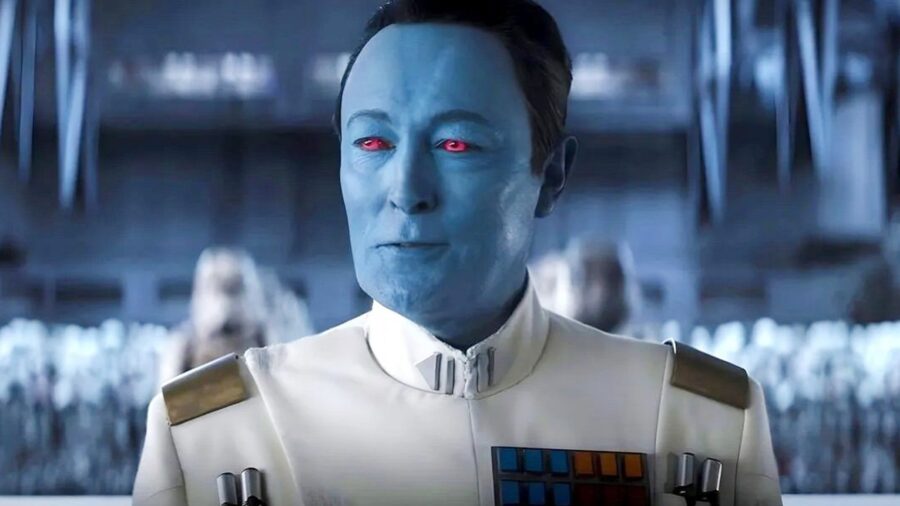
Understandably, Zahn tried to pitch Disney on reintroducing Jade into the canon in any capacity. In 2024, he told a Dragon Con audience that she is the number one character he would like to bring back to Star Wars in just about any capacity. “I keep nudging Lucasfilm, asking them if I could write a book,” he said. “The answers come back basically some place between ‘no’ and ‘heck no.’”
The matter came up again at MegaCon this year. Prolific Star Wars author Claudia Grey told the audience that she had repeatedly pitched putting Mara Jade into her books. “A couple of times I was like, ‘Really? Really, no Mara Jade?’ And they were like, ‘Nope,’” she said, putting a stern emphasis on the final word. By happenstance, Zahn was at the same panel and chimed in: “I asked them, too,” he said, before revealing that his request was similarly rejected.
It’s Time For Live-Action Mara Jade

It’s possible that Disney is hesitant to introduce Mara Jade back into canon because so much of her story doesn’t really work in the wake of the Star Wars prequels and sequels. We never really saw anything like an Emperor’s Hand in any subsequent movies, and the Inquisitors seem to fill the role of “Force-connected Imperials outside the regular chain of command.” Plus, her post-Imperial life was spent building a career with Talon Karrde, a smuggler chief who is also no longer part of established canon. Finally, the whole idea of having her marry Luke Skywalker is completely off the table, both because of Mark Hamill’s age and the fact that Luke hardly had time for love after becoming a grumpy recluse.
However, modern Star Wars writers did a solid job bringing Grand Admiral Thrawn back and gently nestling him within existing canon. It seems like it would be easy enough to do that for Mara Jade, especially with her creator doing his best to help out. However, it seems like the powers that be have decided that this fan-favorite character will never grace the screen or even the page, ever again. Which is unfortunate, because bringing her back in her own show or even film would be the perfect way to appeal to Expanded Universe fans who have felt (ahem) “jaded” by the Disney era of Star Wars.

The Netflix Film That Proves What’s Wrong With Modern Children’s Movies
Robots beat human records at Beijing half-marathon


