
Entertainment
Supergirl Fans Blame Men For The Movie’s Failure

By Chris Snellgrove
| Updated

After the success of last year’s Superman, hopes were high for Supergirl. In fact, they were up, up, and away! This movie was going to flesh out the DCU while adding a strong, independent female character to this cinematic universe. Had the movie been successful, it would have been lauded as proof that the general moviegoing public is ready for a new kind of hero and a new kind of cinematic universe. Unfortunately, the movie was dead on arrival, leaving fans and critics alike to ask the same question: “what the heck happened here?” Some think they have the answer: men happened, damn it!
Specifically, there is a growing narrative among Supergirl fans that the movie is great and that its bad reputation is due to woman-hating misogynists. This is a comforting narrative, of course, allowing someone to believe that anyone who hates their favorite media must 1) Have bad taste, and 2) Be a bad person. However, you don’t need X-ray vision to see just how weak and even dangerous this narrative really is. Why dangerous? Simple: if creators like DC Studios co-CEO James Gunn start blaming all their failures on invisible enemies, then these superhero movies will never, ever get any better.
A Familiar Narrative

One of the emerging fan narratives surrounding Supergirl shouldn’t surprise you, especially if you’ve been paying attention for the last decade or so (more on this very soon). Plenty of fans really love the movie, and they can’t understand how it ended up “rotten” on Rotten Tomatoes and made so little money in its opening weekend. Some of those superfans decided that the only logical conclusion was misogyny. That is, they believe that men who would normally turn up for a superhero movie stayed home and that male influencers killed the chance for bad word-of-mouth by loudly complaining about the movie online.
This narrative doesn’t make sense once you examine it, of course. For one thing, if misogyny killed Supergirl, it would reflect in the demographics, leaving more women seeing it than men. That didn’t happen, though: 59 percent of the audience was men and only 41 percent was women, indicating that the ladies didn’t show up in the same numbers as they did for, say, Captain Marvel and Wonder Woman. Men didn’t show up in the same numbers, either, revealing a hard truth: Supergirl just wasn’t very popular. There was no misogynist conspiracy to keep the masses from seeing it. Rather, the movie’s marketing department did that all on its own.
Who Ya Gonna Blame?
Now, the idea that misogynists sunk Supergirl didn’t come out of nowhere. You can basically throw a rock and hit some weird, conservative influencer offering hot takes on why the film failed. The Critical Drinker, for example, predictably declared that most female-led superhero movies are doomed to poor box office. Megyn Kelly called Supergirl star Milly Alcock “very weirdly small” and “loathsome.” Jesse Waters and Greg Gutfeld clutched their pearls about a Supergirl who is both “woke” and “bisexual.” Matt Walsh lamented how our “female-centric society” produced the “comedically absurd premise” of “some 105-pound girlboss action hero.”
The Supergirl fans blaming misogyny on the film’s failures are looking at narratives like these and believing this toxicity explains everything. But they aren’t considering something deceptively simple: these guys were always going to make these exact same complaints. Prominent conservatives were never going to give a glowing review to a movie about an illegal immigrant who is stronger than almost any male in the entire universe. Such critics made the same critiques of Captain Marvel, which earned over a billion dollars. From the outside, it certainly seems the haters wrote their reviews long before the movie premiered, so Supergirl bombing was just the icing on the cake.
In short, Supergirl fans who blame the movie’s failure on men because of these comments are putting the cart before the horse. These reviews didn’t keep people from seeing the movie. By the time they went live, most fans had decided whether or not to plonk down a small fortune to see it on opening weekend. Supergirl was doomed long before these conservative voices spoke out, and in a bit of irony, trying to blame them for the movie’s failure may doom this franchise.
Apathy Is The Real Enemy

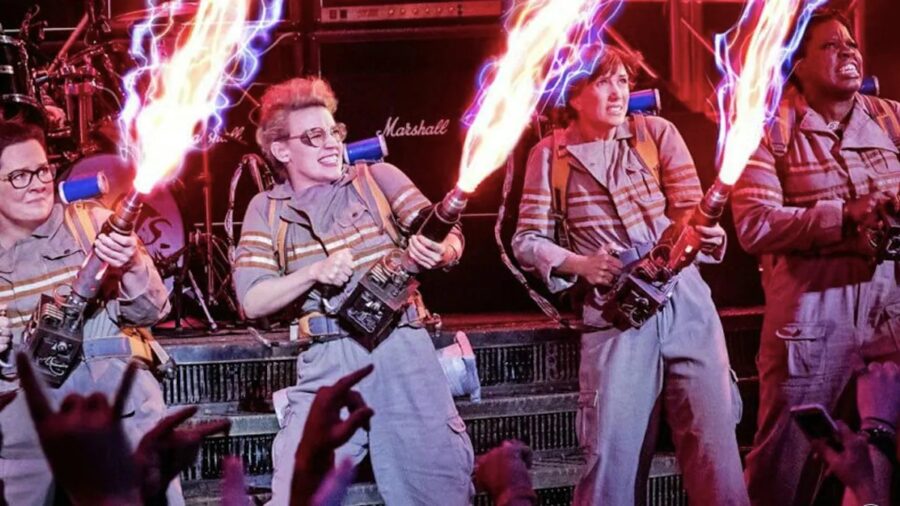
What do Ghostbusters: Answer the Call, Star Trek: Discovery, and Supergirl all have in common? Simple: they all had major flaws and fans who thought you weren’t allowed to notice the flaws. If you hated Ghostbusters for its poor script and bad improv, fans would argue that you simply hated women. If you hated Discovery for Michael Burnham’s emotional overreactions, fans would argue that you simply hated women. Now, if you hate Supergirl for its bad script and bland direction, fans will argue (you guessed it!) that you simply hate women. It’s a narrative producers encourage because it shifts the blame from creators to a bunch of nameless incels.
However, buying into this narrative actually hurts the franchises in a tangible way. Once fans start blaming invisible targets (“those chuds just weren’t ready for the ultimate girlboss!!1!!”), they let the actual culprits (such as bad writers and directors) off the hook. Like, if you want future DCU movies to be better, it’s important to figure out why audiences were so “meh” on Supergirl in the first place. But when fans blame other fans, studios just keep cranking out the same crappy movies filled with the same preventable mistakes. Time to break the cycle, be honest about Supergirl’s flaws, and encourage DC Studios to make better films.
If that doesn’t work, there’s always Plan B: pretending that the only reason fans ever complain about superhero slop is because we hate women!
Entertainment
Tragically Overlooked Dark 90s Sci-Fi Was Supposed To Be An American Gundam
By Jonathan Klotz
| Published

Before the rise of dedicated networks for cartoons, the Saturday morning and after-school animation blocks were the day’s highlight for most kids. We got to enjoy such classics as Denver the Last Dinosaur, Cowboys of Moo Mesa, Dinosaucers, Bravestar, and not one but two Sonic the Hedgehog cartoons. As fun as those shows were, story and character development weren’t their selling point, which is what Exosquad was created to change about American animation.
Airing from 1993 through 1994, for 52 episodes, Exosquad was the response of Jeff Segal, the head writer from Challenge of the Go-Bots, to match the quality output of Japanese anime. Typically, American cartoons were structured more like sitcoms than dramas, and the status quo would always be reset by the end of the 22-minute episode. Taking heavy inspiration from Mobile Suit Gundam, the original storyboard designs for the series even refer to it as “American Anime.”
In The Grim Darkness Of The Far Future

Exosquad is set in the future after humanity has colonized and terraformed Venus and Mars, where the Neosapiens, a bio-engineered slave race used by humanity for menial labor, have launched an uprising. Taking control of the planets, the Exosuit pilots that form Able Squad and their allies form the core of humanity’s fight against the Neosapiens.
Unusual for an American cartoon of the time, Exosquad treats the war completely seriously, with characters dying and multiple episodes of fighting followed by more episodes of clean-up and what to do as an occupying force.

While the long-form storytelling was something unique and groundbreaking, what wasn’t new and different was that each member of Able Squad had a different exoframe that they would pilot. From the winged blue frame used by squad leader J.T. Marsh, to the green reconnaissance frame of Alec DeLeon, and the extra-large two-pilot vehicle design of Diana and Thrax’s frame, it’s clear that while Exosqaud broke storytelling ground, it was still designed to sell toys.
When Afternoon Cartoons Go Dark

The colorful designs of the exoframes covered the dark nature of the story, with Episode 22, “Fire Ship,” remaining a standout that has stuck with me for decades. After being betrayed, Able Squad is captured and held on board a captured ship rigged with explosives as a booby trap for the Terran leadership. I was 10, and here was an episode with the heroes contemplating mortality and debating a plan to explode the ship prematurely so that no one else would die.
In 1993, this was unlike anything else on the air, and while yes, the heroes survived this time, that wasn’t always the case. Characters would routinely be injured and unseen for episodes at a time as they recovered, nameless pilots would die in almost every episode, and there was a very palpable sense of dread as the war ramped up and it was clear that not everyone would be making it home alive.
Tragically Ahead Of Its Time

No matter how dark the story became, the animation remained spectacular throughout, but it was the same studio, AKOM, in South Korea, that handled X-Men ’92, Batman: The Animated Series, and Gargoyles, so of course, it’s going to look good. For an American 90s cartoon that is, compared to its contemporary, Gundam Wing, Exosquad doesn’t hold up.

Exosquad came out during an interesting time for American animation, as the industry was quickly evolving and changing, going from Teenage Mutant Ninja Turtles at the start of the decade, to Spongebob Squarepants by the time it came to a close. The saga of Able Squad and the Neosapien War still stands out as a series that was unique and ahead of its time. Thankfully, if you want to experience the war yourself, is available for rent or purchase through Amazon Prime Video and Apple TV+.

Entertainment
R-Rated Dark Netflix Sci-Fi Thriller Is Over-The-Top Action At Its Best
By Jeffrey Rapaport
| Published

One reason we love Netflix is that, like any good streaming service, the platform offers a lot of options. However, the sprawling catalog can sometimes inspire decision paralysis. If you want to lock in on something worth your time, consider Project Power: the thrilling, R-rated film weaving together threads of sci-fi, action, and a dash of real-world commentary into a compelling, singular tapestry.
Visionary directing duo Henry Joost and Ariel Schulman shot the 2020 film, sporting a unique narrative penned by Mattson Tomlin; their collaborative efforts engineered a cinematic venture that hooked audiences with its novel premise: a pill granting temporary superpowers. Moreover, the movie admirably grounds its tale in the gritty, vibrant streets of near-future New Orleans. It provides a multifaceted exploration of Power, whether supernatural or societal.
Superpowers With A Twist
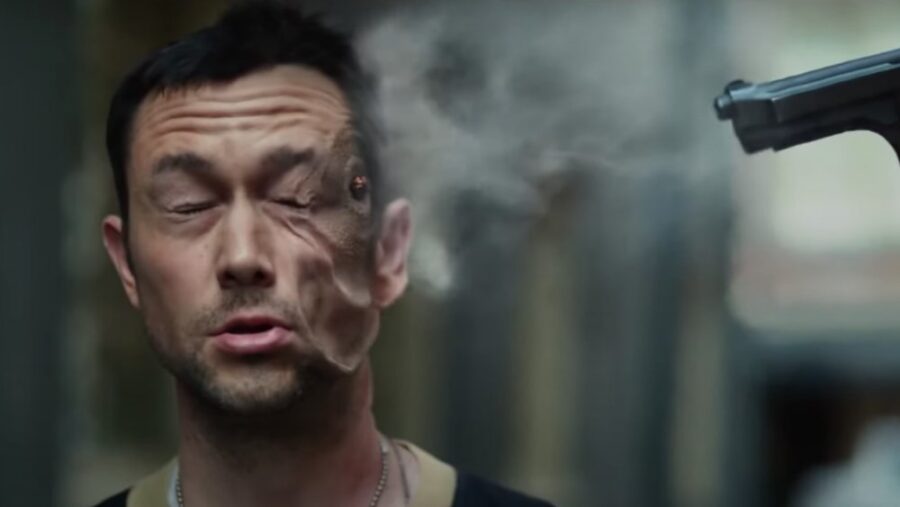
Project Power begins in the not-too-distant future, when a new drug, unsubtly termed “Power,” has hit the streets. The drug offers users a tantalizing yet dangerous proposition: five minutes of pure, unadulterated superhuman abilities. We’re talking super strength, invisibility, bullet-dodging, you name it. The catch? The powers are unpredictable and unruly, varying widely from user to user and, most damningly, often accompanied by dangerous side effects (including death).
Jumping from high-concept sci-fi futurism to the intimate, even sociological fabric of fictionalized New Orleans, Project Power’s principal characters are Art, played wonderfully by Jamie Foxx, a former soldier harboring a vendetta; Frank, the ’90s heartthrob Joseph Gordon-Levitt, a local cop bending the rules to protect the city; and Robin, played commendably by Dominique Fishback, a brainy, resourceful teen dealing drugs to care for her ailing mother.
Different Motivation
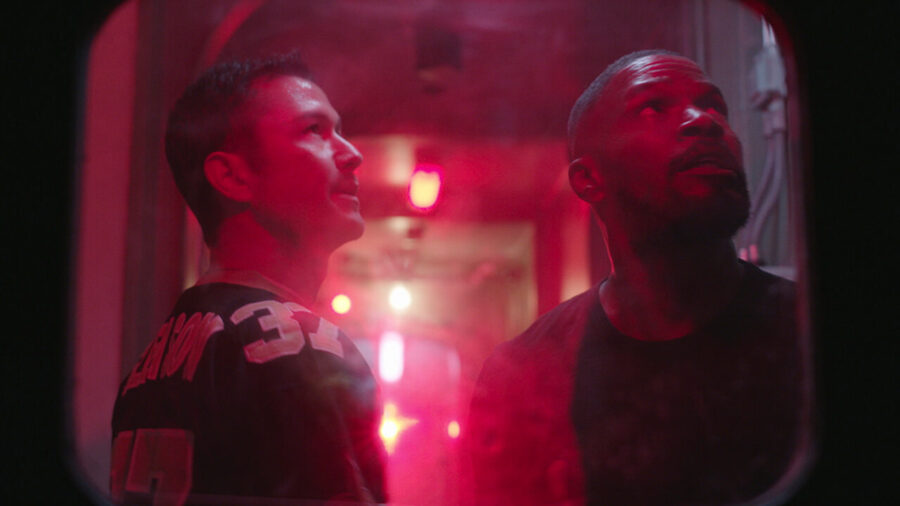
Each character retains their burning desire to locate the source of the Power pills, wreaking havoc in their city in the process.
Art’s quest in Project Power is incredibly personal. Tracy (Kyanna Simone), his daughter, was kidnapped by the shadowy, nefarious group behind the drug. Born with natural superpowers due to Art’s exposure to experimental drugs during his deployment, Tracy’s unique genetics mean she’s a perfect guinea pig for the manufacture of the power pills. His mission constitutes a desperate rescue opp.
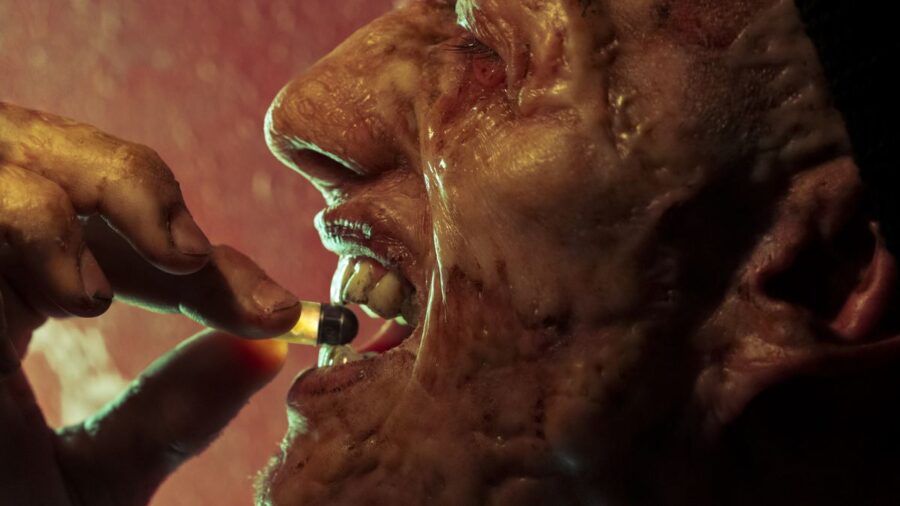
Whereas Frank, on the other hand, witnesses the devastation the narcotic inflicts on his city. Though Frank employs Power to compete with the criminal underworld, he’s nonetheless, motivated by a sense of duty to halt the drug’s spread and expose those responsible for it.
Thirdly, Robins’s involvement with Power is initially strictly business. However, her journey grows increasingly intertwined with Art and Franks, evolving her into an integral ally in their crusade. With her quick wit and street smarts, she becomes indispensable. At the same time, her personal growth is a central theme of Project Power.
Pure, Genre-Blending Bliss

Fusing realism and high-concept sci-fi thematics, themselves borrowing heavily from the superhero universe, the film admirably achieves a simultaneity of genres. In this, it reminds viewers of genre-bending hits like District 9 and Bone Tomahawk. Indeed, at its heart, the movie amounts to more than impressively stylistic, action-packed set pieces, and delves into ethical and moral quandaries posed by its central conceit.
The film questions the nature of power beyond the drug’s scope; who has it, who wants it, and at what cost? The film scores ethical points, as well, for shining a spotlight on New Orleans. More than a mere backdrop, the city functions as a living, breathing character in Project Power, enriching the film with its cultural tapestry and post-Katrina resilience. All of which offer a poignant context for the movie’s meditation on power dynamics, whether sci-fi or systemic.
Mixed Thoughts

On the critical side, the movie received mixed reviews, ranging from positive to lukewarm, and currently sitting with a 61 percent approval rating on Rotten Tomatoes. Critics ardently enjoyed its action sequences, impactful visuals, and performances, principally Fishback’s. That said, experts leveled some criticism at its screenplay, with some suggesting the project’s ambitious premise could have been explored more deeply.
That said, Project Power enjoyed success on Netflix; it became one of the platform’s most-streamed films upon release. Indeed, the streaming service reveals that 75 million accounts streamed the movie within a month of its release.
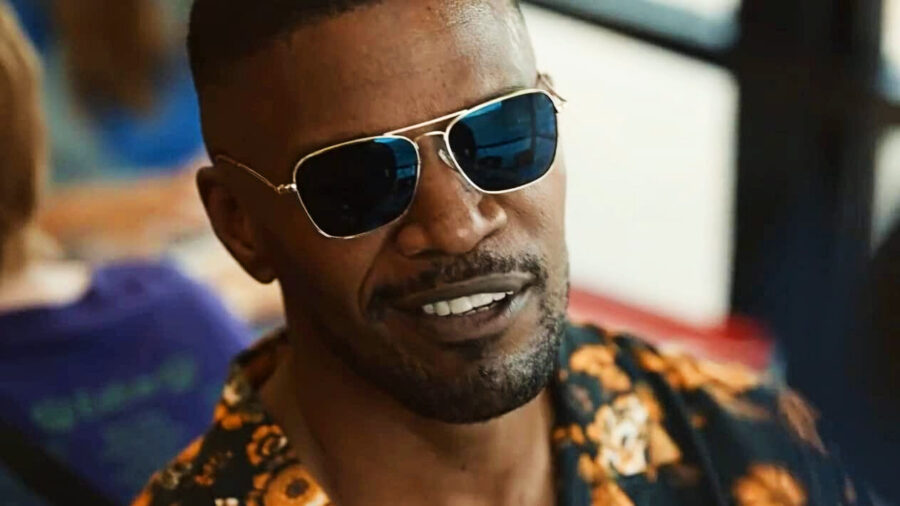
Music fans, especially hip-hop aficionados, should consider the film, too, given it features a prominent supporting role by Colson Baker, otherwise known as Machine Gun Kelly, who plays a drug dealer trafficking in Power.
Ultimately, for a sci-fi thrill ride sure to impress with its unique concept and powerful performances, stream Project Power today.
Entertainment
X-Men ‘97 Season 2 Proves The Past Is Still A Blast
By Chris Snellgrove
| Updated

When X-Men ‘97 premiered, it came in like the proverbial wrecking ball. At that point, superhero fatigue was bad enough that many fans were worried whether Marvel (whose live-action films had become very hit-or-miss) still had the juice to create something awesome. Throw in the fact that this was a revival of an absolutely beloved ‘90s cartoon, and we were all very nervous that the writers and animators would drop the ball and ruin an iconic part of our childhood. Fortunately, we worried for nothing. X-Men ‘97 Season 1 was the best thing Marvel made in years, providing episode after episode of nostalgic perfection.
In fact, the only bad thing about X-Men ‘97 was the wait for more. After the final episode streamed back in 2024, we had to sit back and wait a couple of years for another season. It’s been a long wait, but I’m happy to report that it was well worth it. The first three episodes of X-Men ‘97 Season 2 are now streaming on Disney+, and the show picks up right where it left off, with half the team stuck in the distant past and the other half stuck in the far future. Each episode raises the bar for superhero storytelling with ambitious plots and the best character-building on modern television.
When The Past Blasts Back

The plot of X-Men ‘97 Season 2 begins with one half of the team (including Cyclops, Jean Grey, Morph, and Wolverine) tossed into a dystopian adventure in which Apocalypse reigns supreme. There, they try to help the young Nathan Summers (who grows up to become Cable), fight the forces of Apocalypse, and make their way home. Meanwhile, the other half of the team (including Professor X, Magneto, Nightcrawler, and Beast) are tossed into ancient Egypt, where Apocalypse is a rebel fighting against a tyrant. There, Magneto gives him lessons about fighting oppressors, which may lead to either a Golden Age for mutants or a cruel, never-ending Age of Apocalypse.
As you might imagine, both groups of X-Men are very resourceful, and they make allies that help them in their struggle to get (as Bishop so memorably says) “back to the ‘90s.” But they also have a little help: Forge jumps into the future to help Cyclops and Jean’s group while Bishop jumps into the past to help Professor X and Magneto’s group. The real wild card is Cable, who assembles his own X-Force team comprised of himself, Psylocke, Archangel, Sunspot, and Jubilee. They investigate Apocalypse in the present day, but they run into an unexpected enemy: X-Factor, a government-sanctioned mutant team led by Cyclops’ brother.
Redefining Future Shock

Like X-Men ‘97 Season 1, Season 2 does an excellent job of folding various comic book storylines into the animated continuity in new and exciting ways. For example, the X-Force and X-Factor teams in this show will look familiar to any fans of ‘90s X-Men comics, but they have different origins, both being formed in response to the events of the previous season. X-Factor is the government’s response to the disappearance of the X-Men, basically filling the vacuum with their own tame group of superpowered mutants. X-Force is basically a gamble, with Cable assembling a team with the mix of knowledge and skills necessary to hit Apocalypse when he least expects it.
There are other great nods to different eras of X-Men comics, including Wolverine wearing the same awful bandana he wore in the comics after the adamantium was leached from his bones. Plenty of the young mutants introduced in Grant Morrison’s New X-Men make an appearance, including Quentin Quire and the Cuckoos. As predicted, the future scenes draw plenty of inspiration from The Adventures of Cyclops and Phoenix miniseries, and the past scenes draw heavily from the Rise of Apocalypse miniseries. Fortunately, everything onscreen makes sense in context, meaning you can easily follow along even if you’ve never read any of these comics.
When Beautiful Animation Meets Killer Voice Acting

The voice acting in X-Men ‘97 Season 2 remains top-notch. The returning cast does an excellent job, but it’s arguably the newcomers who shine brightest. For example, Michael Johnston (of Obsession fame) is excellent as Nathan Summers. Meanwhile, the new Big Bad has two perfect voice actors: Ross Marquand voices the creepier Apocalypse of the future, while Adetokumboh M’Cormack voices the younger version, who goes by En Sabah Nur. As for the returning cast, I was impressed with Chris Potter’s Cable, and I wouldn’t be much of a gamer if I didn’t give a shout-out to Jean Grey voice actor Jennifer Hale (you’ll always be my Commander Shepard).
In short, X-Men ‘97 Season 2 is more than a worthy follow-up to Season 1. It fires on all cylinders, pairing beautiful animation with writing that really respects these mutants and their tangled decades of lore. The voice acting is fantastic, and each episode leaves you wanting more. The first three episodes are out now on Disney+. Starting next week, the streamer will release one episode at a time. That may be frustrating if you’re someone who likes to binge your favorite entertainment. Trust me, though: this newest season of X-Men ‘97 is definitely worth savoring.

Tragically Overlooked Dark 90s Sci-Fi Was Supposed To Be An American Gundam
R-Rated Dark Netflix Sci-Fi Thriller Is Over-The-Top Action At Its Best


