
Entertainment
Star Trek Planned To Have Captain Archer Meet Sisko And Kirk During Tribble Troubles

By Chris Snellgrove
| Published

As a nostalgic English professor, I often think about these wise words from John Greenleaf Whittier: “Of all sad words of tongue or pen, the saddest are these, ‘It might have been.’” No matter what current events are bringing you down (and boy, do you have a lot to choose from right now), nothing will be quite as tragic as the idea that things could have turned out better. That’s not just true of personal or global events, either. In this case, it’s also true of Star Trek: Enterprise.
At this year’s TrekTalks (the annual livestream telethon that raises money for the Hollywood Food Coalition), several Enterprise writers and producers were reunited, including Brannon Braga, Mike Sussman, Phyllis Strong, André Bormanis, and Judith and Garfield Reeves-Stevens. During the stream, they dished on some of the coolest Enterprise episode pitches that were rejected. Some of them (including a Borg Queen origin story and a crossover with both The Original Series and Deep Space Nine) would have been amazing, and making those episodes could have done what once seemed impossible: saved Star Trek’s most hated spinoff from getting canceled.
Hey, You, Get Off Of My Cloud
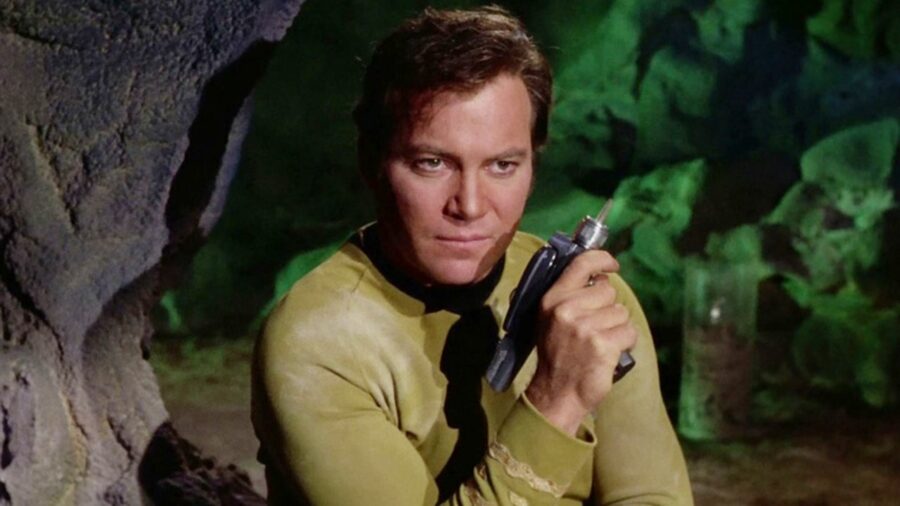
Star Trek: Enterprise was a show that, to put it mildly, couldn’t figure out what it wanted to be. Sometimes, it was a proto-Original Series frontier adventure, and other times, it was a post 9/11 nataionlistic parable. By Season 4, showrunner Manny Coto had transformed Enterprise into a must-see Star Trek show, but the damage was already done, and the show was canceled. That made it the first Trek show since The Animated Series to get fewer than seven seasons, and Enterprise was deemed a failure. However, the assembled writers and producers who reunited for Trek Talks revealed some rejected episode pitches that might have saved this underappreciated series.
For example, André Bormanis pitched a prequel to the Original Series episode “The Cloud Minders,” which featured an upper class of citizens literally living in the clouds while an underclass labored in the mines below. Bormani pitched an episode that would have shown the city in the sky being built while social unease and income inequality grew worse. Coto wanted to shoot this episode for Season 5, but Enterprise was canceled before that could happen.
From The Romulan War To World War III
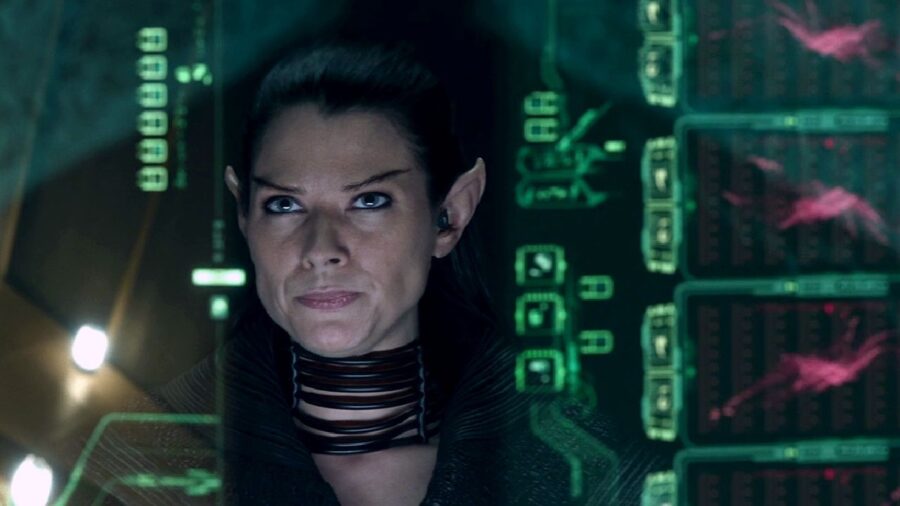
Speaking of the Coto and his scrapped plans for Enterprise, he was really keen on finally portraying the Romulan War onscreen. Mike Sussman confirmed that the late showrunner wanted to finally show the audience the Earth/Romulus conflict that had only been referenced in passing back in the Original Series. Brannon Braga chimed in and alluded to Coto having this planned out for Season 5, confirming that the early cancellation of Enterprise took yet another awesome story away from us.
Judith and Garfield Reeves-Stevens confirmed they had pitched an episode where Colonel Green (previously seen in the TOS episode “The Savage Curtain”) would survive and torment the descendants of those who fought him, with the audience discovering that Reed’s grandfather supported Green. In case his name doesn’t ring a bell, Green is the war criminal generally credited with starting World War III. Bringing him into an Enterprise episode would have shed light on Star Trek’s most mysterious and generally unexplored time period, but this episode was rejected because it was too similar to storylines involving the Khan-like Augments, themselves a remnant of WW3-era Earth.
Borg Queen Origin Story
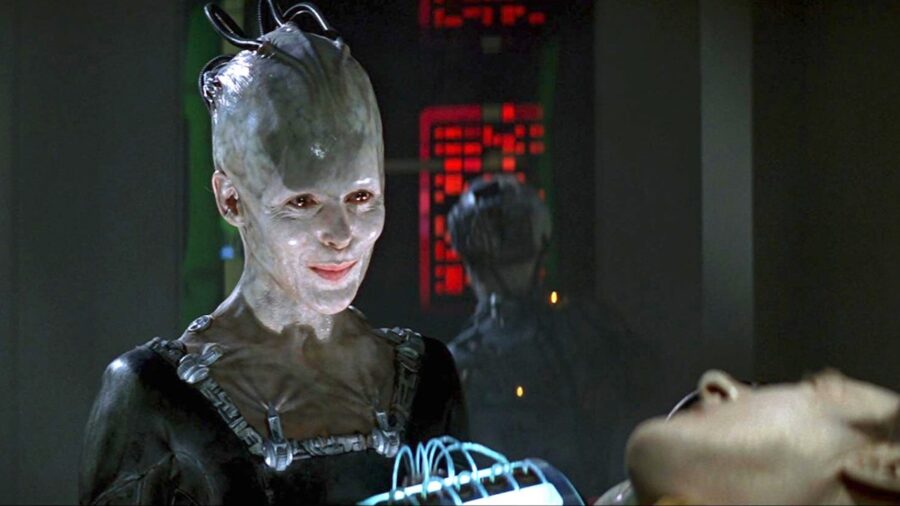
This same writing duo also pitched an episode where Alice Krige plays the head of Starfleet Medical and willingly chooses “to join the Collective.” For better or for worse, this would have provided an origin story for the Borg Queen, a character that many Star Trek fans feel has never made much sense.
This would have been a high-risk, high-reward story because it would either finally nestle this strange character into existing canon or ruin the Borg altogether. However, Reeves-Stevens have a great track record(they also wrote some of the best fiction and non-fiction books in Trek history), so if anyone could pull it off, it’s them.
Archer Meets Both Kirk And Sisko Amid The Trouble With Tribbles

The husband/wife writing duo’s final rejected Enterprise pitch was, far and away, the most ambitious. Had the show made it to Season 7, they wanted to feature one last Temporal Cold War episode in which Captain Archer and his crew would have to return to space station K-7 during the events of “The Trouble With Tribbles.”
There, they’d run into both Kirk’s crew from the original episode and Sisko’s crew from “Trials and Tribble-ations.” In retrospect, such an ambitious episode would have been far better than the Enterprise finale, which turned the show’s final story into Commander Riker’s bizarre holodeck simulation.
The Path Not Taken

That series finale was so bad that many Star Trek fans are grateful that Enterprise was canceled before it could get any worse. However, aside from the finale, Season 4 was a high point for this controversial show, and these rejected stories reveal the series’s still untapped potential.
Now, I can’t help but wonder if these episodes could have turned the metaphorical ship around, getting both fans and the network on board for more adventures with the franchise’s quirkiest crew. Had that happened, Enterprise would not have been canceled, and the future of Star Trek might not have landed in the hands of the creative world’s most fearsome villain: Alex Kurtzman.
Entertainment
Apple WWDC 2026 event: Live updates on iOS 27 and Siri AI
Every year, Apple hosts the Worldwide Developers Conference to reveal the latest updates to its operating systems (and occasionally drops some hardware surprises, too). And this year, Apple had a lot to cover.
WWDC 2026 is Tim Cook’s last big event as CEO, and the tech world has been waiting for a torch-passing moment to CEO-in-waiting John Ternus. We also learned all about iOS 27, macOS 27, iPadOS 27, and a ton more Apple products, including the revamped AI version of Siri, during the opening keynote.
WWDC 2026 kicked off with a live “special event” at Apple Park at 10 a.m. PT on Monday, June 8. That keynote has now ended, but you can still watch the livestream and catch up on all the biggest announcements.
Keep checking back, as we’ll be updating this page repeatedly throughout WWDC 2026, which officially runs through Friday, June 12.
Entertainment
Get 1 year of VPN, antivirus, breach alerts, and Incogni for just $75
TL;DR: Surfshark One+ with Incogni combines VPN protection, antivirus, breach alerts, and automated personal-data removal for $74.99 (reg. $250.20).
$74.99
$250.20
Save $175.21
Most people understand the idea of protecting their devices online. Fewer people realize how much of their personal information is already floating around the internet long before a hacker or scammer ever gets involved.
That’s what Surfshark One+ with Incogni is trying to address. And one year is on sale for just for $74.99 (reg. $250.20).
Mashable Deals
Instead of focusing only on VPN protection, the bundle tackles both sides of online privacy: protecting your devices in real time and reducing how much personal information is already circulating through data brokers and people-search databases.
The Surfshark side covers the familiar tools. You get a VPN for encrypted browsing across up to five devices, antivirus protection, private search, alternative identity tools for signups, and breach alerts that notify you if your email, passwords, IDs, or payment information show up somewhere sketchy.
Then there’s Incogni — the feature that makes this bundle feel more proactive than reactive.
Incogni automatically contacts more than 420 data brokers on your behalf and requests the removal of personal information like your name, address, phone number, and other identifying details. It also continues to monitor and re-request removals as your information reappears online.
On its own, Incogni normally costs about $95 per year, which makes its inclusion here especially notable.
This is an ideal opportunity for anyone increasingly uncomfortable with how exposed personal data has become online.
Mashable Deals
Get a 1-year subscription to Surfshark One+ with Incogni for a one-time payment of $74.99 (reg. $250.20).
StackSocial prices subject to change.
Not the day you’re after? Here’s the solution to today’s Connections.
Entertainment
I track TV prices year-round, so I know that these 15+ TV deals ahead of Prime Day are actually worth it
Table of Contents
Best TV deals ahead of Prime Day


Prime Day season is one of the best times of year to buy a TV on sale. That’s been etched into our mental calendars in July for the past decade, but this year, hype for one of the year’s biggest shopping events starts in June: Prime Day 2026 will run from June 23 to 26. As always, worthwhile TV deals are already popping up in the weeks preceding the event.
The good pre-Prime Day TV deals aren’t just at Amazon. Half the time, the reason that TV deals during Prime Day go so hard is that competing retailers like Best Buy refuse to let Amazon get all the attention — and it has already started this year. If you don’t want to wait until the end of the month to grab your new TV, here are 15+ of the best TV deals I’ve found at Amazon and Best Buy ahead of Prime Day. Most models in this list match or beat their all-time record-low price, according to Amazon price tracker camelcamelcamel.
Best TV deal ahead of Prime Day overall

$1,197.99
at Amazon
$1,999.99
Save $802
Why we like it
Hisense finally launched its highly-awaited RGB TVs on June 2. While both the UR8 and UR9 RGB TVs are on sale at Best Buy, there’s another 2026 Hisense TV with a much wilder discount: The 75-inch Hisense U7 Mini LED TV is just $1,197.99 after a massive 40% price drop from its usual $1,999.99.
Mashable Deals
Just released in March, the Hisense U7 series has a pretty incredible lighting system for its price range. Its backlight benefits from full-array local dimming, which uses clusters of tiny LED bulbs that can fully turn themselves on or off for more precise contrast during any scene or livestream. Other impressive numbers include a peak brightness of 3,000 nits (great news for FIFA fans trying to watch a game during the daytime) and a native 165Hz refresh rate (great news for gamers on a budget).
Deals on 43-inch TVs and under
Deals on 50-inch to 55-inch TVs
Deals on 65-inch TVs
Deals on 75-inch to 77-inch TVs
-
Toshiba 75-inch C350 4K Fire TV — $379.99
$729.99(save $350) -
Hisense 75-inch QD7 Mini LED QLED 4K TV — $549.99
$799(save $249.01) -
LG 75-inch 75B QNED 4K TV — $729.99
$999.99(save $270) -
Hisense 75-inch U6 Pro Mini LED QLED 4K TV — $848.99
$1,399.99(save $249.01) -
TCL 75-inch QM8K Mini LED QLED 4K TV — $1,497.99
$1,999.99(save $502) -
Hisense 75-inch S7N Canvas QLED 4K Art TV — $1,597.99
$2,499.99(save $902) -
Hisense 75-inch UR8 RGB Mini LED 4K TV — $2,199.99
$2,499.99(save $300) -
LG 77-inch C5 OLED 4K TV — $2,199.99
$3,699.99(save $1,500)
Deals on 85-inch TVs

Reports: NHLPA wants investigation before Oilers hire Mike Babcock
Big 12 ADs, NCAA president speak out against Brendan Sorsby ruling


