
Entertainment
New Scream Movie Is Only For Diehard Fans

By Chris Snellgrove
| Published

In 1996, iconic director Wes Craven rejuvenated the slasher genre with Scream, a film that served as the perfect deconstruction of horror movies. Scream was ahead of its time in many ways, predicting modern phenomena like true crime obsession and paradoxical relationships. At the same time, it worked as a perfect scary movie, one that transformed the entire genre for the better.
However, Scream was delivering diminishing returns even before Wes Craven died, and the franchise later re-oriented itself around a new pair of leads with Scream (2022). Unfortunately, the studio lost both Melissa Barrera and Jenna Ortega, which necessitated the return of original franchise icon Neve Campbell for Scream 7. The new movie is directed by original Scream scribe Kevin Williamson, and while it provides competent kills and fun moments for returning cast members, the sloppy plotting results in a film that only diehard fans will really enjoy.
Sydney’s Coming, And Hell Is Coming With Her

The basic premise of Scream 7 is that a new killer (or is it killers?) is gunning for Sydney Prescott, and they are claiming to be the original Scream villain, Stu Macher. Syd is skeptical and thinks Stu’s taunting video calls are just an AI fabrication, but the danger is all too real when her daughter and her daughter’s friends become targets for the attacker. Now, Sydney must team up with Gale Weathers and other returning allies, but even their combined strength may not be enough to defeat the one type of foe they have never fought before: one who refuses to follow any kind of rules.
The Stu Macher stuff is mostly an excuse to bring fan-favorite actor Matthew Lillard back into the fold, and his taunting video calls to Syd are easily one of the best parts of the film. Unfortunately, his presence is also evidence of the worst part of the film: namely, that Scream 7 is much more interested in wallowing in nostalgia than really building anything new. This is a franchise that once deconstructed the entire horror genre, and every movie was fair game. Now, the latest Scream is only interested in its own lore, and with nothing left to really deconstruct, all director Kevin Williamson can really do is play the hits of yesteryear.
Like Mother, Like Daughter

On paper, that happens through a loose reconstruction of the first film: Sydney now has a daughter of her own, one who is the exact age that Syd was when the Woodsboro murders went down. She’s got a slightly creepy boyfriend who likes to climb in her window for surprise snuggles and a group of hapless friends that soon become cannon fodder for a marauding masked killer. The police (including her dad, the chief) are helpless to stop the carnage, forcing these plucky teens to take matters into their own hands lest they get picked off one by one.
A remake (or requel, or whatever we’re calling all this crap now) of the first film works well on paper, but the essential problem of Scream 7 is that it can’t decide which characters to focus on. We start out with an uneasy balance of newer and older actors, but the film soon focuses almost exclusively on legacy characters like Sydney Prescott, Gale Weathers, and even Scream 5 and 6 veterans Chad and Mindy. While that leads to some great fan service for returning audiences, it creates one of the film’s biggest problems: we don’t really get to know almost any of these younger characters before Ghostface is picking them off.
Ghostface Is Back For More Blood Than Ever Before

Fortunately, the kills in this movie are some of the nastiest and most memorable in the entire franchise, and Ghostface is as viscerally scary as ever as he dispatches victims in increasingly grotesque ways. Accordingly, your enjoyment of Scream 7 will largely hinge on your primary motivation for watching slasher movies. If you’re here for killers looking cool (the kids call it aura farming) and pretty faces dying ugly deaths, this latest franchise entry delivers all that and a bloody bag of chips. If you prefer to get to know the virtual victims before they are transformed into raw meat, you’ll likely find Scream 7 to be the weakest movie in the entire series.
Speaking of weak, the reveal of the killer (or is it killers? Don’t worry, I’m keeping this spoiler-free) is particularly disappointing because the motivation for stalking Sydney comes out of nowhere. In the first movie, Stu Macher and particularly Billy Loomis had tangible reasons for stalking Syd, and discovering who the killers were felt a bit like solving the puzzle of a whodunnit. Like Scream 6 before it, Scream 7 tries too hard to surprise fans with the reveal, and this came at a cost: namely, the killer’s motivation makes no real sense, and it comes in the form of an exposition chunk so thick it threatens to choke the climax of the movie.
Killer Performances From Actors Old And New

Aside from the cool kills, Scream 7 does a few other things very well. The new additions to the cast are awesome: Community’s Joel McHale is weirdly perfect as Sydney’s top cop husband, and the character steals his handful of scenes with McHale’s trademark rogueish charisma. But I was even more pleasantly surprised by Isabel May, who convincingly gives Sydney Prescott’s daughter an aching vulnerability whose pain masks ice-cold reserves of hidden strength.
As you might imagine, the returning actors all do a great job, starting with Courtney Cox: her Gale Weathers is as fierce and funny as ever, and she has taken the characters played by returning actors Mason Gooding and Jasmin Savoy Brown under her wing as journalistic interns. Those younger characters continue to provide humorous, Randy-like commentary on the violent proceedings around them. But the actor truly giving it her all is Neve Campbell, whose Sydney reluctantly saddles up for one last fight with the ghostly demons of her past.
When You Stare At The Past, It Stares Right Back

Ultimately, how much you like Scream 7 will depend on how much you enjoy the franchise as a whole. As for myself, I’m a superfan: I saw the original in theaters, I’ve listened to the cast speak at multiple conventions, and I’ve got a house filled with way too much Ghostface merchandise. From the perspective of a superfan, the film is decent (good, not great) in bringing back our favorite characters and wrapping up its derivative story in the bloody packaging of some truly innovative kills.
If you’re not a Scream fanboy, though, it’s worth waiting to catch this on streaming, assuming that you catch it at all. Kevin Williamson wrote the legendary first film in this franchise, but now that he’s in the director’s chair, he created a movie that only complete franchise diehards will really enjoy. As for everyone else, let’s just say that if Ghostface calls, Scream 7 will never be the answer to this franchise’s age-old question: “what’s your favorite scary movie?”

Entertainment
This $43 bundle quietly upgrades your entire PC experience
TL;DR: This rare Microsoft bundle deal gives you a lifetime license to Microsoft Office Professional 2021 for Windows and Windows 11 Pro for only $42.97 (reg. $418.99) through May 17.
$42.97
$418.99
Save $376.02
Looking for an affordable way to make your old PC feel new again? If you don’t have the funds to buy a brand new computer, don’t worry. The Ultimate Microsoft Office Professional 2021 for Windows lifetime license and Windows 11 Pro Bundle is the next best thing, offering your computer a total upgrade for only $42.97 through May 17.
Don’t count out your dusty old PC. This Microsoft bundle is here to give it a total facelift for less than $50. It kicks off with a lifetime license to some of the brand’s most popular tools — Microsoft Office, which you’ll pay for once and enjoy without any subscription fees.
Mashable Deals
You’ll get permanent access to a suite of eight helpful apps with Microsoft Office Professional 2021 for Windows. It includes staples that have been around for decades, like Word, Excel, PowerPoint, and Outlook. You’ll also get newer favorites like Teams, OneNote, Access, and Publisher.
Once you’ve loaded the apps onto your device, you can upgrade your OS to Windows 11 Pro. It’s an operating system made for modern professionals, with tools that support your workflow. Enjoy a more powerful search experience, improved voice typing, a seamless interface, snap layouts, and much more.
You can rest easy knowing Windows 11 Pro takes your cybersecurity seriously. You’ll have biometric logins, encrypted authentication, and advanced antivirus defenses to keep your data secure.
Mashable Deals
Show your PC some love with the Microsoft Office Professional 2021 for Windows and Windows 11 Pro bundle for only $42.97 (reg. $418.99) now until May 17.
StackSocial prices subject to change.
Entertainment
Star Trek’s First Broadcast Episode Was Very Carefully Chosen, Because It Was Boring
By Chris Snellgrove
| Published

These days, Star Trek is a bona fide pop culture phenomenon. But during the development of The Original Series, there was anxiety that the general public wouldn’t really understand Gene Roddenberry’s mashing up Western tropes with a sci-fi setting. Making matters worse was that the original pilot, “The Cage,” had been rejected by NBC for being too brainy. Fortunately, Roddenberry got a chance to shoot another pilot, one which impressed the network enough to order an entire season worth of episodes.
Several episodes of Star Trek: The Original Series had already been shot when the time came for this new show to make its broadcast premiere. The first episode that the general public saw was “The Man Trap,” which featured a shapeshifting monster that was revealed to be an alien salt vampire. This good-but-not-great episode was an odd choice, and it was one that the cast and crew hated. As it turns out, though, this episode was very carefully selected by executives because it served as an inoffensive, relatively straightforward encapsulation of everything Star Trek had to offer.
It’s A Trap!

Most of the information we have about why “The Man Trap” was selected as Star Trek’s first episode comes from the book Inside Star Trek: The Real Story. Within this impressive reference tome, Robert H. Justman and Herbert F. Solow revealed something surprising: NBC had several other episodes to choose from for the premiere, including “The Corbomite Maneuver,” “Charlie X,” “Mudd’s Women,” “Where No Man Has Gone Before,” and “The Naked Time.” All of them had already been shot and were mostly finished, so it was just a matter of figuring out which episode would serve as the best introduction to Star Trek, a heretofore unknown sci-fi series.
“The Man Trap” won out, mostly because the powers that be worried that other episodes would be off-putting to general audiences in some very specific ways. For example, they worried that audiences would find “Charlie X” a story that was “too gentle” because it focused on an adolescent with special powers. This was probably the right call, in retrospect: when Variety gave a negative review of “The Man Trap” (an episode chosen, in part, because of its relative maturity), they declared that Star Trek: The Original Series was “better suited to the Saturday morning kidvid bloc” (ouch!).
A Monster Hit Of An Episode

“The Corbomite Maneuver” was a great potential choice, but this episode’s impressive special effects were still in post-production, and almost all of its action took place on the ship. “Where No Man Has Gone Before” really outlined the premise of the new show, but it was deemed “expository” for general audiences expecting more action and danger. Justman thought “The Naked Time” was a killer introduction to the crew’s personalities, but the network passed, presumably because of how over-the-top (half-naked, swashbuckling Sulu? Oh, my!) that episode gets. “Mudd’s Women,” meanwhile, was deemed too offensive because the plot involved literally selling women to miners.
Through this process of elimination, executives decided that “The Man Trap” was the best intro to Star Trek. It had cool scenes on both the Enterprise and a distant outpost (a strange new world) and featured a straightforward action plot you didn’t have to be a sci-fi aficionado to understand. Finally, it was all about finding and defeating a creepy monster, which offered thrills to audiences of all ages. The network’s choice paid off, and Star Trek: The Original Series became the most popular sci-fi show in television history, even though the cast (including William Shatner and Leonard Nimoy) thought “The Man Trap” was the worst possible episode they could have chosen.

All of this is a keen reminder of how much thought and work went into putting Star Trek’s best foot forward. It might be a reminder that Paramount’s current upper leadership needs, as Starfleet Academy hit the ground running with the worst episodes of Season 1. The show got better after that, but it didn’t matter because the prospective audience had already been driven away. As it turns out, today’s execs need to learn something that the network execs of the ‘60s had learned very well: series succeed when you give the audience what they want to see and not what you want to show!
Entertainment
How A Fantasy Box Office Bomb Lost $200 Million In Theaters, And Suddenly Became A Streaming Hit
By Jonathan Klotz
| Published

For the last decade as streaming has taken off in homes around the world, it’s become possible for films that lost historical amounts of money in theaters to find success, even if it might be the post-Mystery Science Theater 3000 trend of “so bad it’s good.” That’s why a massive flop, for example say, Morbius, and films that slightly missed the mark like The Fall Guy can turn it around and become a streaming success.
What’s even more impressive is the amazing turnaround of 2013’s Jack the Giant Slayer, which lost Legendary Pictures an alleged $200 million, only to end up topping streaming charts in 2025.
The Classic Fairy Tale With A Twist
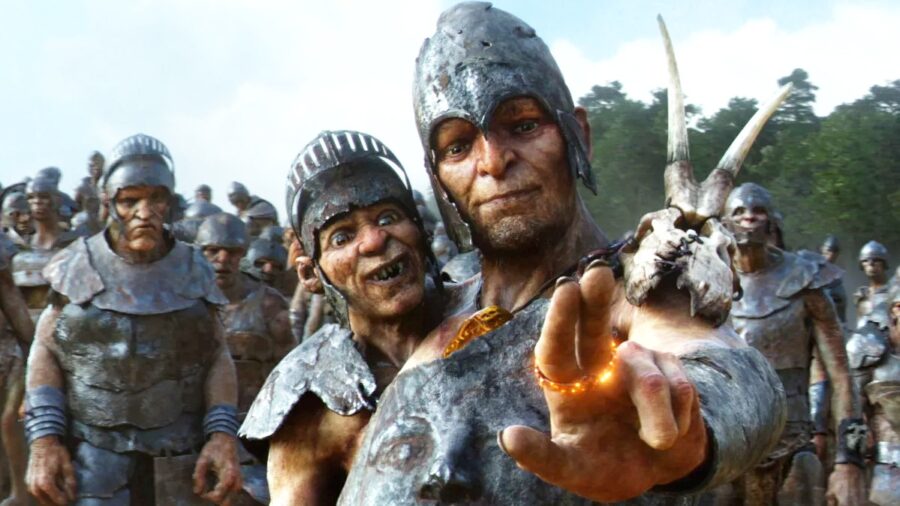
Everyone knows the story of Jack and the Beanstalk, the classic fairy tale about selling a horse for magic beans and climbing a beanstalk to find a giant living in the clouds. It’s simple, contains multiple morals, and can be easily adjusted to turn Jack into the villain, but Jack the Giant Slayer instead asks, “What if there was no moral, and instead of one giant, there was an entire army of evil giants?” The movie is the classic story, as you’ve never seen it before, and it almost works.
Nicholas Hoult plays Jack, the young man who finds himself trading his horse to a monk in exchange for beans that he can’t allow to get wet, ever. Like the rules in Gremlins, it’s not long before Jack accidentally gets the beans wet and a beanstalk grows under his house with the princess, Isabell (Eleanor Tomlinson), trapped inside as it grows into the sky. All the king’s men gather to rescue the princess, including Lord Roderick (Stanley Tucci), who, thankfully, Jack the Giant Slayer makes obvious is very evil, very quickly.
It’s up to Jack, Isabell, and the loyal Knight, Elmont (Ewan McGregor) to save the kingdom and stop the invasion of giants led by Roderick and the giant two-headed General Fallon (Bill Nighy). If there’s one thing Jack the Giant Slayer does better than every other adaptation, it’s the third act featuring a full-blown war between humans and giants, with a touch of humor and absurdity. Watching a giant toss a windmill like the glaive from Krull is the perfect amount of off-beat to distract from a surprising amount of body horror in both the giant’s designs and Fallon’s ultimate fate.
A Movie For No One
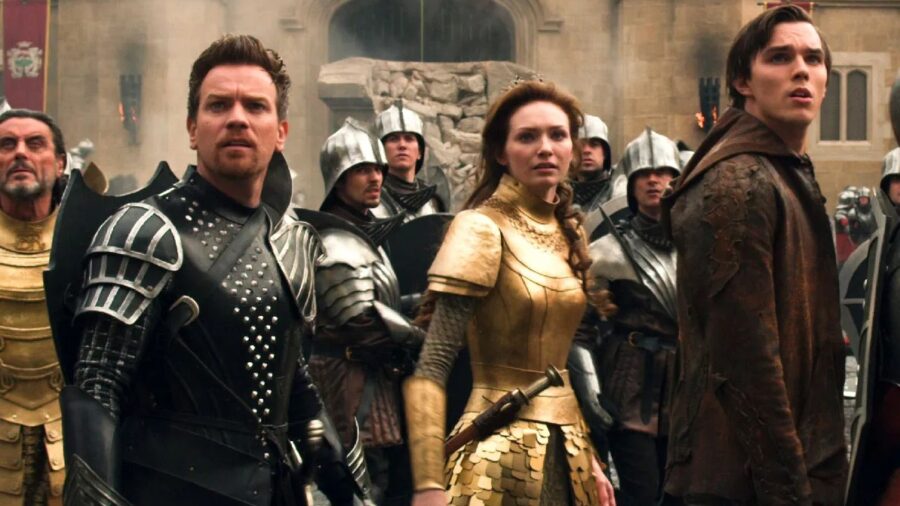
Jack the Giant Slayer looks too good, and the star-studded cast is having way too much fun for it to be a truly bad movie. The problem is that the pacing is off: it takes a little too long to get to the good stuff, then it feels a little too rushed, and though it is a fun adventure, it’s also, like the source material, simplistic. It’s not like the movie wasn’t watched in theaters; it made $197 million worldwide, which would be a great haul except it cost $185 million to make, and that’s not including the extensive marketing campaign.
The push and pull of director Bryan Singer’s vision of a dark take on the fable, complete with actual people-eating on screen, and the sanitized version that hit theaters, which was still too dark for children, since the film is surprisingly rated PG-13, meant it ended up being a film for no one. The Rotten Tomatoes ratings, of 52 percent from critics and 55 percent from the audience, are proof that the final product is not great, but not bad; it’s a movie that will keep you watching for a few hours and then leave no lasting impression. These days, Lionsgate and Sony wish they’d release a movie that is that well-received, as even Jack the Giant Slayer looks like a masterpiece compared to Borderlands or Kraven the Hunter.
Streaming is the perfect home for Jack the Giant Slayer, and 10 years later, it no longer matters that the movie lost hundreds of millions in theaters. It finally gets to stand on its own as a fun, if unremarkable, fantasy adventure.

Angels activate OF/DH Jorge Soler from four-game suspension
Flyers aim to take 2-0 lead over rival Penguins


