
Entertainment
Kids Today Will Never Understand A Generation's Hatred For The Shrine Of The Silver Monkey

By Jonathan Klotz
| Published

If you read that headline, and immediately was filled with the rage of a thousand burning suns, let this be your reminder to stretch. We may be getting old, but we still get unreasonably angry over the inability to put together a three-piece statue. It had a top, a middle, and a base. That’s it. It’s not difficult. Nickelodeon’s Legend of the Hidden Temple started airing in 1993, went off the air in 1995, but its impact has traumatized a generation.
Legends Of The Hidden Temple Was An Afterschool Staple

Legend of the Hidden Temple was one of the many game shows filmed at the network’s Universal Studio location in the early 90s. This one pit six teams against each other in a race across the temple moat. The Red Jaguars, Green Monkeys, Blue Barracudas, Orange Iguanas, Silver Snakes, and the best of them, Purple Parrots, were all comprised of one boy and one girl, and after the race, only four would be left to descend the Steps of Knowledge. This was the shoe-horned in “educational” component of the show with questions centered around the legendary artifact they have to receive from the Temple at the end of the game.
Round 3 let teams win pendants, and the team with the most at the end of three games was able to go on a run through the Temple. This was why every kid was watching Legend of the Hidden Temple in the first place. We all daydreamed about making the run, going from room to room, evading temple guards, and getting the artifact. Waiting for every team at some point during the run was the Shrine of the Silver Monkey. It spelled doom for all of the idiot pre-teens.

That’s what I thought at least, watching from the floor after I got home from school. The pieces of the monkey were set around the room at random, and yet, for some reason, countless kids would try to put the head on the base. Or install the middle without the base in place. Even pure guessing trial and error should get them to the right combination. THERE WERE ONLY THREE PIECES. What I didn’t know as a kid watching, was the depths of evil that the show’s producers tapped into when designing the Silver Monkey.
I knew it was frustrating for the contestants between the host, Kirk Fogg, the studio lights, the audience cheering them on, and the very tight three minute time limit. What I didn’t know until later was that the statue was purposely designed to be as difficult as possible. The head of the statue has a pole that goes through the middle and the base at the right angle, will hit a button at the bottom that opens the door to the next room. It was especially brutal for the shorter contestants.

Now, host Kirk Fogg and co-host Olmec (voiced by Dee Bradley Baker) never let on that there was an added degree of difficulty. The angle was purposely designed to be hard, and looking back, the pedestal was set up juuuuust high enough to where it would be hard to aim the rod. Every kid watching Legends of the Hidden Temple was getting angry at the wrong people.
The Forgotten Legend Of The Hidden Temple Movie

In 2016, Nickelodeon aired the TV movie Legend of the Hidden Temple, starring DC’s Hawkgirl Isabela Merced as Sadie, which brought back Fogg and Baker to reprise their roles. Of course, it turns out the Temple isn’t a run-down theme park attraction, but an actual Temple. Sadie and her two younger siblings have to run through the Temple, retrieve the pendant, and get out. And yes, they have to solve the Shrine of the Silver Monkey.
The Nickelodeon movie was watched by 1.6 million viewers, and then, in 2021, The CW brought back the original game show, except now, it was for adults. Slapping in reality television style confessionals between the rounds helped pad out each episode to 60-minutes, but also wrecked the flow of the game show. To the shock of absolutely no one, it was cancelled after one season.
Legend of the Hidden Temple only aired for 120 episodes over three seasons, but it was one of those shows that felt like it was on forever. The entire genre of cheap game shows made for kids has been overtaken now by YouTubers. It’s how MrBeast got so big in the first place. If kids today wanted to see why the mere mention of the Shrine of the Silver Monkey causes eye twitches in Millennials, they can catch the entire original run on Paramount+.
Entertainment
Amazon has Yeti coolers on sale for up to $65 off — just in time for peak summer heat
With summer heat taking over, it’s time to cool down. Get out of the house and into a shady forest, sit next to the lake-side breeze, or take to the local pool for some cooling relief. In addition to the cool air, pack the chilled beverages along in a Yeti cooler.
One of the top outdoor brands makes a worthwhile range of coolers, and Amazon has a handful of models on sale for 20% off. Snag one of these before your next outing and you’ll have cool drinks and snacks ready to go. Check out some of our favorite deals.
Best overall Yeti deal
$260
at Amazon
$325
Save $65
Why we like it
A fan favorite, the Yeti Hopper M backpack is packed with functional design elements. The closed-cell foam keeps items chill while the external kangaroo pocket is perfect for keys, wallet, or a phone. Plus, the soft backpack straps make it comfortable for carrying around in the heat.
Mashable Trend Report
Best Yeti backpack deal
$160
at Amazon
$200
Save $40
Why we like it
While it’s on sale for $40 off, upgrade to the Yeti Ranchero Backpack. The 18-liter model is on sale for $160, down from the normal price of $200. It has quick-access zippers to everything you packed along for the day, and it can stand up on it’s own. Keep in mind, this model isn’t designed to keep items cold, but instead is a well-designed backpack.
Best Yeti personal cooler deal
$200
at Amazon
$250
Save $50
Why we like it
Designed to hold up to 12 cans plus ice, the Hopper Flip is great for keeping drinks cool for a day spent outside. The leak-proof HydroLok zipper means a drip-free experience. Plus, the high-density fabric is UV-resistant and can handle punctures.
Entertainment
The Sitcom Trope That Makes No Sense But Every Show Does It
By Robert Scucci
| Published
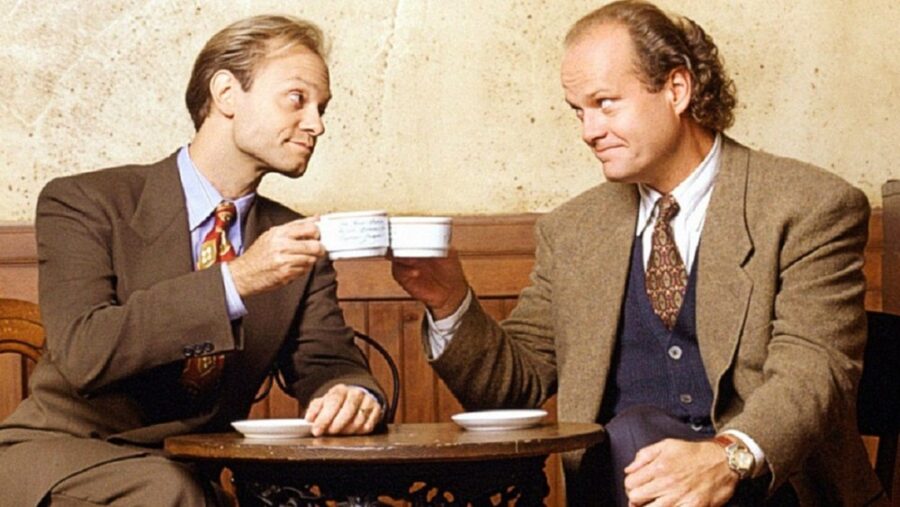
For the sake of convenience and continuity, every single sitcom somehow has a soundproof kitchen that’s seemingly located in another dimension where guests can’t hear conversations across an open floor plan. On a technical level, this trope makes sense because erecting an entirely new set for secret conversations to take place would prove to be a cumbersome ordeal. But how much disbelief are we supposed to suspend when sitcom characters like Frasier Crane talk loudly about their guests who are clearly within earshot?
Magically Sound Proof Kitchens

The only sitcom in recent memory that actually acknowledged this trope during its run was How I Met Your Mother. In the episode “Okay Awesome,” Marshall and Lily are frustrated after inviting their new boring friends, Claire and Austin, over for a wine-tasting party. When Marshall steps into the kitchen to air his grievances about Claire and Austin, it’s revealed that Claire is standing right behind him, having heard every word. It’s a rare instance of a sitcom recognizing that an open-concept apartment doesn’t magically become a private confessional just because somebody crossed into the kitchen.
Even then, it’s implied that if Claire hadn’t breached the kitchen’s threshold, Marshall would have gotten away with his mean-spirited jabs about Claire and Austin’s 30-year fixed mortgage and ultrasound photos. Given how the episode concludes with Marshall and Lily literally climbing out of their bathroom window to meet up with the rest of the gang at the club, “Okay Awesome” didn’t need to lean into the soundproof sitcom kitchen trope because it’s not like they were trying to save face in the first place. If anything, having Claire overhear the entire conversation from the living room would have better sold the joke while poking even more fun at one of television’s oldest unwritten rules.
Pokes Fun At The Concept

From this point forward, we never see Claire or Austin in any significant capacity again, so who cares if their feelings get hurt over some critical commentary when their hosts rudely abandon their own party to meet up with the rest of the gang anyway? Their friendship was clearly doomed regardless, which makes the need for a magically private kitchen feel even more unnecessary.
I’m willing to forgive How I Met Your Mother because it at least acknowledges the absurdity of the trope instead of pretending it isn’t happening. Most sitcoms simply expect us to accept that crossing an invisible line into the kitchen somehow creates a cone of silence, but “Okay Awesome” briefly calls attention to how ridiculous that idea actually is before going right back to business as usual.
The Most Egregious Examples Can Be Found In Frasier

But I can’t say the same thing about Frasier, where Frasier Crane routinely has crucial conversations in his kitchen with his booming baritone voice while his guests sit less than 10 feet away in the living room. One of the most egregious examples of the soundproof sitcom kitchen trope comes in “Daphne Dates a Niles Doppelganger,” when Niles has a complete meltdown over hesitating to tell Daphne how he feels, only to watch her start dating a man who’s practically his exact double.
While the episode implies that conversations taking place in Frasier’s kitchen can’t be heard anywhere else in the apartment, it completely undermines that logic moments later. As Frasier mingles with his guests in the living room, he immediately hears Niles accidentally drop and shatter one of his antique coffee cups in the kitchen (Catherine of Aragon!), proving that sound can, in fact, travel freely between the two rooms. If Niles breaking a coffee cup carries across the apartment, there’s no reason an emotionally distraught Frasier ranting at full volume shouldn’t.
The Rare Exception
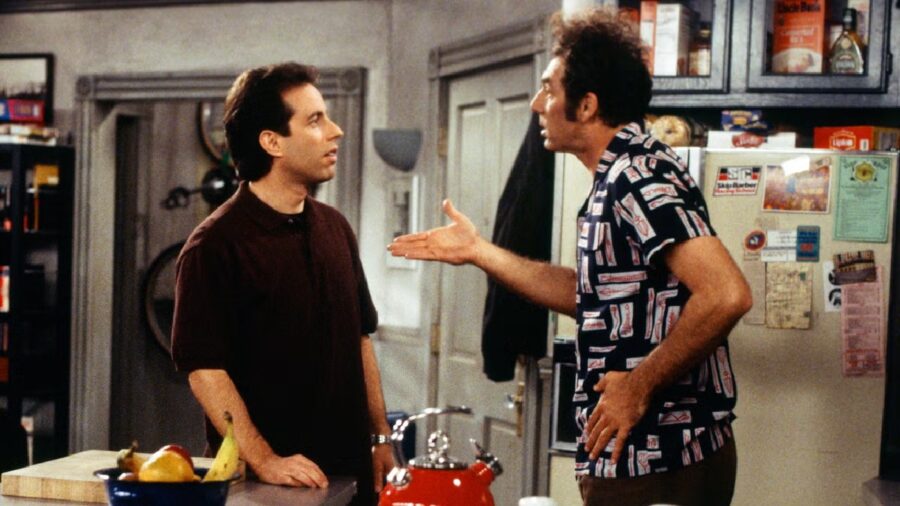
If sitcoms are going to use this trope, they should at least commit to it. The kitchen can’t only become a soundproof bunker when the plot demands a private conversation, only for noises to travel freely across the exact same distance moments later. Either sound carries through an open floor plan or it doesn’t.
That’s also why the trope feels less noticeable in sitcoms like Seinfeld and It’s Always Sunny in Philadelphia. Those shows thrive on characters openly scheming against one another, insulting each other to their faces, or making no effort to hide their selfish intentions in the first place. When everybody’s already saying the quiet part out loud, there’s far less need for a magically silent kitchen to keep the story moving.
Entertainment
The Best 1980s Sci-Fi Horror Thriller You've Never Seen Is One Of Quentin Tarantino's Favorites
By Sckylar Gibby-Brown
| Published
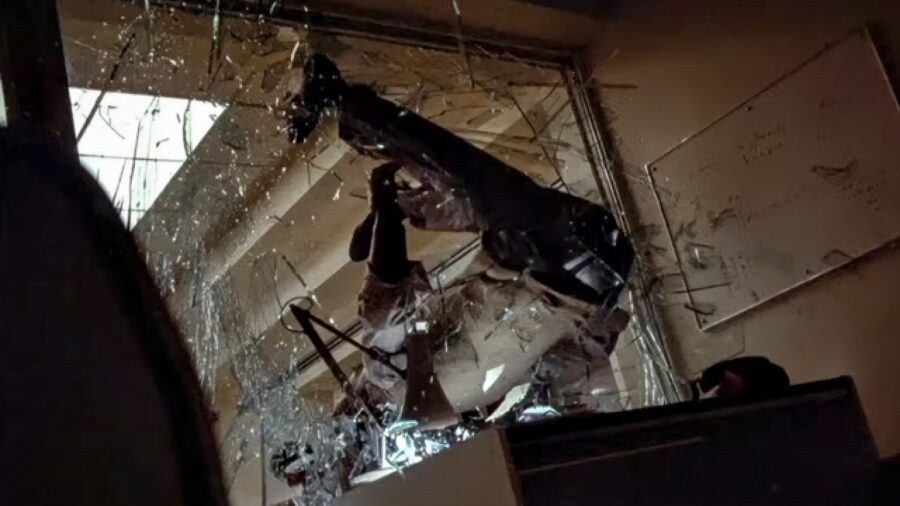
Quentin Tarantino has covered many genres throughout his filmmaking career, but he’s never tackled a horror film. That doesn’t mean he’s not a fan, however. In fact, the Kill Bill director claims the 1982 horror thriller The Sender is his favorite.
Tarantino shared that The Sender was his favorite horror film while joining Edgar Wright, the writer and director of Hot Fuzz, for a commentary special for the action comedy’s DVD release. During the special feature, the pair talked little about Hot Fuzz, instead discussing the most influential movies throughout their careers. They covered over 190 different features, most of which you’ve probably never heard of, including this forgotten sci-fi horror thriller.
Breaks The Boundaries Of Reality

The Sender is a 1982 British psychological horror thriller directed by Roger Christian and written by Thomas Baum. The film is a tantalizing exploration of trauma, telepathy, and the blurred lines between reality and hallucination. The script is brought to life by a talented cast of actors you’ve probably seen before, including Kathryn Harrold (Raw Deal), Željko Ivanek (Seven Psychopaths), Shirley Knight (As Good As It Gets), and Paul Freeman (Hot Fuzz).
The Sender unfolds with the discovery of a young man (Ivanek), disoriented and amnesiac, attempting to drown himself on the shore of a lake. Labeled as “John Doe #83,” he is admitted to a mental hospital under the care of psychiatrist Dr. Gail Farmer (Kathryn Harrold). As John’s peculiar behaviors surface, including the projection of his dreams onto others, Dr. Farmer uncovers a web of suppressed memories and psychic abilities.

Amidst visions of a haunting maternal figure and the relentless pursuit of his own demise, John’s telepathic powers spiral out of control. Dr. Farmer’s attempts to understand and aid him are met with skepticism from her colleagues, culminating in a risky electroshock therapy session. However, as the truth of John’s past begins to surface, the boundaries between reality and illusion blur, leading audiences to a climactic showdown at the end of The Sender.
An Exploration Of Trauma
At its core, The Sender grapples with the theme of trauma and its lingering effects on the human psyche, as shown through John’s journey. Baum loosely based the screenplay on his own upbringing, inspired by his experience growing up with an agoraphobic and overly protective mother.

The concept of telepathy, which appears as a main theme in The Sender, is probably not based on real-life experiences. Using telepathy, John projects his dreams onto other characters in the film, creating a metaphor for the interconnectedness of human consciousness and showcasing the blurred lines between the self and the other.
Because the film covers such deep abstract concepts, director Roger Christain decided to bring a distinct visual style to The Sender, weaving together elements of surrealism and psychological tension to create the foreboding atmosphere of lingering dread. Tarantino is certainly not the only audience member who remained on the edge of their seat while watching the film flick between terrifying images of John’s hallucinations to the stark, clinical interiors of the mental hospital.
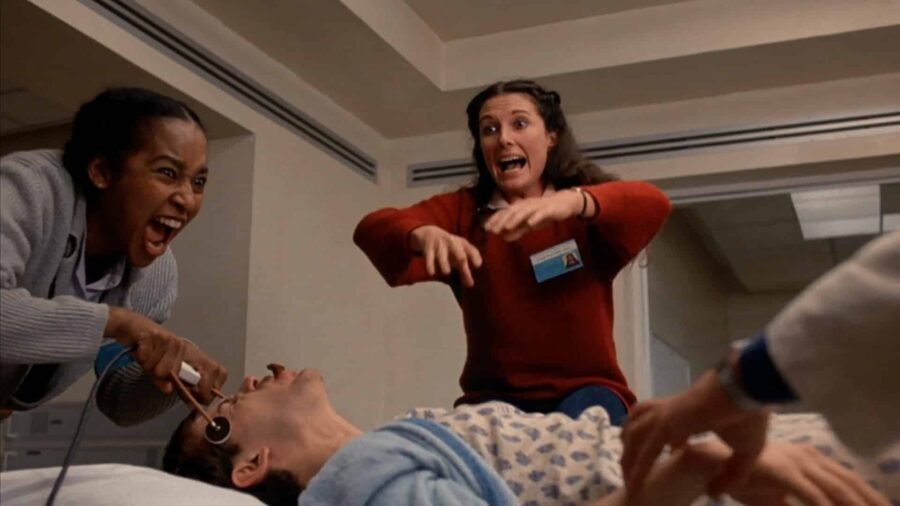
Now, The Sender is a forgotten thriller of days long past. But thanks to Quentin Tarantino, as well as horror auteur Wes Craven, more cinephiles are discovering this film. It’s hard to find this movie on streaming, but you can always rent or purchase on-demand through YouTube, Apple TV+, Amazon Prime Video, and Fandango.

Robert Lewandowski could debut as Fire host Whitecaps
Astros trade RHP Lance McCullers Jr. to Brewers


