
Entertainment
The Best 1980s Sci-Fi Horror Thriller You've Never Seen Is One Of Quentin Tarantino's Favorites

By Sckylar Gibby-Brown
| Published
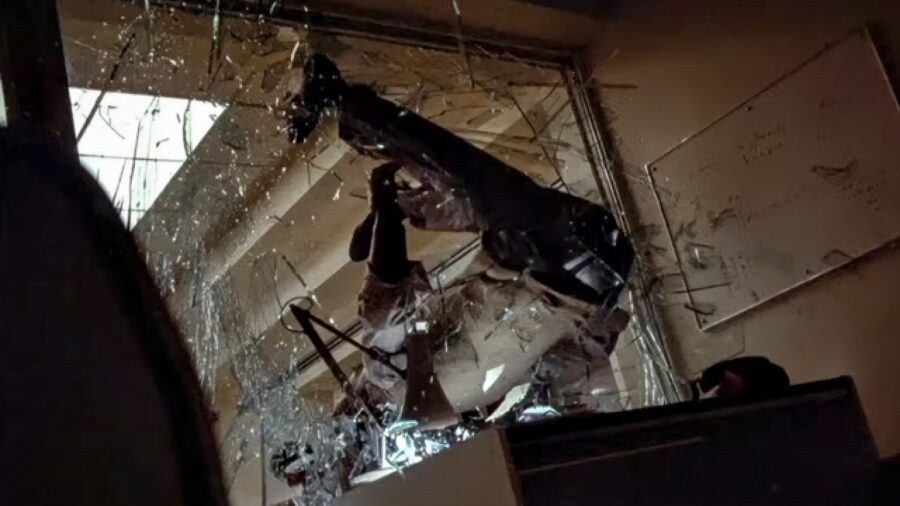
Quentin Tarantino has covered many genres throughout his filmmaking career, but he’s never tackled a horror film. That doesn’t mean he’s not a fan, however. In fact, the Kill Bill director claims the 1982 horror thriller The Sender is his favorite.
Tarantino shared that The Sender was his favorite horror film while joining Edgar Wright, the writer and director of Hot Fuzz, for a commentary special for the action comedy’s DVD release. During the special feature, the pair talked little about Hot Fuzz, instead discussing the most influential movies throughout their careers. They covered over 190 different features, most of which you’ve probably never heard of, including this forgotten sci-fi horror thriller.
Breaks The Boundaries Of Reality

The Sender is a 1982 British psychological horror thriller directed by Roger Christian and written by Thomas Baum. The film is a tantalizing exploration of trauma, telepathy, and the blurred lines between reality and hallucination. The script is brought to life by a talented cast of actors you’ve probably seen before, including Kathryn Harrold (Raw Deal), Željko Ivanek (Seven Psychopaths), Shirley Knight (As Good As It Gets), and Paul Freeman (Hot Fuzz).
The Sender unfolds with the discovery of a young man (Ivanek), disoriented and amnesiac, attempting to drown himself on the shore of a lake. Labeled as “John Doe #83,” he is admitted to a mental hospital under the care of psychiatrist Dr. Gail Farmer (Kathryn Harrold). As John’s peculiar behaviors surface, including the projection of his dreams onto others, Dr. Farmer uncovers a web of suppressed memories and psychic abilities.

Amidst visions of a haunting maternal figure and the relentless pursuit of his own demise, John’s telepathic powers spiral out of control. Dr. Farmer’s attempts to understand and aid him are met with skepticism from her colleagues, culminating in a risky electroshock therapy session. However, as the truth of John’s past begins to surface, the boundaries between reality and illusion blur, leading audiences to a climactic showdown at the end of The Sender.
An Exploration Of Trauma
At its core, The Sender grapples with the theme of trauma and its lingering effects on the human psyche, as shown through John’s journey. Baum loosely based the screenplay on his own upbringing, inspired by his experience growing up with an agoraphobic and overly protective mother.

The concept of telepathy, which appears as a main theme in The Sender, is probably not based on real-life experiences. Using telepathy, John projects his dreams onto other characters in the film, creating a metaphor for the interconnectedness of human consciousness and showcasing the blurred lines between the self and the other.
Because the film covers such deep abstract concepts, director Roger Christain decided to bring a distinct visual style to The Sender, weaving together elements of surrealism and psychological tension to create the foreboding atmosphere of lingering dread. Tarantino is certainly not the only audience member who remained on the edge of their seat while watching the film flick between terrifying images of John’s hallucinations to the stark, clinical interiors of the mental hospital.
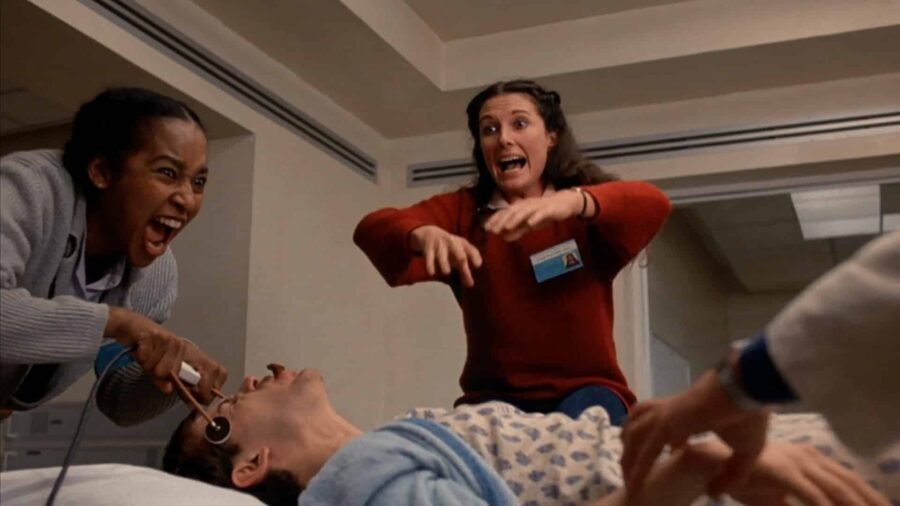
Now, The Sender is a forgotten thriller of days long past. But thanks to Quentin Tarantino, as well as horror auteur Wes Craven, more cinephiles are discovering this film. It’s hard to find this movie on streaming, but you can always rent or purchase on-demand through YouTube, Apple TV+, Amazon Prime Video, and Fandango.
Entertainment
The Sitcom Trope That Makes No Sense But Every Show Does It
By Robert Scucci
| Published
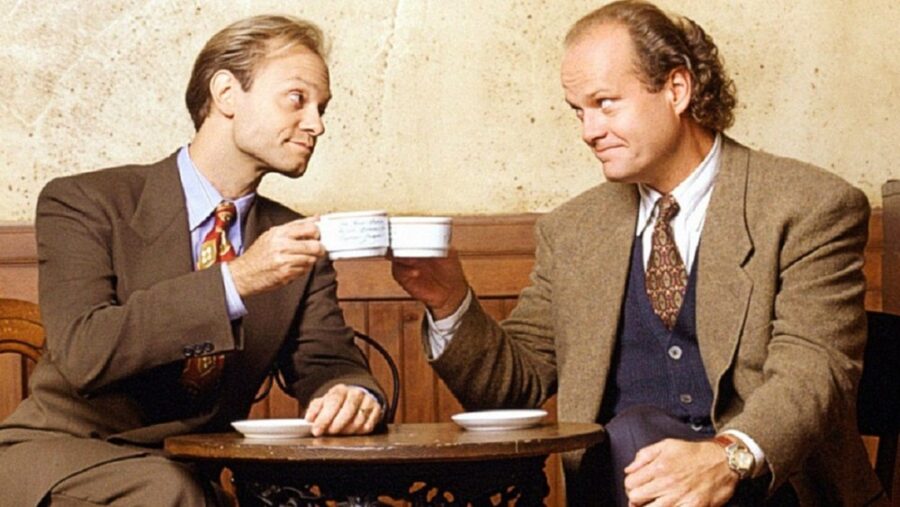
For the sake of convenience and continuity, every single sitcom somehow has a soundproof kitchen that’s seemingly located in another dimension where guests can’t hear conversations across an open floor plan. On a technical level, this trope makes sense because erecting an entirely new set for secret conversations to take place would prove to be a cumbersome ordeal. But how much disbelief are we supposed to suspend when sitcom characters like Frasier Crane talk loudly about their guests who are clearly within earshot?
Magically Sound Proof Kitchens

The only sitcom in recent memory that actually acknowledged this trope during its run was How I Met Your Mother. In the episode “Okay Awesome,” Marshall and Lily are frustrated after inviting their new boring friends, Claire and Austin, over for a wine-tasting party. When Marshall steps into the kitchen to air his grievances about Claire and Austin, it’s revealed that Claire is standing right behind him, having heard every word. It’s a rare instance of a sitcom recognizing that an open-concept apartment doesn’t magically become a private confessional just because somebody crossed into the kitchen.
Even then, it’s implied that if Claire hadn’t breached the kitchen’s threshold, Marshall would have gotten away with his mean-spirited jabs about Claire and Austin’s 30-year fixed mortgage and ultrasound photos. Given how the episode concludes with Marshall and Lily literally climbing out of their bathroom window to meet up with the rest of the gang at the club, “Okay Awesome” didn’t need to lean into the soundproof sitcom kitchen trope because it’s not like they were trying to save face in the first place. If anything, having Claire overhear the entire conversation from the living room would have better sold the joke while poking even more fun at one of television’s oldest unwritten rules.
Pokes Fun At The Concept

From this point forward, we never see Claire or Austin in any significant capacity again, so who cares if their feelings get hurt over some critical commentary when their hosts rudely abandon their own party to meet up with the rest of the gang anyway? Their friendship was clearly doomed regardless, which makes the need for a magically private kitchen feel even more unnecessary.
I’m willing to forgive How I Met Your Mother because it at least acknowledges the absurdity of the trope instead of pretending it isn’t happening. Most sitcoms simply expect us to accept that crossing an invisible line into the kitchen somehow creates a cone of silence, but “Okay Awesome” briefly calls attention to how ridiculous that idea actually is before going right back to business as usual.
The Most Egregious Examples Can Be Found In Frasier

But I can’t say the same thing about Frasier, where Frasier Crane routinely has crucial conversations in his kitchen with his booming baritone voice while his guests sit less than 10 feet away in the living room. One of the most egregious examples of the soundproof sitcom kitchen trope comes in “Daphne Dates a Niles Doppelganger,” when Niles has a complete meltdown over hesitating to tell Daphne how he feels, only to watch her start dating a man who’s practically his exact double.
While the episode implies that conversations taking place in Frasier’s kitchen can’t be heard anywhere else in the apartment, it completely undermines that logic moments later. As Frasier mingles with his guests in the living room, he immediately hears Niles accidentally drop and shatter one of his antique coffee cups in the kitchen (Catherine of Aragon!), proving that sound can, in fact, travel freely between the two rooms. If Niles breaking a coffee cup carries across the apartment, there’s no reason an emotionally distraught Frasier ranting at full volume shouldn’t.
The Rare Exception
If sitcoms are going to use this trope, they should at least commit to it. The kitchen can’t only become a soundproof bunker when the plot demands a private conversation, only for noises to travel freely across the exact same distance moments later. Either sound carries through an open floor plan or it doesn’t.
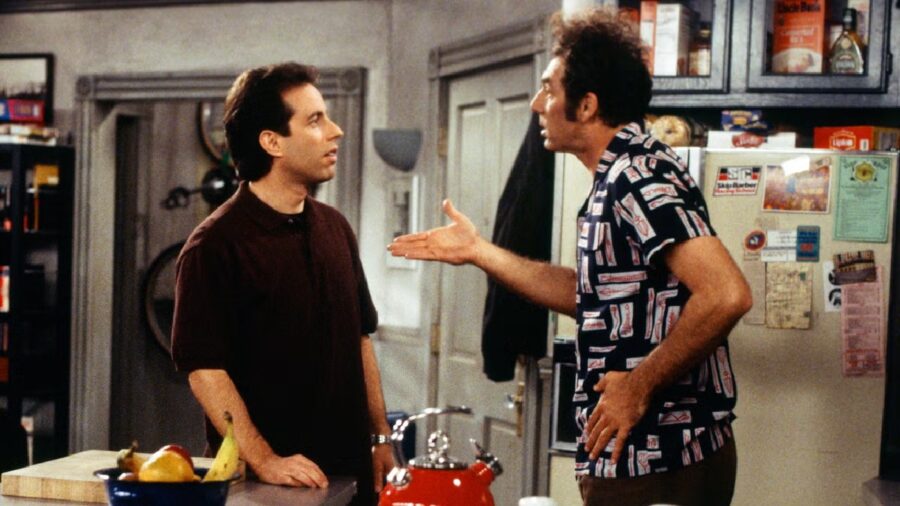
That’s also why the trope feels less noticeable in sitcoms like Seinfeld and It’s Always Sunny in Philadelphia. Those shows thrive on characters openly scheming against one another, insulting each other to their faces, or making no effort to hide their selfish intentions in the first place. When everybody’s already saying the quiet part out loud, there’s far less need for a magically silent kitchen to keep the story moving.
Entertainment
The 1990s Comedy Series That Defined The Decade, Stream Without Netflix
By TeeJay Small
| Published

Today, multi-cam half-hour comedy series have largely gone out of style, with the format looking aged and reminiscent of the 1990s. While many shows maintained this format throughout the golden years of cable television, one of the most defining shows of that era is The Nanny, which ran for six seasons from 1993 through 1999.
If you’re looking for a nostalgic series to instantly transport you back in time to a world of Nintendo 64, mood rings, and pogs, you need to take a moment to binge through a few seasons of this iconic CBS sitcom for yourself.
A 90s Icon

The Nanny was created by series star Fran Drescher and her then-husband Peter Marc Jacobson. It centers on a fictionalized version of Drescher as she takes on the role of a live-in nanny for a trio of adorable wealthy children. As the show’s iconic theme music will explain, Fran originally showed up at the door of the Sheffield family with the intention of selling makeup door to door before falling into the role of a nanny through her style, flair, and compelling presence.
Niles Is The Real Hero

Over the course of six seasons, The Nanny relies on a number of running gags, inside jokes, and catch-phrase humor, each punctuated with the riotous laughter of the live studio audience. The show is heavily dated, with references to decades-old television programs, fourth-wall breaks, and nods to the camera, but in today’s era of sardonic humor and eight-episode seasons, it might be exactly what audiences need.
Personally, I binged the entire series over the last few months with a friend, and we were shocked to see the 50/50 split on jokes that would hold up perfectly for today’s Gen Z audience and jokes that went way over our heads because we would have been babies when these pop culture references germinated.

Much of the humor in The Nanny also requires you to have at least a basic understanding of Fran Drescher’s actual life, as she based a ton of the characters, comedy, and wacky situations on her own personal experience.
A Prototypical Sitcom
Regardless, the barrier for entry on the show is remarkably low, even if you might be left scratching your head at a few jokes while the studio audience laughs themselves into an aneurysm.

Looking back with decades of hindsight, it’s easy to see why The Nanny was such a major hit in its day, as it contains everything that made that quintessentially 90s period of television so great. The show has tons of heart, a lot of sweet moments, and a main character who is equal parts freakishly attractive and unbearably annoying.
Relevant Today Thanks To Fran Drescher

In my opinion, The Nanny is as relevant as ever today, due to the real life exploits of Fran Drescher. For those of you who don’t know, the former sitcom legend stepped into the role of President of SAG-AFTRA back in 2021, and was instrumental in navigating the terms and conditions of the union’s new deal with the major studios during the lengthy 2023 strike.
Today, Fran Drescher is a Hollywood icon, partially for her role as a union leader, and partially due to her instantly recognizable series, which has become a comfort sitcom for millions of viewers around the world.

If you’d like to watch The Nanny today, the series is available to stream on Hulu and Amazon Prime Video. The show arguably deserves to be on a 90s sitcom Mount Rushmore alongside Seinfeld, The Fresh Prince of Bel-Air, and Frasier.

Entertainment
Extremely Graphic R-Rated Sci-Fi Comedy Will Take Over Your Hometown
By Robert Scucci
| Published

Though it’s billed as a sci-fi horror comedy, I wouldn’t consider 2024’s Ick a horror film. It’s a monster story, and it certainly has fun with Lovecraftian imagery (read: lots of tentacle violence), but if anything, it’s a comedy that leans into horror tropes rather than a horror flick that adds levity through comic relief.
With a real-life global pandemic still in recent memory, Ick also has fun with how people react to government mandates when the powers that be, at least as far as we know, are actually trying their best to protect their citizens. A lot of the humor comes from the fact that the citizens of Eastbrook refuse to stay confined to their homes. The titular Ick has been a presence for as long as they can remember, and they’ll be damned if they can’t go about their daily lives just because it suddenly becomes violent and starts killing everyone in its path.
Normalizing Something Horrible

When we’re first introduced to Hank Wallace (Brandon Routh), it’s the early 2000s, and he’s a high school football star destined for greatness, dating the girl of his dreams, Staci (Mena Suvari). During one of his games, he’s attacked by the Ick, a giant, tentacled, and seemingly sentient organism that lives beneath the town. Nobody believes him when he claims his life-altering injury, which requires him to wear a leg brace for the rest of his life, was caused by the Ick, and life goes on without him.
Between the early 2000s and present day, Hank becomes a shell of his former self. He never leaves his hometown of Eastbrook and now works as a high school science teacher. Staci ends up marrying former classmate Ted Kim (Peter Wong), and together they have a daughter named Grace (Malina Pauli Weissman). Hank has good reason to believe Grace may actually be his daughter, given her date of birth, his sexual history with Staci, and the fact that Grace looks nothing like her Asian father.

Shortly after collecting saliva samples from his students so he can secretly run a paternity test, the Ick, as he always suspected, becomes violent and slowly starts destroying the town. The Feds show up and advise all the citizens of Eastbrook to lock down, only to be met with immediate pushback. Prom is coming up, which is the big event none of the teenagers want to miss.
Given that we’re talking about kids and what’s considered by most to be a once-in-a-lifetime occurrence, they’re right to be apprehensive about government overreach. It’s the adults who act like children here, as they absolutely refuse to let their way of life be interrupted, consequences be damned.

From this point forward, Ick goes full bore into tentacle-driven madness, leading to the kind of third-act blowout that makes the Stranger Things finale look like a strawberry festival by comparison. It’s full-on Lovecraftian bedlam, but I still refuse to call Ick a horror movie. It never gets scary in the traditional sense, and most of the plot is driven by the sheer magnitude of CGI violence, panic, and constant allusions to a ridiculous rivalry between Eastbrook and the neighboring town of Vicksburg that’s never explained but constantly brought up.
Oh, Come On!
Ick wins serious points for its willingness to go fully absurd, and that’s not even the best part about this movie. What really sold me was realizing that every single little setup, no matter how seemingly insignificant, has an eventual payoff. I can’t get into them too deeply without revealing massive spoilers, but everything from the specs of Ted’s car to the Louis Vuitton pepper spray comes back into play when you least expect it, instantly reminding you of the first-act moments where these plot devices were subtly introduced. It’s an alarming and impressive amount of Chekhov’s gunnery from start to finish, and you don’t even realize it in real time because everything unfolds so casually.

The only thing that really took me out of the movie, even if only briefly, was the excessive use of needle drops in the first act. They really had to drive home the point that Hank listened to Good Charlotte, All-American Rejects, and Fountains of Wayne (because he dated Staci, and they have that song about her mom). For a second, it felt like a gigantor slice of Member Berry pie, but circling back to the Chekhov’s gun thing, it had to be this way. Otherwise, we’d never get the Creed montage that makes the third act so memorable. After all, we’re all six feet from the edge if you think about it.
All in all, Ick is an absolute blast from start to finish. It has the small-town charm and sense of adventure that the golden era of Stranger Things had, and it’s not afraid to embrace its own ridiculousness. The science behind the titular tentacled antagonist is deliberately under-explained so you can just lock in and enjoy the show without putting much thought into it.

Ick is hilarious, thoughtful, and excessively violent in all the best ways. If you want to see what it’s all about, you can stream it on Tubi for free as of this writing.

ATP roundup: Roman Andres Burruchaga stuns top-seeded Flavio Cobolli in Umag
Reports: RB Alvin Kamara staying with Saints on reworked contract


