
Entertainment
How The Raunchy College Comedy Was Dismantled By Its Own Lies

Unemployment in the haiku industry is still undefeated.
By Robert Scucci
| Updated

Ever wonder what happened to the raunchy college comedy? Animal House (1978). Road Trip (2000). Van Wilder (2002). The list goes on and on, but then drops off hard around the mid-aughts. As we approached the 2010s, we stopped getting raunchy college party movies, and instead got a wave of films like The Hangover (2009) and its sequels, which are about grown adults acting like college kids in places like Las Vegas. So what happened? The answer is simple. The illusion of carefree college life was shattered during the 2008 recession, and it never recovered.
Starting with Millennials, the idea that college automatically improves your adult life started to fall apart. Unless you’re in a hyper-specialized field that requires formal education, a lot of people on the wrong side of their 30s will tell you the same thing. They’re not working in their field of study, they’re earning far less than a livable wage from a single full-time job, they’ve had to lean on gig work to close the gap, and they’re all thinking some version of, “I could have done this without being buried in debt.”
The Top Gun Parallel

Before getting further into why the raunchy college comedy disappeared, it helps to look at a genre that still works as a measuring stick: military porn.
Films like Top Gun (1986), Saving Private Ryan (1998), Black Hawk Down (2001), Act of Valor (2012), and Lone Survivor (2013) all share something in common. They glorify military life. Yes, they show the horrors of war, but they’re framed through a hero’s journey. Even if you enlist knowing your life is on the line, there’s still a clear upside for people who are built for that lifestyle.

You can be trained in fields like IT or logistics during your service and transition into stable work afterward. There were even reports of U.S. Navy representatives appearing at Top Gun: Maverick (2022) screenings, which coincided with a spike in recruitment interest tied to the film’s portrayal of the lifestyle.
Here’s the difference. Compared to raunchy college comedies, movies like Top Gun are not necessarily selling a lie. Most people understand the risks of military service. But the infrastructure being sold is real. If you complete your service honorably, there is a clear path forward. You can stay within the system or move into the private sector with experience that translates.

You can’t say the same thing about a feminist studies and basket weaving degree from even the most prestigious private university. Last time I checked, unemployment in the haiku industry is still undefeated.
The Lie That Was Sold
Melanie Hanson’s “Average Cost of College & Tuition,” published in February 2026, breaks down tuition across public and private universities, both in-state and out-of-state. The takeaway is straightforward. Many graduates walk away from a bachelor’s program with tens of thousands of dollars in debt, and in some cases much more depending on the school and living situation.

That means kids who can’t legally rent a car, drink alcohol, get a tattoo, or purchase a lottery ticket are encouraged to take on long-term predatory loans and pause their lives for four years. The opportunity cost alone “can ultimately cost upwards of $500,000.”
Most people my age were part of the last wave of kids who were told that a degree guaranteed a better life. We were told it didn’t matter what we studied, as long as we got the degree. We were told that without it, we’d be stuck in menial, low-paying service jobs, as if honest hard work in any industry isn’t just that: honest, hard work. Now, in 2026, I’ve lost count of how many people I know with advanced degrees who are bartending because it pays more than their chosen field of study.

I can’t speak for everyone, but from kindergarten through 12th grade, the messaging was constant. We all remember authority figures pointing to the school janitor or someone wearing a hard hat and saying, “If you don’t go to college, this could be you.” Meanwhile, a lot of blue-collar workers I know who skipped college and went straight into the workforce or military are now in a position to retire early or pivot careers without experiencing total financial collapse.
And we all remember the Education Connection ads. The waitress sings about how a degree would lead to a bigger salary (that’s the rhyme). We also remember decades of raunchy college comedies selling the same dream. Party for four years, then walk into a stable white-collar life.
The Reality, And The Genre’s Downfall

By the early 2000s, most of us knew college wasn’t just toga parties and running from the dean after filling the campus pool with instant mashed potatoes. What we believed was that if we worked hard early, we could relax later.
Even then, college comedies still leaned into feel-good endings. Road Trip wraps with everyone’s lives improving. Accepted (2006) ends with personal growth and forward momentum. The illusion was still there, just softened. Expectations were already shifting, and the tone reflected that.
Then the 2008 recession hit.

Speaking from experience, the economy collapsed while I was deciding whether to matriculate as a Junior. I doubled down and finished my degree. I lived at home, worked full-time, and commuted to a state university. I still ended up over $80,000 in debt, with payments starting before my diploma even arrived in the mail.
Six months after graduating, I was paying $700 a month and still making $12.50 an hour flipping burgers.
This situation wasn’t unique to me, and it felt like it was becoming the new expectation. I eventually landed a corporate job, but it required a three-hour round-trip commute that cost about $10,000 a year in gas and maintenance. The job paid $30,000, before taxes. This was considered by many to be gainful, post-grad, white-collar work. Meanwhile, my bartending friends made more money, had nicer things, and zero debt. They could afford to live alone.

Since then, the raunchy college comedy didn’t disappear overnight. It mutated. The behavior is still there, but it shifted to older characters. Neighbors (2014) is technically college adjacent, but the frat house is framed as a nuisance. The main character isn’t aspiring to that lifestyle. He’s disgusted by it.
Movies like The Package (2018) picked up some of the slack, but the setting changed. The antics happen at home during spring break for a bunch of college-bound teenagers, not on campus. Everybody still lives with their parents. It feels like Hollywood recognized that the traditional college fantasy no longer landed the same way, even though some of the humor from those films still did.
When the audience stops believing in the premise, the genre has to adapt.
Lower Your Expectations, And You’ll Never Be Disappointed

So is college worth it? Maybe. That’s a personal decision you have to figure out for yourself.
As a parent with two kids under eight, I think about this constantly. I don’t want to set them up for failure or lock them into decades of loan payments that limit their options to live a meaningful life. There are other paths. Starting a business. Taking a risk on a startup. Learning a trade.
Right now, I’m neck deep in gig work because most job listings, according to LinkedIn, require a Master’s degree for entry-level roles, pay what my first corporate job paid 16 years ago, offer no benefits, and still expect you to show up on site and play dressup. I’ve told recruitors that if I ended up working for them, it would set me back, while simultaneously destroying my work/life balance. In so many words, they agreed with me.

Imagine spending eight years in higher education just to land there.
At that point, movies like Van Wilder stop feeling aspirational and start feeling like a joke, while something like Top Gun suddenly looks like a more honest pitch.
Entertainment
Netflix Violent Thriller True Story Is Pure Adrenaline Rush
By Robert Scucci
| Published
Survival films like Castaway and The Revenant need to make way for 2023’s Society of the Snow, a one-of-a-kind survival thriller. Based on the 1972 Andes flight disaster, this Netflix film will punch you in the gut and not let up until you’re weeping into your popcorn because there are too many emotions to even consider unpacking upon its conclusion.
Through the tremendous hardships that are portrayed throughout Society of the Snow, you’ll find yourself awestruck by the indomitable human spirit that is so expertly captured on-screen.
The Suffering Of Surviving

Society of the Snow’s story is primarily set in the Andes mountains after a plane carrying 45 passengers crash-lands, ripping the fuselage apart. In one of the most violent depictions of a plane crash in recent cinematic history, those who lived through the initial impact often wished that they had been spared from the suffering of surviving.
Over the course of 72 days, the remaining survivors were put to the ultimate test as they braved sub-zero temperatures with whatever clothes they had on their backs, while tending to the wide array of injuries they sustained.
After eight days of waiting for a rescue plane, a battered radio leftover from the crash broadcasts that search parties have been called off, leaving the traumatized and gravely injured survivors to their own devices and basic survival instincts. Many of the passengers never experienced snowfall, let alone being stranded in the frozen mountains.
A Terrible And Desperate Time

During the months leading to an eventual rescue, Society of the Snow compassionately points to the desperation that the survivors faced during this unthinkable time.
Enduring multiple avalanches that buried their shelter and meager food supply, they had to resort to cannibalism and had no choice but to rely on their friends’ corpses as a means to fight off starvation. It’s worth noting, however, that although such drastic measures had to be taken, their reluctance to commodify human life as a source of sustenance was one of many moral dilemmas they had to make peace with.
A Climb Through The Mountains

Arriving at the conclusion that nobody will ever find them while they’re still alive, Society of the Snow’s narrative shifts to Nando (Augustin Pardella) and Robert (Matias Recalt), who embark on a 10-day climb through the mountains after spending two months subjected to unimaginable living conditions with 14 other survivors.
With each passing scene that Society of the Snow delivers, the only thought that consumes your mind is “how can things get any worse?” The unforgiving mountains always find a way to deliver on this front up until the film’s conclusion.
Compelling Storytelling

Though Society of the Snow is a Spanish-language film, its storytelling is so compelling that you won’t mind the subtitles. In fact, the subject matter is so heavy that you’ll actually appreciate the storytelling on a whole other level because this layer of abstraction in the form of a language barrier will help keep you anchored.
Society of the Snow’s unrelenting storytelling won over audiences upon its limited theatrical release. Universally praised for its tense delivery of despair and insurmountable struggle, this survival movie garnered a 90 percent critical score against an 88 percent audience score on Rotten Tomatoes.

You’re not going to form an emotional connection with a volleyball named Wilson when you watch Society of the Snow, but this movie is a must-see if you are looking for a gripping and emotionally jarring survival film.

SOCIETY OF THE SNOW SCORE
If you have the stomach for it, it comes with strong recommendations that you watch Society of the Snow on Netflix today.
Entertainment
Moon phase today: What the Moon will look like on July 5
The Moon is changing in appearance and visibility each night. This is because of the lunar cycle. We’re currently on day 20 of this 29.5 day of this cycle, which means we’re approaching the Third Quarter, when the Moon appears half full.
What is today’s Moon phase?
As of Sunday, July 5, NASA’s Daily Moon Guide tracker tells us the Moon phase is in its Waning Gibbous phase, with 75% of its surface visible.
If you look up tonight with just your naked eye, you should be able to see the Mare Vaporum, Aristarchus Plateau, and the Tycho Crater. If you have binoculars, you’ll be able to catch a glimpse of the Mare Humorum, the Alphonsus Crater, and the Grimaldi Basin. And if you have a telescope, you’ll see all this plus the Apollo 16 landing spot, the Schiller Crater, and the Fra Mauro Highlands.
When is the next Full Moon?
The next Full Moon will take place on July 29.
What are Moon phases?
According to NASA, the Moon completes one orbit around Earth approximately every 29.5 days, moving through eight recognised phases along the way. Although the same side of the Moon always faces Earth, the amount of its surface illuminated by the Sun changes as it travels around our planet. As a result, the Moon appears to shift in shape throughout the month, progressing from slender crescents to quarter moons and eventually reaching the brightly lit Full Moon stage. This repeating pattern is known as the lunar cycle.
New Moon – The Moon is between Earth and the sun, so the side we see is dark (in other words, it’s invisible to the eye).
Mashable Light Speed
Waxing Crescent – A small sliver of light appears on the right side (Northern Hemisphere).
First Quarter – Half of the Moon is lit on the right side. It looks like a half-Moon.
Waxing Gibbous – More than half is lit up, but it’s not quite full yet.
Full Moon – The whole face of the Moon is illuminated and fully visible.
Waning Gibbous – The Moon starts losing light on the right side. (Northern Hemisphere)
Third Quarter (or Last Quarter) – Another half-Moon, but now the left side is lit.
Waning Crescent – A thin sliver of light remains on the left side before going dark again.
Entertainment
The Sci-Fi Thriller That Killed Director's Career Deserves Another Look
By Brian Myers
| Published

The 2009 thriller The Box had all the makings of a Hollywood hit. A-list stars (Cameron Diaz, Frank Langella, James Marsden), a $30 million budget, and a hot new director to take the lead. However, the lukewarm reception at the box office and the mediocre critical response to The Box led director Richard Kelly’s career to take an almost immediate nosedive. Fifteen years later, streaming maks it possible for viewers to get a second look at a film that deserves a lot more credit than it originally received.
Kelly had scored a major success several years leading up to the production of The Box, serving as director and screenwriter for the sleeper hit 2001 film Donnie Darko. However, in the years since The Box was released, Kelly has only had a handful of projects in the industry.

Some of this has been attributed to his own admission of wanting to prove to studios that he’s worthy of another modestly budgeted film, and some due to sheer bad luck. Kelly was set to work on a crime film titled Amicus with Sopranos star James Gandolfini, only to have the actor die from a heart attack in 2013 before the project could be started.
The Box’s Moral Conundrum
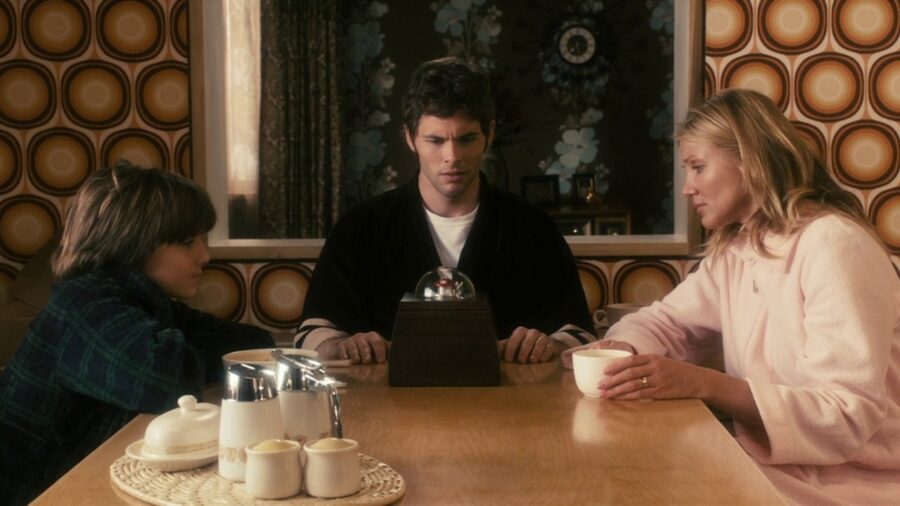
If you’ve never seen The Box, you’ll likely be intrigued by the storyline alone. Married couple Norma and Arthur Lewis (played by Diaz and Marsden, respectively) are approached by a disfigured stranger (Frank Langella) who gives them a mysterious box. Press the button inside the box, the stranger promises, and you’ll receive $1 million in cash.
However, the stranger reveals a caveat to receiving the prize money. Press the button, and someone that they do not know will die. The plot of The Box takes a good number of unpredictable twists and turns after Norma presses the button, and the young family sees a horrific fate unfold before their very eyes.
The Twilight Zone Episode
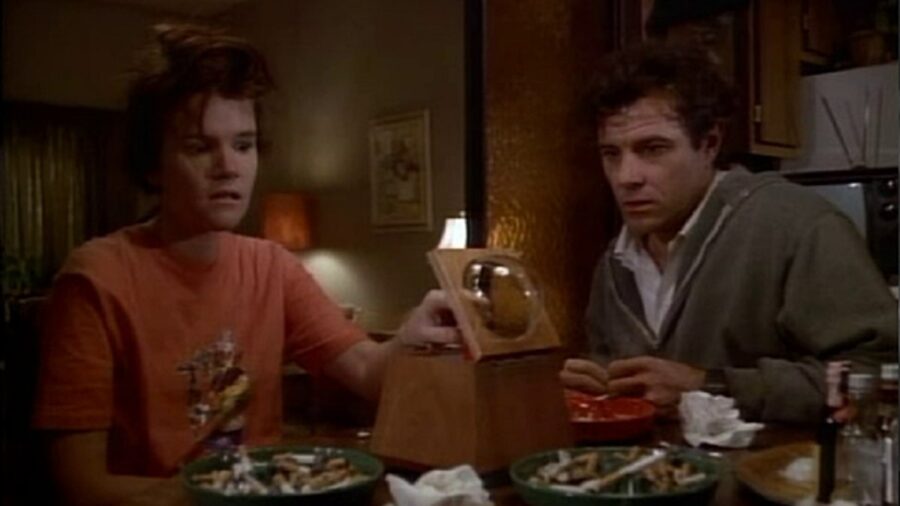
The Box was conceived from a short story written by acclaimed horror and science fiction writer Richard Matheson in 1970. Matheson’s original story, Button, Button, was turned into a radio show in the late 1970s. In 1986, a screenplay was written based on the story for an episode of the revived version of The Twilight Zone.
The theatrical version of Matheson’s story debuted in 2009 and wasn’t a favorite of critics. Though Roger Ebert gave it three out of four stars, other critics cited poor editing and the sense of the film being more of a pet project for Kelly as reasons for their dislike of The Box. Audiences at the time largely agreed as box office receipts led to barely making back the film’s budget.

The Box is certainly worth a look 15 years later, despite the lack of enthusiasm it received in 2009. The soundtrack alone should tempt a good number of curiosity seekers. Win Butler and Regine Chassagne of the pop band Arcade Fire teamed with composer Owen Pallett for a film score that more than redeems any of the film’s minor shortcomings that critics pointed out.
As of this writing, The Box can be rented or purchased on-demand through Amazon Prime Video, YouTube, Apple TV+, and Fandango at Home.

No. 2 overall pick Darryn Peterson scores 28 in Summer League debut
Dodgers, Phillies, Braves land five players for All-Star Game in Philadelphia


