
Entertainment
How A Decade-Old Flame War Made Everything Terrible And Lame
By Jennifer Asencio
| Published

If you look up Gamergate online, most sources will tell you that it was a mass attack on female game developers by misogynists and incels in the video gaming community. While this happened, there was a lot more to the incident that not only gets overlooked, but has been swept under the rug by activists who support the changes Gamergate ushered in.
Furthermore, although the incident happened in 2014, our culture is still feeling the effects of it, far beyond the video gaming world. In fact, there are jokes on social media that blame a person named Zoe Quinn for the state of world politics today, and there is probably more truth to that than anyone realizes.
The Zoe Quinn Flame War Exposes Corruption
Zoe Quinn was a woman who made a video game called Depression Quest. She also had a habit of fraternizing with other figures in the gaming community, including game critics. Her ex, Eron Gnoji, wrote a long, annotated blog post about it in which he insinuated that her game got a positive review because she had relations with the reviewer.
Whether or not that specific accusation was true, there was actually some chicanery going on between gaming development and gaming journalism. The two industries had a lot of overlap and communication.
Firefly Star Adam Baldwin Names It Gamergate

As more information became public, it was soon discovered that several gaming journalists had a back channel through which they discussed what to write and even when to publish. In August 2014, several articles were published decrying the “traditional gamer” and demanding that video games make room for others. It was around this time that Firefly actor Adam Baldwin coined the term “Gamergate” on Twitter.
Fraudsters Doxxed Their Accusers To Silence Them
Meanwhile, Zoe Quinn received a lot of harassment from people who claimed her video game wasn’t very good and only became famous because it was mentioned by the reviewer. Two other figures turned up in the controversy: Anita Sarkeesian, a video game reviewer who called for less sexism in gaming; and Brianna Wu, who claimed to be a female game developer but later came out as trans. They, too, found themselves on the receiving end of harassment, which they quickly attributed to an organized movement comprised of “incels,” “misogynists,” and “far-right agitators.”
Although there was no such organized effort, the war between “Gamergaters” and “everyone else” was vehement. People were doxed to the point of having to leave their homes, and SWAT-ed, which means police were sent to their homes as though they were imminent and deadly threats. Gamergaters were painted as hateful bigots who were trying to exercise white male supremacy over video games.
Gamergate Leads To Activist Tokenism
When the dust settled, there were certain conventions that started to take over in the name of “inclusivity.”
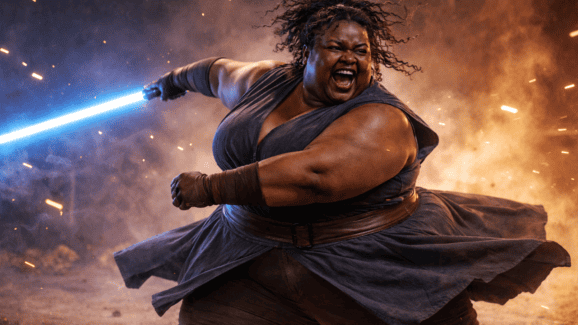
Female characters were suddenly capable of feats of strength that would defy their male counterparts. Noticeable effort was made to include women who did not adhere to traditional beauty norms, such as characters who were masculine, androgynous, or overweight. Established characters were subjected to new designs that toned down their beauty, and there were even random scraps of clothing added to new editions of existing games to combat “the male gaze.”

Male characters were deemphasized from the games. Where they existed, they were often emasculated or added to another minority. Often, they were not as capable as their female counterparts, relying on them to give instructions, make decisions, and even save the day. If they happened to be muscular, they usually had no other personality; if they were attractive, it was a sure sign of their insidiousness.
Token characters representing other minorities were emphasized and placed in settings that made no sense within the game. These included racial minorities, disabled characters, and gay, trans, and nonbinary characters. Topics like colonization and slavery had to be tempered with trigger warnings and in-game lectures about human rights.
What made these characteristics tokenistic was the gratuitousness of their inclusion in the story. They often appeared in jarring settings where such characters and situations are out of place and only included for the activism, not the betterment of the game. However, pointing this out subjected critics to accusations of bigotry, to the point of being associated with Nazism, incels, and the far-right.
Gamer Replacement Theory
This was very much on purpose. The goal was to expand video gaming beyond the world of young, predominantly white men and allow other people to “see themselves” in the games.
Studios hired sensitivity readers and language localizers who pre-read plots, dialogue, and translations to ensure that “no one” would be offended by the content. Entire consulting firms, such as the infamous Sweet Baby Inc., were formed to streamline gaming studio hiring, focusing on everyone except the typical gaming audience; nobody cared about being insensitive to them.

What resulted were sloppy games that ruined franchises. The culmination of the activist development in video games was exemplified by weak entries such as Assassins Creed: Shadows, which famously included an ahistorical black samurai as a main character in its feudal Japanese setting; Dragon Age: Veilguard, whose nonbinary character injects modern identity politics into its fantasy setting; and Concord, a highly-anticipated game that flopped because its female main character was androgynous, butch, and ugly. These are not old games from a decade ago; all of them were released in the last year. The recently announced Fable reboot is carrying the torch by removing its defining good/evil mechanic from the game, because “evil is not objective.”
How Gamergate Ruined More Than Just Games
The true insidiousness of Gamergate is in how it has infected the rest of our culture since. In response to what was seen as misogyny in male-dominated fields, the social movement #MeToo gained more steam. This was a positive development in many ways, as it allowed a lot of women to address sexual harassment that resulted from power imbalances in the workplace, particularly in Hollywood, where sexism is rampant, and beauty standards are strict.
However, it also had the effect of demonizing men and allowed for no criticism of its tactics, with accusations of sexism and sexual harassment levied against even women who spoke out against it. I was one of those women, constantly accused of “internalized misogyny” and “upholding patriarchy” for calling out the excesses of the movement and its misandry.
This step of making accusations was important because by making it okay to criticize young white men (who, after all, had harassed women during Gamergate), the stage was set for the more flagrant attacks on Western culture. By allowing “no debate,” activists for various minorities inserted themselves into every fandom and decried anyone who complained about it as supporting “patriarchal, Christian, cis, white, heteronormative colonialism.” Masculinity itself was branded as “toxic,” especially by major figures like James Cameron, who even demonized testosterone as “poisonous.”
Gamergate Destroys Star Wars
The Star Wars show The Acolyte was heavily criticized for violating established franchise lore in favor of gratuitous minority characters. The response from director and showrunner Leslye Headland was to accuse detractors of sexism and homophobia. However, Headland herself taunted the same fans before the show’s release by insisting that it would be “the gayest Star Wars” and “make” old-school fans “cry.” Other Star Wars shows failed because of poor storylines, but The Acolyte is the only show that blamed the fans.

The Star Wars fandom does have a reputation for toxicity, as evidenced by its treatment of sequel actress Kelly Marie Tran; Tran quit social media after some fans harassed her online over her character, Rose Tico, who wasn’t very popular. However, to blame any and all criticism of Star Wars on some kind of -ism or -phobia is an avoidance of the flaws in the franchise. Fans also didn’t like how the screenplays dropped the ball on both Finn’s character development and his conflict against the ridiculously ineffective Captain Phasma, but were accused of disapproving of the casting of John Boyega rather than criticism of the wasted potential.
Dungeons & Dragons Destroyed By Subsequent Activism
Dungeons & Dragons is another example of a property that has been co-opted by activism enabled by Gamergate. One infamous ad campaign from the game’s publisher, Wizards of the Coast, posits why adventurers can’t be in wheelchairs. The newer editions of the game manuals decry settings that include colonialism and slavery, as well as neuter fantasy races that were traditionally considered the game’s bad guys.

Its 50th anniversary commemorative history accuses its creators (most of whom are deceased and can’t rebut) of being sexist and white supremacist, attacking some of their creations as being racist caricatures. Recent Pride artwork reduces the iconic Beholder, one of the game’s oldest Big Bads, to a heart-eyed Care Bear cartoon.
Dancing On The Grave Of Brigitte Bardot
Probably the most insulting attack from the cascade caused by Gamergate is the recent posthumous villainization of Brigitte Bardot by Vogue Magazine. Vogue is a fashion magazine, and Bardot was such a fashion icon of her era that the Beatles got their girlfriends to dye their hair blonde to imitate her.
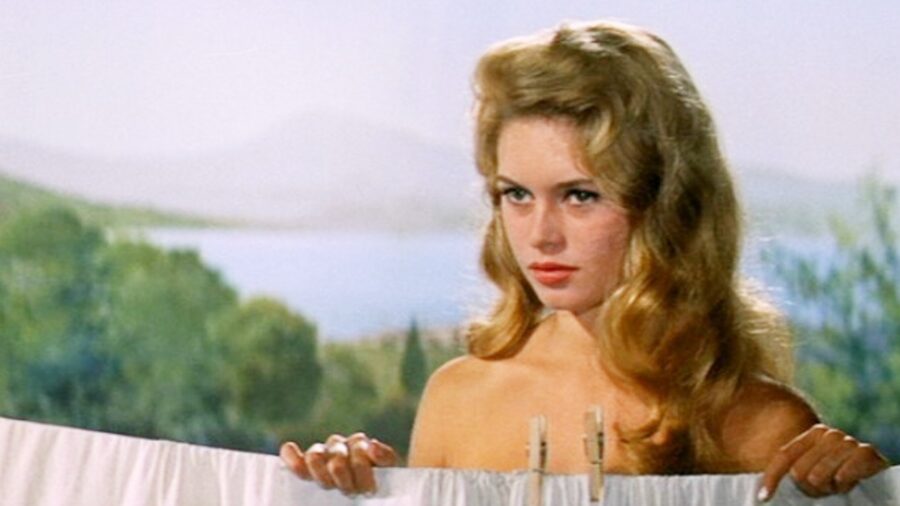
Bardot was also a complicated woman who was very passionate about the causes she believed in. She was heavily involved with the French far-right party, including being married to its former campaign manager.
Rather than paying tribute to Bardot’s status in the fashion world, the Vogue obituary focused on her politics and used her death as an opportunity to make sure everyone knew it was okay to hate her. Only in a world that has shunned traditional ideas of beauty would a fashion magazine spend more time and effort on tearing down someone so representative of the influence of fashion on society.
Intentional Activist Fraud
The point these activists willfully misportray is that it is not the “inclusion” itself that is the problem. Fans are objecting to the fact that inclusion has been shoehorned into numerous properties.
Nobody plays video games or watches movies to look at ugly characters, not even female video game players. Males are allowed to be strong, capable, rugged, and manly. Women can be sexy and alluring and have agency without being girlbosses who are the only competent people.

Nor do most people want to be lectured about identity politics in their entertainment. Fans are not “toxic” for being annoyed about being forced to sit through a minutes-long cutscene in Veilguard during which a nonbinary character argues with her uncomprehending parents. It is not racist to want to fight orcs and goblins that are using the local gnome population as slave labor.
The Line Between Inclusion And Tokenism
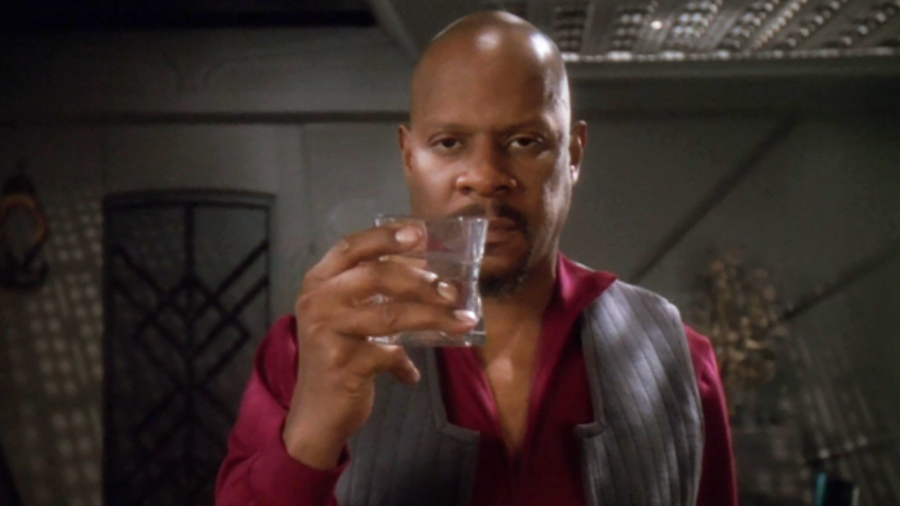
There is a line between inclusion and tokenism. Many old-school Star Trek fans view Ben Sisko as the greatest leader in the entire franchise. Lando Calrissian was another major Black science fiction character, celebrated for his nuance and redemption.
Samus was a girl, Yellow Dancer was secretly a boy, and fans lauded these revelations. Lara Croft’s revealing outfit was once a symbol of feminine empowerment. These characters all worked because they were not artificial insertions, but organic parts of their stories.
The response to Gamergate ushered in an era in which tokenism is seen as a virtue more important than storytelling and even more important than culture itself. By not allowing criticism or debate, it enabled all the toxic behavior it claimed to stand against, creating an environment where even the most marginal hint of viewpoint diversity can ruin a person with accusations of far-right sympathies. It started with video games but seeped throughout our entire society.
How Good Stories Can Heal A Broken Culture
Hope can be found in the same origin, however. The releases of the video games most steeped in this artificial inclusion all flopped. The 2025 Game Awards, which are nominated by industry insiders and voted on by fans, overwhelmingly rejected games with weak storylines and tokenistic characters, giving the award to a game whose only minority character dies early in the story. The current battle between upcoming medieval fantasy games A Knight’s Path and 1348: Ex Voto over their female characters is showing that fans prefer attractive, traditional characters over gratuitous representation.

If the entertainment studios that want to make money are listening, they’ll put more effort into telling good stories, regardless of who populates them. Good stories will go a long way toward healing a culture sickened by the events and division of the last decade. The thing about good stories is that everyone can see themselves in them, no matter who the characters are.
Entertainment
Perfect, R-Rated Comedy Thriller Will Infiltrate And Destroy Your Life

By Robert Scucci
| Published

Working as an office drone is the worst possible way to spend your time, especially if your doppelganger is showing up for work, running circles around you, and tarnishing your good name. Not only does Jesse Eisenberg’s doppelganger do all of these things in 2013’s The Double, nobody else at work seems to notice that his primary antagonist is his exact body double. It’s a bleak reminder of how little your coworkers actually pay attention to things like who they’ve been working with for the past seven years, what they look like, and what they do for a living.
After thinking about it for a minute, it’s not even that far-fetched of a scenario. Having to wear a shirt and tie, commute to a central office, and sit in a cubicle inside a windowless room, all while attending meetings that could have been an email, only to be rewarded with a slice of room-temperature pizza left over from yesterday’s sales meeting, is more than enough to suck the soul right out of you and turn you into a shell of a man who locks in without soaking in their surroundings.

While The Double is clearly an unrealistic story, what’s depicted here doesn’t feel that far removed from what office culture could easily devolve into over the next decade.
An Office That Makes Office Space Look Like A Beach Paradise
Set mostly in oppressively dank apartment buildings, corner offices, and cubicles, The Double centers on Simon James (Jesse Eisenberg), an office drone of the highest order who’s wandering aimlessly through life. Though everyone at the office works for a cold-hearted authority figure known only as The Colonel (James Fox), it’s never made entirely clear what anyone actually does for a living. It’s obvious they’re clerks for some wide-reaching, dystopian government agency, but beyond that, your guess is as good as mine.

This level of impersonality in The Double feeds directly into its central conflict. Simon frequently forgets his ID badge and is never recognized by the security guards or his coworkers. He has to sign a visitor’s form just to go to work, as if he barely exists. Simon feels this same kind of invisibility when it comes to his coworker Hannah (Mia Wasikowska), who lives in the apartment building across from him but doesn’t even know he’s there. He admires her from afar, often collecting her torn-up art projects and saving them in a notebook for himself.
It’s a lonely existence for Simon James, until he meets his doppelganger, James Simon (also Jesse Eisenberg), who appears out of nowhere and suddenly starts working at the same office.

James Simon is everything Simon James is not in The Double, which immediately creates a number of problems. Simon is shy, reserved, and lacking confidence, content to blend into the background and quietly move through life. James, on the other hand, is charming, assertive, and instantly recognized as a standout employee, despite doing similar work to Simon, who barely gets acknowledged by anyone. Slowly but surely, James begins intruding on Simon’s life, eventually earning Hannah’s affection, much to Simon’s dismay. To make matters worse, nobody at the office seems to notice that Simon James and James Simon are identical, calling Simon’s grip on reality into question.
As Simon spirals, he gets to know James better, and the two even swap places on occasion in an attempt to live in each other’s shoes. These exchanges usually backfire, further straining their already toxic relationship and forcing Simon to question what it even means to be alive.
Sounds Like Another Movie That Came Out At The Same Time

Based on the 1846 novel of the same name by Fyodor Dostoyevsky, The Double shares a similar premise with 2013’s Enemy, starring Jake Gyllenhaal. While it might be tempting to chalk this up to parallel development, the coincidence is actually stranger than that. Enemy is based on a completely different novel from 2002, also titled The Double, written by José Saramago.
Both films explore what happens when two perfectly identical men occupy the same space, and the personal fallout that follows when one’s likeness is used by someone else with questionable intentions. While they tell very different stories, they make for an interesting double feature if you want to see how two doppelganger narratives released in the same year end up echoing each other in unexpected ways, as if they were each other’s doppelgangers all along.

Strangely enough, both films also exist within liminal, brutalist environments, trapping their protagonists in fluorescently-lighted spaces as their identities fracture and their personal lives collapse while they try to figure out where they belong in the world.

As of this writing, The Double is streaming for free on Tubi. Enemy, which explores similar themes and came out the same year, is currently streaming on Max.
Entertainment
The Most Disturbing CSI Episode Is Pure Nightmare Fuel
By Jonathan Klotz
| Published

For 15 years, CSI reigned on CBS as one of the highest-rated shows after perfecting the procedural formula. Every now and then, the series broke its formula, from “Lab Rats” focusing on the side characters to “4×10” telling a series of short stories, but none shattered viewer expectations quite like Season 11’s “Sqweegel.” The night-shift team was trying to figure out the motives and identity behind the gimp-suit-clad serial killer, leading to the most unexpected ending of the entire series: They failed.
The Bad Guy Wins

Every now and then, there’s an episode of CSI where the villain’s triumphant, going back to Season 1 that occur din “Chimera,” except the doctor with twisted DNA eventually was brought to justice in a later episode. Sqweegel, named after the noise a little girl heard in a carwash, is never arrested, his identity is never uncovered, and he’s never seen again. When the episode starts, viewers know something is off about what they are about to see by the way the killer moves through a posh, upscale Las Vegas home. Slipping in through a window is one thing, but the way he walks up the stairs in a strange, herky-jerky motion that’s also inhumanly smooth and fluid is immediately unsettling.
The team, led during this era by Catherine Willows (Marg Helgenberger) and Dr. Raymond Langston (Laurence Fishburne), starts piecing together Sqweegel’s motive when they realize each victim was a hypocrite. The first was a disability-rights advocate who killed her son, but she admitted what she did and was allowed to live. Of the rest of the victims, a firefighter who starts fires to be a hero, and a cheating wife who serves on the Family Values Committee. As far as motives go, it’s par for the course for the procedural. It’s also the only part of the episode that’s normal.
The visual of Sqweegel stalking his victims and slipping into spaces too small and tight for a normal human is somehow more disturbing than the usual dead bodies. Sqweegel’s final shot, lacing up the gimp suit and saying, “I am no one,” is more dark and more haunting than you’d expect from a network show. After the episode first aired in 2010, CBS didn’t outright ban it; instead, the network quietly pulled it from the regular rotation, but it’s available today wherever CSI is streaming.
A Killer From A Different Series

“Sqweegel” felt like an episode from another series dropped into CSI. That’s essentially what it was. Series creator Anthony E. Zuiker wrote a series of novels alongside Duane Swierczynki called Level 26, which featured Sqweegel as the villain. The episode’s release date coincided with the release of Level 26: Dark Prophecy. Disturbingly, Sqweegel in the book was even darker and more disturbing than what was shown on network television.
The character was brought to life by Daniel Browning Smith, a talented contortionist, who also co-hosted Stan Lee’s Superhumans. Smith has hypermobile Ehlers–Danlos syndrome, which allows him a superhuman degree of flexibility. On the one hand, knowing that a real human was performing Sqweegel’s stunts and they weren’t special effects may make them worse, but on the other hand, Daniel Browning Smith also performs comedy and hasn’t killed anyone.
Corporate synergy is the real horror of CSI’s most disturbing episode. Because Sqweegel wasn’t created for the series, there was never going to be a resolution. Instead, he managed to kill, traumatize a child, and get away into the night, not because he was a criminal mastermind, but because of corporate licensing. Millions of fans were left wondering when he’d return, never realizing that they’d only learn his fate if they took a look, because it’s in a book.
Entertainment
Dream Vacation Ruined In Raunchy, R-Rated Horror Comedy
By Robert Scucci
| Published

Family vacations are always tough to plan and execute for a number of reasons. The kids swear they went to the bathroom at the last rest stop, only to complain that they have to go again five minutes after you get back on the road. The McDonald’s off the side of the highway are disproportionately expensive, and they always forget your ranch. And sometimes, just sometimes, the destination you plan to spend your company-allotted two weeks of PTO at is the home of a bunch of locals who are fast approaching the 200-year anniversary of what can only be described as a cannibal massacre.
2024’s Get Away focuses entirely on that third scenario, and it has so much fun pushing you into hostile territory that you’ll find no shortage of weird rituals and the kind of splatty, third-act violence any slasher comedy fan will appreciate. Written by Nick Frost of Shaun of the Dead in his first solo writing effort, Get Away boasts exactly the kind of irreverent humor you’d expect, specifically the kind that thrives on a suspicious level of nonchalance once things start to spiral out of control.
“We Really Need This”

Get Away starts out simply enough, but continually pushes itself into increasingly uncomfortable territory as it plays out. We’re introduced to Richard (Nick Frost) and his wife Susan (Aisling Bea), along with their son and daughter, Sam (Sebastian Croft) and Jessie (Maisie Ayres). The echoing sentiment we hear from Susan as the family travels to the Swedish island of Svalta is that she really needs this. The implication is clear. She and Richard have been grinding all year to support their family, and this is the only two-week window they have to get some genuine rest and relaxation before heading straight back into the rat race.
The primary reason they’ve chosen to travel to Svalta is to witness a play put on by the locals that commemorates the 200th anniversary of a British quarantine. That quarantine resulted in a small group of survivors who still live on the island today, largely because their ancestors resorted to cannibalism when their food supply dwindled and was never replenished. Whether the family has any direct connection to the islanders isn’t made clear, but it still feels like a strange place to spend your only family vacation.

Almost immediately upon arrival, the family is met with anger, hostility, and resentment, as if they’re intruding on something deeply personal. Dead animals are left at their bed and breakfast doorstep, it appears someone has been rummaging through their belongings while they’re out exploring, and Jessie begins to suspect there are hidden mirror doorways in the house, implying someone may be watching her while she sleeps.
Get Away hits its boiling point during the ceremony the family traveled to see, when it becomes clear that not everything on the island is what it seems. After a series of traumatizing incidents that are best left undescribed so you can experience them firsthand, the family realizes they’re grossly outnumbered by the locals and decides to reclaim their dignity through whatever means necessary before leaving the island for good.
Predictable Until It’s Not

During its first and second acts, Get Away plays out like a classic folk horror setup. A group of outsiders arrives somewhere they clearly shouldn’t be, and the people who already live there participate in increasingly bizarre rituals that would make most people leave before they’re sacrificed to some sort of blood demon. Get Away subverts those expectations through Richard and Susan’s family, because they seem oddly at peace with everything happening around them.
They know they aren’t welcome on the island of Svalta, but they don’t care. This is their vacation. This is their only chance to relax and spend time together before heading back to their everyday lives, and they refuse to let a bunch of strange locals ruin it. Most of the humor in Get Away comes from this tonal clash, and Nick Frost’s friendly, straight-faced approach to what most people would consider a nightmare scenario is oddly wholesome.

If you start to feel restless during what appears to be a lack of conflict, all you have to do is wait for the third act, when things go completely off the rails and the film turns into a violent battle of wills. It all builds toward one of the most out-of-pocket twist endings you’ve probably seen in a hot minute.
Get Away is a satisfying watch if you’re already a fan of Nick Frost’s screen presence and delivery, and his performance is further elevated by Aisling Bea, Sebastian Croft, and Maisie Ayres. On screen, they play the perfect English family trying to charm their way out of an insane situation, while also hinting that they’re not to be underestimated. Sometimes the most polite people are exactly the ones you don’t want to mess with.
As of this writing, Get Away is streaming for free on Tubi.

The Biggest Question Facing Every 2026 MLB Contender
Twilio co-founder’s fusion power startup raises $450M from Bessemer and Alphabet’s GV


