
Entertainment
Greatest Sequel In Movie History Is Free To Stream

By Jonathan Klotz
| Published

Ask anyone on the street to name the greatest movie of all time, and you’ll get a wide range of answers, from Avengers: Endgame to Gone with the Wind, but ask someone to name the greatest sequel ever, and it narrows the field. Star Wars: The Empire Strikes Back is in the conversation, Star Trek II: The Wrath Of Khan is a classic, but nothing compares to The Godfather: Part II, not only is the best sequel ever made, it’s one of the greatest movies in history. Both sequel and prequel, the return of Michael and Vito Corleone pulled off the rare feat of improving on the near-perfection of the original.
The Godfather Part II Is A Cinematic Masterpiece
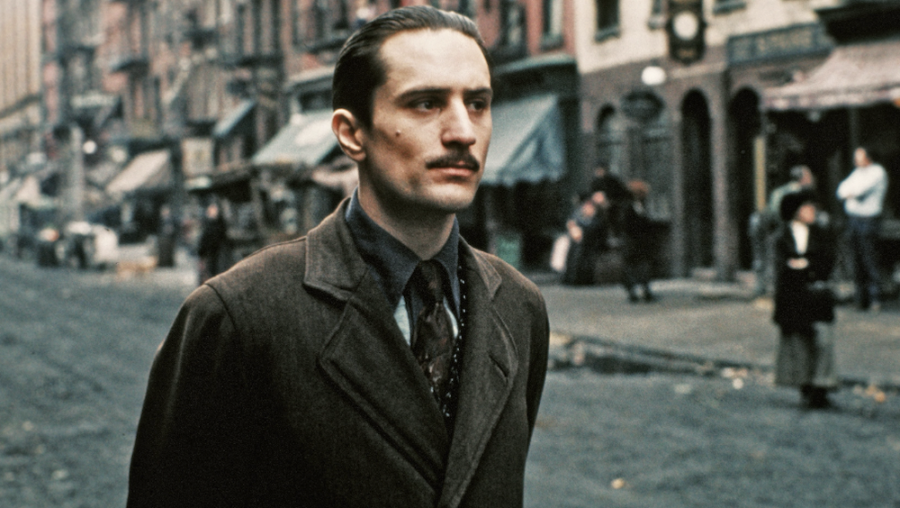
The Godfather: Part II splits its narrative along two timelines: first, the rise of Vito Corleone (Robert De Niro) in Italy as he takes his first steps into the Mafia. De Niro’s award-winning performance shows the struggle of the future Don as he tries to do right by his family when life keeps kicking him down. When we first met Vito, as played by Marlon Brando in the original, he was confident and in control, ruling an empire, but as we learn in the sequel, it’s an empire doomed to fall.
Vito’s sons, Michael (Al Pacino) and Fredo (John Cazale), struggle to hold onto the Corleone’s top spot in the Mafia amid assassination attempts and a traitor from within the family. While Vito’s story is about building an empire, Michael’s is about the struggle to hold onto one, and you can see how the sons of an immigrant are losing touch with their homeland. The Godfather: Part II is, at its heart, a story about the immigrant experience, which also happens to be the movie that defined crime movies for decades.
Defining A Genre
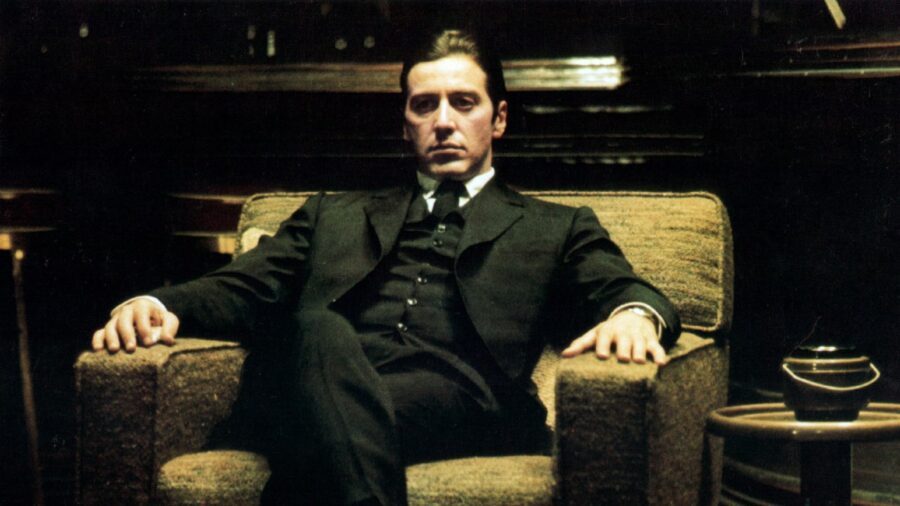
Impressively, The Godfather Part II earned $93 million worldwide in 1974, which is unadjusted for inflation, which means 50 years later, Francis Ford Coppola’s masterpiece outgrossed Borderlands. At the time of its release, the sequel/prequel was slammed by critics for being overly slow, and no less a critic than Roger Ebert slammed the dual-narrative. It didn’t take long, though, for the film to be rightly recognized as a landmark achievement in movie history, to the point that not even Megalopolis could diminish the legend of Coppola.
Every Mafia movie that has come after The Godfather Part II is standing on the shoulders of a giant. The Sopranos owes it a debt for building off of Michael’s story, Boardwalk Empire contains echoes of Vito’s struggle to build his Empire, and even the legendary Goodfellas pulls from the tragedy of Fredo. Few films are so successful that they define an entire genre, but that’s exactly what Coppola’s magnum opus has achieved.
The luxurious pacing of The Godfather Part II sticks out even more today in the era of rapid-fire mini-climaxes every 20 minutes. It isn’t a weakness, though; it’s a strength, because when you give the film all of your attention, each and every detail, every subtle interaction, every inflection of De Niro and Pacino carries weight and meaning. Francis Ford Coppola is one of the greatest directors in history, The Godfather is one of the greatest films in history, and yet, its sequel is required viewing by everyone who has even a passing interest in crime cinema.
The Godfather Part II is now streaming for free on Pluto TV.
Entertainment
George Lucas Almost Ruined Beloved Star Wars Movie By Removing Its Worst Line
By Chris Snellgrove
| Updated

While younger fans have done their best to rehabilitate the Star Wars prequels, most older fans still agree that The Phantom Menace was pretty bad and that Attack of the Clones was an overstuffed, equally embarrassing sequel. However, the third time was the charm for George Lucas: Revenge of the Sith felt like a proper Star Wars movie, especially after the disappointing films that preceded it. Unfortunately, the film is held back by some of Lucas’ trademark excess and bizarre dialogue. The most famous example of this is Obi-Wan Kenobi infamously warning Anakin Skywalker, “I have the high ground;” Anakin attacks anyway, getting sliced up and left to burn.
It’s a notoriously goofy moment in franchise history. Like, when they’re dunking on Star Wars writing in shows as normy as Gilmore Girls, you know you wrote something pretty stupid. Interestingly, though, this notorious line was almost removed from Revenge of the Sith altogether. In one version of the duel scene, Obi-Wan never says anything about the high ground, but he still ends up beating Anakin by accidentally slicing his former apprentice. This would have ruined the movie’s most iconic scene by turning it into accidental comedy. Fortunately, Lucas changed things up and added the high ground dialogue, effectively saving the best Star Wars prequel by giving it the worst line in the franchise!
Dueling Fates
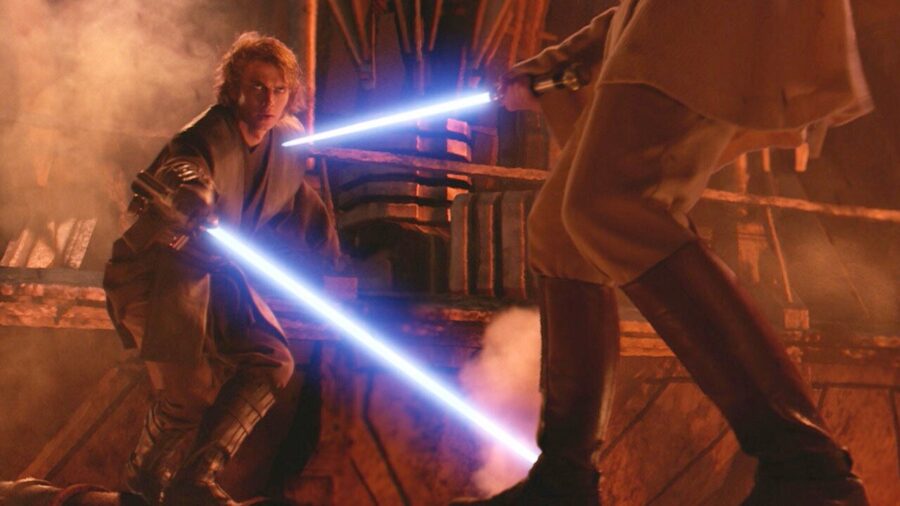
All of this information comes to us courtesy of Revenge of the Sith stunt coordinator Nick Gillard. In an interview with Empire, he revealed how the first version of Obi-Wan and Anakin’s duel went down. “Originally, they both land on the side of the lava flow and immediately start fighting. Anakin disarms Obi and grabs him by the throat,” he said. “He’s about to chop his head off, but Obi sucks the lightsaber into his hand in a defensive move to try and block it, and in doing so cuts straight through Anakin’s arms and legs.”
What happened? George Lucas. According to Gillard, “[George Lucas] wanted something else.” He then added that, “George is the creator. We would be foolish to second-guess him.” While Gillard’s loyalty is laudable, he accidentally shed some light on why most of the stupidest stuff ended up in the prequels. Basically, Lucas would get some weird idea or another in his head, and he was surrounded by so many sycophants that nobody wanted to tell him this was a bad idea. This is presumably why Jar-Jar gets farted on, why Anakin rambles about sand, and why Qui-Gon’s obsessed with midichlorians. Lucas came up with these things without anyone to tell them these are dumb ideas.
Burn, Baby, Burn

In this case, though, George Lucas had the right idea. Sure, the high ground dialogue is dumb, but at least it’s charming, adding some levity (even if by accident) to one of the franchise’s most serious scenes. Speaking of unintentional comedy, the original scene that Gillard describes sounds like it would have been a little too goofy. Like, Obi-Wan wins the duel through an act of self-defense, which some might think seems fitting for a Jedi. But this description also makes it sound like the Jedi Master dismembered his old apprentice completely by accident, which would arguably ruin Star Wars far more than hearing Obi-Wan screaming out, “I have the high ground!”
In the final version of the duel that made it onscreen, Obi-Wan Kenobi is forced to make a haunting decision. He has to fight Anakin to save his own life, but he can’t bring himself to kill his old apprentice. Instead, he dismembers him, which ends up being far crueler. Anakin is disabled and disfigured, and instead of getting a clean death, he slowly burns, nearly to death, before getting rescued. All of this adds weight to Obi-Wan’s words about Anakin in A New Hope: he truly loved his former apprentice, and that final duel hurt him as much (okay, almost as much) as it hurt young Skywalker.
Saving The Best Prequel With The Worst Dialogue
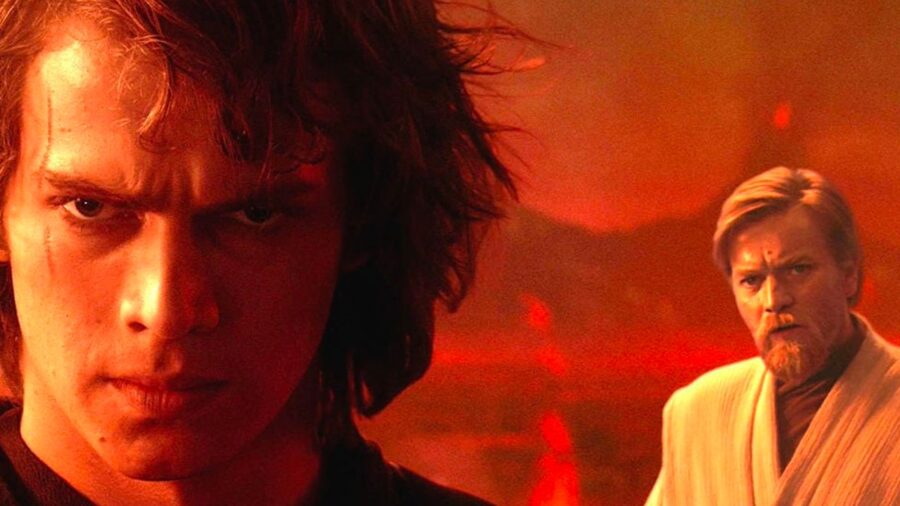
There you have it, Star Wars fiends. Originally, Revenge of the Sith lacked any dialogue about having the high ground, and Obi-Wan and Anakin’s final duel was very different. But George Lucas personally intervened to create the scene that we know and love (or perhaps loathe). It’s the kind of decision that only the Maker could, uh, make, and it was a good one. With a single decision, Lucas saved the best of the Star Wars prequels, and he did so by adding the worst dialogue in the galaxy.
Sadly, nobody was willing to clap back at him like Harrison Ford reportedly did on the set of A New Hope: “You can type this sh*t, but you sure can’t say it!
Entertainment
The Best Air Disaster Movie Ever Is Streaming On Netflix
By Steven Nelson
| Published

If you’ve ever wondered where the “disaster film” genre really took flight, look no further than Airport. Streaming now on Netflix, this ’70s classic offers a blend of over-the-top drama, impressive-for-its-time special effects, and a cast more packed than your last overbooked flight. Get ready to buckle up and enjoy some in-flight entertainment that doesn’t involve tiny screens or questionable headphones!
A Multi-Layered Disaster Flick With A Stacked Cast
Airport gives us a 24-hour peek into the chaotic world of a fictional Chicago airport (which, let’s be honest, sometimes doesn’t feel all that fictional when you’re waiting at an actual airport). Directed by George Seaton, the film is based on Arthur Hailey’s 1968 novel of the same name.

The story revolves around Mel Bakersfeld (played by Burt Lancaster), the weary, duty-driven airport manager. On one snowy night, he’s juggling runway closures, irate passengers, a wife who’s had it with his job, and oh, did I mention a bomb on an airborne plane? Yep, Mel’s got his hands full.
Our lead man Lancaster is ably supported by Dean Martin, who slips into the shoes of playboy pilot, Vernon Demerest. Vernon’s got his own share of problems, mainly an unplanned pregnancy with a flight attendant (the iconic Jacqueline Bisset).
However, the real tension in Airport boils down to a distraught bomber on board the flight. He’s schemed up a plan to blow up the plane, hoping his wife will get the insurance money (talk about going to extremes, right?). Enter Joe Patroni (George Kennedy), a sassy and tough chief mechanic, tasked with getting a stuck plane off the snowy runway and playing an unexpected hero in the climax.

As for our supporting cast, it’s an ensemble to write home about. We’ve got Jean Seberg as Tanya Livingston, Mel’s sidekick and chief customer relations agent. There’s also the Oscar-nominated Helen Hayes playing the cunning little old stowaway, Ada Quonsett. She’s an absolute scene-stealer, weaving in and out of the story, scoring free flights with her wits.
Through gripping narratives, the film, in a rather dramatic manner, showcases the underbelly of 1970s air travel. From technical dilemmas, personal dramas, to the palpable tension of an impending disaster, the movie paints a turbulent (pun intended!) picture of the aviation world. All in all, Airport is a joyride filled with drama, suspense, romance, and a bit of old-school airport glamour. They sure don’t make ’em like this anymore!
Airport Cleaned Up At The Box Office

The ’70s began with a bang for Universal Pictures, as Airport soared high on the box office charts. The movie grossed a whopping $128 million, making it one of the top grossers of 1970. That’s a lot of tickets and probably a ton of popcorn. Considering the film had a budget of around $10 million, Universal must’ve been throwing some pretty swanky office parties that year.
“Brace for impact!”—is probably what the producers thought when the reviews started pouring in, because, let’s face it, critics can be a tricky bunch. The film garnered mixed reviews, but even the harshest critics couldn’t deny its entertainment value.

While some found it a touch melodramatic (it is a disaster flick, after all), others appreciated the film’s meticulous production design and multi-layered narrative. The highlight? Helen Hayes snagged an Oscar for Best Supporting Actress for her role as the sprightly stowaway, Ada Quonsett. I mean, come on, a cheeky old lady outsmarting airport security? Who wouldn’t give her an award?
Airport also earned nine other Academy Award nominations, including Best Picture. It may not have been the darling of every critic, but the Academy sure showed it some love. The film’s success also spawned a slew of sequels and arguably gave birth to the “disaster film” genre of the ’70s. So, while Airport had its fair share of turbulence with critics, its legacy is undeniably grounded in cinema history.

Alright, let’s land this plane! Airport might be packed with dramatic moments, campy scenes, and iconic performances, but it’s these exact qualities that make it a must-watch. Whether you’re in for the nostalgia trip or just curious about the roots of the disaster genre, hopping aboard this cinematic flight on Netflix is a journey worth taking. Airport is streaming now.
Entertainment
The Greatest Black Comedy Of All Time Is Finally Back On Streaming
By Jessica Goudreault
| Published

It’s time to brush up on your sleuthing and detective skills, because the greatest black comedy of all time, Clue, is available to stream for free on YouTube. The classic film from 1985 is based on the board game of the same name, an entertaining whodunit that will keep you guessing until the very end, when three alternate endings reveal who the killers are.
The Ultimate Mystery Comedy

In Clue, six guests with dark secrets are invited to a New England mansion for a mysterious purpose. They are welcomed by Wadsworth, the butler, and Yvette, the maid, who give each guest a pseudonym to try and conceal their identities: Colonel Mustard, Mrs. White, Mrs. Peacock, Mr. Green, Professor Plum, and Miss Scarlet. Mr. Boddy, a man who has been blackmailing each of the other guests, arrives at the house as the seventh guest.
The evening really kicks off when Mr. Boddy is found dead, and no one knows who did it. Each guest, armed with a specific weapon (rope, dagger, wrench, pistol, candlestick, and lead pipe), must try and survive. The bodies and lies begin piling up, leading the guests and viewer to try and figure out who the killer is before it’s too late.
A Bona Fide Cult Classic

When Clue first hit theaters back in 1985 it was not very successful, failing to even earn back the $15 million spent on its production. The film offers three alternate endings, and audiences across the country would see different outcomes and killers. While the concept is interesting and unique, it must have made it hard for friends to chat about the movie and compare notes, which is part of the fun of seeing a movie in theaters.
Years later, Clue has become a cult classic that fans can’t get enough of. While some people can’t stand the wacky performances from the eccentric characters, others absolutely love it. Part of what makes the film so great is its ensemble cast that includes Eileen Brennan, Tim Curry, Madeline Kahn, Christopher Lloyd, Michael McKean, and Colleen Camp.

Tim Curry plays Wadsworth, the outlandish butler who is responsible for inviting all the guests to the mansion, and he has a personal vendetta against Mr. Boddy. Eileen Brennan puts on a hilarious and entertaining performance as Mrs. Peacock, the chatty wife of a senator who is accused of bribery. Madeline Kahn portrays Mrs. White (a widow to five different men) who gives a famous “flames” speech that she improvised on set.
The script for Clue was co-written by John Landis and Jonathan Lynn, with the latter going on to direct the movie. Originally, John Landis wrote a fourth alternate ending, but felt that it was not good and that three alternate endings would suffice.
Clue’s Lasting Legacy And Impact

To achieve the 1950s aesthetic of the film, the production used authentic furnishings from the 18th and 19th century and even used the estate of the late President Theodore Roosevelt. Nearly all of the filming took place at Paramount Pictures in Hollywood, except for the ballroom scene and shots of the driveway gate which were filmed at a mansion in South Pasadena, California.
Clue has gone on to create quite a legacy, and has been referenced in TV shows like Psych, Family Guy, CSI: NY, and Vagrant Queen. Fans are so fascinated by the film that Who Done It: The Clue Documentary was released in 2022.

There have been talks of a Clue remake since 2011, though the details of the development have changed quite a bit over the past 15 years. The director of the remake has changed hands several times, from Gore Verbinski to Jason Bateman to, most recently, James Bobin.
Supposedly, Ryan Reynolds is on board to star in the remake while Rhett Reese and Paul Wernick (who wrote Deadpool, Deadpool 2, and Life) were set to write the script. However, in 2022, Oren Uziel, who is best known for writing Escape Room: Tournament of Champions, took over the script. As of 2024, Hasbro Entertainment sought new rights arrangements, but there’s been no new updates on the project since.

Whether it’s your first time or your hundredth time seeing it, you can watch Clue for free on YouTube or Pluto TV. All of the alternate endings play in succession at the end, so you can enjoy all three.

Wing drone delivery might not be a novelty anymore
Yanks' Carlos Rodon continues success vs. Guardians in sweep


