
Entertainment
Friendster has returned! But you can only connect with offline friends.

Do you remember Friendster?
The early-2000s social networking platform has now returned roughly 24 years later with a whole new gimmick: Users can only connect with real-life friends.
The founder of the new Friendster, Mike Carson, is promoting the relaunched social media platform as being free of any ads and algorithms. But, that’s not all that’s missing either.
Friend currently exists as an iOS app. And once a user downloads the app and sets up their account, they’ll see completely blank space. Friendster doesn’t show users any posts. In fact, there are no suggestions about who to follow at all.
The new Friendster is built for users to strictly follow people they know in real-life. And the platform makes sure it’s being used that way too. In order to follow someone on Friendster, the two users need to physically tap each other’s phones while the app is open. This is the only way to connect with someone on the platform.
What happened to Friendster
Before even MySpace took off, there was Friendster.
Mashable Light Speed
Friendster was officially launched in March 2002 by its founder Jonathan Abrams and is largely considered to be the first major online social networking platform. However, shortly after its launch, other social networks like MySpace quickly took off and Friendster was unable to maintain a foothold with American users.
The platform did find a significant user base in Asia and was eventually sold to a Malaysian company, before Friendster pivoted to become a social gaming website in 2011. Eventually, however, Friendster was completely shut down in 2015.
Carson, the new owner, said he noticed that the Friendster.com domain was once again resolving to a website filled with pop-up ads in 2023. Carson reached out to the new owner of the domain and found out that they had won Friendster.com at an expired domain auction one year earlier for just $7,456. Carson eventually struck a deal with the domain owner, purchasing Friendster.com for $20,000 in Bitcoin along with another domain Carson owned that generated $9,000 per year.
In a blog post discussing his journey acquiring the Friendster domain, Carson said he has plans to enable a Friends of Friends feature, that will allow users to connect solely online if they are already connected to another friend that one of the users have actually met.
In addition, Carson would like to roll out a Fading Connection feature which nudges users when they haven’t been in the same room with one of their Friendster connections for more than a year.
“Not a punishment — a gentle nudge that real friendships are kept alive in person, not online,” Carson explains.
After downloading the app, I must point out that all the nothingness makes it feel daunting to use the app. However, the new Friendster seems like a very interesting idea – if it can take off. The real challenge seems to be getting users on there to begin with, because they too will see an app with empty space until they start making real-life connections.
Topics
Apps & Software
Social Media
Entertainment
July 4th fireworks livestreams: See the best Fourth of July fireworks live
Happy 4th of July, America. This year’s Independence Day celebrations are a little extra special as we celebrate the United States of America’s 250th birthday.
Across the country, many people will spend the day at the beach or at a barbecue, capping the night off with a fireworks display. But, if you’re spending the night indoors, there are still plenty of ways to celebrate with an array of July 4th fireworks livestreams.
Macy’s 4th of July Fireworks
Perhaps the most well-known of the Independence Day celebrations is the Macy’s 4th of July fireworks. If you live in NYC, you can catch them live. Otherwise, you can tune into NBC or Peacock at 8 p.m. on July 4th to watch the show.
While the U.S. is celebrating its 250th, Macy’s 4th of July Fireworks is also celebrating a milestone with its 50th anniversary this year.
PBS’s America Made in Virginia: 250 Years Together
While many of the livestream options on this list will require a paid subscription to a particular streaming platform, PBS is airing its 4th of July special on YouTube for absolutely free.
America Made in Virginia: 250 Years Together will start at 8 p.m. on July 4th and culminate in a fireworks and pyrotechnics display from Colonial Williamsburg.
Mashable Top Stories
Disney Celebrates America
Disney is also getting in on the 250th anniversary of the United States celebrations with its own event.
Disney+, Hulu, and the ESPN app will stream a 24-hour broadcast called “Disney Celebrates America” that checks in on 4th of July celebrations around the country, which will ostensibly include at least a few fireworks displays. The grand finale, Star-Spangled Bash in Nashville, will also be hosted by ABC and deliver one of the country’s largest fireworks and drone shows.
The broadcast kicks off at 10 p.m. on Friday, July 3rd, with the main event out of Nashville starting at 8 p.m. on July 4th.
Freedom 250 fireworks display
There’s been a lot of controversy surrounding President Donald Trump’s own Freedom 250 group, set up to lead Trump’s 250th anniversary celebrations. You’ve probably seen the memes about the lackluster attendance for Trump’s Great American State Fair all week.
With that said, Freedom 250 is claiming they’re about to have a record-breaking 40 minute long firework display on the 4th of July with more than 850,000 fireworks. And, according to the group, the MonumentCam atop the Washington Monument will be the premier free-to-watch livestream to watch it all.
The Great American Block Party 250
Paramount+ and CBS are hosting their own 3-hour Independence Day special at 8 p.m. on July 4th.
Like Disney’s, the show will check in on 4th of July celebrations and firework displays from around the country. The broadcast will also culminate in their own feed of Freedom 250’s Washington, DC, fireworks display.
Entertainment
The '90s Dark Sci-Fi Thriller Cult Classic Saved By Its Director's Cut
By Jason Collins
| Published
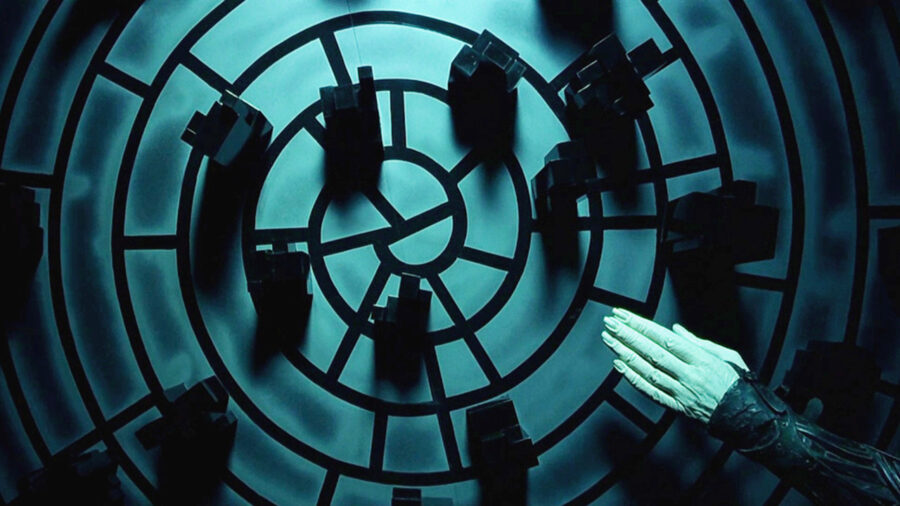
The removal of content from streaming, or the absence of definitive versions, underscores the importance of media preservation. That now applies to Dark City, the 1998 neo-noir sci-fi thriller about an amnesiac man trying to recover his identity while hunted for a series of murders. The theatrical cut is available to stream for free, but if you want to watch the superior Director’s Cut, you’ll have to rent or purchase the title on-demand.
A Dystopian City Ruled By The Strangers
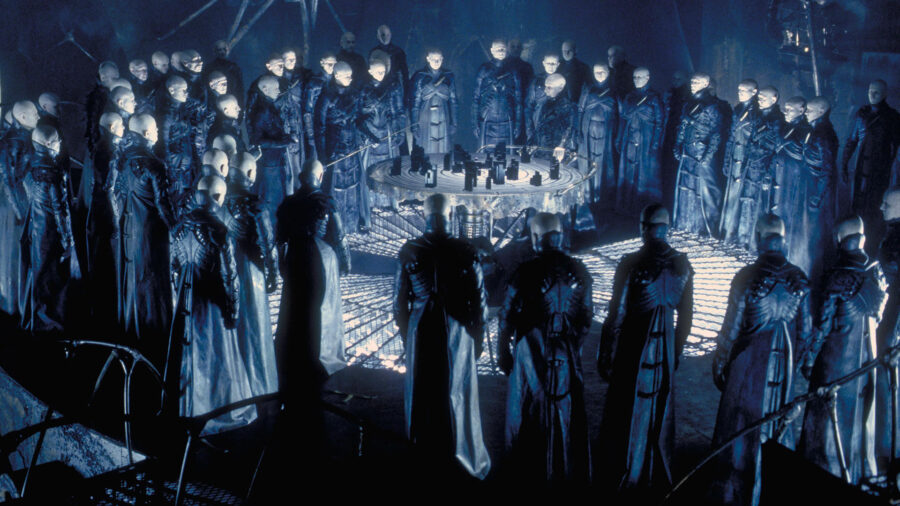
Dark City’s narrative is set in a dystopian city that is perpetually shrouded in darkness and controlled by a mysterious group known as the Strangers, beings that possess the ability to alter reality and reshape the city and its inhabitants’ memories at will.
The protagonist, John Murdoch (Rufus Sewell), wakes up with no memories and finds himself accused of murder, which sets him on a quest to uncover his past and the city’s darkest secrets and horrifying truths about his reality and Strangers’ manipulations.
Dark City Was Doomed At The Box Office

Dark City’s theatrical release was marred by studio interference from New Line Cinema, which diluted its thematic complexity and sense of mystery. Most notably, the studio insisted on an opening narration that prematurely explained many of the film’s biggest reveals, undercutting its suspense and intrigue.
Coupled with a marketing campaign that failed to convey the film’s unique blend of noir and sci-fi accurately, these interventions contributed to its initial lack of success among critics and audiences.
How The Director’s Cut Saved The Film

Something similar happened with Highlander II: The Quickening, which was also nearly completely ruined by its production studio, investors, and completion bond company. However, similar to Highlander II, Dark City was also saved by its Director’s Cut edition by removing the opening narration and restoring the film’s intended sense of mystery. The added scenes also deepened character development and clarified the narrative further, which significantly improved the audiences’ perception of the movie.
The added changes to the film transformed Dark City from a misunderstood gem into a cult classic that’s now appreciated for its bold narrative and visuals. Not to mention that some of its themes, such as the loss of individuality and the manipulation of reality, have become more relevant with time, particularly now, with the rising concerns about technology and privacy.
Without The Director’s Cut, It Might As Well Be Radio
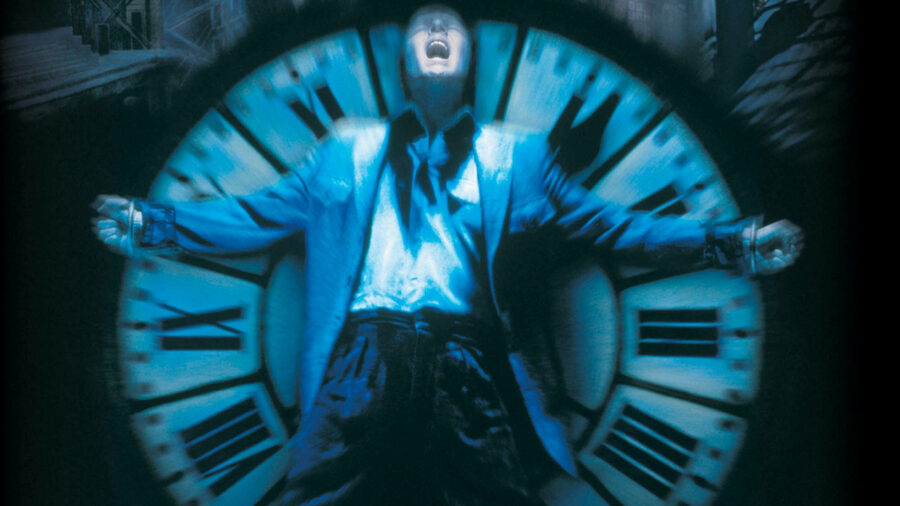
The improvement introduced with the Director’s Cut propelled Dark City into a Certified Fresh rating on Rotten Tomatoes. As of this writing, the film has a 78 percent critical score against an 85 percent approval rating on the Popcornmeter.
Yet, despite its acclaim, the definitive version remains relatively inaccessible. While the theatrical cut is available to stream for free on Tubi, the superior Director’s Cut is still locked behind on-demand purchases, making the film’s best version harder for casual viewers to discover.
Despite its immense quality, Dark City continues to elude many viewers because the version most deserving of its cult reputation isn’t the one most people are likely to stumble across.
Entertainment
The 2000s Sci-Fi Space Adventure Epic That Destroyed An Entire Studio
By Charlene Badasie
| Published

Titan A.E. is an animated sci-fi action adventure directed by Don Bluth and Gary Goldman. Released in 2000, it was a major project for Fox Animation Studios. But despite its ambitious scope and visual appeal, the film was a commercial failure, earning $36.8 million at the box office against a budget of almost $90 million. So, the studio closed its doors, and the movie became infamous as a result.
Leaving In The Titan

Titan A.E. tells the story of a young man named Cale Tucker (Matt Damon) who is tasked with saving humanity after a hostile alien species destroys Earth. The movie begins in 3028 when The Titan Project becomes the target of a hostile alien race called the Drej. Made of pure energy, the aliens fear that the ambitious Earthly undertaking will allow humans to challenge their power.
The Drej eventually launch a massive attack on Earth, forcing humans to evacuate the planet. Amid the chaos, Professor Sam Tucker (Ron Perlman) leaves his son Cale with his alien friend Tek (Tone Loc).

Before leaving in the Titan spaceship, Sam gives Cale a gold ring and tells him that as long as he wears it, there will be hope for humanity. Over a decade later, Titan A.E. finds the surviving humans living as refugees without a home planet.
Meanwhile, Cale has become jaded and works in a space station salvage yard. Former military officer and trusted companion of Cale’s father, Joseph Korso (Bill Pullman), finds Cale and reveals that the whereabouts of the Titan are hidden in his ring.
Becoming Fast Friends
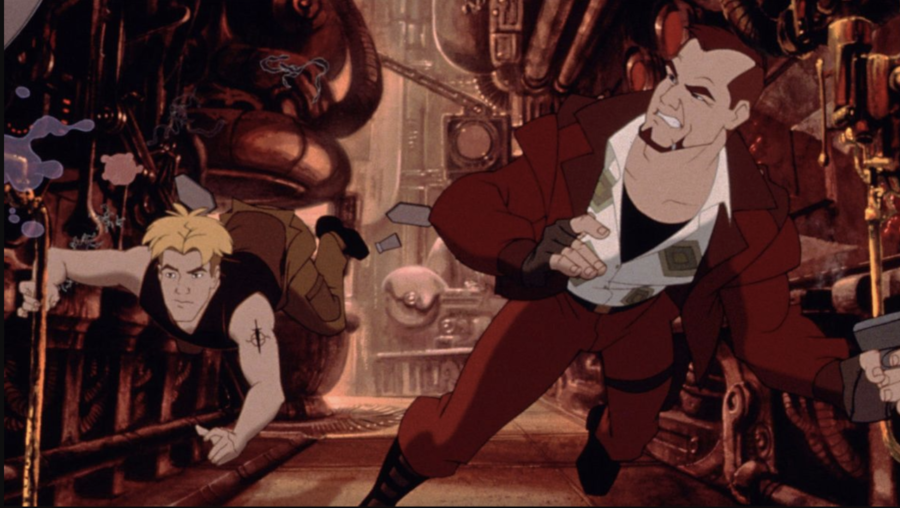
Upon activating it, a holographic map opens. Korso asks Cale to accompany his crew to Valkyrie so they can search for the Titan together. Cale agrees and becomes fast friends with pilot Akima Kunimoto (Drew Barrymore) and three alien crew members, including first mate Preed (Nathan Lane), weapons officer Stith (Janeane Garofalo), and scientist Gune (John Leguizamo).
Using Cale’s map, they reach the planet Sesharrim, where the Gaoul reveals the Titan’s location. But everything is not as it seems in Titan A.E., as the map often changes. The crew of the Valkyrie is also faced with various challenges, including a kidnapping and a shocking betrayal that takes the story to a new level.
The Deathblow To Fox Animation Studios

Originally planned as a live-action movie named “Planet Ice,” Titan A.E. was brought to life as an animated feature due to the high costs of the visuals.
Ben Edlund penned the initial script, with John August handling re-writes. With a budget of $55 million and 19 months to complete after $30 million had already been spent on pre-production, much of the animation was computer-generated, with traditional animation used for the main characters. Despite various setbacks, like studio cutbacks and executive changes, the film was released in 2000.

However, the closure of Fox Animation Studios shortly after hindered its promotion and distribution. In fact, cutbacks at the studio during the making of Titan A.E. were largely responsible for the movie underperforming. It kind of all went wrong at once here.
Still, Titan A.E. made almost $9.4 million in its opening weekend, ranking fifth behind other popular films. However, its audience dropped by 60 percent the following weekend.
Streaming Titan A.E.

Titan A.E. received mixed reviews from critics and currently holds a 51 percent approval rating on review aggregator Rotten Tomatoes alongside a 61 percent audience score.
The movie’s DVD release featured extras like commentary by the directors, deleted scenes, and a music video. Titan A.E. is available via various video-on-demand platforms such as YouTube, Apple TV+, Amazon Prime Video, and Fandango at Home.

LIV golfer acknowledges league's future 'not looking great'
Hanwha Life sweeps opener in Mid-Season Invitational bracket stage


