
Entertainment
Billy Zane’s Forgotten, R-Rated 90 Sci-Fi Thriller Is Blade Runner Meets Inception

By Robert Scucci
| Published

There’s nothing quite like a solid neo-noir sci-fi mind-bender, and 1990’s Megaville is the most Inception thing I’ve ever seen in my life. And I’ve seen Inception! Megaville wins some extra points, though, because it’s Billy Zane’s first lead role. That’s right, before he blew up with The Phantom and Titanic, he was all about that Blade Runner-style dystopian sci-fi grit, taking on an increasingly complicated mission that requires him to live between two worlds: the Hemisphere and the titular Megaville.
Megaville tells a story about assumed identities, a tyrannical government that has outlawed the media, and the resulting black market hanging in the balance as corrupt officials do as they please, all in the name of controlling the masses. It’s delivered through classic neo-noir beats in the context of a sci-fi film. It’s Billy Zane at his most frenetic and hungry, and he commits to the bit like a total pro.
The Hemisphere Vs Megaville

Megaville starts out in the Hemisphere, where media is outlawed and the government rules with an iron fist. Raymond Palinov (Billy Zane) is the captain of the Media Police, but here’s the problem: he’s addicted to the media he’s supposed to be confiscating, which clearly doesn’t go over well with his higher-ups who run the CKS, the Hemisphere’s governing body. To make matters worse, Raymond keeps “losing control” in the form of full-body seizures, complete with hallucinations, that only continue to escalate.
Despite his personal and professional issues, Raymond is summoned by CKS Director Mr. Duprell (Daniel J. Travanti) to handle a classified mission in Megaville involving a new consumer product known as Dream-A-Life (DAL), a virtual reality headset that allows users to live whatever kind of life they want but can’t attain in the physical world. The Hemisphere has made such devices legal, but thanks to a mysterious man named Mr. Newman (J.C. Quinn), they’re fair game over in Megaville, which is where Raymond will be put to use.

Raymond bears an uncanny resemblance to Mr. Newman’s only known contact in the Hemisphere, Jensen, and is put under by Dr. Vogel (Stefan Gierasch) under the guise of having his head problems fixed. Instead, Dr. Vogel implants Jensen’s memories into his skull, allowing him to navigate Megaville, find Jensen’s lover, Christine (Kristen Cloke), and piece together exactly where he needs to be to track down Mr. Newman. The implant also makes him incredibly unstable, which may have been the plan all along.
From this point forward, it’s unclear who Raymond is supposed to trust. He’s still his own person, but sometimes finds himself thinking like Jensen, and other times finds himself spazzing out as if his brain is being remotely accessed by the folks back in the Hemisphere. Raymond gets further lost in his own mind as he tries to navigate a mission that even his mother (Grace Zabriskie) encouraged him to take on. Between the voices in his head, the increasing hallucinations, and the DAL technology starting to influence his decision-making, Raymond is caught in the middle of a grand conspiracy with no clear escape route, to the point where he doesn’t even know who he is anymore.
A Gritty, Frenetic Brain Twister

By now, we’ve all seen similar plots play out, but Megaville holds its own as one of those weird sci-fi gems you may have overlooked. If you go in as a blank slate, the film has a lot going for it, even if some of its genre conventions can be found elsewhere. I can’t say with confidence that I’d feel the same way if anybody other than Billy Zane were the lead actor in this movie, however. His physicality and, at times, complete blankness hint at what’s to come in his career as he’s just starting to cut his teeth as a lead actor here. This doesn’t seem like an easy role to convincingly play, and he fully commits to the premise.
Megaville is one of those weird films that’s inherently cerebral but still easy to digest because every character archetype is familiar enough to wrap your head around. You have the evil government scientists and the conflicted agent trying to find inner peace, and along the way we learn how these shadow-government operations are handled. Despite its familiar beats, Megaville remains enthralling from start to finish because we’re allowed to focus on what’s happening in the moment instead of constantly wondering what everybody’s motives are.

This isn’t to say there aren’t surprise twists and turns along the way, but rather to illustrate how this vehicle is primed to kick it into fifth gear without leaving viewers in the dust. It’s clearly a low-budget effort with a then up-and-coming A-lister, but if anything, it serves as a solid proving ground for Billy Zane, who leans so hard into his conflicted character’s fractured mental state that he sells it better than just about anybody else who could have been cast in the role.

As of this writing, you can stream Megaville for free on Tubi.
Entertainment
Avengers: Doomsday Synopsis Reveals Over Half A Decade Of Secret Planning
By Chris Snellgrove
| Updated
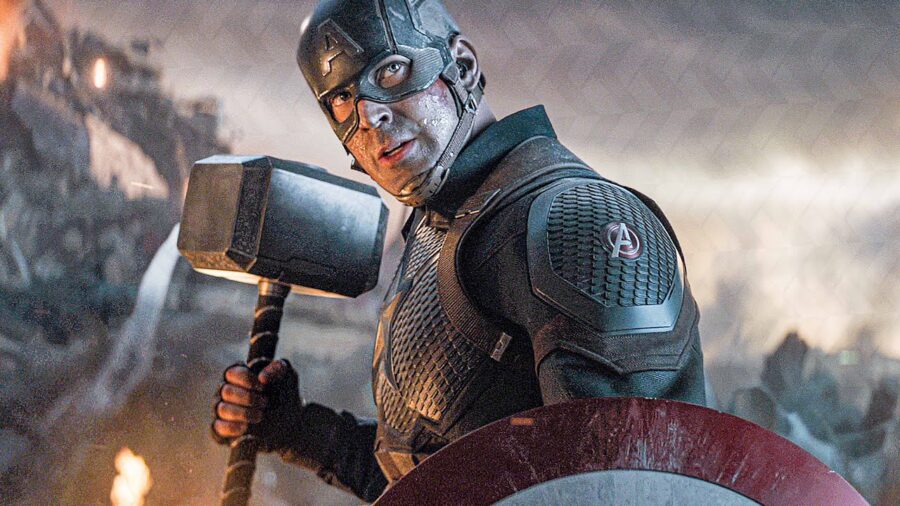
Marvel fans are gearing up to see their friendly neighborhood web-head swing back into theaters next month in Spider-Man: Brand New Day, a film destined to become this summer’s biggest blockbuster. However, that’s just the appetizer for fans of this cinematic universe. The main course will be Avengers: Doomsday, which comes out on December 18. So far, most of the details on that ambitious crossover extravaganza have been kept a secret, meaning fans could only speculate about this movie’s story based on early trailers. Now, though, Marvel Studios has released an official synopsis for Doomsday.
Aside from details about the cast, the directors, and the producers, the synopsis only contains a one-sentence description of the upcoming film’s plot. “In Avengers: Doomsday, beloved heroes from three distinct universes will be set on a deadly collision course and face an existential threat unlike anything they’ve ever encountered.” That’s not much to go on, but Marvel comics fans think they’ve deciphered what this means. If they are right, we know exactly what to expect about this (quite literally) universe-shattering plot, and those details reveal something astounding: that Marvel has been planning the major events of this film for over half a decade, littering films and TV shows with clues!
The Devil’s In The Details
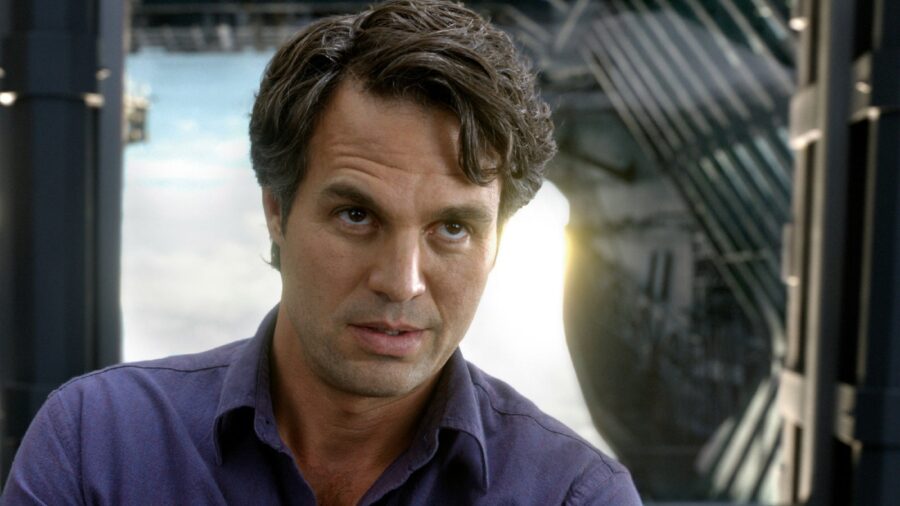
So, what does this synopsis actually mean? Marvel Comics superfans agree that the part about universes being “on a deadly collision course” and facing “an existential threat” is quite literal. In the comics, Doctor Doom’s multiversal shenanigans set off a chain of events in which parallel realities keep colliding with one another, destroying both. To avoid this outcome, there is only one option: one Earth must destroy the other before the collision begins. Afterward, Doom merges the destroyed realities into a Battleworld under his control. Once he’s defeated, the primary universe is reset, but with some changes, like the addition of Miles Morales.
What does that mean for Avengers: Doomsday and the MCU? Doom is going to similarly set off these multiversal incursions, and we’re going to see three different universes fight for survival. In all likelihood, those universes will be the Marvel Cinematic Universe, the Tobey Maguire Spider-Man universe, and the original X-Men universe. Those universes will be destroyed, but Doom will revive and merge them into a Battleworld. After he’s beaten in Secret Wars, we’ll have a reset MCU where certain characters and actors have changed. There will also be lore changes, like the introduction of the X-Men and other mutants into the MCU.
Are You Down With Multiverses?
As cool as this sounds, some Marvel fans are skeptical because Avengers: Doomsday feels like a Plan B. Everybody knows that Kang was supposed to be the next Big Bad and only got replaced because of Jonathan Majors’ legal woes. That’s enough to make a cynic think that Doomsday is just a bunch of weird ideas held together by nostalgia. However, some comics fans have been deciphering more clues, and they have reached an amazing conclusion. Namely, that Marvel Studios has been secretly building up to Doomsday for over half a decade!
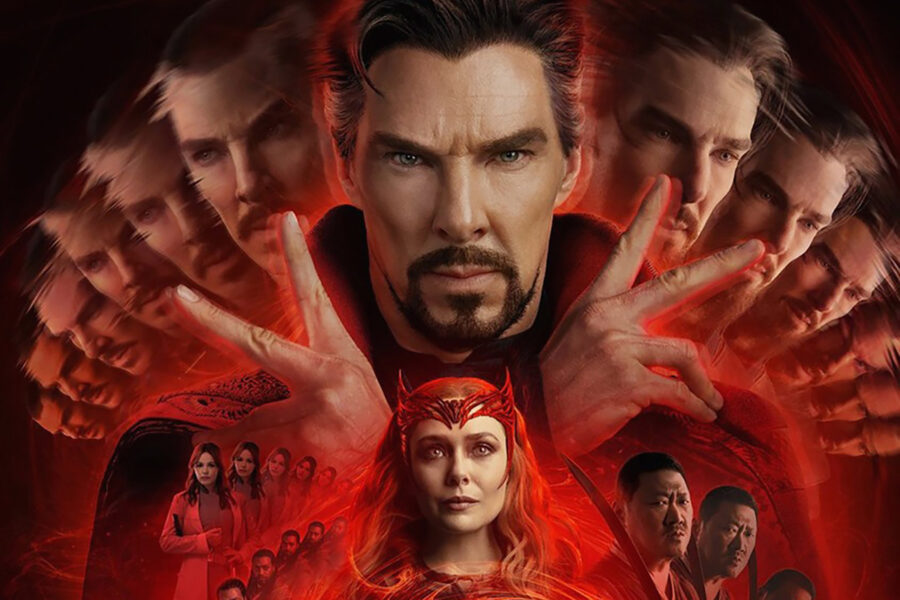
How does that work? For one thing, Doctor Strange and the Multiverse of Madness explicitly introduced the idea of multiversal incursions. If Doomsday had been the first film to introduce this idea into the MCU, fans would likely wonder why we hadn’t already heard of it. Now, Doomsday is building its whole plot on a key thematic element from Multiverse of Madness: namely, that incursions are dangerous, and those causing them can endanger potentially countless lives throughout each universe. That point is further driven home by a villain accidentally causing an incursion in The Marvels.
A Universe Without Its Anchor
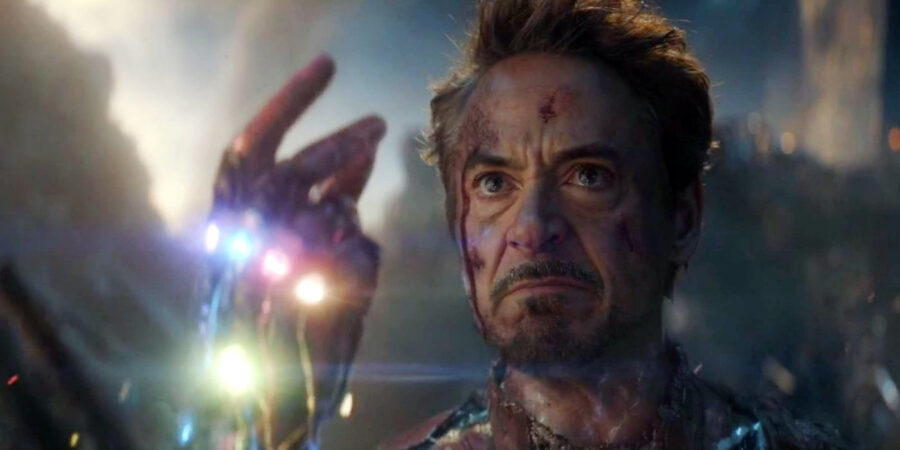
Additionally, while we won’t see more incursions until Avengers: Doomsday, we’ve already seen the TVA “pruning” reality and destroying entire multiverses at a time. Furthermore, Deadpool & Wolverine introduced the idea of Anchor Beings whose entire universes will slowly disappear once they die. The intentional destruction of universes will likely play a role in Doom setting off the incursions (maybe he uses TVA tech or resources to travel to different realities). The TVA’s looser grip on the multiverse may even play a role in worlds colliding. Finally, there are persistent rumors that Tony Stark was the MCU’s anchor being, and his death paved the way for the arrival of Doom, his multiversal counterpart.
Obviously, we won’t know exactly how accurate all of these predictions are until Avengers: Doomsday comes out. But the official synopsis lines up with the comics this movie and Secret Wars are based on, and it really does seem like Marvel has been building up to Doomsday by dropping powerful clues in previous movies and shows. Hopefully, all of this buildup will have a correspondingly rewarding payoff. Otherwise, the blockbuster film intended to cure superhero fatigue may serve as the final nail in the coffin for the most successful cinematic universe in Hollywood history.
Entertainment
It’s Official: Steven Moffat Is Now The Best Doctor Who Showrunner
By Chris Snellgrove
| Published
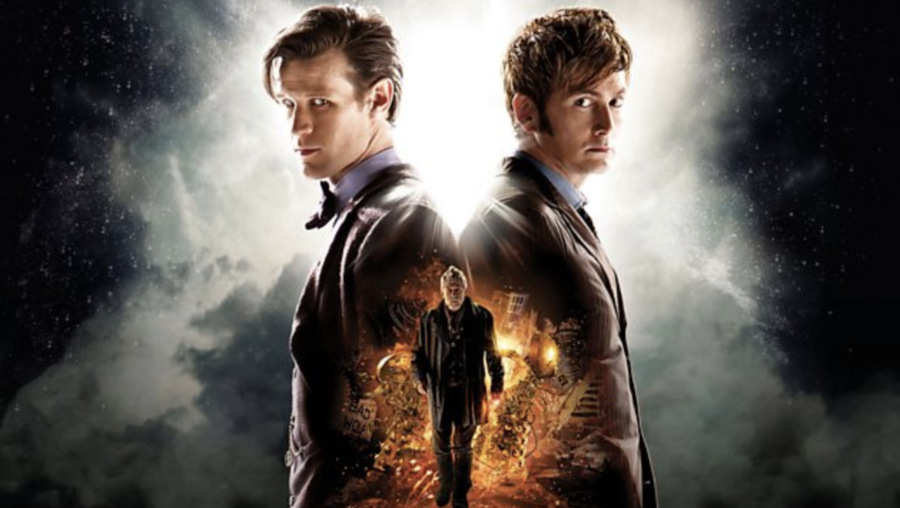
Like many Doctor Who fans, my wife and I often debate the most important question of them all: who was the best actor to play the Doctor? She and I both came on board with the 2005 revival, so we don’t have the same passion as veteran fans for classic series actors such as Tom Baker. The source of our debate is quite simple. She prefers David Tennant, whose very human performance made the Tenth Doctor a timey-wimey favorite to fans all over the world. As for myself, I prefer Matt Smith, who tempered his whimsical performances with occasional glimpses of both the tragedy and the darkness that have defined the Doctor’s life.
While both Tennant and Smith give showstopping performances, they each worked for very different showrunners. Russel T. Davies brought Doctor Who back in 2005 and soon transformed David Tennant into a household name. After four seasons, Davies left the show, and Steven Moffat took over. His tenure on the show was quite controversial, and countless fans just wanted Davies to come back. However, Davies did come back for the most recent two seasons, and they were so bad that the show he revived is now canceled again. Now that NuWho is dead for the foreseeable future, the fandom can finally embrace a simple truth: Moffat was the best showrunner Doctor Who ever had!
More Like Doctor Whoa
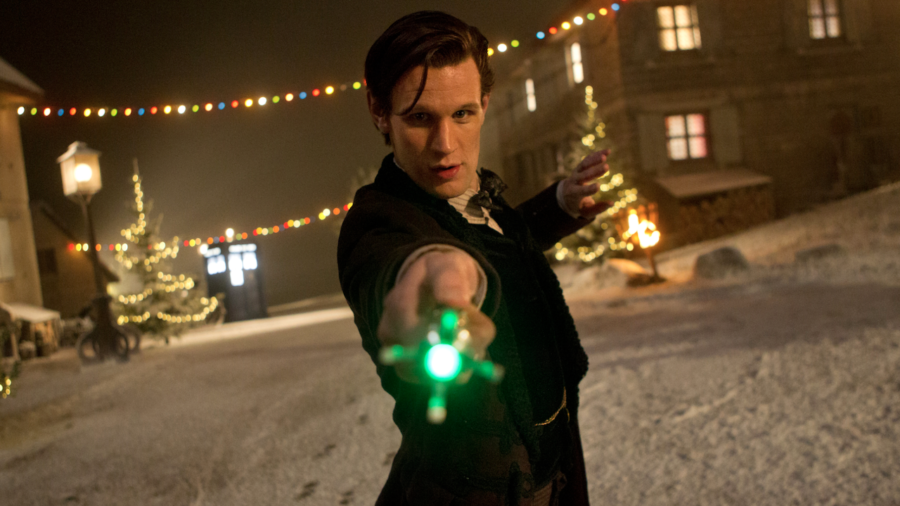
What made Steven Moffat the best Doctor Who showrunner? For one thing, he delivered episodes that were much more cinematic in nature. The classic series had often cheaped out on special effects, and even in the early years of the revival, Davies relied on some shoddy CGI. Once Moffat took over, episodes started looking more and more like blockbuster films (albeit modestly budgeted ones). Throw in the abundance of excellent two-parters (like “The Pandorica Opens” and “The Big Bang”), and stories often had the runtime of a movie, too. Obviously, this is a matter of aesthetic preference, but I’ll take Moffatt’s cinematic storytelling over Davies’ warmed-over schlock any day of the week.
Speaking of which, Moffat did cool, slow-burning mysteries and reveals better than Davies. Davies often had crazy mysteries (like Bad Wolf) and even crazier reveals (like the Master) that were cool in the moment but made less and less sense the more you thought about them. By comparison, Moffat had meaty mysteries that would keep you on the edge of your seat, including the Pandorica, the Silence, the true nature of River Song, and so much more. In each case, the reveal felt like the rewarding culmination of entire seasons’ worth of build-up. Davies, however, would just show us bonkers stuff and crank out a nonsensical reveal before calling it a day.
The Best Companions, Full Stop

Obviously, a lot of this is a matter of taste. If you don’t care for the mysteries of Moffat, you might be disappointed by how much screentime is devoted to exploring them. Personally, I thought he got the balance of episodic episodes and serialized arcs just right. The unfolding mystery of the Pandorica didn’t keep us from getting standout episodes like “Vincent and the Doctor,” for example, and the mystery of Impossible Girl Clara didn’t keep us from getting bottled brilliance such as “Nightmare in Silver.” Killer standalone episodes and mysteries worthy of TV shows like Lost. Honestly, what more could you want?
If you just said “great characters,” then Steven Moffat still has you covered. Even Doctor Who fans who generally disliked Moffat as showrunner can agree that he brought us some excellent new characters. Amy Pond and Rory are possibly the cutest Companions in franchise history, and they got something most classic Companions never did: their own arcs. Personally, I found their relationship much more compelling than just watching Rose pine for the Doctor in earlier seasons. Plus, under Moffat’s leadership, River gets fleshed out to be a worthy wife for our time-traveling hero. These characters and more got to shine because of how well-written they were from beginning to end.
Gab Man In A Box
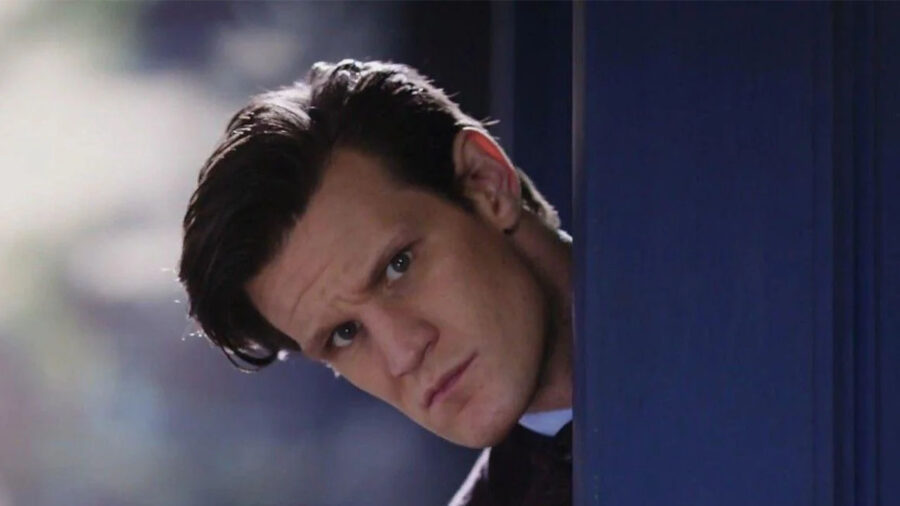
That brings me to the last and arguably most compelling reason why Steven Moffat is the best Doctor Who showrunner: the dialogue. Moffat personally wrote a huge number of the episodes under his run, and he gave his characters the wittiest, breeziest banter this side of The West Wing. For as beautifully cinematic as his episodes were, they are almost as enjoyable if you close your eyes entirely and just soak in the weird, found family warmth of the show’s dialogue. Even when Moffat was at his worst (“The Doctor, the Widow and the Wardrobe,” anyone?), he was still writing circles around everyone else.
Long story short? We’re not going to have any new Doctor Who for a while. Possibly a long while; the last hiatus for the show lasted 16 years! There’s no time like the present to go back and watch your favorite episodes of the revival that began in 2005. If you’re someone who hated Steven Moffat’s run back in the day, I encourage you to give him another shot. Every shot is beautiful, every mystery is riveting, and every character is three-dimensional. Throw in dialogue that feels like the lovechild of Joss Whedon and Aaron Sorkin, and you have episodes that can help you do the impossible.
Namely, wash the awful taste of Russell T. Davies’ last two seasons out of your mouth!
Entertainment
The Extremely R-Rated Sci-Fi Masterpiece Destroyed By Stallone Stink
Dredd is another in a long line of movies that, for one reason or another, failed to find a theatrical audience despite being fantastic.
By Brent McKnight
| Updated

Sometimes movies don’t click with audiences when they’re initially released. It may be timing, it may be the style, maybe it lacks a big-name star to put butts in theater seats. Movies tank for any number or combination of factors, but that doesn’t mean they’re not still great. Such is the case with 2012’s Dredd.
Let us not confuse the movie we’re talking about today with the much-maligned 1995 Sylvester Stallone debacle, Judge Dredd. Based on the same source material, they are very, very different animals. (I have a weird affection and place in my heart for that film, though I will never go so far as to argue that it’s good.) In fact, that confusion, or at least association, is one reason people often cite for why the latter film fell on its face at the box office. It certainly didn’t help matters.
Dredd is another in a long line of movies that, for one reason or another, failed to find a theatrical audience despite being fantastic. Worldwide, it only took in $41 million, with a dismal $13 million domestic haul.
Why Dredd Deserved Better

Dredd may be based on a comic (he first appeared in 1977 via a long-running British comic called 2000 AD), but it’s not your typical comic book movie. This isn’t the episodic long-form superhero storytelling of Marvel, nor the darker, brooding, but still PG-13 fare DC often trades in. No, directed by Pete Travis, Dredd is violent and brutal and hard-R to the point it had to be toned down to get there.
Set in the future after a nuclear incident destroys much of the world, the remnants of humanity cram into sprawling metropolises. These become dystopian hell-holes, full of violence and depravity. The only force of order is the Judges, roving cops who serve as judge, jury, and executioner all in one, dispensing tyrannical justice. Our story takes place in Mega-City One, which accounts for much of the East Coast of the United States. There are 17,000 serious crimes reported daily, to which law enforcement responds in 6% of cases.

The plot of Dredd is fairly simple. Legendary Judge Dredd (Karl Urban) is tasked with training and evaluating a new recruit, Judge Anderson (Olivia Thirlby), a mutant with strong psychic ability. They respond to a trio of murders in Peachtrees, a 200-story high-rise slum, and have to fight their way through the building, which is controlled by a vicious drug dealer named Ma-Ma (Lena Headey). She controls the trade of a new drug called Slo-Mo, which slows down how the user experiences time to one percent normal speed.
Dredd takes a certain amount of flak for having a similar plot to Gareth Evans’ martial arts banger The Raid. The Raid did come out first; after a festival run, Evans’ film got a theatrical release in March 2012, while Travis’ debuted in September, and they are, at least on the surface, similar. That said, and for the sake of clarity, one didn’t rip off the other. This is a case where two films with comparable plots came out near each other. Though it arrived later, due largely to significant post-production special effects work, Dredd actually filmed first.
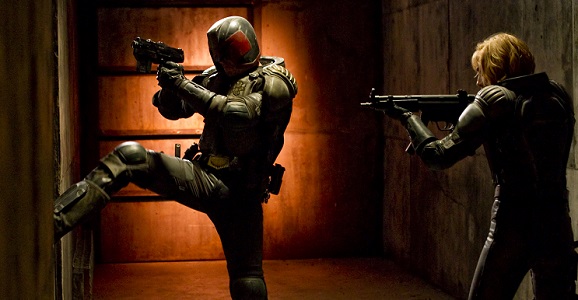
It doesn’t really matter; in addition to being their own individual things, both movies are completely badass and should be watched, often.
Though the setup of Dredd may be relatively straightforward, the finished product is anything but. Written by Alex Garland, who penned the likes of 28 Days Later, and who went on to direct heady sci-fi, like Ex-Machina and Annihilation, Dredd has more on its mind than just empty action. The surface machinations may be minimal, but the film as a whole is deceptively complex and nuanced.
Since his inception, Judge Dredd was always intended as a critique
of the creeping fascism and totalitarian idealism that was on the rise in the political
realm at the time, especially in Britain, but elsewhere as well. He’s a brutal
tool of a corrupt system, draconian in the way he dispenses justice. When we
first meet him, via a high-speed chase full of guns and bullets and viscera strewn
across the highway, he’s a black-and-white, letter-of-the-law lawman. No matter
the situation, no matter the circumstances, this is what the law says, this
is what he does.

Dredd carries this stance to extremes. When he and Anderson are trapped in Peachtrees, taking fire from Ma-Ma’s gang, he still trains her, barking out orders and questions. Because that’s his job and nothing will push him off that path. He’s like a wind-up toy, blindly going in one direction, unable to deviate.
That’s where Anderson comes in. She introduces shades of gray into Dredd’s world. Her psychic abilities give her insight into people and a corresponding empathy. She’s an orphan, a mutant, a product of one of these slums. Dredd looks up, and all he sees is the crime, gangs, the 96% unemployment rate; she sees a place very much like home, full of mostly good people struggling in a tough situation.
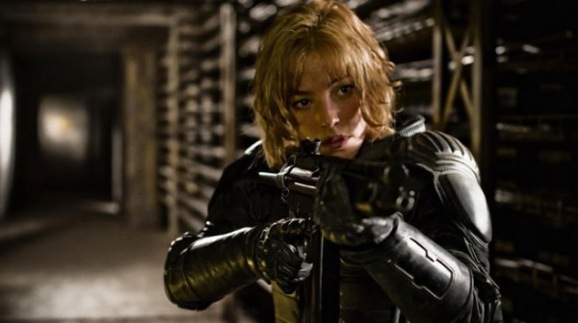
Dredd is bleakly nihilistic, a kind of futuristic Travis Bickle, while she’s earnest and idealistic. Over the course of the movie, they find something of a middle ground. She realizes maybe she shouldn’t always expect the best out of people, while he realizes maybe everything isn’t as cut-and-dried as he’s always thought.
Over the course of their day, Anderson commits errors that should fail a recruit, like losing her primary service weapon. But so did he. Or consider the case of a character like Domhnall Gleeson’s Techie. Yes, he works for Ma-Ma, but only because he has no other choice. If he denies her, she’ll eviscerate him. In fact, by this point, she’s already taken his eyes. Anderson sees that, whereas Dredd can’t, or at least couldn’t before.
Within the larger thematic puzzle, Urban and Thirlby (both actors who should be in way more stuff) carry all of this. When the film was announced, Karl Urban delighted fans ahead of time when he said one of his conditions for accepting the role was that, like in the comics, the character never take off his trademark helmet. Even though we can only see the lower third of Dredd’s face, he manages to portray much more than just clamp-jawed stoicism and a grim demeanor.

Urban has such a great range. He’s charming and funny as Bones in the new Star Trek movies. Here he’s in total big-time action-movie mode, which he more than pulls off. Even with what could easily be a one-note throwaway role like Skurge in Thor: Ragnarok, he gives the character pathos and an arc.
Thirlby’s Anderson could easily have fallen into first-day-on-patrol cop-movie clichés. She’s earnest, but not gullible; hopeful, but not to the point of naivete; frightened, but still strong and capable. Willing to resort to violence (when Dredd declares a criminal guilty and sentences him to die on the spot, she pulls the trigger), it’s not her natural first move. Her character balances and tempers Dredd’s impulses, influencing him. It builds to the point when his superior asks if Anderson passed; he says yes, even though, by the book, she committed failable sins.
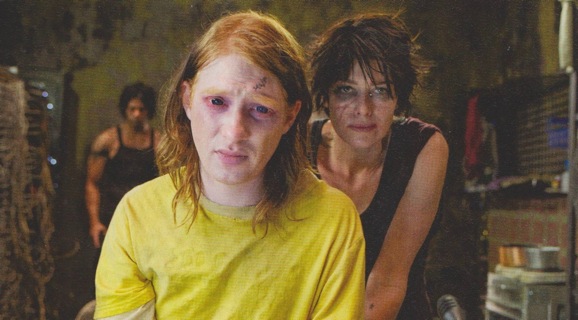
Lena Headey may be the unsung all-star of Dredd, though. She’s straight-up terrifying. A former prostitute wearing a gnarly face scar, she rules through absolute fear. This is a person not afraid to skin enemies alive and dose them with Slo-Mo before tossing them off the top floor, so the 200-story fall takes that much longer. Ma-Ma is equally as terrifying and relentless as Headey’s Cersei Lannister in Game of Thrones, but played in a much different way.
Working with cinematographer Anthony Dodd Mantle (127 Hours), Travis created a fantastic-looking movie. The Mega-City One of Dredd has a palpable grime, like if you touched it, your fingertips would come back covered in grit and something sticky you’d rather not know the origin of. But it also has a hypnotic beauty. We never really see the Cursed Earth beyond the walls of the city, but wide helicopter shots show the expanse of decayed urban sprawl. It’s dirty and smelly and looks a little like a large-scale Die Antwoord video.

It’s the Slo-Mo shots, however, that set Dredd apart aesthetically. This isn’t typical slow motion, just the normal action slowed down; this is molasses compared to that. When a character takes a hit, the subsequent movement practically drips. Travis and Mantle use it to great effect. They use enhanced, borderline psychedelic colors; bullets rip through flesh practically frame by frame; spurts of blood and exploding heads are raw and visceral in a unique way, but also gorgeous and mesmerizing. This is gore elevated to art.
All of this still comes through on streaming, but Dredd hit theaters in 3D. 2012 was the middle of that boom where every big movie of this ilk was upscaled to 3D, whether it was shot that way or not. It was overused and oversold, but Dredd knows what it’s doing in that regard. More than simply things flying at your face, it created an immersive feel more akin to the likes of Avatar than other comic book movies. Especially the Slo-Mo scenes. They put you right in the middle, creating an almost uncomfortable sensation of being there.
Critical And Audience Response To Dredd

Dredd offers up a tense pot-boiler of a movie. From end to end, it’s all escalating pressure, fantastic, epic action, and brutal violence juxtaposed with raw humanity. It’s legitimately great, which begs the question: why did it fail in such spectacular fashion at the box office?
Dredd presents an interesting case for a couple of reasons. It’s not as if no one liked the movie. On Rotten Tomatoes, which collects critical reviews, it has a 79% approval rating. Critics generally liked it at the time as well as now.
Beyond theaters, it made a huge splash on home video (which was still a thing back then). It was the best-selling DVD/Blu-ray release when it hit the market, where it moved 300,000 units in its first week of release, on its way to more than 650,000.

After all this, there were multiple fan petitions that collected hundreds of thousands of signatures calling for Dredd 2. They started almost immediately after it tanked at the box office and have popped up sporadically ever since. There were even annual fan Days of Dredd for a few years to call on Hollywood to make more Dredd movies. We’ve seen comics, animated shorts, and all kinds of talk, particularly from producer Adi Shankar, who, for a time, would chat about sequels every chance he got.
For his part, star Karl Urban has often said he’s game to return to the square-jawed character. Saying this even as recently as March 2020. (Though writer Alex Garland said in October of 2019, he has no intention of ever returning to this universe.)
Why Dredd Failed
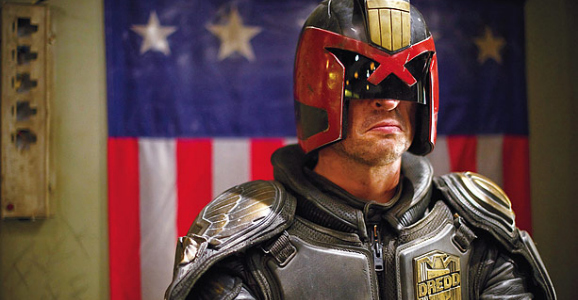
If it’s so popular, why did Dredd fail? There are a lot of potential answers to this. One is that the stank of Stallone’s 1995 version was still on people’s minds and that kept many away. That Stallone movie isn’t good, but is it that bad?
Another theory is that Dredd was marketed as another superhero movie and was a victim of superhero fatigue. It is based on a comic book, but while Judge Dredd is popular, it’s always been more niche and less mainstream. You can slap Batman, Superman, or Spider-Man on anything and people will see it. But Judge Dredd doesn’t have the same drawing power. Also add in the hard-R rating, the violence, the blood, the fact that it is very not family-friendly; that may have had something to do with it.
Dredd also isn’t the product of a major marketing conglomerate. Disney bought Marvel in 2009 and created a monolith. DC has Warner Bros. behind their movies. This is a much smaller-scale production from a bunch of smaller producers. Dredd cost a reported $50 million. Compare that to the other comic book movies in the summer of 2012: The Avengers cost $220 million, The Amazing Spider-Man cost $230 million, and Christopher Nolan’s The Dark Knight Rises set the studio back $250 million. Dredd isn’t in that same echelon, though people made it out that it was.

More than anything, I’m a believer that timing killed Dredd. The film opened in September 2012, which has become a bit of a barren wasteland between summer blockbusters and winter award-season bait. This was also a summer with movies like The Avengers, The Dark Knight Rises, Amazing Spider-Man, Men in Black 3, The Bourne Legacy, and tons of other big franchise movies. It’s one of my jobs to see movies, but even I’m usually exhausted and sick of sitting in theaters by the time September rolls around. So are general audiences, who often stay away from theaters for a while at that time of year. Theatergoers may not have had another big movie in them at that particular moment.
Couple that with a lower budget, a lesser-known comic
property, no significant star power to speak of, and a much smaller marketing
budget, and it adds up to a missed opportunity. And I’m kind of okay with that.
Granted, I have no financial skin in the game, and I would definitely be jacked to see more Dredd movies. Still, we never had to suffer through subpar sequels, or had to hope the next one will be good. Instead, we have this one awesome movie. Dredd kicks all kinds of ass on many levels and we should be psyched we can watch it whenever we want.
Who Really Directed Dredd?
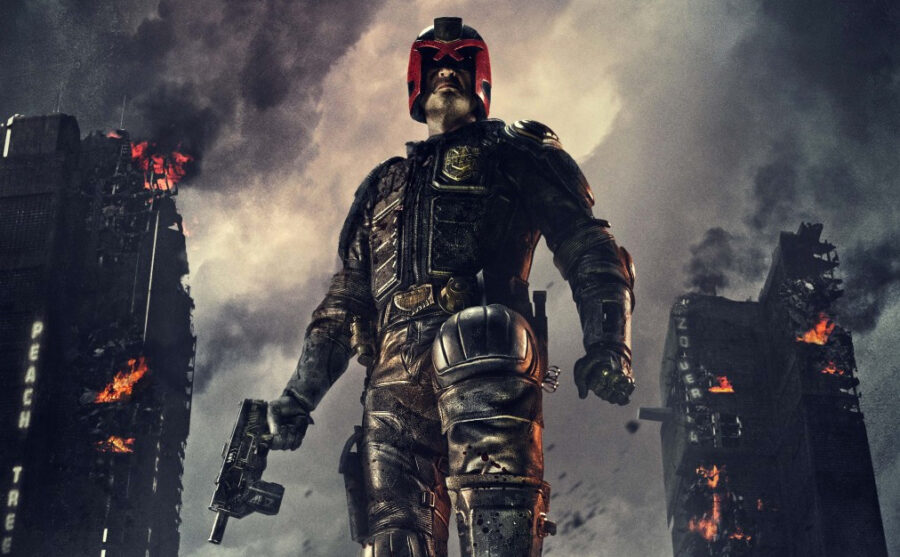
There is one additional thing to note about Dredd. Though it doesn’t necessarily affect how the film is viewed, it may change how some people view it. It’s also a curious story, one that has been floating around for some years, more or less since the initial release.
Looking at the credits, Dredd lists Pete Travis as the director and Alex Garland as the writer. The long-circulating rumor is that Garland actually directed much, if not most, of Dredd. It’s one of those inside-baseball, not-really-a-secret secrets.
And it’s not without some merit. As recently as 2018, Karl Urban said as much. In an interview with JoBlo, he said: “I would love to have the opportunity to play Dredd again, but if it doesn’t happen then I’m happy with the fact that we’ve made a film that has become a cult classic and that people have discovered over time. A huge part of the success of Dredd is in fact due to Alex Garland, and what a lot of people don’t realize is that Alex Garland actually directed that movie.”

That seems pretty definitive. He later went on to say that people should count Dredd as Garland’s directorial debut. There has even been talk that Travis was barred from the editing process, and Garland even sought a co-director credit.
This is all conjecture and gossip, but it makes a bit of sense. Garland obviously had eyes on a directing career and made his debut two years later in 2014. It may not mesh with the look and feel of Ex-Machina and Annihilation, but it does show some of his trademarks. On the other hand, it’s quite different from Travis’ filmography as well. In reality, it doesn’t really feel quite like the work of either filmmaker, and it’s easy to believe it’s a bit of a hybrid.
If Karl Urban and others are to be believed, Dredd is
the result of Garland more than Travis. Whether or not that’s how you lean, the
movie still totally rules.

ATP roundup: Ben Shelton tops Taylor Fritz in Stuttgart final
Padres place C Freddy Fermin on concussion IL


