
Entertainment
Bill Skarsgård’s R-Rated Thriller On Netflix Is The Platform's Best True Crime Offering

By Robert Scucci
| Published

The most dangerous thing in the world is a desperate man who feels like he has nothing left to lose. It makes for inherently compelling cinema, especially when the desperation is played with nuance, like in 2025’s Dead Man’s Wire. Based on the real-life 1977 Tony Kiritsis hostage standoff, Dead Man’s Wire is a fictional retelling of the events depicted in the 2018 documentary Dead Man’s Line, written and directed by Alan Berry and Mark Enochs, who consulted screenwriter Austin Kolodney and director Gus Van Sant on the historical context of the nationally broadcast incident.
While I’m not here to nitpick historical inaccuracies, nor do I want to because I’m talking about the film adaptation as a piece of cinematic art, I can confidently say that Dead Man’s Wire is a shockingly immersive period piece. I didn’t stop to verify every car make and model or anything like that, but the movie takes place in 1977, and it convincingly looks like something that came out of that era. While mostly shot through conventional means, we’re also given on-the-street footage that looks like it was pulled directly from police cameras, and there’s even some real archival footage peppered throughout the film in a similar fashion to how Weezer pulled off looking like they were performing in an episode of Happy Days.

And I haven’t even gotten to the best part about Dead Man’s Wire: Bill Skarsgård as the desperate man operating in this lane, and he’s mad as hell!
Make Sure You Get The Apology In Writing
There’s a kind of wish-fulfillment arc that plays out in Dead Man’s Wire that makes it all feel so universal. Tony Kiritsis has a bone to pick with one specific person, M.L. Hall (Al Pacino), who, in a botched real-estate deal, undermined the profitability of Tony’s most recent and valuable investment. Knowing he’s ruined financially if he doesn’t straighten things out, he heads over to Meridian Mortgage Company, where M.L. Hall said he’d be to exchange words, only to find out that he ducked out for vacation early and delegated the meetup to his son, Richard (Dacre Montgomery).

Furious and unable to contain himself, Tony assaults Richard and straps a loaded shotgun to his neck with a wire rig connected to a dead man’s switch. Here’s how it works: if you move enough to trigger the switch, your head will get blown clean off. With Richard and the device in tow, Tony holes up in his apartment and begins making his demands to the authorities. He also places crazed calls to his favorite radio DJ, Fred Temple (Colman Domingo), hoping his story will be broadcast so the public will side with him.
As Dead Man’s Wire slow-burns through its second and third acts, we get a clear glimpse into Tony’s psychology, which, to Bill Skarsgård’s credit, is portrayed with care, nuance, and just the right amount of unpredictable explosiveness lingering beneath the surface. He knows that he’s dead to rights. Everybody saw what he did. But he refuses to buckle under pressure until he’s made whole financially and receives a sincere apology from M.L. Hall, who doesn’t want to kowtow to terrorists and is more than willing to treat his son as collateral if it means he doesn’t have to show any signs of weakness.
Something, Something, Capitalism

While it’s obvious that Dead Man’s Wire is an indictment of capitalism, it’s carefully constructed in a way that allows you to appreciate all of the gray areas. M.L. Hall is your perfect corrupt capitalist, to the point where he’s willing to gamble with his son’s life during a hostage negotiation while sipping mai tais on the beach. But it’s also reasonable to assume that he’s a smart guy who knows he’s crossed every t and dotted every i, legally speaking, and believes people like Tony are all bark and no bite.
Tony, on the other hand, is a loner facing financial ruin who initially only wanted an apology. His whole stunt was orchestrated with the intent of exposing the kind of financial impropriety that happens behind closed doors at Meridian Mortgage. Even if Hall was well within his legal rights to screw Tony over, Tony recognizes that the house always wins and questions the ethics of what happened to him. In his mind, he’s the little guy taking one for the team by hurting the company’s bottom line with bad publicity.

Everybody in Dead Man’s Wire is in the wrong, but it shows just how far a man is willing to go when he’s convinced, without a sliver of doubt, that he was swindled out of his nest egg and the institutions that are supposed to protect him have failed him. It doesn’t condone or condemn the violence, but rather examines the untethered rage that’s unfortunately, and all too frequently, the byproduct of living in a capitalist society where the working man is forever getting screwed by the institutions that run his life.
What’s most telling about this fictional retelling of Tony Kiritsis’ most unhinged moments is how the entire ordeal ultimately resolves. Mental health is brought into question, but it’s a hotly debated topic when discussing the real-life incident. It does make me wonder how unhinged Tony Kiritsis truly was before he decided to take this route. If Bill Skarsgård’s performance is any indication, it certainly feels like an otherwise reasonable man pushed to the brink by a series of personal and financial crises. It’s written all over his face when he has to mean-mug for the camera, but his true personality occasionally slips through the facade when he’s trying to lighten the mood or add some levity to an impossibly high-strung situation.

Dead Man’s Wire offers no easy answers to its unfolding story, but I don’t think it’s supposed to. Its delivery is very much, “this is what happened, as authentically as we could replicate,” forcing the viewer to arrive at their own conclusions after watching the whole thing play out. Like most Gus Van Sant films, this one lingers because it’s supposed to make you uncomfortable, as if you’ve got a dead man’s switch tied to your neck and any sudden movement could end it all.

As of this writing, Dead Man’s Wire is streaming on Netflix.
Entertainment
The Alexander Skarsgard Futuristic Sci-Fi Thriller Streaming On Netflix
By Steven Nelson
| Published

Ever dreamt of seeing a 6’4″ Swedish actor take on a futuristic, neon-soaked Berlin without uttering a single word? Your oddly specific dream has come true, courtesy of Netflix’s Mute. Alexander Skarsgård, renowned for his charismatic roles in projects like Succession, True Blood, and Big Little Lies, takes a dramatic turn in this cyberpunk mystery.
Ditching his eloquent demeanor, he embraces the silent world of Leo Beiler, a mute bartender on a desperate search. With the murky undertones of the city reflected in its narrative, Alexander Skarsgård’s performance promises to be as captivating as it is quiet. Dive into this Netflix gem and watch as the tall, silent Scandinavian navigates a treacherous terrain with intrigue at every neon-lit corner.
An Amish Tech Noir Adventure

In a not-so-distant future, the sprawling urban landscapes of Berlin have evolved into a dazzling metropolis, shimmering with both neon lights and dark underbellies. At the heart of this city, we meet Leo Beiler (Alexander Skarsgård), a mute Amish bartender with a tortured past. A childhood boating accident took away his voice, and his Amish beliefs prevented any surgical restoration. Now, he communicates through handwritten notes and a profound intensity that only Alexander Skarsgård could deliver.
As if the challenges posed by his disability in such a high-tech world aren’t enough, Leo faces a personal crisis when his girlfriend, Naadirah (Seyneb Saleh), mysteriously disappears. His desperate search to find her leads him deep into the city’s seediest districts, where he unravels a conspiracy much larger than a simple missing person’s case.

Leo’s path collides with that of two shady American surgeons, Cactus Bill (Paul Rudd) and Duck Teddington (Justin Theroux). These two operate on both sides of the law, patching up criminals while getting embroiled in illicit dealings themselves. As their narratives intertwine, Mute transforms from a simple search-and-rescue mission into a complex web of deceit, crime, and human connectivity.
A Polarizing Moon Followup
Helmed by director Duncan Jones (of Moon and Source Code fame), Mute is a rich visual treat, blending elements of traditional noir with futuristic aesthetics. The movie doesn’t just rely on its stunning visuals; it offers a deep dive into themes of isolation, communication, and the lengths one will go to for love in an increasingly disconnected world.

Mute garnered a range of responses upon its release on Netflix. Critics were quick to praise the film’s visual aesthetic, likening its neon-soaked streets and futuristic ambience to classics like Blade Runner.
Alexander Skarsgård’s performance as the silent protagonist was also highlighted, with many lauding his ability to convey depth and emotion without the need for dialogue. But the fact remains that the movie is still sitting at just 20 percent critical score on Rotten Tomatoes.

The narrative didn’t resonate with everyone. Some critics felt the story lacked cohesion and that certain subplots detracted from the film’s central themes. The inclusion of secondary characters and their respective arcs drew mixed reactions, with some feeling they enriched the narrative, while others believed they muddled it.
Regardless of its critical divide, Mute‘s exclusive Netflix release allowed it to find a niche audience. Viewers who appreciate a blend of classic noir storytelling with futuristic settings found much to love. And while it didn’t achieve universal acclaim (far from it), Mute stands as a testament to the potential of streaming platforms to deliver ambitious, visually captivating stories outside the traditional theater system.

In the ever-evolving landscape of cinematic storytelling, Mute stands as a somewhat daring venture into the unknown terrains of the future. Despite its polarizing reception, the film beckons viewers with its stunning visuals and the silent yet poignant performance of Alexander Skarsgård.
Whether you’re a fan of neo-noir, futuristic tales, or simply in for a visual treat, Mute on Netflix promises an experience that lingers, echoing the silence of its protagonist and urging you to dive deeper into the stories that await in the shadows of tomorrow.
Entertainment
Amazon hides its Prime Day sex toy deals — so I found the best alternatives
Best early Prime Day sex toy deals so far:


Prime Day is just a few days away (yes, Amazon bumped the official sale up to June this year), and it’s my pleasure, and journalistic duty, to give you the deets on where to find the best sex toy deals.
As I’ve noted in years past, buying sex toys on Amazon is a gamble. If you don’t know what to look for, you could end up with something that does more harm than good (think porous jelly materials or chemical-laden vibrators). On top of that, Amazon isn’t allowed to promote sex toys on Prime Day the way it does for TVs and air fryers, which means you have to dig to find the discounts.
Luckily, you have me to do the research for you. To be transparent, there aren’t a ton of early sex toy deals live on Amazon just yet, but I expect a lot more to drop when the official sale kicks off next week. Below, I’ve rounded up the best early discounts — including a few Amazon finds that are already marked down, the toys I’m betting will go on sale next week, and deals from outside brands running their own sales. Happy shopping!
Hookup apps for everyone
AdultFriendFinder
—
readers’ pick for casual connections
Tinder
—
top pick for finding hookups
Hinge
—
popular choice for regular meetups
Mashable Trend Report
Best Amazon Prime Day sex toy deal so far

$29.99
at Amazon
$39.99
Save $10.00
Why we like it
A lot of the toys I usually hype up on Prime Day aren’t on sale yet (I’ve listed those below), but Tracy’s Dog is almost always marked down. It is one of my favorite sex toy brands for people who crave intense clitoral stimulation but aren’t willing to pay more than $50. This is one of the only times I feel confident saying you’ll get more bang for your buck.
Right now, you can get Tracy’s Dog OG Lick for $29.99 at Amazon (it’s basically just a newer version of the OG Sucking Vibrator, which I have and love). It’s only 13% off on the Tracy’s Dog website, so this is a good deal.
The OG Lick includes a remote and has seven licking modes and 10 vibration patterns. It’s also waterproof and super easy to use hands-free (I actually love using mine while I’m giving my partner head; it’s fun for everyone involved). Note: This is a “licking” vibrator; if you want suction, I recommend buying the OG Sucking Vibrator (which isn’t available on Amazon for some reason).
More early Prime Day deals hiding on Amazon
The toys I’m betting will go on sale next week
All the sex toy deals you can shop right now
Entertainment
Is Marvel Playing Us All With Fake Leaks?
By Chris Snellgrove
| Updated

It’s a pretty exciting time to be a Marvel fan. We’re getting some solid superhero television (like Daredevil: Born Again), and a new Spider-Man movie is around the corner. In December, Avengers: Doomsday will reunite Chris Evans and Robert Downey Jr. on the big screen in what is certain to be the biggest movie of the year. To make sure that their ambitious crossover classic has maximum impact with fans, Marvel has been doing its best to keep details about Doomsday and its plot under wraps. Unfortunately, trailers and footage for upcoming movies just keep leaking online.
Recently, a major trailer for Spider-Man: Brand New Day leaked online well before it was supposed to be officially released. Less than a week later, footage from Avengers: Doomsday found its way online. This is similar to an incident last December in which trailers for Doomsday kept leaking online before their theatrical debut. Leaks are a problem that has only been getting worse, leading many fans to ask why Marvel’s security has gotten so sloppy. However, I think the answer is simpler. Marvel is intentionally “leaking” footage as a way to build hype and defeat the greatest villain of them all: superhero fatigue.
Brand New Day, Same Old Leaks

The last week alone has been pretty terrible for Marvel when it comes to leaks. First, a major Spider-Man: Brand New Day trailer got leaked that gave us early glimpses of major developments, including Gray Hulk and the fact that Sadie Sink is seemingly mind-controlling him, which may finally confirm that she’s playing Jean Grey. More recently, footage from Avengers: Doomsday leaked that shows Doctor Doom sending Sentinels to fight heroes from the Avengers, Thunderbolts, X-Men, and Fantastic Four. While this footage is soundless and wildly pixilated, it still seems to be giving away major details about one of the movie’s biggest fights.
Marvel has been having problems with leakers for a long time. In fact, a few years ago, they were taking legal action, trying to figure out which insiders were leaking summaries of then-upcoming films like Spider-Man: No Way Home and Doctor Strange in the Multiverse of Madness. Now, things have escalated to the point that we’re getting actual trailers and footage well before the studio wants us to see it. Why is this happening? It could just be that Marvel’s security has gotten really sloppy within a year of their two most-hyped films (Spider-Man: Brand New Day and Avengers: Doomsday) releasing. However, it’s far likelier that these “leaks” are coming directly from Marvel.
Marvel’s Playing 4D Chess
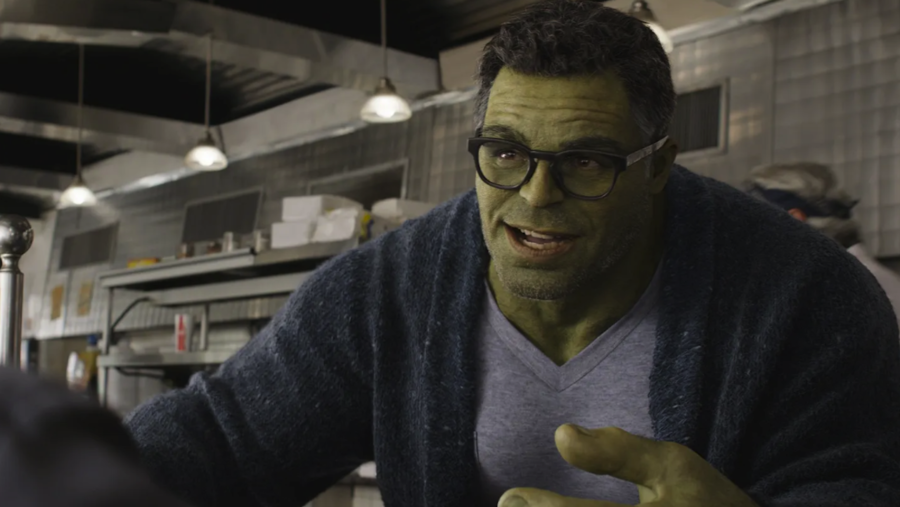
Why the heck would Marvel start leaking its own footage after spending years trying to stop other leakers? The most obvious reason is, of course, free publicity. Marketing something like Avengers: Doomsday or Spider-Man: Brand New Day can be insanely expensive and ultimately cut into a movie’s bottom line. By leaking their own footage, Marvel doesn’t have to spend a dime; they just have to kick back and watch the rest of us effectively promote these upcoming films by sharing the leaks with our real-life friends, posting them online for our followers, and generally speculating to anyone who will listen about what the movie will be about.
The other big reason that Marvel would leak its own footage is to take control of the narrative. In recent years, there has been a glut of fake superhero trailers and footage created by AI. The creators share this footage online, hoping to gain clout by making you think it’s real. Meanwhile, Marvel has to spend plenty of time and money setting the record straight about these fakes. By releasing their own footage, they can get everyone to pay attention to the real deal while generating viral hype with cool scenes (like, say, Doctor Doom siccing a bunch of Sentinels on fan-favorite characters like Thor and Captain America).
Fake Leaks Are A Win/Win For Marvel
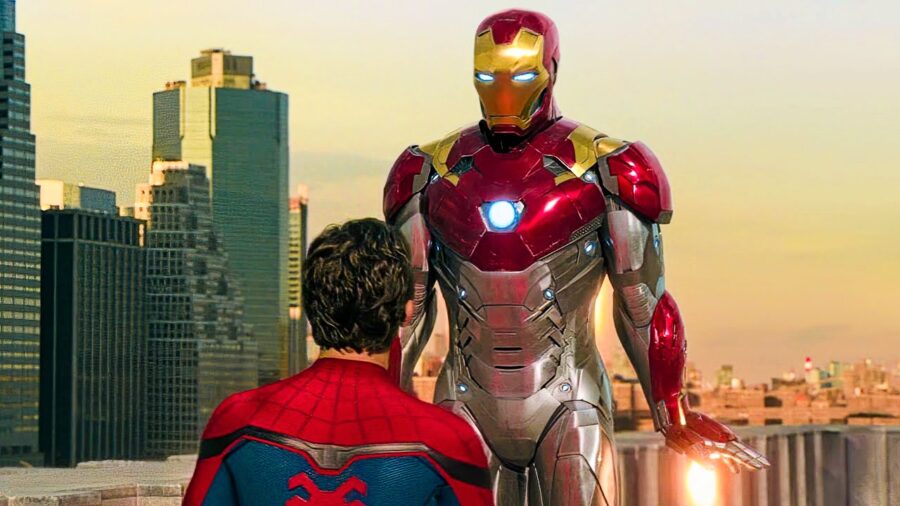
Marvel releasing its own footage via staged “leaks” also allows them to gauge audience reactions and, if needed, edit the film. For example, the Avengers: Doomsday footage leaked more than half a year before the movie comes out. If audiences really hate what they see, there’s time for the studio to make changes to the film through creative edits and, in the worst case, reshoots. Conversely, if audiences love what they see, Marvel knows exactly what to emphasize when marketing their most expensive blockbuster.
Obviously, there’s no way to prove this particular theory. Maybe footage keeps leaking because Marvel is filled with disgruntled employees, or maybe just employees who want to leave their own weird mark on the world. No matter what the cause, though, it seems like Marvel’s leak problem is just getting worse by the year. Will this make superhero fatigue worse and sink Avengers: Doomsday, or will it generate enough hype that Marvel laughs all the way to the bank? Without the Eye of Agomatto to help us out, we won’t know until Doomsday blasts into theaters on December 18.

Seven-run inning carries Cubs to series victory over Rockies
The Alexander Skarsgard Futuristic Sci-Fi Thriller Streaming On Netflix


