
Entertainment
Apple MacBook Pro 16-inch (M4 Pro, 2024) review: Record-breaking performance

Table of Contents
This beastly 16-inch MacBook Pro, packed with Apple’s new herculean M4 Pro chip, is not designed for amateurs like myself — people who think “intensive” means opening 100 Google Chrome tabs and praying one’s laptop doesn’t self combust.
No ma’am.
This mammoth of a laptop is, instead, for professional power users. I’m talkin’ 3D designers, seasoned animators, skilled video editors, and veteran music producers — folks who need a powerhouse that can handle heavy workloads without a single stutter.
However, thanks to the 16-inch MacBook Pro’s eye-popping power efficiency, I’d argue that normies can splurge on the 16-inch MacBook Pro, particularly if they prefer laptops with Energizer Bunny-like endurance. (And I mean, who doesn’t?)
You won’t believe how long the 16-inch MacBook Pro lasted on a charge. It doesn’t quite beat the record-breaking Microsoft Surface Laptop 7, but it’s pretty darn impressive.
Apple MacBook Pro 16-inch (M4 Pro, 2024) price and specs
The 16-inch MacBook Pro in this review costs a whopping $3,649, and it comes with the following:
-
M4 Pro chip
-
14-core CPU
-
20-core GPU
-
48GB of RAM
-
2TB of storage
-
Nano-texture display
Ouch! My wallet is screaming just looking at that price tag. Luckily, the cheapest 16-inch M4 Pro MacBook Pro has a more palatable cost of $2,499. Although it’s still pricey, there’s less sticker shock. This configuration comes with the same M4 Pro chip, but knocks you back down to 24GB of memory and 512GB of SSD storage.
If you’re a video editor, or any other professional handling massive files, you might need to bite the bullet and upgrade to at least 1TB of storage.
Apple MacBook Pro 16-inch (M4 Pro, 2024) design
I mean, it’s a 16-inch laptop, so don’t expect it to be a featherweight. It weighs nearly five pounds and it’s 0.66 inches thick.

Credit: Kimberly Gedeon / Mashable
Compared to its last-generation counterpart (i.e., 16-inch M3 Pro MacBook Pro), the new model is pretty much the same when it comes to design. It still sports a 100% recycled aluminum enclosure and that shiny, tell-tale logo on the lid that yells, “Yes, I’m an Apple laptop!”
It comes in Space Black and Silver.
My review unit sports the Space Black colorway. With a name like that, I was expecting the deepest, darkest black — think inky, onyx, obsidian vibes. After all, isn’t space, as in the vast, empty void beyond Earth, pitch dark? Apparently, I was wrong. Not to get all nerdy, but NASA says that “space isn’t absolutely black; the universe has a faint, suffused glimmer.”
Space Black is quite dark to the naked eye, but under bright lighting, it has a deep gray hue.
This colorway diminishes fingerprints, but it doesn’t completely fend them off. Keep a microfiber cloth handy.
Other than that, the M4 Pro shares the same design as its predecessor. In fact, it’s got the same design as far back as the 2021 model, But I can’t blame Apple; consumers love it. The MacBook Pro continues to be a solid and sturdy dream machine.
Apple MacBook Pro 16-inch (M4 Pro, 2024) display
This configuration comes with a new nano-texture display option.

Credit: Kimberly Gedeon / Mashable
This doesn’t come with the laptop. You have to pay an extra $150 to snag one. Is it worth it? It depends. Do you work in a sun-drenched office? Are you always working outdoors? If you answered yes to either of those questions, you’d benefit from a nano-texture display, as it’s designed to handle challenging lighting situations while still providing decent visibility for users.
I couldn’t wait to take the MacBook Pro outside in my backyard to test the nano-texture display, and I must say, I’m impressed!
The Apple laptop remained crystal clear, even as dappled sunlight attempted to wash out the screen. I didn’t have to squint, adjust angles, nor play hide-and-seek with shadows — the display stood its ground, refusing to surrender to the sun’s relentless glare.
If you’re someone who spends a lot of time working in bright, unpredictable lighting, this nano-texture display might just be the unsung hero you didn’t know you needed.
Plus, compared to the last generation, the M4 Pro MacBook Pro’s screen is brighter. It can hit a peak SDR brightness of 1,000 nits, up from 600 nits. The HDR brightness score continues to be 1,600 nits.
The 16-inch MacBook Pro, like the previous model, features a 16.2-inch, 3,456 x 2,234-pixel resolution display with ProMotion technology (i.e., up to 120Hz refresh rate). As expected, the display looked gorgeous while I feasted my eyes on the new Squid Game 2 trailer. It’s rich, vibrant, and pure visual eye candy.
Apple MacBook Pro 16-inch (M4 Pro, 2024) ports
The M4 Pro MacBook Pro now has Thunderbolt 5 ports, an upgrade from the previous generation’s trio of Thunderbolt 4 ports. Thunderbolt 5 offers double the bandwidth of Thunderbolt 4 at 120Gb/s, which means faster data transfer speeds for your peripherals.

Credit: Kimberly Gedeon / Mashable
Over Thunderbolt, the 16-inch M4 Pro MacBook Pro supports up to two external displays with up to 6K resolution at 60Hz.
You’ll also get an HDMI port, an SDXC card slot, a 3.5mm headset jack, and a MagSafe 3 port.
Apple MacBook Pro 16-inch (M4 Pro, 2024) audio
If music were a dish, the 16-inch MacBook Pro would be a gourmet apple pie, straight out of grandma’s oven — piping hot, golden, and worth every sinful calorie.

Credit: Kimberly Gedeon / Mashable
Packed with a high-fidelity, six-speaker sound system (with fore-cancelling woofers), Era Istrefi’s “Bonbon” sounded delicious to my ears. Yum!
The MacBook Pro is one of the most recommended laptops for music producers — and I see why. The laptop perfectly captured the gritty, exotic undertones and the pulsating, driving beat.
Apple MacBook Pro 16-inch (M4 Pro, 2024) keyboard and trackpad
I’d describe my typing experience on the 16-inch MacBook Pro in two words: snappy and responsive. Plus, it’s got enough key travel to make typing comfortable over long periods of time.

Credit: Kimberly Gedeon / Mashable
Just make sure you’re not sitting next to someone who prefers piece and quiet. The keyboard emits some loud clacks.
Apple’s glass-covered Force Touch trackpad is, as always, a pleasure to use. It’s spacious, responsive, and perfectly balanced between smoothness and resistance. Every swipe and click feel effortless.
Apple MacBook Pro 16-inch (M4 Pro, 2024) benchmarks and performance
Somebody call the coroner because the M4 Pro chip inside the 16-inch MacBook Pro has obliterated the competition.

Credit: Kimberly Gedeon / Mashable
On Geekbench 6, which tests CPU prowess, the 16-inch MacBook Pro delivered a multi-core score of 22,758. For reference, the entry-level M4 MacBook Pro notched a score of 15,199 on the same test.
This is the best Geekbench 6 score we’ve seen at Mashable for a laptop. Coming in close second is the Razer Blade 18, which sports an Intel Core i9-14900HX. So yeah, the MacBook Pro just torched a gaming laptop.
Here are some other scores:
Cinebench R3 – 23,336 (multi-core)
Blender GPU test – 2,533.57
Once again, for reference, the entry-level M4 chip notched scores of 13,891 and 1,065, respectively, for Cinebench R3 and Blender. The M4 Pro chip is fast!
Apple MacBook Pro 16-inch (M4 Pro, 2024) webcam
The M4 Pro MacBook Pro’s 12MP webcam is a step up, delivering sharper video quality with less artifacting in various lighting conditions. FaceTime calls looked great, and my fiancé was quick to notice the improvement in clarity.

Credit: Kimberly Gedeon / Mashable
Desk View is the real star, allowing a top-down perspective of your desk setup using only the built-in webcam. I assumed I’d need a secondary camera, but the 12MP webcam handles it all on its own. Whether you’re presenting or demoing, Desk View is a clever addition that’s both fun and functional.
The updated webcam also supports Center Stage, which may be familiar to those who own iPads. For the uninitiated, Center Stage ensures that you’re kept in frame at all times, even if you lean a little bit to the left or shuffle over to the right.
Apple MacBook Pro 16-inch (M4 Pro, 2024) battery life
The 16-inch MacBook Pro lasted an eye-popping 20 hours and 51 minutes in our video rundown test. In other words, this laptop nearly lasts 21 hours on a single charge.

Credit: Kimberly Gedeon / Mashable
As mentioned at the outset, it doesn’t quite beat our reigning champ (i.e., Microsoft Surface Laptop 7), but it’s nipping at its heels.
Is the Apple MacBook Pro 16-inch (M4 Pro, 2024) worth it?
The 16-inch M4 Pro MacBook Pro didn’t come to play. With jaw-dropping performance, impressive battery life, and a gorgeous nano-texture display option, this laptop is geared for professionals who need powerhouse specs and are willing to pay for them. If you’re a video editor, a 3D designer, or someone who needs serious firepower, this MacBook is as good as it gets.
Even if you’re just an internet surfer and a Netflix browser, get it for the 20-hour+ battery life — if you have the money to blow, of course.
Either way, the M4 Pro is a future-proof machine that won’t leave you disappointed, as long as you’ve got the budget for it.
Entertainment
This $43 bundle quietly upgrades your entire PC experience

TL;DR: This rare Microsoft bundle deal gives you a lifetime license to Microsoft Office Professional 2021 for Windows and Windows 11 Pro for only $42.97 (reg. $418.99) through May 17.
$42.97
$418.99
Save $376.02
Looking for an affordable way to make your old PC feel new again? If you don’t have the funds to buy a brand new computer, don’t worry. The Ultimate Microsoft Office Professional 2021 for Windows lifetime license and Windows 11 Pro Bundle is the next best thing, offering your computer a total upgrade for only $42.97 through May 17.
Don’t count out your dusty old PC. This Microsoft bundle is here to give it a total facelift for less than $50. It kicks off with a lifetime license to some of the brand’s most popular tools — Microsoft Office, which you’ll pay for once and enjoy without any subscription fees.
Mashable Deals
You’ll get permanent access to a suite of eight helpful apps with Microsoft Office Professional 2021 for Windows. It includes staples that have been around for decades, like Word, Excel, PowerPoint, and Outlook. You’ll also get newer favorites like Teams, OneNote, Access, and Publisher.
Once you’ve loaded the apps onto your device, you can upgrade your OS to Windows 11 Pro. It’s an operating system made for modern professionals, with tools that support your workflow. Enjoy a more powerful search experience, improved voice typing, a seamless interface, snap layouts, and much more.
You can rest easy knowing Windows 11 Pro takes your cybersecurity seriously. You’ll have biometric logins, encrypted authentication, and advanced antivirus defenses to keep your data secure.
Mashable Deals
Show your PC some love with the Microsoft Office Professional 2021 for Windows and Windows 11 Pro bundle for only $42.97 (reg. $418.99) now until May 17.
StackSocial prices subject to change.
Entertainment
Star Trek’s First Broadcast Episode Was Very Carefully Chosen, Because It Was Boring
By Chris Snellgrove
| Published

These days, Star Trek is a bona fide pop culture phenomenon. But during the development of The Original Series, there was anxiety that the general public wouldn’t really understand Gene Roddenberry’s mashing up Western tropes with a sci-fi setting. Making matters worse was that the original pilot, “The Cage,” had been rejected by NBC for being too brainy. Fortunately, Roddenberry got a chance to shoot another pilot, one which impressed the network enough to order an entire season worth of episodes.
Several episodes of Star Trek: The Original Series had already been shot when the time came for this new show to make its broadcast premiere. The first episode that the general public saw was “The Man Trap,” which featured a shapeshifting monster that was revealed to be an alien salt vampire. This good-but-not-great episode was an odd choice, and it was one that the cast and crew hated. As it turns out, though, this episode was very carefully selected by executives because it served as an inoffensive, relatively straightforward encapsulation of everything Star Trek had to offer.
It’s A Trap!

Most of the information we have about why “The Man Trap” was selected as Star Trek’s first episode comes from the book Inside Star Trek: The Real Story. Within this impressive reference tome, Robert H. Justman and Herbert F. Solow revealed something surprising: NBC had several other episodes to choose from for the premiere, including “The Corbomite Maneuver,” “Charlie X,” “Mudd’s Women,” “Where No Man Has Gone Before,” and “The Naked Time.” All of them had already been shot and were mostly finished, so it was just a matter of figuring out which episode would serve as the best introduction to Star Trek, a heretofore unknown sci-fi series.
“The Man Trap” won out, mostly because the powers that be worried that other episodes would be off-putting to general audiences in some very specific ways. For example, they worried that audiences would find “Charlie X” a story that was “too gentle” because it focused on an adolescent with special powers. This was probably the right call, in retrospect: when Variety gave a negative review of “The Man Trap” (an episode chosen, in part, because of its relative maturity), they declared that Star Trek: The Original Series was “better suited to the Saturday morning kidvid bloc” (ouch!).
A Monster Hit Of An Episode

“The Corbomite Maneuver” was a great potential choice, but this episode’s impressive special effects were still in post-production, and almost all of its action took place on the ship. “Where No Man Has Gone Before” really outlined the premise of the new show, but it was deemed “expository” for general audiences expecting more action and danger. Justman thought “The Naked Time” was a killer introduction to the crew’s personalities, but the network passed, presumably because of how over-the-top (half-naked, swashbuckling Sulu? Oh, my!) that episode gets. “Mudd’s Women,” meanwhile, was deemed too offensive because the plot involved literally selling women to miners.
Through this process of elimination, executives decided that “The Man Trap” was the best intro to Star Trek. It had cool scenes on both the Enterprise and a distant outpost (a strange new world) and featured a straightforward action plot you didn’t have to be a sci-fi aficionado to understand. Finally, it was all about finding and defeating a creepy monster, which offered thrills to audiences of all ages. The network’s choice paid off, and Star Trek: The Original Series became the most popular sci-fi show in television history, even though the cast (including William Shatner and Leonard Nimoy) thought “The Man Trap” was the worst possible episode they could have chosen.

All of this is a keen reminder of how much thought and work went into putting Star Trek’s best foot forward. It might be a reminder that Paramount’s current upper leadership needs, as Starfleet Academy hit the ground running with the worst episodes of Season 1. The show got better after that, but it didn’t matter because the prospective audience had already been driven away. As it turns out, today’s execs need to learn something that the network execs of the ‘60s had learned very well: series succeed when you give the audience what they want to see and not what you want to show!
Entertainment
How A Fantasy Box Office Bomb Lost $200 Million In Theaters, And Suddenly Became A Streaming Hit
By Jonathan Klotz
| Published

For the last decade as streaming has taken off in homes around the world, it’s become possible for films that lost historical amounts of money in theaters to find success, even if it might be the post-Mystery Science Theater 3000 trend of “so bad it’s good.” That’s why a massive flop, for example say, Morbius, and films that slightly missed the mark like The Fall Guy can turn it around and become a streaming success.
What’s even more impressive is the amazing turnaround of 2013’s Jack the Giant Slayer, which lost Legendary Pictures an alleged $200 million, only to end up topping streaming charts in 2025.
The Classic Fairy Tale With A Twist
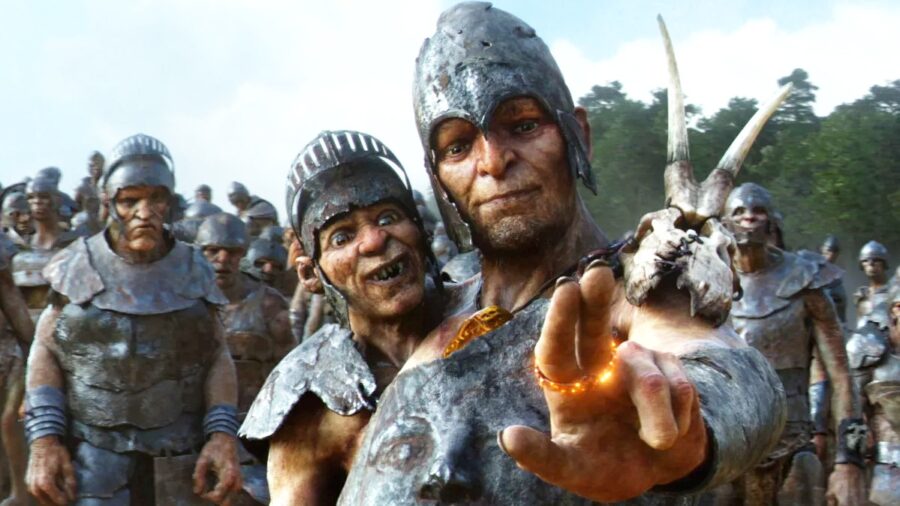
Everyone knows the story of Jack and the Beanstalk, the classic fairy tale about selling a horse for magic beans and climbing a beanstalk to find a giant living in the clouds. It’s simple, contains multiple morals, and can be easily adjusted to turn Jack into the villain, but Jack the Giant Slayer instead asks, “What if there was no moral, and instead of one giant, there was an entire army of evil giants?” The movie is the classic story, as you’ve never seen it before, and it almost works.
Nicholas Hoult plays Jack, the young man who finds himself trading his horse to a monk in exchange for beans that he can’t allow to get wet, ever. Like the rules in Gremlins, it’s not long before Jack accidentally gets the beans wet and a beanstalk grows under his house with the princess, Isabell (Eleanor Tomlinson), trapped inside as it grows into the sky. All the king’s men gather to rescue the princess, including Lord Roderick (Stanley Tucci), who, thankfully, Jack the Giant Slayer makes obvious is very evil, very quickly.
It’s up to Jack, Isabell, and the loyal Knight, Elmont (Ewan McGregor) to save the kingdom and stop the invasion of giants led by Roderick and the giant two-headed General Fallon (Bill Nighy). If there’s one thing Jack the Giant Slayer does better than every other adaptation, it’s the third act featuring a full-blown war between humans and giants, with a touch of humor and absurdity. Watching a giant toss a windmill like the glaive from Krull is the perfect amount of off-beat to distract from a surprising amount of body horror in both the giant’s designs and Fallon’s ultimate fate.
A Movie For No One
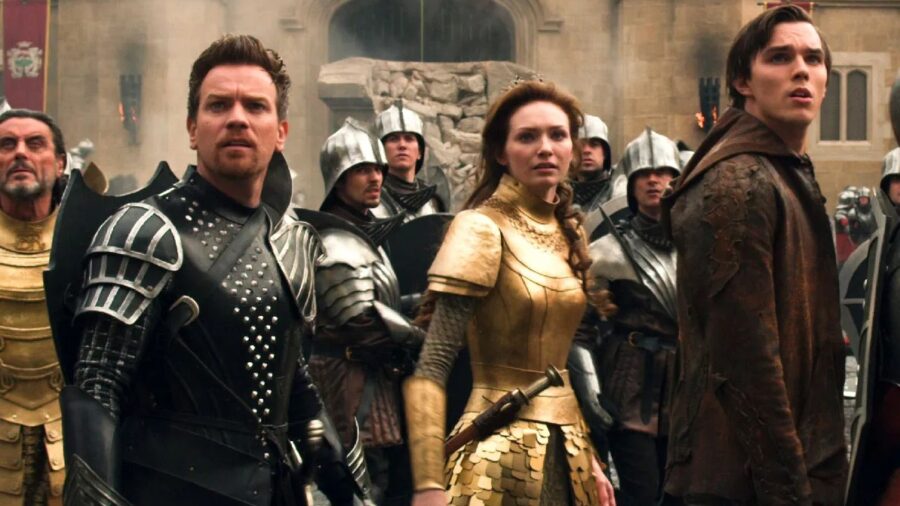
Jack the Giant Slayer looks too good, and the star-studded cast is having way too much fun for it to be a truly bad movie. The problem is that the pacing is off: it takes a little too long to get to the good stuff, then it feels a little too rushed, and though it is a fun adventure, it’s also, like the source material, simplistic. It’s not like the movie wasn’t watched in theaters; it made $197 million worldwide, which would be a great haul except it cost $185 million to make, and that’s not including the extensive marketing campaign.
The push and pull of director Bryan Singer’s vision of a dark take on the fable, complete with actual people-eating on screen, and the sanitized version that hit theaters, which was still too dark for children, since the film is surprisingly rated PG-13, meant it ended up being a film for no one. The Rotten Tomatoes ratings, of 52 percent from critics and 55 percent from the audience, are proof that the final product is not great, but not bad; it’s a movie that will keep you watching for a few hours and then leave no lasting impression. These days, Lionsgate and Sony wish they’d release a movie that is that well-received, as even Jack the Giant Slayer looks like a masterpiece compared to Borderlands or Kraven the Hunter.
Streaming is the perfect home for Jack the Giant Slayer, and 10 years later, it no longer matters that the movie lost hundreds of millions in theaters. It finally gets to stand on its own as a fun, if unremarkable, fantasy adventure.

Angels activate OF/DH Jorge Soler from four-game suspension
Flyers aim to take 2-0 lead over rival Penguins


