After 'inexcusable' effort, Rangers look to rebound vs. Sharks

 Mar 25, 2025; Los Angeles, California, USA; New York Rangers defenseman Will Borgen (17) moves the puck ahead of Los Angeles Kings defenseman Brandt Clarke (92) during the third period at Crypto.com Arena. Mandatory Credit: Gary A. Vasquez-Imagn Images
 Nobody appears to want to earn the last wild-card spot in the Eastern Conference, least of all the New York Rangers.
Yet the Rangers will have another chance to improve their postseason odds and perhaps move into a playoff spot Saturday night when the visit the San Jose Sharks.
The Rangers (34-32-7, 75 points) frittered away a golden opportunity on Friday when they squandered a pair of two-goal leads in a 5-4 overtime loss to the Anaheim Ducks.
The Sharks (20-42-9, 49 points) were off Friday, one day after earning their second straight win with a 6-5 victory in a shootout over the Toronto Maple Leafs.
A fifth loss in the last six games (1-4-1) may have been the most damaging yet for New York.
The Rangers failed to put away the Ducks, whom they led 3-1 just 14 seconds into the middle period and 4-2 more than midway through the third. They also failed to take advantage of two power plays in the final eight minutes of regulation.
The Ducks scored twice in the last six minutes — almost immediately after killing off the penalties — before Mason McTavish scored 59 seconds into overtime.
“That was two points we’ve got to have,” said Rangers defenseman Adam Fox, who scored the game’s first goal 3:20 into the opening period. “Inexcusable third period.”
Instead of taking over the final wild-card spot, the Rangers enters Saturday tied with the Columbus Blue Jackets and Montreal Canadiens, one point ahead of the New York Islanders.
The Blue Jackets (71 games) and Canadiens (72 games) officially rank ahead of the Rangers (73 games) because they have games in hand – as do the Islanders, who are at 71 games.
And yet, once again, the Rangers may have an opportunity to gain ground Saturday night. The Islanders are slated to visit the Tampa Bay Lightning on Saturday afternoon while the Blue Jackets hit the road to battle the Ottawa Senators later in the evening.
“We’re not helping ourselves, but we’re still in it,” Fox said.
The Sharks have been out of it essentially since starting the season with a nine-game losing streak (0-7-2), but they may be a dangerous foe Saturday after earning consecutive wins.
San Jose squandered a 5-3 lead in the final minute of the third period on Thursday and was outshot 6-2 in overtime before Will Smith and rookie Macklin Celebrini scored in the shootout to finish off the win over the Maple Leafs.
“(The Leafs are) obviously a really good team and I thought we played a really good game,” said Sharks center Tyler Toffoli, who scored twice to move within three goals of his third straight 30-goal season.
“We found a way. We stuck with it and I’m happy with this group.”
Earlier this season, the Rangers recorded a 3-2 win over the Sharks on Nov. 14.
–Field Level Media

Entertainment
Did Star Trek’s Best Series Secretly Doom The Franchise?

By Chris Snellgrove
| Published

Star Trek: Deep Space Nine is considered the best show in the franchise by many fans, myself included. The show focused on extensive characterization, long-running arcs, and fairly dark plots, including the Dominion War story that dominated the last two seasons. Decades later, NuTrek shows like Discovery, Picard, and Starfleet Academy fizzled, leaving the frustrated fandom to ask a simple question: why can’t these newer shows be more like Deep Space Nine?
However, here’s a troubling fact: NuTrek sucked so much precisely because the creators were trying to make shows like DS9. Obviously, they didn’t do a very good job, mostly because executive producer Alex Kurtzman is a complete hack. But if you pound a few shots of Romulan Ale and squint, you can see that the architects of NuTrek went all-in on the idea of creating “darker” Star Trek shows in a failed attempt to recapture the magic of what made Deep Space Nine so special.
Star Trek Into Darkness

Deep Space Nine is considered the dark (if not the darkest) Star Trek show for many reasons. It doesn’t feature the squeaky-clean heroes of The Next Generation; instead, our heroes include a former terrorist (Kira), a former spy (Garak), and an angry widower who ends up becoming a reluctant Space Jesus (Sisko). His chief foe is basically Trek’s closest analog to Adolf Hitler (Gul Dukat). Even the relatively “normal” characters get dark backgrounds and plots. For example, fresh-faced medical prodigy Dr. Bashir is revealed to be a Khan-like augmented human. Affable everyman O’Brien, meanwhile, gets physically and mentally tortured at least once a season.
The show also used its Dominion War arc to test the boundaries of Star Trek’s endless idealism. Sisko becomes an accessory to a murder, but he never admits it because this act finally gets the Romulans to join the war. He also discovers that Starfleet has a secret wetworks division known as Section 31, which handles everything from assassinations to genocides. Odo gets so distracted by shapeshifter sex that he becomes a collaborator with monsters (again). Oh, and Worf murders Gowron (with Sisko’s blessing!) so he can install his buddy as Chancellor of the Klingon Empire.
NuTrek Is An Edgerlord’s Paradise
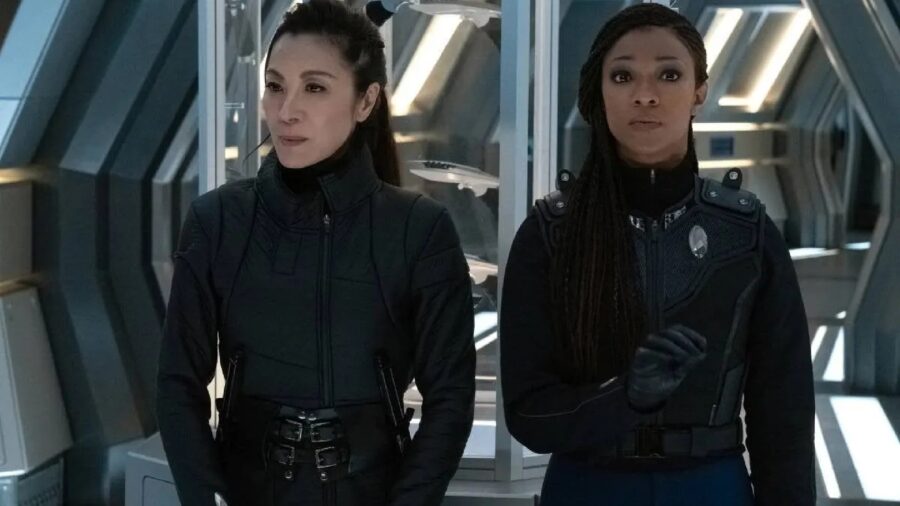
Obviously, DS9 had dark characters and storylines, but what does that have to do with NuTrek? In short, the entire Kurtzman era of this franchise has been filled with lame, edgelord attempts at making the franchise darker. The first season of Star Trek: Discovery, for example, centers on a mutineer who started a war as its main character. It’s a season where Klingons eat their dead foes and strip down to engage in sex that’s half play, half intimate assault. An evil Starfleet captain tortures a tardigrade before the good Starfleet captains one-up him with a plan to blow up an entire planet in an attempt to end a costly war.
Star Trek continued going (ahem) into darkness with other spinoffs. Picard inexplicably features a beloved Voyager B-lister getting tortured and murdered while Picard cozies up to a Romulan swordsman whose only solution to any problem is cutting someone’s head off. They’re fighting to save a Federation that is now cool with creating synthetic slaves. Later, Season 2 has our heroes fighting ICE, watching Q die, and discovering that a young Picard accidentally helped his mother unalive herself. Even the relatively lighthearted Starfleet Academy had the good guys put the entire Federation in danger because they meddled with and accidentally weaponized the most dangerous molecule in the galaxy.
It’s All About Testing Characters’ Morality

In retrospect, it’s clear that Alex Kurtzman and his writers thought they could recapture the old Deep Space Nine magic by throwing a bunch of grimdark characters into gritty situations and calling it a day. However, this didn’t work because DS9’s characters weren’t inherently dark; instead, they were good men and women forced to weigh their morals against the greater good. In the classic episode “In the Pale Moonlight,” Sisko isn’t compelling simply because he’s a morally murky character. No, what makes this episode fascinating is that he’s a good man forced to do bad things, with the fate of potentially billions of lives riding on his decision.
Similarly, Worf doesn’t kill Gowron because of petty vengeance or a haunted past. Instead, he weighs his cultural values as both a Klingon and a Starfleet officer, ultimately deciding it’s better to kill a tyrant than let him continue getting others killed. Even plain, simple Garak seems happy with his life as a tailor, and he’s only reluctantly drawn back into active spycraft because he realizes the best way to save his homeworld is to save it from the Cardassians who have sold its soul, one alliance at a time.
This obviously extends to the Dominion War arc as a whole. We see the toll the war has on good men and women: Nog becomes a wounded and disillusioned war veteran, and Rom nearly gets killed trying to save the Alpha Quadrant. Jadzia Dax does get killed fighting superpowered space Hitler, and Odo begins to question his loyalties. However, characters retain their morality throughout every ordeal. Bashir repeatedly refuses to join Section 31, and Odo saves the Changelings from that organization’s attempted genocide. Standing victorious on Cardassia, Captain Sisko and Admiral Ross refuse to toast their victory, instead choosing to mourn this utterly senseless and completely preventable loss of life.
NuTrek Made Its Worst Villain Into A Hero

Compare that to NuTrek, where the Klingon War hardens hearts and makes the wisest people lose their moral compass. Both Sarek and Starfleet are willing to blow up the Klingon homeworld and kill billions in order to end the war. Starfleet has suddenly decided to trust its war planning to Mirror Universe Georgiou, a woman who has terrorized the entire galaxy while murdering countless people. Later, she’s put in Section 31 (a DS9 invention NuTrek tried very hard to capitalize on) so the entire Federation can continue to benefit from her completely amoral advice. That’s because the Feds believed the same thing that Picard suddenly starts believing over a century later: violence is great as long as the ends justify the means.
This is basically the problem with NuTrek in a nutshell. We don’t get fully fleshed-out characters whose morality is tested by unthinkable scenarios. Instead, we get one-dimensional characters who are dark and compromised from the beginning. Michael Burnham is meant to be the embodiment of Starfleet ideals, but she comes to us as an angry, nearly broken mutineer who, in her guilt, saves an alternate universe’s most murderous monster from certain doom. Even formerly complex characters like Picard are made dumb, violent, and impulsive by writers who value blunt spectacle over elegant storytelling.
Star Trek Needs More Than Darkness
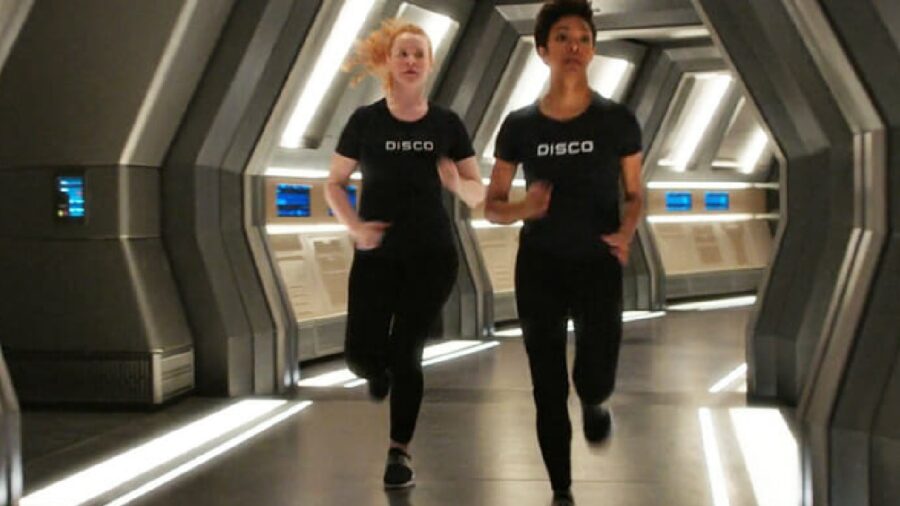
Alex Kurtzman tried to copy the Deep Space Nine formula for NuTrek, but, in typical fashion, he went about it in the stupidest possible way. It’s not enough to give us dark settings and plots; we need well-developed characters whose morality is an idealistic counterpart to the darkness around them. Stories needed to reinforce Star Trek’s hopeful ethos and reward audiences who never lost faith in the greatest sci-fi franchise of all time. Instead, what we got was a collection of dark characters, pointless action scenes, and endless violence, all wrapped up with another snoozeworthy Michael Burnham speech.
This is Kurtzman’s warped idea of what makes Star Trek so great. Is it any wonder that every one of his NuTrek shows has been a colossal failure?
Tech
TechCrunch Mobility: Uber enters its assetmaxxing era
Welcome back to TechCrunch Mobility, your hub for the future of transportation and now, more than ever, how AI is playing a part. To get this in your inbox, sign up here for free — just click TechCrunch Mobility!
A few weeks ago, I wrote about how Uber seemed to be everywhere, all at once in the emerging autonomous vehicle technology sector. The Financial Times has now put a number on it. The FT calculated that Uber has committed more than $10 billion to buying autonomous vehicles and taking equity stakes in the companies developing the tech, according to public records and discussions with folks behind the scenes. About $2.5 billion of that is in direct investments, with the remaining $7.5 billion to be spent on buying robotaxis over the next few years, the outlet reported.
We’ve reported on Uber’s numerous investments and deals with autonomous vehicle companies across drones, robotaxis, and freight. Some of its investments include WeRide, Lucid and Nuro, Rivian, and Wayve.
This rather large number (and particularly that $7.5 billion) got me thinking about another transformative era in Uber’s history and how it has visited these asset-heavy shores before. Uber might have started with a plan to be asset light, but for a brief period it did quite the opposite.
Uber went on a moonshot spree between 2015 and 2018. It launched electric air taxi developer Uber Elevate and the in-house autonomous vehicle unit Uber ATG, which would be boosted by its acquisition of Otto in 2016. It also snapped up micromobility startup Jump in 2018.
And then in 2020, Uber pulled the asset-heavy rip cord, ostensibly leaving all of those moonshots behind. Uber sold Uber ATG to Aurora, Jump to Lime, and Elevate to Joby Aviation. But it didn’t completely divest; it kept equity stakes in all of them.
Uber is now entering into a new and different asset-heavy era. It’s not plunking down millions, or even billions, to develop the technology in-house, although I’m sure folks there would be quick to pipe up that there is always R&D happening over at Uber. Instead, it appears to be focused on owning (or perhaps leasing) the physical assets.
Techcrunch event
San Francisco, CA
|
October 13-15, 2026
That could mean interesting line items on Uber’s balance sheet in the future.
Owning fleets of robotaxis built by other companies might not have been the original vision of Uber, or its former CEO Travis Kalanick, who has said the company made a mistake when it abandoned its AV development program. But this new approach could still get it to the same end point.
A little bird

Earlier this month, I interviewed Eclipse partner Jiten Behl about the venture firm’s new $1.3 billion fund and where that money might be headed. The firm, as I wrote, intends to incubate more startups (e.g., it was behind the Rivian spinout Also). Behl wouldn’t give me details, only stating, “We’re definitely working on a couple of really cool ideas.” He also said Eclipse is particularly interested in startups that work across enterprises.
Thanks to one little bird and some document diving by senior reporter Sean O’Kane, it looks like a seed round announcement is imminent for a San Francisco-based startup working on an autonomous hauler that I’ve been told doesn’t have a driver cab. This sounds similar to what Einride has built, but since we haven’t seen it, we’ll have to wait.
The company’s roster isn’t big, but it is chock-full of Silicon Valley tech elite, including a founder who was at Uber ATG, Pronto, and Waabi. Stay tuned for more.
Got a tip for us? Email Kirsten Korosec at kirsten.korosec@techcrunch.com or my Signal at kkorosec.07, or email Sean O’Kane at sean.okane@techcrunch.com.
Deals!

Slate is back with more capital as it prepares to put its first affordable pickup trucks into production by the end of 2026.
The electric vehicle startup, which got its start with backing from Jeff Bezos, raised another $650 million in a Series C funding round led by TWG Global. Keep your eye on TWG. This is the firm run by Guggenheim Partners chief executive (and Los Angeles Dodgers owner) Mark Walter and investor Thomas Tull.
Slate has raised about $1.4 billion to date, and its previous investors include General Catalyst, Jeff Bezos’ family office, VC firm Slauson & Co., and former Amazon executive Diego Piacentini, as TechCrunch first reported last year.
Other deals that got my attention …
Glydways, a San Francisco-based startup developing personal autonomous pods designed to operate on dedicated 2-meter-wide lanes in cities, raised $170 million in a Series C funding round co-led by Suzuki Motor Corporation, ACS Group, and Khosla Ventures. Existing investors Mitsui Chemicals and Gates Frontier and new investor Obayashi Corporation also participated. But wait, there’s more.
GM and Ford are reportedly talking to the Pentagon about whether the auto industry can help the military revamp its procurement program and find cheaper, faster ways to buy vehicles, munitions, or other hardware, the New York Times reported, citing anonymous sources.
Loop, a San Francisco-based startup, raised $95 million in a Series C funding round led by Valor Equity Partners and the Valor Atreides AI Fund, and includes investments from 8VC, Founders Fund, Index Ventures, and J.P. Morgan’s late-stage fund, Growth Equity Partners.
Monarch Tractor, the startup developing electric, autonomous tractors, has moved on to (ahem) a different pasture. The startup’s assets have been acquired by Caterpillar after struggling to pivot to a software services business.
Uber is increasing its stake in Delivery Hero by 4.5%, the Financial Times reported. Uber agreed to buy about 270 million euros in shares from Prosus, the Dutch investment group and Delivery Hero’s largest shareholder.
Notable reads and other tidbits

Doug Field, the high-profile executive who shaped Ford’s electric vehicle and technology strategies over the past five years, is leaving. Notably, Ford is shaking up the organization as well, creating a “product creation and industrialization” team to be led by COO Kumar Galhotra. Any guesses where Field is headed next? Perhaps he’ll return to Silicon Valley.
Lightship, the all-electric RV startup, is expanding its Colorado-based factory by another 44,000 square feet, which will allow it to quadruple its manufacturing capacity.
Rivian and battery recycling and materials startup Redwood Materials partnered years ago. We’re now seeing the fruits of that relationship. Redwood is installing battery energy storage at Rivian’s factory in Illinois. The catch? Redwood is using 100 second-life Rivian battery packs, which will provide 10 megawatt-hours (MWh) of dispatchable energy to reduce cost and grid load during peak demand periods.
Tesla created a new self-driving app that makes it easier for owners to subscribe to its Full Self-Driving software and see statistics on how — and how often — they use it. This may not be huge news, but it did catch my eye because of the gamified qualities of these new stats.
Waymo, as per usual, has a few news items this week. The Alphabet-owned company started testing its autonomous vehicles on public roads in London. It also removed its waitlist in Miami and Orlando to scale its robotaxi services in the two cities.
One more thing …
This newsletter isn’t my only project that is leaning more heavily into robotics. My podcast, the Autonocast, is too, as the worlds of autonomous vehicles, AI, and robotics mash together. Check out this interview with Foxglove founder Adrian MacNeil, who previously worked at Cruise.
Sports
Best Value Betting Picks Ahead of 2026 NFL Draft
 Feb 27, 2026; Indianapolis, IN, USA; Arizona State wideout Jordyn Tyson (WO40) speaks to members of the media during the NFL Combine at the Indiana Convention Center. Mandatory Credit: Jacob Musselman-Imagn Images
 It’s hard to believe that the 2026 NFL Draft is already almost here. It’s the perfect time to cash in on some draft betting picks.
Over the last few months, countless NFL mock drafters have taken stabs at where these top prospects could be selected.
In this article, we’ll take a look at some of the best value on the board, utilizing FanDuel Sportsbook odds. Remember, this doesn’t mean that we’re predicting these players will be drafted in these spots.
Rather, we’re going to try to cash in on some valuable plus money opportunities for the NFL Draft, an event that is always capable of a few surprises.
No. 3 Overall: Francis Mauigoa (+650)
The Arizona Cardinals have the No. 3 overall pick – and they have needs all over their roster.
David Bailey (+110) and Arvell Reese (+260) are the betting favorite to come off of the board in this spot. But what if the Cardinals want to hook up new offensive minded head coach Mike LaFleur with a player to help fix his offense?
That could lead the Cardinals to Mauigoa, who was a standout right tackle for the Miami Hurricanes. 31-year-old veteran Elijah Wilkinson is expected to start at right tackle for the Cardinals.
They’ll probably take an edge rusher. But if they don’t Mauigoa would be the play at +650.
Our Current Best Offers
Channel debug: betting
No. 6 Overall: Caleb Downs (+1200)
The Cleveland Browns don’t need a defensive player. But Browns general manager Andrew Berry continues to float the idea of the team trading down. It’s a safe bet to expect the Browns to try and trade back.
Who would be worth another organization deciding to trade up for? Ohio State star safety Caleb Downs, who should still be on the board if the New York Giants select his Buckeyes teammate, Sonny Styles, at No. 5 overall.
Obviously, a lot has to go right for this selection to cash. But Downs is one of the best players in the draft. If he’s still available outside of the top five selections, he won’t last much longer.
Our Current Best Offers
Channel debug: betting
No. 10 Overall: Jordyn Tyson (+440)
Tyson is the one player in this class that could cause a major shakeup inside the top 10 picks.
According to reports, 20 teams attended the Arizona State star’s private workout, where the consensus seemed that most teams were comfortable with his medical situation.
The Giants just acquired the No. 10 selection from the Cincinnati Bengals. The NFL Network’s Mike Garafolo reported that Giants GM Joe Schoen had dinner with Tyson the night before the private workout.
If Tyson is still available at No. 10 overall, the Giants could load up on offense for Jaxson Dart.
Our Current Best Offers
Channel debug: betting

Did Star Trek’s Best Series Secretly Doom The Franchise?
TechCrunch Mobility: Uber enters its assetmaxxing era


