
Entertainment
The ‘80s Best Comedy Is Built On The Most Comforting Lie Of All

By Chris Snellgrove
| Published

Like many aging nerds, I am constantly revisiting my favorite childhood movies. This is mostly driven by nostalgia, but I also enjoy looking at old films through fresh eyes. Most of the time, I discover a few things about these beloved movies that I never noticed before. On a really good day, studying these films helps me learn a thing or two about how they helped shape my childhood. Those insights can be more than a bit sobering at times, which is what happened when I recently revisited 1989’s Bill & Ted’s Excellent Adventure, considered by many to be the best (or, at the very least, the silliest) ‘80s comedy of them all.
The movie is about the titular duo traveling back and forth through time, gathering famous figures so they can pass their history class. Should they fail, the future would fall apart because these two would-be rockers are inexplicably the key to transforming our dystopian world into a Star Trek-like utopia. The film never really explains how this is supposed to happen, which is part of the quirky charm I enjoyed so much as a child. As an adult, I realized that all of Bill & Ted’s Excellent Adventure’s hilarity is based on the comforting lie that parents have spent decades telling children: you can be anything you want when you grow up.

In case you’ve never seen it (bogus!), Bill & Ted’s Excellent Adventure focuses on two high school seniors in danger of failing a history class. The consequences of this (like Ted’s dad sending him to military school) would completely destroy their dreams of becoming a famous pair of rock’n’roll stars. Fortunately, they are given a time machine by a mentor from the future, allowing them to gather historical figures and deliver a history presentation good enough to save their grade. As for the time-traveling visitor, he is invested in Bill (Alex Winter) and Ted (Keanu Reeves) because their music has somehow transformed the future into a utopia where everyone is excellent to each other.
As a music-loving little kid, I loved the sheer simplicity of this premise: that the world is just one awesome song away from achieving global unity. War, famine, disease. What if all of it could be eliminated with a sweet tune and a few good vibes? Growing older, I realized the audacity of the premise, but I still enjoyed it as part of the film’s tongue-in-cheek humor. Once I became a parent, though, I realized that the narrative of the film rests firmly on a lie told to children by generations of parents. Namely, that kids can be anything they want to be when they grow up.
Party’s Over, Dudes

The parents telling children “you can be anything you want to be” are, of course, doing their best to avoid limiting their kids’ horizons. Youth is a time for curiosity and optimism, and this parental encouragement is an easy way to demonstrate both. Unfortunately, after watching movies like Bill & Ted’s Excellent Adventure, many of these children end up on a collision course for failure. That’s because their parents and favorite films are preaching that their greatness is assured. Like Bill and Ted, these kiddos must have an awesome destiny that is nothing less than preordained. And like Bill and Ted, they don’t need to worry about how to make their happy future happen.
In case you think I’m just being a cranky old fart, research backs me up on this. For example, a 2017 study from Digital Third Coast and C+R Research found that even though most people end up in some kind of administrative or office job, 0 percent of teenagers surveyed said this was the kind of job they wanted to do. The sad disparity here is obvious: if nobody wants to do the most common job when they grow up, we can tell that many (if not most) teens are going to be disappointed by their future career, and they’ll most likely blame themselves.

As psychologist Juli Fraga wrote in 2025, telling kids they can accomplish anything they put their minds to actually does them a disservice. First, they are likely to initially blame themselves when things don’t work out, internalizing that it is somehow their fault (obviously, they should have wanted it more and didn’t apply themselves enough!). Second, they are likely to grow cynical over time when they realize that working hard does not always lead to success or happiness. Fraga concluded that children would be much better off if their parents were simply honest and realistic about children’s goals, how achievable they are, and how to prepare today for a more successful tomorrow.
You Can Never Go Home Again

That’s not exactly what happens in Bill & Ted’s Excellent Adventure. While the biological parents are pretty terrible in this movie, Rufus (George Carlin) serves as the titular boys’ joint father figure, and he’s the one who convinces them they are destined for greatness. In a very literal way, these boys are supposed to save the world with their awesome music! But the film ends by showing us that Bill and Ted are still awful at playing, though Rufus comedically reassures the viewers that “they do get better.”
We don’t see that, of course. In fact, in the sequel, the two only get better off-screen, using time-travel to finally master their craft before traveling back to the big concert. Even the final film in the trilogy never explains, mechanically, how playing a song (even a really great one) will magically make the world a better place. That’s because this has never been the point of the franchise. The point is that these two can achieve greatness by simply wanting it badly enough, which never really works out. But hey, it makes for a comforting message for those of us secretly streaming the first movie from our office job!

Whether you’re at work, at home, or maybe even getting ready to play with your own band, you can now stream Bill & Ted’s Excellent Adventure for free on Tubi. It might be powered by the biggest lie of your childhood, but the movie is still filled with awesome performances, hilarious jokes, and absolutely immaculate ‘80s vibes. Throw in the fact that it was the breakout role for John Wick star Keanu Reeves, and you’ve got a movie that might (just might) fill the empty void left by your unfulfilled childhood dreams.
Entertainment
New Microsoft Defender exploits discovered. How to protect yourself
Microsoft has identified some nasty exploits that could affect your Windows machine if you let them.
Bleeping Computer reported on the exploits, which are specific vulnerabilities in Windows Defender, the built-in anti-malware software in Windows. The company has detailed reports on its security website for both vulnerabilities. While it can be a bit difficult for a layperson to understand what’s going on from those reports, the main thing to know is that vulnerable Windows machines can be subjected to denial-of-service attacks using these exploits.
The good news is that Microsoft has already revealed these exploits, and a fix is in the pipeline. If you have automatic updates for Defender turned on, it should have installed the Malware Protection Engine versions 1.1.26040.8 and 4.18.26040.7 to address these exploits.
Mashable Light Speed
Bleeping Computer also included a helpful set of instructions for making sure these updates are turned on:
-
Open Windows Security
-
Select “Virus and threat protection”
-
Click “Protection Updates” and then “Check for updates”
-
Select “Settings” and then “About”
-
Check the Anti-malware Client version number and make sure it matches the two numbers above
Hopefully, everything is properly set up, and your machine is good to go.
Topics
Cybersecurity
Microsoft
Entertainment
Spotifys new Reserved feature could make concert ticketing less miserable
These days, scoring concert tickets can feel like entering a digital Hunger Games. Fans log on the second tickets go on sale, only to watch seats disappear instantly — many of them seemingly snapped up by scalpers and resellers before actual fans ever get a chance.
Now, Spotify wants to change that by rewarding the people who stream the most.
Today, May 21, the streaming platform announced Reserved by Spotify, a new ticketing initiative aimed at helping dedicated fans access concert tickets before they go on sale to the general public. The program is launching for Premium subscribers in the U.S. who are 18 or older.

Credit: Spotify
The idea is simple: Instead of forcing fans to battle through chaotic on-sale queues or complete elaborate fan-verification games, Spotify will identify an artist’s most dedicated listeners through streaming activity and reserve tickets specifically for them. Eligible fans will receive a purchase window before the public on-sale begins, with up to two tickets held in their name.
Importantly, Spotify says the reserved tickets will not include additional Spotify service fees.
Mashable Trend Report
The company says the number of fans selected — and the number of tickets available — will vary depending on the artist, tour, and market. But Spotify says allocations are intended to be substantial and to scale with an artist’s fanbase.

Credit: Spotify
The move reflects the growing importance of superfans to the music industry, where artists and platforms alike are increasingly trying to reward the fans who engage most deeply. In recent years, fandom has become one of the most powerful forces shaping touring, chart performance, and even marketing strategies, particularly in pop and K-pop spaces where highly organized fan communities already treat streaming like participation.
Reserved by Spotify also expands the company’s broader ambitions in live music. Spotify says it has already driven more than $1.5 billion in ticket sales through its platform via partnerships with more than 40 ticketing companies, alongside features like Concerts Near You and Venue Search.
The bigger question, though, is whether programs like this can meaningfully combat the frustrations fans increasingly associate with modern ticket-buying in the U.S. As ticket prices continue to climb and resale markets remain difficult to control, many fans have grown cynical about whether fair access to concerts is even possible anymore.
Spotify is betting that listening history — not luck — might be the closest thing to a solution.
Entertainment
The Greatest Action Movie of All Time Is Leaving Streaming Platforms
By Douglas Helm
| Published
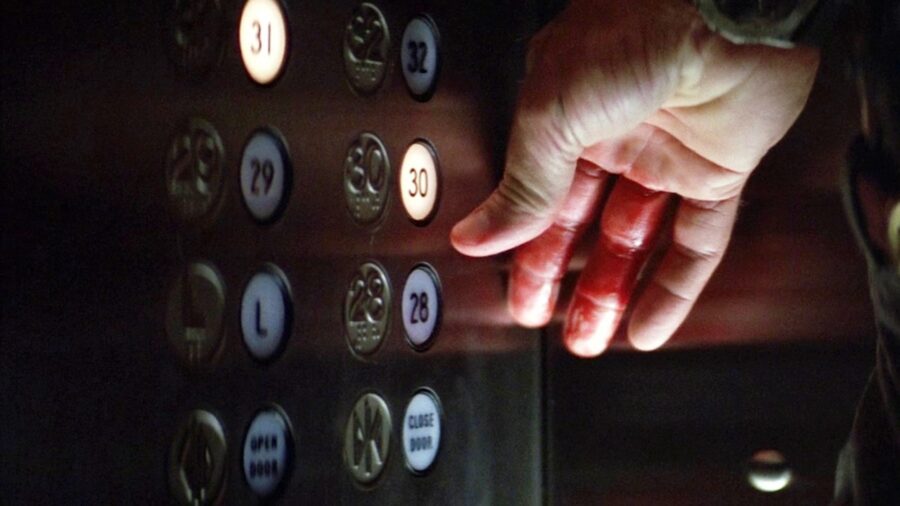
There are quite a few action movies that could be considered the “greatest action movie of all time,” and Die Hard is always in the conversation. The classic 1988 film is Bruce Willis and Alan Rickman at their best, and it’s a highly entertaining thrill ride throughout.
If you somehow have missed out on this one, or if you want a rewatch, now may be your last chance to stream it. The movie’s been available on budget streaming platforms like Philo for a while, but it’s leaving in less than two weeks. Once it’s gone, you’ll be forced to pay video-on-demand fees to rent it on Amazon if you want to watch.
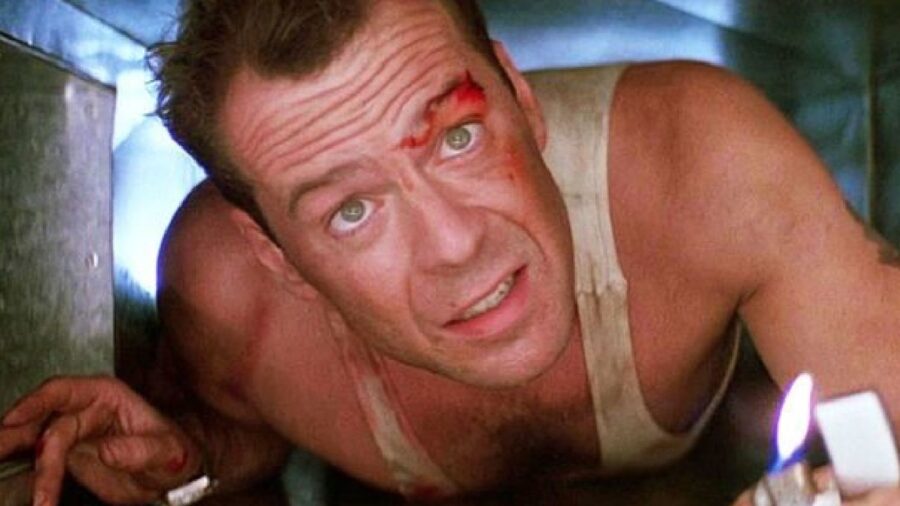
Die Hard is directed by John McTiernan from a script by Jeb Stuart and Steven E de Souza based on the Roderick Thorp novel Nothing Lasts Forever. It features a cast that includes a young Bruce Willis alongside Alan Rickman, Alexander Godunov, and Bonnie Bedelia, as well as Reginald VelJohnson, William Atherton, Paul Gleason, and Hart Bochner. The film follows NYC police detective John McClane, who gets caught in an LA skyscraper being taken over by terrorists during a holiday party.
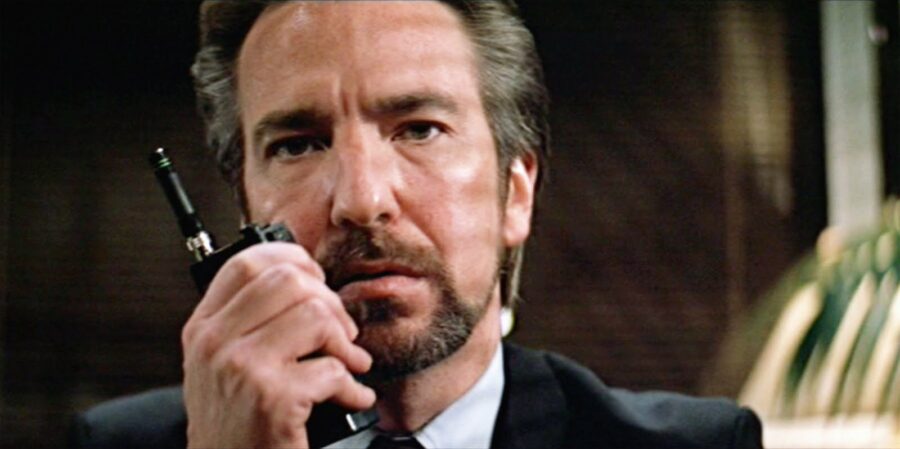
McClane is the quintessential everyman hero, and his scrappy battle to stop the terrorists and save the hostages makes for the perfect action film. Bruce Willis gives a great performance in every scene, and Rickman’s charismatic Hans Gruber is the perfect antagonist. Almost everything has been said about Die Hard, and it’s an easy recommendation for anyone who appreciates a well-directed, well-acted, and well-paced action flick.
Stallone And Schwarzenegger Turned Die Hard Down
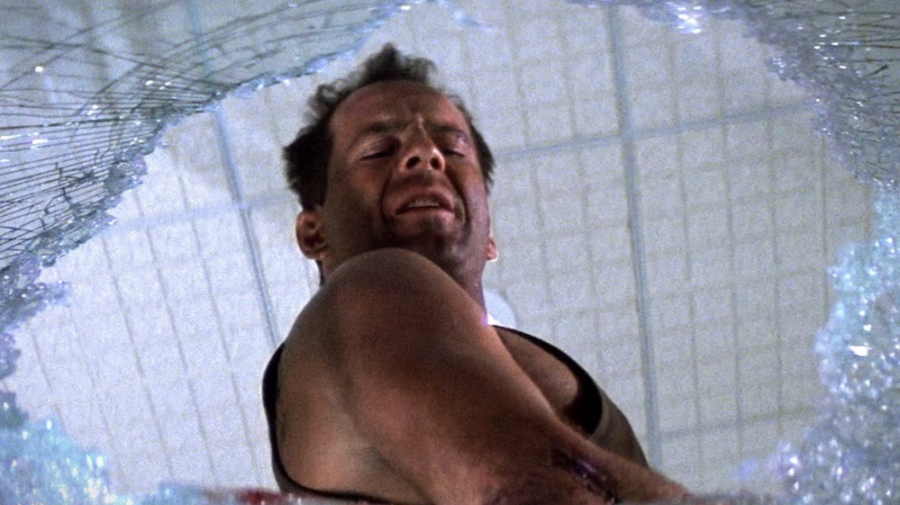
Funnily enough, no one expected Die Hard to be such an iconic hit upon its release. First, both Arnold Schwarzenegger and Sylvester Stallone turned down the role of McClane, leading Willis to be offered the role despite being mostly known for TV work. However, he was paid a hefty sum of $5 million, leading to controversy as the film was painted as a bad investment.
Critics Didn’t Get It At First
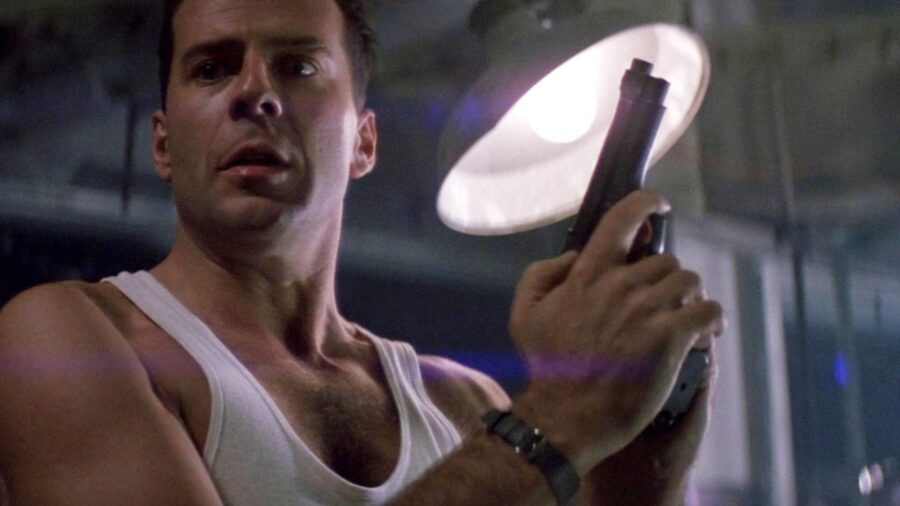
Leading up to the release of Die Hard, Bruce Willis was largely absent from marketing materials. When the film hit theaters, the reviews were pretty mixed, so it was far from the critically acclaimed film it’s known as today. However, the film overcame these obstacles at the box office, grossing an impressive $140 million and earning four Academy Award nominations.
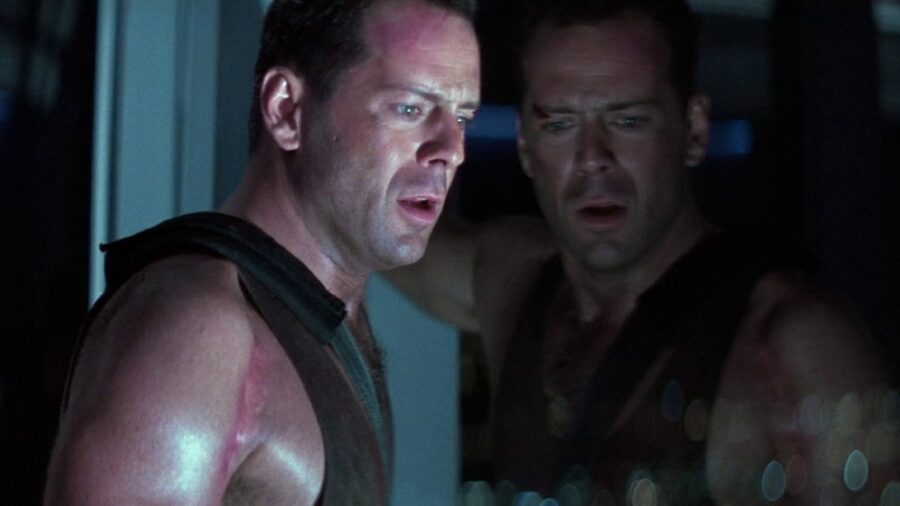
Of course, we now know that Die Hard is a cinematic treasure and one of the undisputed action movies of all time (along with one of the best Christmas movies, depending on who you ask). It defied expectations and showed that action heroes don’t have to be invincible shining paragons of oiled muscle. It also spawned a ton of sequels that never captured the magic of the original.

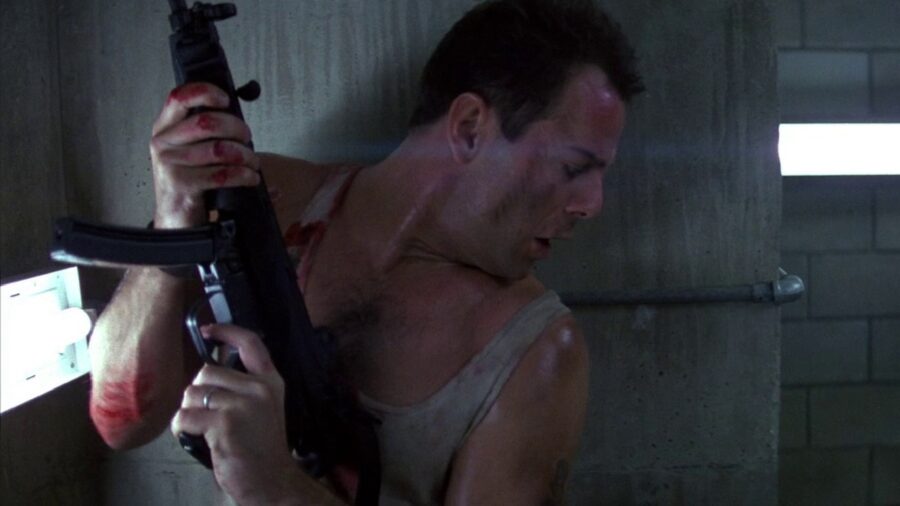
In a far cry from the original thoughts critics and industry pros had of Die Hard upon its release, in 2017 the United States Library of Congress deemed the film worthy of being preserved in the National Film Registry. Its preservation and its place in action movie history is well earned, and a film that will forever be one of the peaks of Bruce Willis’ illustrious acting career.

Carmen Mlodzinski gets plenty of support as Pirates shut out Cardinals
Second-period surge leads Knights past Avalanche in West finals opener


