
Entertainment
Sonys barely updated Bluetooth turntable is still the perfect record player for beginners

Table of Contents
After seven years — a metric eternity in tech time — Sony has finally ventured back into the world of Bluetooth turntables. This spring, the company released the Sony PS-LX3BT ($399.99) and the Sony PS-LX5BT ($499.99), a pair of replacements for its original PS-LX310BT record player.
These newcomers have big shoes to fill. Long regarded as one of the best beginner-friendly turntables, the PS-LX310BT was a popular, perennial favorite for its easy setup, fully automatic operation, and minimalist look. It also helped that it was easy to find on sale for under $200 in its later years.
Admittedly, I never rode the PS-LX310BT hype train. The record player I’ve used for the past 10-odd years is an entry-level wired, manual turntable that’s served me well for the most part, save for some occasional needle issues. I like it a lot… or at least, I thought I did until I used the new PS-LX3BT for a month (the cheaper option). It made me feel so spoiled that I was genuinely bummed to ship it back at the end of my testing period. If you’re a vinyl novice in the market for a solid plug-and-play turntable, your search still ends with Sony.

$368
at Amazon
$398
Save $30
Sony PS-LX3BT review: Setup and hands on
The PS-LX3BT ships in a few parts and looks a little intimidating right out of the box, but assembly wound up being a cinch. You just pop on its aluminum platter, hook a rubber belt around its motor pulley, place a slip mat on top, and snap some hinges onto its plastic dust cover. (You can also use it without the cover.) Sony’s instructions are easy enough to follow, but there are plenty of setup tutorials on YouTube if you need extra guidance.

Here’s what the Sony PS-LX3BT looks like right out of the box.
Credit: Haley Henschel / Mashable
The PS-LX3BT is a belt-drive turntable, which means its motor is separate from its platter, the plate-shaped thing underneath your record. (They’re connected by the aforementioned belt.) This produces less vibration when the motor is running, preserving audio quality, though the belt can stretch out over time and may need to be replaced eventually. The other kind of turntable you’ll encounter is the direct-drive variety, which has a motor that’s attached to the platter. These are more durable and have more consistent speeds, but they can be noisy. Professional DJs generally prefer direct-drive turntables, but belt-driven ones, which tend to be cheaper, are fine for the rest of us.
I did notice that the PS-LX3BT made a mechanical whirrr sound when it was on, but it was impossible to hear once a record started playing. This will only bother the pickiest audiophiles.

The Sony PS-LX3BT’s main housing, or plinth, has a dark gray finish.
Credit: Haley Henschel / Mashable
The PS-LX3BT is stupidly simple to use. Hit the “Bluetooth” button on the left-hand side of its base, or plinth, to connect it to a wireless speaker, soundbar, or wireless headphones. An indicator light next to the button glows blue when it’s paired.
You can also hook up the PS-LX3BT to wired speakers if you’re really worried about latency or sound quality. (Bluetooth compresses audio for the trade-off of portability, which, to vinyl purists, defeats the point of listening to analog vinyl.) There’s an attached audio cable and a built-in phono preamp, so you just need to plug in your speakers of choice.

Two other buttons near the Sony PS-LX3BT’s Start button let you manually stop and raise or lower the tonearm as needed.
Credit: Haley Henschel / Mashable
Once the PS-LX3BT is connected to some kind of audio output device, you just have to press the green “Start” button on the opposite side of its plinth. Your record will start spinning, and the tonearm will automatically move over, drop down, and start playing it from the beginning. When it reaches the end of the record side, the tonearm rises and returns to its cradle. It makes some mechanical clacking noises along the way, which might bug some folks, but it’s great in that it’s completely fuss-free.
Mashable Light Speed
The PS-LX3BT supports standard 12-inch albums or 7-inch singles, and you can play either of them at 33 1/3 or 45 revolutions per minute (RPM). There are knobs that let you switch between the two sizes and speeds on the right-hand side of its plinth. Sony throws in an adapter for 7-inchers, which you can stash in a slot within the plinth.

You can rip vinyl records onto your laptop using the Sony PS-LX3BT’s USB-B port. Its power cable is removable (right), but its audio cable (left) is not.
Credit: Haley Henschel / Mashable composite
The PS-LX3BT’s rear connectivity includes a USB-B port that lets you rip vinyl tracks onto your laptop. I didn’t have a USB-B cable on hand when I was testing the turntable, so I couldn’t try it myself (it’s sold separately). But this is a cool feature that I would absolutely use to digitize physical-exclusive bonus tracks, B-sides, and vinyl releases that differ from the streaming versions. I can’t be the only one who misses the “Milkshake” sample on Beyoncé’s Renaissance.
For $100 more, the premium PS-LX5BT model nets you a detachable audio cable, a slightly thicker slip mat, and a gold-plated audio jack, which “supports a high-grade wired connection,” according to Sony. (From what I’ve read, it’s mainly a durability thing.) Its plinth is black, while the PS-LX3BT is more of a dark gray.

The Sony PS-LX3BT’s cartridge has a tracking force of 3.5 grams, which puts it on the heavy side.
Credit: Haley Henschel / Mashable
The pricier PS-LX5BT also has a lighter, removable cartridge (the part that houses the needle on the end of its tonearm). Its cartridge has a tracking force of two grams, while the cheaper PS-LX3BT’s cartridge has a tracking force of 3.5 grams. I think this is the biggest advantage of splurging on the PS-LX5BT: Lighter cartridges equal less wear and tear on your vinyl.
A tracking force of one to three grams is generally ideal, which makes the PS-LX3BT’s cartridge a bit heavy. It’s not adjustable, unfortunately, though you might be able to jerry-rig a counterweight yourself if you’re concerned about long-term vinyl damage. Someone on Reddit lightened the tracking force of their PS-LX310BT (Sony’s older turntable) by putting a kneaded eraser on the back end of its tonearm.
Sony PS-LX3BT vs. Sony PS-LX310BT: What’s new?

The original Sony PS-LX310BT (top) versus the newer Sony PS-LX3BT (bottom).
Credit: Haley Henschel / Mashable composite
My sister, who lives nearby, happens to own the original PS-LX310BT, so I stopped by her apartment to check it out. There are a couple of small differences between it and the newer PS-LX3BT, but overall, the latter is a pretty iterative update. (My colleagues have said similar things about Sony’s latest XM6 headphones and earbuds. That’s modern consumer tech for you.)
Here’s what sets them apart:
-
The PS-LX3BT adds support for AptX and AptX Adaptive Bluetooth codecs.
-
The PS-LX310BT’s Start, Stop, and Up/Down buttons are flush on the side of its plinth. The same buttons protrude on the surface of the PS-LX3BT.
-
The PS-LX310BT’s record speed and size dials are knobs on the PS-LX3BT.
-
The PS-LX310BT’s dust cover has a smoky gray tint. The PS-LX3BT’s cover is clear.
The PS-LX310BT retailed for $449.99 at launch, though it was often on sale for half that in recent years. I think it’s still worth buying if you can catch it at a very cheap price, but it’s getting tougher to find in stock nowadays.

The Sony PS-LX3BT’s transparent dust cover lets you see colorful pressings clearly.
Credit: Haley Henschel / Mashable
If you already own the PS-LX310BT, there’s no world in which you’d need to upgrade to the PS-LX3BT. Its design tweaks are minimal, and its tonearm-moving mechanism is exactly the same. In theory, its AptX and AptX Adaptive support translates to better wireless audio quality, but the records I spun on my sister’s PS-LX310BT didn’t sound worse.
Sony PS-LX3BT review: Final thoughts

I’m a Sony convert if my current record player dies.
Credit: Haley Henschel / Mashable
The PS-LX3BT is a stylish turntable with idiotproof plug-and-play functionality. Its Bluetooth connectivity and automatic operation will turn off vinyl purists, but they’re boons for newbies.
As someone who came to the PS-LX3BT from a wired, manual record player, I can’t deny the appeal of this convenience — and if mine ever gives out, I’ll seriously consider defecting to Sony. I’m precious with my vinyl collection, so I’d go with the nicer PS-LX5BT model for the lighter cartridge.
The PS-LX3BT and PS-LX5BT are both expensive compared to other top-rated turntables, so try to buy them on sale. (I think you’re mostly paying a premium for the Sony name, though I’m inclined to trust its build quality over other random brands you might find at Best Buy or Amazon.) At the time of writing, both models were up to $30 off at major retailers.
$368
at Amazon
$398
Save $30

$473
at Amazon
$499.99
Save $26.99
Entertainment
Khloé Kardashian Says Daughter True Thompson Has an 'Elevated' Way of Wearing Her XO Blue Perfume
Like mother, like daughter! Khloé Kardashian’s new XO Blue perfume has already earned the approval of daughter True Thompson.
Ahead of the launch party in Malibu, California on June 16, The Kardashians star shared that Thompson, 8, is already taking after her in one unexpected way.
“She doesn’t wear fragrance on a daily basis, but she has the Squishmallows fragrance, which is so cute and age-appropriate, and then she has all of mine on her counter, and sometimes she sprays herself, and sometimes she doesn’t, but they’re into scents, these kids,” she explained during a virtual press day.
When Kardashian’s daughter does decide to borrow one of the reality television star’s favorites, she has her own way of doing things.
“I do let her use it, but it’s everything in moderation and she’s so great. She sprays her clothes and not herself, which I’m like, ‘Okay, elevated.’ I love when kids are smarter and more creative than we are. So, she doesn’t spray her body, which I’m fine with.”
It’s a far cry from Kardashian’s own spritzing habits growing up.
“When I was younger, it was Bath and Body Works. … I mean, we doused ourselves in the most potent of stuff.”
These days, though, Kardashian is chasing vacation vibes with her signature scent.
“XO Blue is very tropical, in my opinion. I think when you put it on, you immediately get this woody coconut. I feel very transported onto a beach with a piña colada. … It’s still something that you can wear, but I just love where it transports me to.”
And for the Khloé In Wonder Land podcast host, the appeal goes beyond an island getaway.
“I just want you to feel the sexiest at your core, and that doesn’t have to be this aesthetic thing.”
“For me, that’s all energetically. I just want you to feel just super sexy and feminine and that you can manhandle anyone and do whatever you want to do, and you’re just that girl. … You want to be in a summer dress or a tank top. It’s so silly that that’s how I feel when I’m wearing it, but I feel like the less clothes, the better.”
The Khloud founder is just as passionate about what goes into her body as what goes on it.
“I love peptides. I don’t know if that’s a secret. I feel like everyone takes a peptide. … I take injections, which I love, and they just make you feel good and you look good. … I’m also a big vitamin girl and just staying active. There’s not one thing that’s gonna make anything all better.”
RELATED CONTENT:
Entertainment
Set Phasers To Fun: The Year Of Star Trek Video Games Is Here
By Chris Snellgrove
| Updated

Star Trek has been entertaining sci-fi fans for 60 years through TV shows, movies, books, and comics. There’s only one entertainment sector where the franchise historically falters: video games. If we’re being honest, there have only ever been a handful of really good Star Trek games, and the best ones came out literally decades ago. Because of that, any Star Trek fans looking to lose themselves in a good video game would be forgiven for giving a Bones-like prognosis to the state of modern Trek titles: “it’s dead, Jim!”
However, all of that is changing. We already got Star Trek: Voyager—Across the Unknown, a game that puts us in command of Voyager as the crew tries to make it back home from the Delta Quadrant. Later this year, we’ll be getting a SimCity-style game (Star Trek: Outposts Unknown) as well as a digital, customizable card battler (Star Trek Warp). Next year, Star Trek: Shadow Frontier will put us in control of Ro Laren, with Michelle Forbes reprising her role from The Next Generation. So, what’s the deal with all these games? What are they about, and when can you play them? Keep scrolling to replicate answers to all these questions!
Finally, You Can Kill Tuvix Yourself
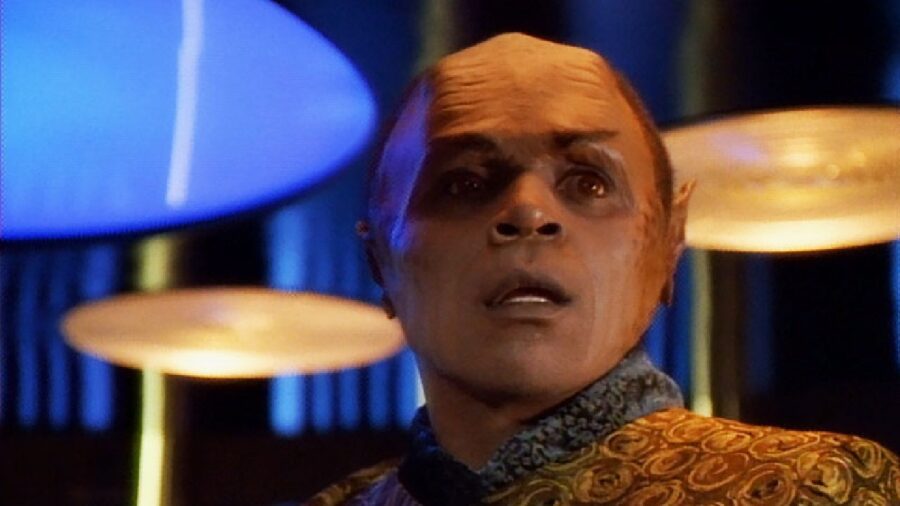
The first game to kick off the Star Trek video game renaissance is Star Trek: Voyager—Across the Unknown, and it takes the franchise where it has never gone before. You take control of Voyager after it is zapped into the Delta Quadrant, and like Captain Janeway, you must help everyone find their way back home to the Alpha Quadrant. Much of the game is spent managing finite resources and using your best judgment of which systems to prioritize. Speaking of judgment, you’ll have to make snap calls in several adventures (including recreations of iconic Voyager dilemmas, like whether to kill Tuvix) that can save the day or possibly get everyone killed.
The general consensus on Star Trek: Voyager—Across the Unknown (which is out now on console and PC) is that it’s good but not great. The most notable thing about it is arguably its sandbox nature and its emphasis on resource management. Historically, many Star Trek games have been shooters, real-time strategy games, and RPGs filled with bonkers puzzles. This was the first game to focus extensively on both resource management and narrative choices, making it arguably the best Starfleet captain simulation since the 2002 title Star Trek: Bridge Commander.
Two More To Beam Up

Surprisingly enough, we’re going to get two more Star Trek games this year. One of them is Star Trek: Outposts Unknown (which will be released for PC and console sometime this year). This game is designed like SimCity, but with a Trek twist. Basically, you are trying to build, maintain, and defend an outpost on a distant planet. That means exploring strange new worlds, gathering resources, and defending everyone from the planet’s most hostile creatures. While not exactly a cozy game, the Outposts Unknown demo (which is out on Steam) proved surprisingly relaxing, which may be good news for players who don’t like the intensity of games like StarCraft.
The other big Star Trek video game of 2026 is Star Trek Warp. This title is described as a “card battler” that lets players “choose characters from a huge roster of Star Trek legends, heroes, and villains, and deploy them at iconic locations like Ten-Forward and the Warp Core.” With seven virtual lanes to defend, this game is designed to keep you on your toes; the title also features both PvE and PvP modes. Overall, Warp sounds like the weird lovechild of League of Legends (what with the lane defense) and the old Star Trek Customizable Card Game. That might just help it appeal to both young fans and older fans.
A New Strategy And An Old Legend

The most exciting new Star Trek game won’t be coming out until next year. Star Trek: Shadow Frontier is a survival horror title where a Starfleet officer must survive on a mysterious planet. The twist? That officer is Ro Laren, who once left the Enterprise-D to join the Maquis before making her way back to Starfleet. Since her surprise appearance in Picard, fans have been wondering how she went from being a principled rebel to being a good, rule-abiding officer. Shadow Frontier may very well give us that explanation. If nothing else, it will give us something unique: a Silent Hill-type game set in the Star Trek universe.
So, what’s up with this sudden influx of Star Trek video games? The smart money is that Paramount is continuing to throw everything at the wall with this franchise to see what sticks. No Star Trek show is currently in development, and the only definitive thing on the horizon is a movie intended to give this universe its second huge reboot. Trek games (particularly those featuring characters like Ro Laren and Tuvok) are a way of appealing to older fans who like the IP and younger fans who just like gaming. By seeing what sells, Paramount can finally get to the bottom of a decades-old question: what the heck Star Trek fans actually want.
Entertainment
Star Wars Is Dying Because It Can’t Stop Copying Marvel
By Chris Snellgrove
| Updated

Lately, I’ve spent a lot of time thinking about one of the coolest things from the Star Wars prequels: podracing! Even the biggest critics of The Phantom Menace readily admitted that the podracing scenes were some of the most thrilling moments ever captured on film. This high-speed racing in a galaxy far, far away was so popular that it led to multiple podracing video games. Now, another game is on the horizon: Star Wars: Galactic Racer. Releasing on October 6th, this game will feature a solo campaign mode as well as a variety of multiplayer modes that pit players against different races.
Between excitement for this game and social media users rediscovering the darkly hilarious story of racer Ratts Tyerell, it’s clear that excitement for podracing is greater than ever before. That excitement is so great that it seems like a no-brainer for Lucasfilm to create a Star Wars TV show about a plucky young racer trying to win big. Unfortunately, we’re never going to get this or countless other great show ideas for a simple, depressing reason: the MCU. You see, Star Wars authorities like Dave Filoni are obsessed with creating their own Marvel-style cinematic universe, meaning that any shows that don’t directly connect to other series or movies will never see the light of day.
The Mando Cinematic Universe

If you somehow don’t know (what, you didn’t feel a disturbance in the Force?), there’s a slowly growing mountain of exciting Star Wars projects that got canceled before they ever got off the ground. This includes things like Patty Jenkins’ Rogue Squadron movie, Guillermo del Toro’s Jabba the Hutt film, an untitled movie from Taika Waititi, and even an entire new trilogy from The Last Jedi director Rian Johnson. Some canceled projects were later transformed into TV shows for Disney+. This includes a solo Boba Fett movie and what was meant to be a solo Obi-Wan Kenobi trilogy. Interestingly, both TV shows featuring these characters underscore why Star Wars is doomed to fail.
You see, part of why The Book of Boba Fett sucked is that a huge chunk of its runtime was dedicated to other characters. Like, midway through its first and only season, this Boba Fett spinoff focuses on the Mandalorian and Grogu, with a bit of Ahsoka thrown in for good measure. Similarly, Obi-Wan Kenobi couldn’t simply focus on the wacky dessert misadventures of its titular character. Instead, Lucasfilm inexplicably threw in both Darth Vader and Princess Leia, which threatened to disrupt established Star Wars lore. Ahsoka is, of course, a live-action Rebels sequel with plenty of character overlap, and even The Acolyte features appearances by familiar names like Yoda, Ki-adi-Mundi, and even Darth Plagueis.
Let Me See That Thrawn

Why are potentially solid Star Wars shows getting clogged with characters that ultimately hurt the overall story? Simple: Dave Filoni wants this franchise to be more like the Marvel Cinematic Universe. Part of the MCU’s charm is that characters can pop into each other’s movies. Iron Man is in the first Spider-Man movie, Black Widow is in the second Captain America movie, and so on. Done well, this lays the groundwork for major team-ups, like The Avengers. For years, there have been rumors that Star Wars is trying to put its own interconnected characters in place to loosely adapt Timothy Zahn’s Heir to the Empire book into a show or film.
That sounds fine on paper; after all, Heir to the Empire is one of the best Star Wars books ever written. But it’s a book featuring characters that Disney likely won’t feature in their own adaptation, including all of the Original Trilogy’s primary heroes and fan-favorite new characters like Mara Jade. Even if we do eventually get an Heir to the Empire adaptation, it’s clear that it would have almost nothing in common with the book besides the presence of Thrawn. Adding some salt to the wound, the lack of any official updates means that this project is very likely dead.
No Heir, No Spare

If Filoni’s dream of creating an Heir to the Empire movie or series is over, then it means that we’ve had years of wasted Star Wars TV shows. Why bother using The Book of Boba Fett to set up more Mandalorian stuff? Why use The Mandalorian to set up Ashoka? Why try (and fail) to cause Ahsoka to set up Heir to the Empire? From the outside looking in, it seems like these shows were extensively tweaked to set up a project that we’ll never see. Episodes and entire series that could have been great ended up sucking, and for what? To set up yet another franchise project that ended up getting canceled.
Star Wars is dying because it can’t stop copying the MCU, which itself is on life support thanks to superhero fatigue. Just like that, two great franchises ruined themselves because they were too busy setting up the next big thing instead of giving fans what they really want: something original, for once!

Cybersecurity researchers aren’t happy about the guardrails on Anthropic’s Fable
NBA Finals ticket prices continue to plunge ahead of Game 4


