
Entertainment
The Sci-Fi That Failed Twice And Demands A Third Chance

By Joshua Tyler
| Published

No other genre falls victim to early cancellation more often than science fiction. Networks are notoriously impatient with anything that involves expensive special effects or sets, and SF is labor and cost-intensive.
That short runway for success has deprived us of proper endings to some of the greatest sci-fi stories ever told, so we’re left wondering what happened to the Wild Cards in their war with the Chigs, whether the crew of the Destiny ever found a gate back to Earth, and did Captain Gideon find a cure for the Drak plague before it was too late?
It’s the not knowing that’s the worst, and in the case of one sci-fi franchise, we were left in the dark not once, but twice. This is why V failed, and then failed again!
The Biggest Television Event Of The 1980s
V was created by television writer-producer Kenneth Johnson as a large-scale science-fiction event for NBC. The story begins when massive alien ships arrive over Earth’s major cities, with the Visitors aboard them claiming they come in peace and offering advanced technology in exchange for Earth’s resources. They look like humans, they act like humans, and they seem friendly, so we go all in on cooperation.

As the world falls further under the influence of the Visitors, a small group discovers that their human appearance is only a disguise. In reality, the Visitors are secretly reptilian beings manipulating humanity and harvesting people. As the truth is uncovered, a resistance movement forms to fight back.
When it aired in 1983, the two-night miniseries became a huge ratings success and a pop-culture phenomenon, praised for its spectacle, suspense, and memorable twists.
The Event Becomes A Series
After the huge ratings success of V, NBC quickly ordered a follow-up. In 1984, the network aired the sequel miniseries V: The Final Battle, which continued the human resistance fighting the alien Visitors and again drew strong viewership. Hoping to turn the concept into a long-running franchise, NBC then launched a weekly television series simply titled V: The Series later that same year.

At the heart of V: The Series was more of the struggle between the human Resistance and the Visitors’ full-scale invasion of Earth. It starred popular actors of the time like Marc Singer and Faye Grant, who portrayed resistance leaders Mike Donovan and Juliet Parrish. The aliens were the real selling point of the show, with Jane Badler standing out as the evil leader of the visitors, Diana, and the great Robert Englund, famously known for his role as Freddy Krueger, as Willie, a sympathetic Visitor
Why The First V Series Failed
There were immediate problems. The weekly format required producing far more episodes with a more limited budget. That meant the show drastically reduced the spectacle and large-scale action that made the original events exciting.

It also had a leadership problem. Kenneth Johnson, who’d created the concept, refused to be part of the series. He disliked the sequel miniseries V: The Final Battle and wanted out. Lacking his presence, V lost much of its more complex narrative drive and fell into the boring, predictable monster-of-the-week format most shows of the era used.
At the same time, the show’s narrative was all over the map, as constant changes disrupted the story. Resistance leader Mike Donovan was written out midway through the season when the character was captured by the Visitors. Key resistance member Robin Maxwell, played by Blair Tefkin, also disappeared early in the run.

With major characters gone and the storytelling becoming more episodic, the show lost the tight resistance-movement narrative that made the original miniseries compelling. Throw all that in a blender, and you have a disaster in the making, and the audience bailed.
V: The Series debuted on NBC on October 26, 1984, and on March 22, 1985, it was canceled and off the air. What started out as one of the biggest television events in the medium’s history crashed and burned within a year.
Rebooting V For Battlestar Galactica Audiences

The concept was good. The miniseries was great. There was something here that should have worked. So decades later, ABC tried again, hoping to ride the early 2000s wave of sci-fi interest generated by the success of shows like the rebooted Battlestar Galactica.
V: The Series was brought back by ABC on November 3, 2009, and ran for 22 episodes across two seasons until March 15, 2011. This time, they skipped right over the miniseries and went straight to a new V series, wasting no time at all.

Within minutes, the aliens have landed, and from there it skips forward at a rapid pace, setting up the same intrigue that fans of the first series are familiar with. The aliens, who call themselves Visitors and “Vs” for short, present themselves as human in appearance, and the plot starts rolling.
The Visitor’s representative is Anna, played by the stunning Morena Baccarin (Firefly). She quickly becomes a global celebrity, convincing governments and much of the public that the aliens are humanity’s greatest allies. Behind the scenes, however, the Visitors are secretly infiltrating governments, media, and military organizations while preparing for a long-term takeover of Earth.

The story focuses on several characters who gradually discover the truth and join a growing resistance. FBI counterterrorism agent Erica Evans, played by Lost’s Elizabeth Mitchell, becomes one of the central leaders of the underground fight against the Visitors.
Her son, Tyler, played by Logan Huffman, is drawn to the aliens and joins their human youth program, creating tension between loyalty and suspicion. Journalist Chad Decker, played by Scott Wolf, becomes Anna’s media ally while questioning the Visitors’ true motives.
Why V Failed Again

V premiered with strong curiosity and solid ratings, drawing viewers eager to see a modern take on the classic V. Critics were mixed on the reboot. Many praised the sleek production values and Morena Baccarin’s performance as the alien leader Anna, but reviews often said the show moved too slowly and lacked the urgency of the original.
Audience response followed a similar pattern. The pilot attracted over 14 million viewers, but interest steadily declined as the season progressed. By the second season, ratings had dropped sharply, signaling fading audience enthusiasm despite a loyal core fanbase.

The new V had a promising start, but the show made some of the mistakes the previous V series had. It tried to save money by avoiding the spectacle that had made the original miniseries such a hit, and instead leaned heavily into slow-burn conspiracy plotting.
Once again, behind the scenes, V was in turmoil. There were showrunner changes between seasons that shifted the tone and direction. Long breaks between episodes disrupted its ability to retain its audience, draining momentum and confusing casual viewers.
So in 2011, ABC canceled yet another V series before its larger alien-occupation storyline could reach a real conclusion.
Why V Deserves A Third Chance

There’s something to V as a premise. It does things no other alien invasion story has ever done quite as well. It’s exactly the right idea, but somehow it has never found the right time.
Maybe that time is now. Rather than rebooting something that already worked once, Hollywood should consider giving V a third attempt and maybe, just maybe, instead of repeating the same mistakes, they could learn from them and make V the stunning, generational hit it was always meant to be.
Entertainment
Cordless power tool deals are already live at Amazon before Prime Day starts
Best early Prime Day deals on cordless power tools:


Summer is the ideal time to tackle home DIY projects. The paint will dry quicker, there’s more hours of daylight, and maybe some friends around to help out. If you have a list of home and yard projects to take care of this summer, make sure you have the necessary tools. Nothing sidelines a weekend project quite like realizing you need to run to the hardware store.
Lucky for us, early Amazon Prime Day deals already have great discounts on cordless power tools. Of course, we expect to see more as we get closer to the June 23 official start of the sale. But for now, here are the top deals worth shopping.
Best DeWalt deal
$169
at Amazon
$249
Save $80
Why we like it
Perfect for anyone building a new tool collection, the DeWalt 20V MAX Cordless Drill and Impact Driver Combo Kit is on sale for $80 off before Prime Day. The kit comes with the 20V compact drill/driver, 20V impact driver, two 20V batteries, a battery charger, and a durable carrying case. Both tools have a built-in LED light so you’ll get a better view for optimal accuracy. The comfort grip with ergonomic design is also a major plus.
Best Craftsman deal
$299
at Amazon
$369
Save $70
Why we like it
Packing in seven tools, the Craftsman V20 Power Tool Combo Kit is an upgraded starter pack. It comes with a drill/driver, oscillating tool, impact driver, grinder, reciprocating saw, circular saw, and even more. You also get two 20V batteries and a battery charger.
Before Prime Day kicks off, the Craftsman Power Tool Combo Kit is on sale for $229, down from the normal price of $369.
Mashable Deals
Best Hoto deal
$79.99
at Amazon
$99.99
Save $20
Why we like it
Hoto makes some excellent cordless tools that are useful to have around any home, even if you’re not taking on DIY projects soon. The Hoto SNAPBLOQ S-A01 3.7V Electric Screwdriver is the perfect example given that it comes with 56 bits to cover every possible scenario. It also has three torque settings and an LED light. Use it to repair your glasses or sunglasses, get access to tiny screws in a watch or your laptop, while still having access to more standard bits.
Hoto says you’ll get about 60 minutes of runtime before the cordless electric screwdriver needs to recharge its 800 mAh battery.
More cordless tool deals to shop before Prime Day
Entertainment
The Decade's Funniest Sci-Fi Series Is Finally Complete On Netflix
By Jonathan Klotz
| Published

Comedy is hard to do right. Science fiction is hard to do right. A sci-fi comedy is nearly impossible. That’s what makes Resident Alien one of the best series of the decade. It’s a funny, well-written sci-fi comedy allowed to tell a complete story from beginning to end. After originally airing on SyFy, the series went to Netflix, and now, the final season has arrived for you to easily binge Alan Tudyk’s greatest performance.
The Perfect Role For Alan Tudyk

Tuidyk plays “Harry Vanderspeigle,” or rather, the alien with a name humans can’t pronounce, impersonating the town doctor (also played by Alan Tudyk in flashbacks), whom he accidentally killed when landing in Patience, Colorado. Harry learns medicine by watching Law & Order, and slowly picks up on human emotions, customs, and social cues as the series goes on, all to further his mission to exterminate the human race. Early on, he realizes that a young boy, Judah, can see his true alien form. He tries to exterminate the witness, but fails, and ends up befriending him instead. Be a different series if the bone saw had worked.
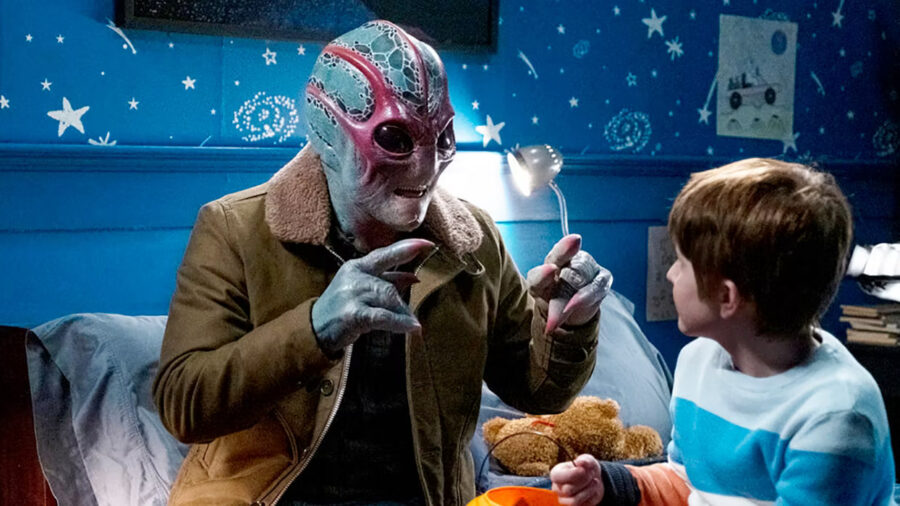
The first few episodes have the other residents of Patience playing the straight man to Harry’s quasi-murderous antics, before Resident Alien finds its groove and settles in. As the seasons go on, Harry finds an ally in Judah’s mom, Asta (Sara Tomko), and a new enemy when the government moves into Patience, which, as with Stranger Things, is represented by Linda Hamilton as a no-nonsense extraterrestrial hunting General. Hamilton isn’t the only sci-fi cameo. Resident Alien is filled with familiar names and faces having the time of their life on the show.
Alan Tudyk’s Firefly co-stars, Nathan Fillion and Jewel Staite, turn up as a telepathic octopus and an FBI Agent respectively. Clancy Brown, Terry O’Quinn, George Takei, and Stephen Root all drop by while behind the camera, Star Trek Voyager’s Robert Duncan McNeill is often directing the big episode of the season. When the star of the show is one of the most beloved performers in Hollywood, it’s easy to get everyone to show up.
Resident Alien Is The Decade’s Best Sci-Fi Series
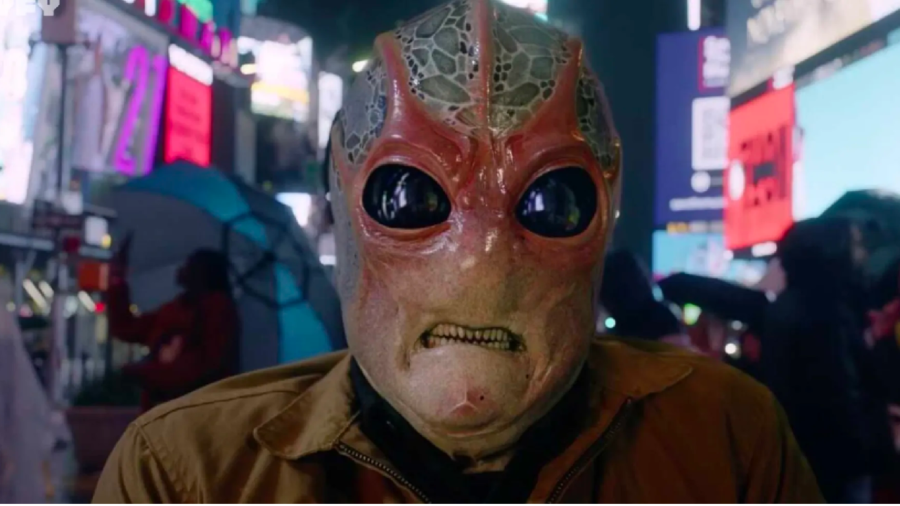
Resident Alien is an absolute blast of a series. It’s a throwback to the old SyFy slate of Eureka and Warehouse 13, and the only show this decade to nail that vibe. It took a while to catch on. Season 1 flew under the radar with barely a million viewers for each episode. Once it was available on streaming, it became a social media hit, and viewership boomed. Now that it’s complete on Netflix, expect it to again experience a new surge in popularity.
There’s a lesson to be learned here by studios about producing original sci-fi, or well, almost original, since it does adapt the comic book series by Peter Hogan and Steven Parkhouse, and then giving them room to grow, develop, and find their audience. Too often, sci-fi shows are canceled after one season before anyone even knows how great it is. Resident Alien did everything right, barely survived for four seasons, and is now going to be your new favorite series
Entertainment
The best early Prime Day air fryer deals you can shop right now
Best early Prime Day air fryer deals at a glance:


Prime Day is almost here — and Amazon isn’t waiting for the official start to roll out discounts. This year’s sale kicks off on June 23, but early deals on small kitchen appliances are already live, and air fryers are among the standouts.
Whether you’re after a compact basket-style fryer for weeknight meals or a larger oven model that can roast a whole chicken, brands like Ninja, Instant Pot, and Chefman are already seeing price cuts. Here are the best early Prime Day air fryer deals worth grabbing now.
Mashable Trend Report
Best mini air fryer deal

$64.99
at Amazon
$129.99
Save $65.00
Why we like it
If you live alone, like making apps or quick side dishes, or just want an air fryer that won’t take up your entire counter, the Instant Pot Vortex Plus 6-in-1 Mini Air Fryer (4QT) is on sale for $64.99 at Amazon, down from $129.99. This little air fryer can bake, roast, broil, dehydrate, reheat, and air fry small meals in minutes. Just press the preset button, and it does the rest.
Best large air fryer deal

$89.99
at Amazon
$149.99
Save $60.00
Why we like it
For households with more mouths to feed, the Chefman XL 6-in-1 Air Fryer (14QT) can make family-sized meals in no time. (There’s also a Hi-Fry button for those who prefer an extra crispy finish.) It comes with three removable wire racks, a rotisserie spit, a fetch tool to remove the rotisserie, and a dip tray/baking pan. And right now, you can get it for $89.99 — the lowest price we’ve tracked on this model to date!
More air fryer deals
Topics
Kitchen
Air Fryers

Cordless power tool deals are already live at Amazon before Prime Day starts
SoFi workers reach agreement to avoid strike ahead of World Cup


