
Entertainment
NYT Connections Sports Edition today: Hints and answers for February 1, 2026

Today’s Connections: Sports Edition will be easier if you know aquaticsports.
As we’ve shared in previous hints stories, this is a version of the popular New York Times word game that seeks to test the knowledge of sports fans.
Like the original Connections, the game is all about finding the “common threads between words.” And just like Wordle, Connections resets after midnight and each new set of words gets trickier and trickier — so we’ve served up some hints and tips to get you over the hurdle.
If you just want to be told today’s puzzle, you can jump to the end of this article for the latest Connections solution. But if you’d rather solve it yourself, keep reading for some clues, tips, and strategies to assist you.
What is Connections: Sports Edition?
The NYT‘s latest daily word game has launched in association with The Athletic, the New York Times property that provides the publication’s sports coverage. Connections can be played on both web browsers and mobile devices and require players to group four words that share something in common.
This Tweet is currently unavailable. It might be loading or has been removed.
Each puzzle features 16 words and each grouping of words is split into four categories. These sets could comprise of anything from book titles, software, country names, etc. Even though multiple words will seem like they fit together, there’s only one correct answer.
If a player gets all four words in a set correct, those words are removed from the board. Guess wrong and it counts as a mistake — players get up to four mistakes until the game ends.
This Tweet is currently unavailable. It might be loading or has been removed.
Players can also rearrange and shuffle the board to make spotting connections easier. Additionally, each group is color-coded with yellow being the easiest, followed by green, blue, and purple. Like Wordle, you can share the results with your friends on social media.
Mashable Top Stories
Here’s a hint for today’s Connections: Sports Edition categories
Want a hint about the categories without being told the categories? Then give these a try:
Here are today’s Connections: Sports Edition categories
Need a little extra help? Today’s connections fall into the following categories:
-
Yellow: Aquatic Sports Verbs
-
Green: Speed
-
Blue: Sports Card Brands
-
Purple: Tennis Grand Slam Winners, Minus A Letter
Looking for Wordle today? Here’s the answer to today’s Wordle.
Ready for the answers? This is your last chance to turn back and solve today’s puzzle before we reveal the solutions.
Drumroll, please!
The solution to today’s Connections: Sports Edition #496 is…
What is the answer to Connections: Sports Edition today?
-
Aquatic Sports Verbs – KAYAK, ROW, SAIL, SWIM
-
Speed – MUSTARD, POP, VELOCITY, ZIP
-
Sports Card Brands – LEAF, PANINI, TOPPS, UPPER DECK
-
Tennis Grand Slam Winners, Minus A Letter – ASH, KIN, NADA, WILLIAM
Don’t feel down if you didn’t manage to guess it this time. There will be new sports Connections for you to stretch your brain with tomorrow, and we’ll be back again to guide you with more helpful hints.
Are you also playing NYT Strands? See hints and answers for today’s Strands.
If you’re looking for more puzzles, Mashable’s got games now! Check out our games hub for Mahjong, Sudoku, free crossword, and more.
Not the day you’re after? Here’s the solution to yesterday’s Connections.
Entertainment
Star Trek’s First Broadcast Episode Was Very Carefully Chosen, Because It Was Boring

By Chris Snellgrove
| Published

These days, Star Trek is a bona fide pop culture phenomenon. But during the development of The Original Series, there was anxiety that the general public wouldn’t really understand Gene Roddenberry’s mashing up Western tropes with a sci-fi setting. Making matters worse was that the original pilot, “The Cage,” had been rejected by NBC for being too brainy. Fortunately, Roddenberry got a chance to shoot another pilot, one which impressed the network enough to order an entire season worth of episodes.
Several episodes of Star Trek: The Original Series had already been shot when the time came for this new show to make its broadcast premiere. The first episode that the general public saw was “The Man Trap,” which featured a shapeshifting monster that was revealed to be an alien salt vampire. This good-but-not-great episode was an odd choice, and it was one that the cast and crew hated. As it turns out, though, this episode was very carefully selected by executives because it served as an inoffensive, relatively straightforward encapsulation of everything Star Trek had to offer.
It’s A Trap!

Most of the information we have about why “The Man Trap” was selected as Star Trek’s first episode comes from the book Inside Star Trek: The Real Story. Within this impressive reference tome, Robert H. Justman and Herbert F. Solow revealed something surprising: NBC had several other episodes to choose from for the premiere, including “The Corbomite Maneuver,” “Charlie X,” “Mudd’s Women,” “Where No Man Has Gone Before,” and “The Naked Time.” All of them had already been shot and were mostly finished, so it was just a matter of figuring out which episode would serve as the best introduction to Star Trek, a heretofore unknown sci-fi series.
“The Man Trap” won out, mostly because the powers that be worried that other episodes would be off-putting to general audiences in some very specific ways. For example, they worried that audiences would find “Charlie X” a story that was “too gentle” because it focused on an adolescent with special powers. This was probably the right call, in retrospect: when Variety gave a negative review of “The Man Trap” (an episode chosen, in part, because of its relative maturity), they declared that Star Trek: The Original Series was “better suited to the Saturday morning kidvid bloc” (ouch!).
A Monster Hit Of An Episode

“The Corbomite Maneuver” was a great potential choice, but this episode’s impressive special effects were still in post-production, and almost all of its action took place on the ship. “Where No Man Has Gone Before” really outlined the premise of the new show, but it was deemed “expository” for general audiences expecting more action and danger. Justman thought “The Naked Time” was a killer introduction to the crew’s personalities, but the network passed, presumably because of how over-the-top (half-naked, swashbuckling Sulu? Oh, my!) that episode gets. “Mudd’s Women,” meanwhile, was deemed too offensive because the plot involved literally selling women to miners.
Through this process of elimination, executives decided that “The Man Trap” was the best intro to Star Trek. It had cool scenes on both the Enterprise and a distant outpost (a strange new world) and featured a straightforward action plot you didn’t have to be a sci-fi aficionado to understand. Finally, it was all about finding and defeating a creepy monster, which offered thrills to audiences of all ages. The network’s choice paid off, and Star Trek: The Original Series became the most popular sci-fi show in television history, even though the cast (including William Shatner and Leonard Nimoy) thought “The Man Trap” was the worst possible episode they could have chosen.

All of this is a keen reminder of how much thought and work went into putting Star Trek’s best foot forward. It might be a reminder that Paramount’s current upper leadership needs, as Starfleet Academy hit the ground running with the worst episodes of Season 1. The show got better after that, but it didn’t matter because the prospective audience had already been driven away. As it turns out, today’s execs need to learn something that the network execs of the ‘60s had learned very well: series succeed when you give the audience what they want to see and not what you want to show!
Entertainment
How A Fantasy Box Office Bomb Lost $200 Million In Theaters, And Suddenly Became A Streaming Hit
By Jonathan Klotz
| Published

For the last decade as streaming has taken off in homes around the world, it’s become possible for films that lost historical amounts of money in theaters to find success, even if it might be the post-Mystery Science Theater 3000 trend of “so bad it’s good.” That’s why a massive flop, for example say, Morbius, and films that slightly missed the mark like The Fall Guy can turn it around and become a streaming success.
What’s even more impressive is the amazing turnaround of 2013’s Jack the Giant Slayer, which lost Legendary Pictures an alleged $200 million, only to end up topping streaming charts in 2025.
The Classic Fairy Tale With A Twist
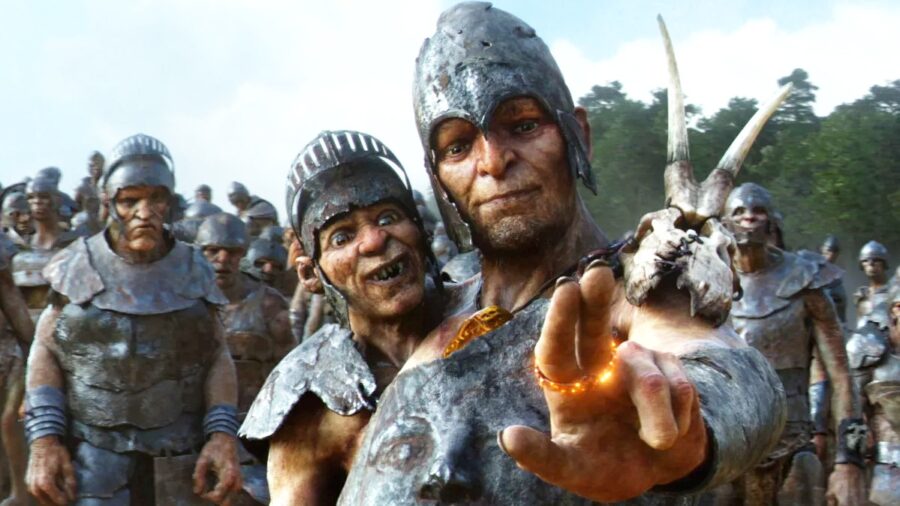
Everyone knows the story of Jack and the Beanstalk, the classic fairy tale about selling a horse for magic beans and climbing a beanstalk to find a giant living in the clouds. It’s simple, contains multiple morals, and can be easily adjusted to turn Jack into the villain, but Jack the Giant Slayer instead asks, “What if there was no moral, and instead of one giant, there was an entire army of evil giants?” The movie is the classic story, as you’ve never seen it before, and it almost works.
Nicholas Hoult plays Jack, the young man who finds himself trading his horse to a monk in exchange for beans that he can’t allow to get wet, ever. Like the rules in Gremlins, it’s not long before Jack accidentally gets the beans wet and a beanstalk grows under his house with the princess, Isabell (Eleanor Tomlinson), trapped inside as it grows into the sky. All the king’s men gather to rescue the princess, including Lord Roderick (Stanley Tucci), who, thankfully, Jack the Giant Slayer makes obvious is very evil, very quickly.
It’s up to Jack, Isabell, and the loyal Knight, Elmont (Ewan McGregor) to save the kingdom and stop the invasion of giants led by Roderick and the giant two-headed General Fallon (Bill Nighy). If there’s one thing Jack the Giant Slayer does better than every other adaptation, it’s the third act featuring a full-blown war between humans and giants, with a touch of humor and absurdity. Watching a giant toss a windmill like the glaive from Krull is the perfect amount of off-beat to distract from a surprising amount of body horror in both the giant’s designs and Fallon’s ultimate fate.
A Movie For No One
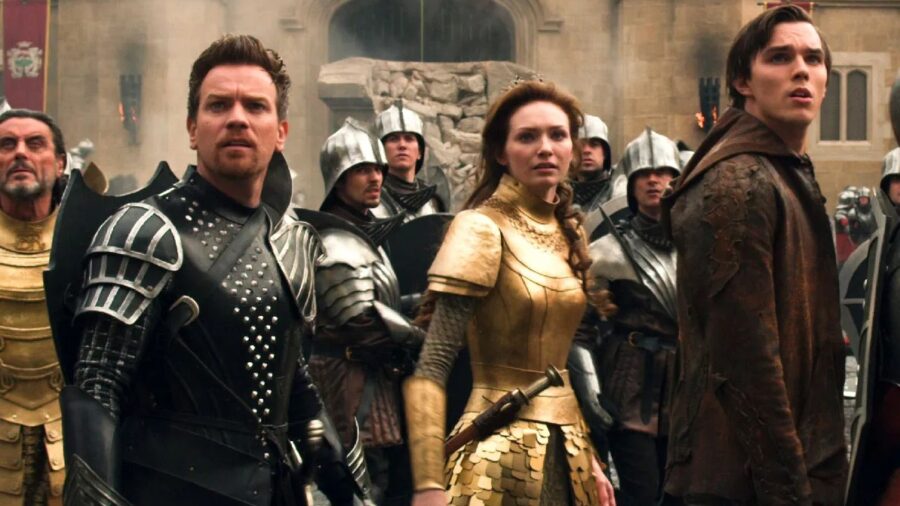
Jack the Giant Slayer looks too good, and the star-studded cast is having way too much fun for it to be a truly bad movie. The problem is that the pacing is off: it takes a little too long to get to the good stuff, then it feels a little too rushed, and though it is a fun adventure, it’s also, like the source material, simplistic. It’s not like the movie wasn’t watched in theaters; it made $197 million worldwide, which would be a great haul except it cost $185 million to make, and that’s not including the extensive marketing campaign.
The push and pull of director Bryan Singer’s vision of a dark take on the fable, complete with actual people-eating on screen, and the sanitized version that hit theaters, which was still too dark for children, since the film is surprisingly rated PG-13, meant it ended up being a film for no one. The Rotten Tomatoes ratings, of 52 percent from critics and 55 percent from the audience, are proof that the final product is not great, but not bad; it’s a movie that will keep you watching for a few hours and then leave no lasting impression. These days, Lionsgate and Sony wish they’d release a movie that is that well-received, as even Jack the Giant Slayer looks like a masterpiece compared to Borderlands or Kraven the Hunter.
Streaming is the perfect home for Jack the Giant Slayer, and 10 years later, it no longer matters that the movie lost hundreds of millions in theaters. It finally gets to stand on its own as a fun, if unremarkable, fantasy adventure.
Entertainment
Did Star Trek’s Best Series Secretly Doom The Franchise?
By Chris Snellgrove
| Published

Star Trek: Deep Space Nine is considered the best show in the franchise by many fans, myself included. The show focused on extensive characterization, long-running arcs, and fairly dark plots, including the Dominion War story that dominated the last two seasons. Decades later, NuTrek shows like Discovery, Picard, and Starfleet Academy fizzled, leaving the frustrated fandom to ask a simple question: why can’t these newer shows be more like Deep Space Nine?
However, here’s a troubling fact: NuTrek sucked so much precisely because the creators were trying to make shows like DS9. Obviously, they didn’t do a very good job, mostly because executive producer Alex Kurtzman is a complete hack. But if you pound a few shots of Romulan Ale and squint, you can see that the architects of NuTrek went all-in on the idea of creating “darker” Star Trek shows in a failed attempt to recapture the magic of what made Deep Space Nine so special.
Star Trek Into Darkness

Deep Space Nine is considered the dark (if not the darkest) Star Trek show for many reasons. It doesn’t feature the squeaky-clean heroes of The Next Generation; instead, our heroes include a former terrorist (Kira), a former spy (Garak), and an angry widower who ends up becoming a reluctant Space Jesus (Sisko). His chief foe is basically Trek’s closest analog to Adolf Hitler (Gul Dukat). Even the relatively “normal” characters get dark backgrounds and plots. For example, fresh-faced medical prodigy Dr. Bashir is revealed to be a Khan-like augmented human. Affable everyman O’Brien, meanwhile, gets physically and mentally tortured at least once a season.
The show also used its Dominion War arc to test the boundaries of Star Trek’s endless idealism. Sisko becomes an accessory to a murder, but he never admits it because this act finally gets the Romulans to join the war. He also discovers that Starfleet has a secret wetworks division known as Section 31, which handles everything from assassinations to genocides. Odo gets so distracted by shapeshifter sex that he becomes a collaborator with monsters (again). Oh, and Worf murders Gowron (with Sisko’s blessing!) so he can install his buddy as Chancellor of the Klingon Empire.
NuTrek Is An Edgerlord’s Paradise
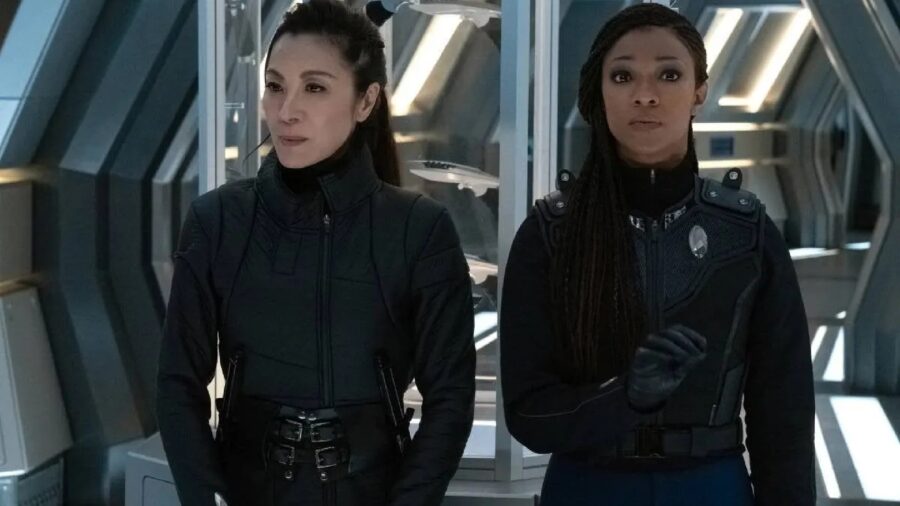
Obviously, DS9 had dark characters and storylines, but what does that have to do with NuTrek? In short, the entire Kurtzman era of this franchise has been filled with lame, edgelord attempts at making the franchise darker. The first season of Star Trek: Discovery, for example, centers on a mutineer who started a war as its main character. It’s a season where Klingons eat their dead foes and strip down to engage in sex that’s half play, half intimate assault. An evil Starfleet captain tortures a tardigrade before the good Starfleet captains one-up him with a plan to blow up an entire planet in an attempt to end a costly war.
Star Trek continued going (ahem) into darkness with other spinoffs. Picard inexplicably features a beloved Voyager B-lister getting tortured and murdered while Picard cozies up to a Romulan swordsman whose only solution to any problem is cutting someone’s head off. They’re fighting to save a Federation that is now cool with creating synthetic slaves. Later, Season 2 has our heroes fighting ICE, watching Q die, and discovering that a young Picard accidentally helped his mother unalive herself. Even the relatively lighthearted Starfleet Academy had the good guys put the entire Federation in danger because they meddled with and accidentally weaponized the most dangerous molecule in the galaxy.
It’s All About Testing Characters’ Morality

In retrospect, it’s clear that Alex Kurtzman and his writers thought they could recapture the old Deep Space Nine magic by throwing a bunch of grimdark characters into gritty situations and calling it a day. However, this didn’t work because DS9’s characters weren’t inherently dark; instead, they were good men and women forced to weigh their morals against the greater good. In the classic episode “In the Pale Moonlight,” Sisko isn’t compelling simply because he’s a morally murky character. No, what makes this episode fascinating is that he’s a good man forced to do bad things, with the fate of potentially billions of lives riding on his decision.
Similarly, Worf doesn’t kill Gowron because of petty vengeance or a haunted past. Instead, he weighs his cultural values as both a Klingon and a Starfleet officer, ultimately deciding it’s better to kill a tyrant than let him continue getting others killed. Even plain, simple Garak seems happy with his life as a tailor, and he’s only reluctantly drawn back into active spycraft because he realizes the best way to save his homeworld is to save it from the Cardassians who have sold its soul, one alliance at a time.
This obviously extends to the Dominion War arc as a whole. We see the toll the war has on good men and women: Nog becomes a wounded and disillusioned war veteran, and Rom nearly gets killed trying to save the Alpha Quadrant. Jadzia Dax does get killed fighting superpowered space Hitler, and Odo begins to question his loyalties. However, characters retain their morality throughout every ordeal. Bashir repeatedly refuses to join Section 31, and Odo saves the Changelings from that organization’s attempted genocide. Standing victorious on Cardassia, Captain Sisko and Admiral Ross refuse to toast their victory, instead choosing to mourn this utterly senseless and completely preventable loss of life.
NuTrek Made Its Worst Villain Into A Hero

Compare that to NuTrek, where the Klingon War hardens hearts and makes the wisest people lose their moral compass. Both Sarek and Starfleet are willing to blow up the Klingon homeworld and kill billions in order to end the war. Starfleet has suddenly decided to trust its war planning to Mirror Universe Georgiou, a woman who has terrorized the entire galaxy while murdering countless people. Later, she’s put in Section 31 (a DS9 invention NuTrek tried very hard to capitalize on) so the entire Federation can continue to benefit from her completely amoral advice. That’s because the Feds believed the same thing that Picard suddenly starts believing over a century later: violence is great as long as the ends justify the means.
This is basically the problem with NuTrek in a nutshell. We don’t get fully fleshed-out characters whose morality is tested by unthinkable scenarios. Instead, we get one-dimensional characters who are dark and compromised from the beginning. Michael Burnham is meant to be the embodiment of Starfleet ideals, but she comes to us as an angry, nearly broken mutineer who, in her guilt, saves an alternate universe’s most murderous monster from certain doom. Even formerly complex characters like Picard are made dumb, violent, and impulsive by writers who value blunt spectacle over elegant storytelling.
Star Trek Needs More Than Darkness
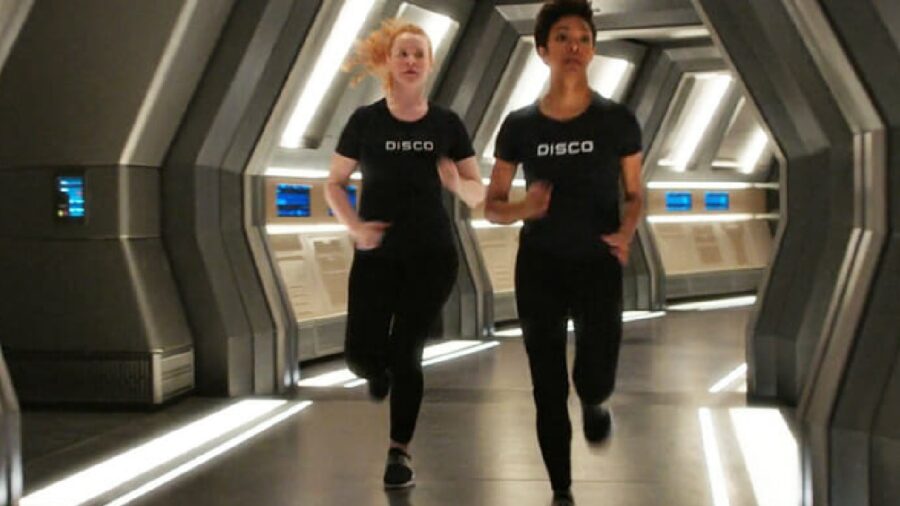
Alex Kurtzman tried to copy the Deep Space Nine formula for NuTrek, but, in typical fashion, he went about it in the stupidest possible way. It’s not enough to give us dark settings and plots; we need well-developed characters whose morality is an idealistic counterpart to the darkness around them. Stories needed to reinforce Star Trek’s hopeful ethos and reward audiences who never lost faith in the greatest sci-fi franchise of all time. Instead, what we got was a collection of dark characters, pointless action scenes, and endless violence, all wrapped up with another snoozeworthy Michael Burnham speech.
This is Kurtzman’s warped idea of what makes Star Trek so great. Is it any wonder that every one of his NuTrek shows has been a colossal failure?

Frederik Andersen, Hurricanes look to shut down Senators in Game 2
Keller directs Pirates over Rays to clinch series win


