
Tech
Rad Power Bikes reaches deal to sell itself for $13.2M

Electric bike company Rad Power Bikes has reached a deal to sell itself to a company called Life Electric Vehicles Holdings (or Life EV) for around $13.2 million, a little more than a month after entering the bankruptcy process.
Florida-based Life EV bills itself as a “developer, manufacturer, and distributor in the light electric vehicle industry.” It offers a number of electric bikes for sale on its website, although most of them were labeled as “sold out” at the time this article was published.
A filing to the bankruptcy docket over the weekend shows that five entities participated in an auction on the Rad Power assets on January 22. The first bid came in at $8 million, and parties traded bids until Life Electric Vehicles came away as the winner. When accounting for Rad Power’s liabilities, the total value of the bid is $14.9 million.
Another e-bike company called Retrospec had the second-highest bid of $13 million and is being labeled as the “backup bidder” in case the deal with Life EV falls through. The bids were a steep discount to Rad Power’s peak $1.65 billion valuation, which was reached in October 2021, per PitchBook. The company has raised a total of $329.2 million, according to PitchBook data.
The acquisition still needs to be approved by the bankruptcy judge.
Rad Power is not the only company in the micromobility world to seek bankruptcy protection in recent years. Peers like VanMoof and Cake went through restructurings and found new owners. Scooter company Bird also went through the bankruptcy process.
It’s not clear what Life EV plans to do with Rad Power; Life EV CEO Robert Provost directed questions to Rad Power. “There is still a process underway and there is an exciting future being planned for Rad Power,” he wrote in a message.
Techcrunch event
San Francisco
|
October 13-15, 2026
TechCrunch was unable to reach Rad Power for comment; this article will be updated if the company responds.
Like many of those peers, Rad Power saw a huge increase in sales during the pandemic but struggled as that momentum dried up.
The company went through multiple rounds of layoffs in recent years, juggled CEOs, and more recently had trouble with some of its older batteries catching fire. The Consumer Product Safety Commission found 31 reported fires tied to the batteries.
Rad Power told TechCrunch at the time that it “firmly stands behind our batteries and our reputation as leaders in the e-bike industry, and strongly disagrees with the CPSC’s characterization of certain Rad batteries as defective or unsafe.”
Tech
San Francisco’s pro-billionaire march draws dozens

A march supporting California’s billionaires didn’t exactly attract a huge crowd on Saturday — the San Francisco Chronicle counted around three dozen attendees, along with another dozen tongue-in-cheek counter-protesters.
To be fair, organizer Derik Kauffman had predicted attendance of only “a few dozen” beforehand. But the incongruous idea of the “March for Billionaires” has provoked an outsized response on social media. And according to Mission Local, journalists nearly outnumbered demonstrators at the event itself, where marchers carried signs with messages like “We ❤️ You Jeffrey Bezos” and “It’s very difficult to write a nuanced argument on a sign.”
The ostensible reason for the demonstration was to protest the Billionaire Tax Act, a proposed state ballot measure that would require Californians worth more than $1 billion to pay a one-time, 5% tax on their total wealth. If the measure actually passes, Governor Gavin Newsom said he will veto it.
Kauffman, who founded the AI startup RunRL and is not a billionaire himself, told reporters, “California is, I believe, the only state to give health insurance to people who come into the country illegally. I think we probably should not be providing that.” (Fourteen states offer health care to undocumented immigrants.)
Tech
TechCrunch Mobility: Is $16B enough to build a profitable robotaxi business?

Welcome back to TechCrunch Mobility — your central hub for news and insights on the future of transportation. To get this in your inbox, sign up here for free — just click TechCrunch Mobility!
Waymo’s acceleration over the past 18 months is undeniable. The Alphabet-owned self-driving company now operates commercial robotaxi services in six markets, including the San Francisco Bay Area, Phoenix, Los Angeles, Austin, Atlanta, and Miami. It has plans to grow its fleet of driverless taxicabs this year to more than a dozen new cities internationally, including London and Tokyo.
And now it has $16 billion to fuel that expansion. Is it enough?
Talking to a few industry watchers, the answer kept landing in the squishy “sort of” and “it depends” territory.
First the bull case. Alphabet is clearly committed to ensuring Waymo’s success; the parent company is, and continues to be, the primary investor. Which means Waymo isn’t exposed like other AV startups that suddenly lost funding after their backers (often legacy automakers) got skittish or pivoted.
Its ridership and autonomous miles driven stats are also exploding and will likely continue in that trajectory unless it is derailed by regulators. (Waymo provides 400,000 rides every week across six major U.S. metropolitan areas, and in 2025 alone, it more than tripled its annual volume to 15 million rides.)
This doesn’t guarantee success, though, especially if the gauge is set to profitability. Waymo still must solve several problems, including cost and increasing attention from regulators (the company’s chief safety officer just testified in a Senate Commerce hearing). If Waymo wants to simply be the licensor of its AV tech, it will have to move away from being the operator, which means giving up some control. That’s hard with a nascent technology under scrutiny.
Techcrunch event
Boston, MA
|
June 23, 2026
And while some of you will fight me on this, it also lacks the in-house manufacturing that Tesla has. Yes, Waymo has automotive partners. But it doesn’t come with the same financial leverage or ability to drive down costs with scale.
Disagree? Send your argument to my email at kirsten.korosec@techcrunch.com.
A little bird

The investors behind the now-defunct EV startup Canoo were always mysterious — in fact, they were only revealed as part of a lawsuit. Six years ago, I received a tip to look into one of them in particular: David Stern. He had connections to Prince Andrew but was otherwise a ghost.
He was on my mind, though, as the Department of Justice started releasing its files on Jeffrey Epstein. My curiosity as to whether he would turn up in the documents was quickly overwhelmed by the fact that he was, in fact, a close business partner of the convicted sex offender. He brought Epstein investment opportunities from around the world, and in particular, pitched him on investing in Faraday Future, Lucid Motors, and Canoo during the go-go days of mobility funding. Read my story on Stern and Epstein’s relationship and how mobility startups were once in the mix.
— Sean O’Kane
Got a tip for us? Email Kirsten Korosec at kirsten.korosec@techcrunch.com or my Signal at kkorosec.07, or email Sean O’Kane at sean.okane@techcrunch.com.
Deals!

Autonomous vehicle technology is about more than just robotaxis — it is a difficult and costly business that only a handful of well-capitalized companies like Tesla, Waymo, and Zoox are pursuing. Many startup founders are applying the AV systems they’ve developed to other use cases, including off-road defense, trucking, forklifts, mining, and construction. Investors, anxious about missing out on the AV party, are jumping into these sectors.
Bedrock Robotics is the latest example of investor interest. The Silicon Valley autonomous vehicle technology startup, founded by veterans of Waymo and Segment, are developing a self-driving system that can be retrofitted onto construction equipment. And it just raised $270 million in Series B funding co-led by CapitalG and the Valor Atreides AI Fund. Other investors include Xora, 8VC, Eclipse, Emergence Capital, Perry Creek Capital, NVentures (Nvidia’s venture capital arm), Tishman Speyer, Massachusetts Institute of Technology, Georgian, Incharge Capital, C4 Ventures, and others.
Bedrock raised more than $350 million in a short time (the company was formed in 2024). And while that might not seem like a lot compared to the size of some seed rounds in the AI labs sector, it shows money is flowing into physical AI startups. I expect more deal flow; importantly I expect the startups focused on practical applications of automated driving systems to attract talent — if they can afford them. Bedrock, for instance, hired Vincent Gonguet, who previously led AI safety and alignment at Meta for all Llama models, as its head of evaluation. It also hired John Chu away from Waymo.
Keep an eye out for my interview with Bedrock Robotics co-founder and CEO Boris Sofman.
Other deals that got my attention this week …
German electric motor maker Additive Drives raised €25 million ($29.5 million) from Nordic Alpha Partners.
Autonomous underwater vehicles startup Apeiron Labs closed a $9.5 million Series A round led by Dyne Ventures, RA Capital Management Planetary Health, and S2G Investments. Assembly Ventures, Bay Bridge Ventures, and TFX Capital participated.
GoCab, the African mobility fintech startup, raised a $45 million financing round comprising $15 million in equity and $30 million in debt. The equity round was co-led by E3 Capital and Janngo Capital, with participation from KawiSafi Ventures and Cur8 Capital.
Mitra EV, a commercial EV fleet company in Los Angeles, raised $27 million in financing, including equity funding from lead investor Ultra Capital and a credit facility from S2G Investments.
Overland AI, a Seattle-based developer of self-driving systems designed for military operations, raised $100 million in a round led by 8VC. Other investors included Point72 Ventures, Ascend Venture Capital, Shasta Ventures, Overmatch Ventures, Valor Equity Partners, and StepStone Group.
Plug, the used EV marketplace, raised $20 million in a Series A led by Lightspeed with participation from Galvanize and existing investors Autotech Ventures, Leap Forward Ventures, and Renn Global.
R3 Robotics, a European startup that wants to automate the disassembly of EV systems at scale, raised €20 million ($23.6 million) in combination of grants and venture funding. The €14 million ($16.5 million) Series A funding was co-led by HG Ventures and Suma Capital. Oetker Collection, the European Innovation Council Fund (EIC Fund), and existing shareholders, including BONVENTURE, FlixFounders, and EIT Urban Mobility also participated.
Skyryse, an El Segundo, California-based aviation automation startup, has raised more than $300 million in a Series C investment. The round, led by Autopilot Ventures, pushes its valuation to $1.15 billion. Other investors include Fidelity Management & Research Company, ArrowMark Partners, Atreides Management LP, BAM Elevate, Baron Capital Group, Durable Capital Partners, Positive Sum, Qatar Investment Authority, RCM Private Markets Fund managed by Rokos Capital Management, and Woodline Partners.
Notable reads and other tidbits

China has banned concealed electronically actuated door handles popularized by Tesla. The ruling, published by China’s Ministry of Industry and Information Technology, says all new cars sold in the country must have mechanical releases on their door handles by January 1, 2027. There is chatter that Europe could soon follow.
Uber continues to make moves designed to make it competitive in the autonomous vehicle sector. The company has promoted Balaji Krishnamurthy, its VP of strategic finance and investor relations, to be its CFO. This may not seem connected to AVs, but it is. Krishnamurthy actively promotes the company’s autonomous ride-hailing partnerships and has a board seat at AV company Waabi. During the company’s Q4 call, he talked about AVs, saying the company would invest capital in its AV software partners, work with AV makers by investing equity or via offtake agreements, and “support our AV infrastructure partners.”
Meanwhile, a high-profile lawsuit against Uber has delivered a mixed verdict for the ride-hailing company, which was sued after a woman alleged she was raped by her Uber driver in November 2023. A jury determined Uber was liable as an apparent agent of the driver and awarded $8.5 million to the plaintiff. The jury rejected claims that Uber was liable for negligence or design defects and declined to award punitive damages. An Uber spokesperson, who emailed TechCrunch a statement, said the “verdict affirms that Uber acted responsibly and has invested meaningfully in rider safety. We will continue to put safety at the heart of everything we do.” Uber plans to appeal the decision.
One more thing …
Last week in our newsletter, we did a poll asking what the name or ticker of Elon Musk’s combined supercompany should be. Thanks to those who emailed their suggestions, many of which had space themes, like Galactic X (great one). As for the poll, the majority picked plain ol’ X.
That makes sense, considering Musk has often talked, and posted, about X, the everything app. About 50% voted for X, while 20.7% picked ELON, 17.2% selected SpaceAI, and 12.1% chose K2, a reference to one of the corporate entities created in January.
My pick? I think it will ultimately be X, and the company will include more than just SpaceX and xAI.
To participate in our polls, sign up for our newsletter!
Tech
Okay, I’m slightly less mad about that ‘Magnificent Ambersons’ AI project
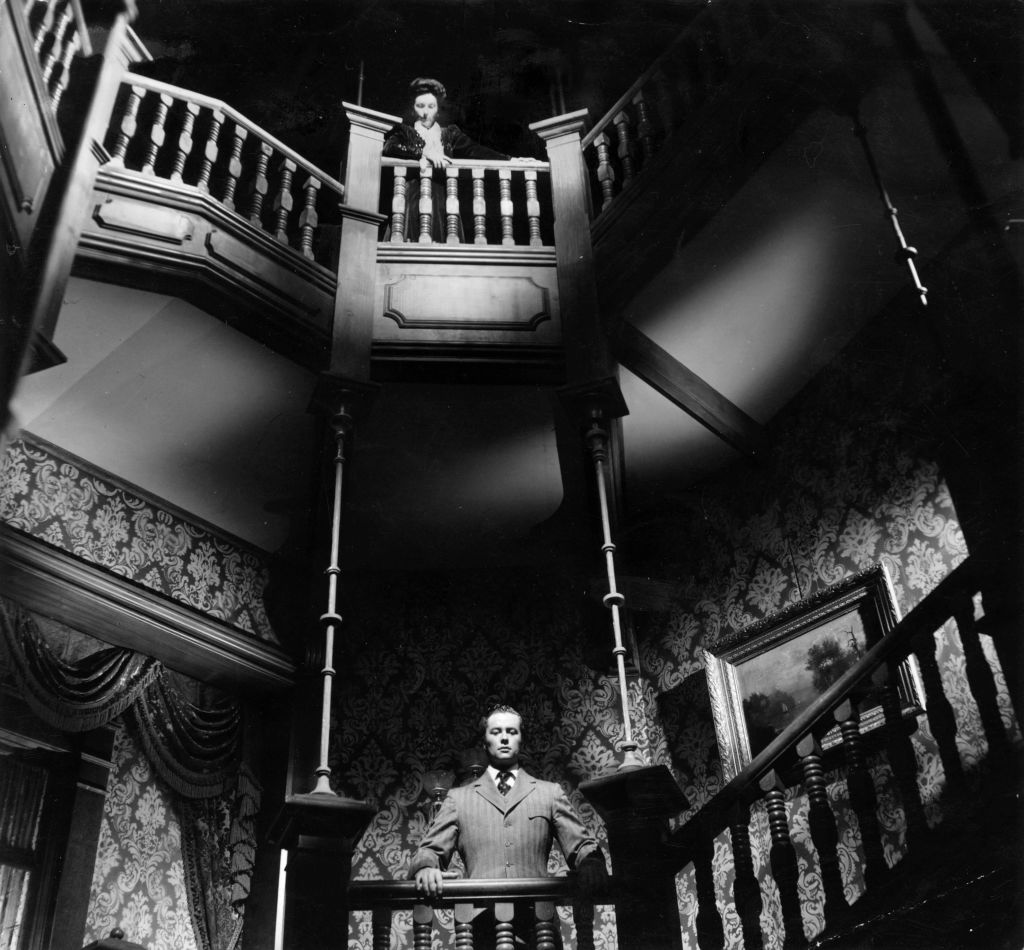
When a startup announced plans last fall to recreate lost footage from Orson Welles’ classic film “The Magnificent Ambersons” using generative AI, I was skeptical. More than that, I was baffled why anyone would spend time and money on something that seemed guaranteed to outrage cinephiles while offering negligible commercial value.
This week, an in-depth profile by the New Yorker’s Michael Schulman provides more details about the project. If nothing else, it helps explain why the startup Fable and its founder Edward Saatchi are pursuing it: It seems to come from a genuine love of Welles and his work.
Saatchi (whose father was a founder of advertising firm Saatchi & Saatchi) recalled a childhood of watching films in a private screening room with his “movie mad” parents. He said he first saw “Ambersons” when he was twelve.
The profile also explains why “Ambersons,” while much less famous than Welles’ first film “Citizen Kane,” remains so tantalizing — Welles himself claimed it was a “much better picture” than “Kane,” but after a disastrous preview screening, the studio cut 43 minutes from the film, added an abrupt and unconvincing happy ending, and eventually destroyed the excised footage to make space in its vaults.
“To me, this is the holy grail of lost cinema,” Saatchi said. “It just seemed intuitively that there would be some way to undo what had happened.”
Saatchi is only the latest Welles devotee to dream of recreating the lost footage. In fact, Fable is working with filmmaker Brian Rose, who already spent years trying to achieve the same thing with animated scenes based on the movie’s script and photographs, and on Welles’ notes. (Rose said that after he screened the results for friends and family, “a lot of them were scratching their heads.”)
So while Fable is using more advanced technology — filming scenes in live action, then eventually overlaying them with digital recreations of the original actors and their voices — this project is best understood as a slicker, better-funded version of Rose’s work. It’s a fan’s attempt to glimpse Welles’ vision.
Techcrunch event
Boston, MA
|
June 23, 2026
Notably, while the New Yorker article includes a few clips of Rose’s animations, as well as images of Fable’s AI actors, there’s no footage showing the results of Fable’s live action-AI hybrid.
By the company’s own admission, there are significant challenges, whether that’s fixing obvious blunders like a two-headed version of the actor Joseph Cotten, or the more subjective task of recreating the complex beauty of the film’s cinematography. (Saatchi even described a “happiness” problem, with the AI tending to make the film’s women look inappropriately happy.)
As for whether this footage will ever be released to the public, Saatchi admitted it was “a total mistake” not to speak to Welles’ estate before his announcement. Since then, he has reportedly been working to win over both the estate and Warner Bros., which owns the rights to the film. Welles’ daughter Beatrice told Schulman that while she remains “skeptical,” she now believes “they are going into this project with enormous respect toward my father and this beautiful movie.”
The actor and biographer Simon Callow — who’s currently writing the fourth book in his multi-volume Welles biography — has also agreed to advise the project, which he described as a “great idea.” (Callow is a family friend of the Saatchis.)
But not everyone has been convinced. Melissa Galt said her mother, the actress Anne Baxter, would “not have agreed with that at all.”
“It’s not the truth,” Galt said. “It’s a creation of someone else’s truth. But it’s not the original, and she was a purist.”
And while I’ve become more sympathetic to Saatchi’s aims, I still agree with Galt: At its best, this project will only result in a novelty, a dream of what the movie might have been.
In fact, Galt’s description of her mother’s position that “once the movie was done, it was done,” reminded me of a recent essay in which the writer Aaron Bady compared AI to the vampires in “Sinners.” Bady argued that when it comes to art, both vampires and AI will always come up short, because “what makes art possible” is a knowledge of mortality and limitations.
“There is no work of art without an ending, without the point at which the work ends (even if the world continues),” he wrote, adding, “Without death, without loss, and without the space between my body and yours, separating my memories from yours, we cannot make art or desire or feeling.”
In that light, Saatchi’s insistence that there must be “some way to undo what had happened” feels, if not outright vampiric, then at least a little childish in its unwillingness to accept that some losses are permanent. It may not, perhaps, be all that different from a startup founder claiming they can make grief obsolete — or a studio executive insisting that “The Magnificent Ambersons” needed a happy ending.


Microsoft Office 2024 for Mac and PC gets smarter with AI, now 60% off

Sam Darnold Is 60 Minutes Away From Erasing His Past


