
Tech
AI startup CVector raises $5M for its industrial ‘nervous system’
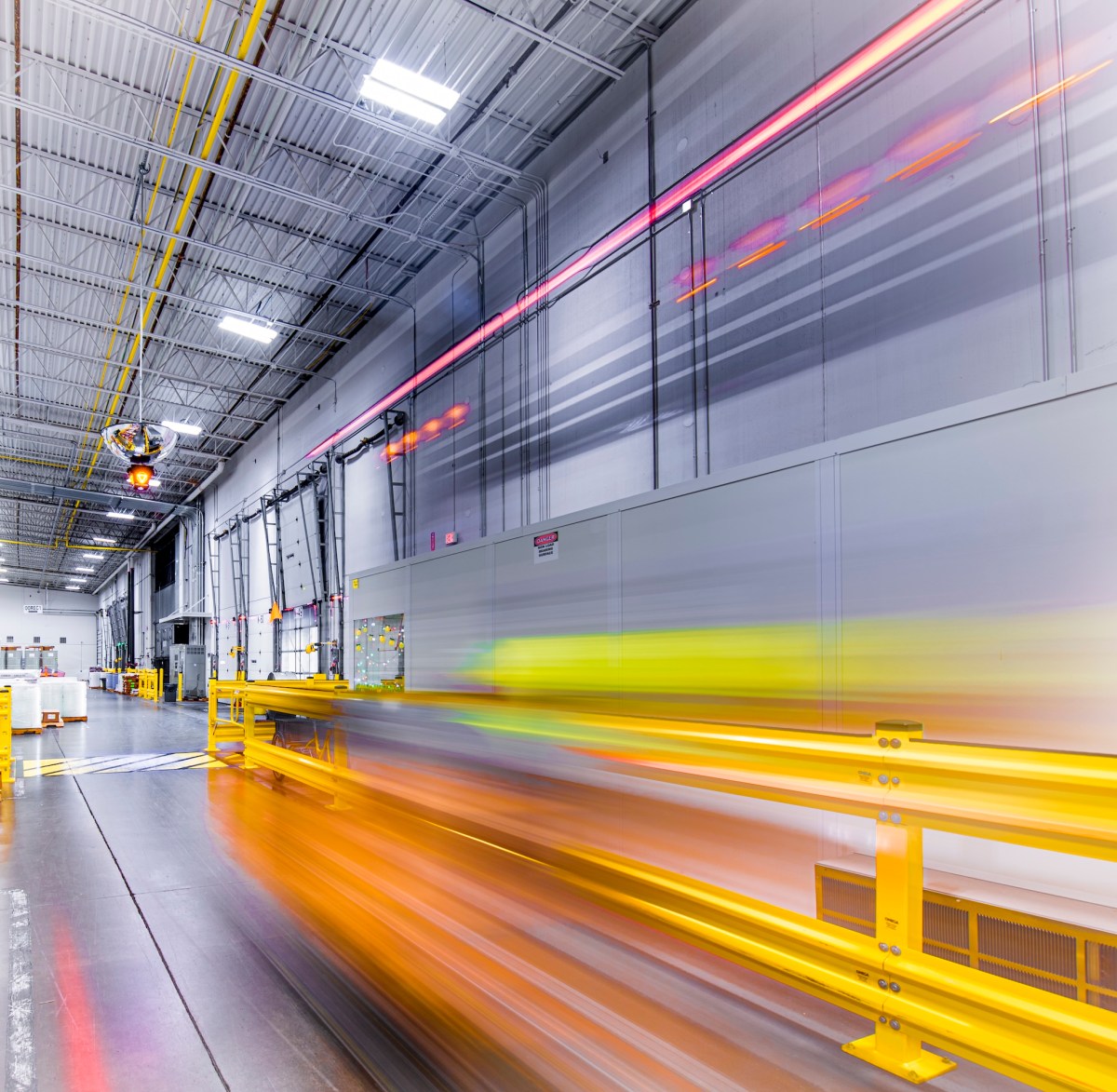
Industrial AI startup CVector built a brain and nervous system for big industry. Now, founders Richard Zhang and Tyler Ruggles are tasked with a bigger challenge: showing customers and investors how this AI-powered software layer translates to real savings on an industrial scale.
The New York-based startup has had some success following its pre-seed funding round last July. Its system is now running with real customers, including public utilities, advanced manufacturing facilities, and chemical producers. It’s given the duo more concrete examples of what problems they can solve — and money they can save — for their big industry clients.
“One of the core things we’re witnessing,” he said, is customers “really lack the tool to translate a small action, like turning on and off a valve, [into] did that just save me money?”
As a homeowner with bills to pay, it’s a bit unnerving to think about one nondescript valve making such a big difference in the bottom line of a company and its customers. But it’s examples like this that helped CVector reach a new milestone, as it has now closed a $5 million seed round, Zhang and Ruggles told TechCrunch.
The financing was led by Powerhouse Ventures and included a mix of venture and strategic backing, with participation from early-stage funds like Fusion Fund and Myriad Venture Partners, as well as Hitachi’s corporate venture arm.
With the funding round closed, CVector is talking a bit more about some of its first customers — and just how different they are.
“The joy of the last, say, six to eight months has been going to the industrial heartland, to all of these places that are just in the middle of nowhere, but have massive production plants that are either reinventing themselves or really transforming how they make decisions,” Zhang said in an interview.
Techcrunch event
San Francisco
|
October 13-15, 2026
One of those customers is a metals processing company based in Iowa called ATEK Metal Technologies, which makes aluminum castings for Harley-Davidson motorcycles, among other things. CVector is doing things like helping spot potential problems that could lead to equipment downtime, monitor the whole plant’s energy efficiency, and keep an eye on commodity prices that impact raw material cost.
“That is, to me, such a good example where this is really skilled labor, and they will need all the help they can get from for us, from the software side, from technology side, to really help that group of people transform, take the business to the next level so they can keep growing,” Zhang said.
Finding optimizations in older plants might seem like the most obvious path for a company like CVector. But it has also picked up startups as customers, too, including Ammobia, a materials science startup based in San Francisco that is working to lower the cost of making ammonia. And yet the work CVector is doing for Ammobia is surprisingly similar to what it’s doing for ATEK, Zhang said.
CVector is also growing. The company is up to 12 people, and it’s locked down its first physical office in the financial district in Manhattan. Zhang said he’s been attracting talent from the worlds of fintech and finance, especially hedge funds. The latter is ripe for recruiting, he said, since the people who work in the hedge fund industry are already pretty focused on using data to gain a financial edge.
“That’s the core of our sales pitch; it’s what we call ‘operational economics,’” Zhang said. “We position it to sit between the operation of the plant and the actual economics — the margin of how much you’re making money.”
Zhang still sees public utilities as a great place to apply CVector’s technology, though. (That’s where the valve example came from.) And he’s found that even these types of customers have become far more fluent in talking about the kinds of work CVector does.
“Tyler and I were just talking about how when we first started [the] company almost exactly a year ago, it was still like a taboo to talk about AI in general. There was a 50/50 chance if the customer would embrace AI or just kind of discredit you, right?” he said. “But now, over the especially last six months, everyone is asking for more AI-native solutions, even when sometimes the ROI calculation might not be clear. This kind of adoption craze is real.”
Ruggles said that’s in large part because what CVector does ultimately comes down to one thing: money. And with so much uncertainty in the world, managing costs has only gotten harder.
“We’re at this time when companies are really intimately worried about their supply chain and the costs and variability there, and being able to kind of layer AI on top [to make an] economic model of a facility, it’s really resonated with a lot of customers, whether it’s old and industrial in the heartland, or whether it’s new energy producers who are trying to do new and novel things,” he said.
Tech
Can an Apple lawsuit derail OpenAI’s hardware plans?

Apple recently filed a trade secrets lawsuit against OpenAI, accusing the AI company of a pattern of misconduct aimed at getting current and former Apple employees to share confidential information. (In response, OpenAI said it is “not aware of any evidence that this complaint has merit.”)
On the latest episode of TechCrunch’s Equity podcast, Kirsten Korosec, Sean O’Kane, and I debated whether this lawsuit will cast a shadow over OpenAI’s much-discussed plans to get into the hardware business (starting with a mobile smart speaker) and go public.
“Even setting aside whether or not the court grants any kind of injunctive relief or any kind of restraining order over what OpenAI is doing, it just naturally can lead to that sort of situation where it’s going to cause some delays in what OpenAI is working on,” Sean suggested. “Which I’m sure was probably part of the reasoning behind Apple doing this. They don’t do this stuff willy nilly.”
With all those plans on the line, will OpenAI try to settle this as quickly as possible, or did it learn from its recent courtroom victory against Elon Musk that it can endure the cost and embarrassment of a trial? Kirsten, at least, predicts the latter.
Keep reading for a preview of our conversation, edited for length and clarity.
Kirsten: Sean, how do you feel about Sam Altman listening to you with a little device maybe in your pocket?
Sean: I’m good. Maybe that’s predictable, but I’m good. No thanks.
We’ll get into it, I’m sure, but this is allegedly the first product that OpenAI has been working on in its hardware division with Jony Ive and company. They’ve been really coy ever since that weird video they put out last year of them sitting at that coffee shop or bar in San Francisco and sort of talking very vaguely about hardware and legacy devices, meaning laptops and phones. And so if this is the direction they’re headed in, all power to people who want to have somebody like that always listening to them. This is not going to be for me.
Anthony: Part of what we have to remember about those kinds of devices is also that, depending on how mobile it is, it’s not just listening to you, it’s listening to the people around you. I might be fine with it — I’m not fine with it, but let’s say I was — but then if we met up in-person at Disrupt, then suddenly it might be listening to all of us.
There are all kinds of social norms that are going to have to be renegotiated if these things become widespread. I think we should make fun of and criticize people who record other people without consent.
Kirsten: Well, I bring up the device that has been speculated about for a really long time, and we’ll see what it really ends up being once it’s officially introduced, but it’s important in the context of this lawsuit that Apple filed last Friday.
It was the biggest news of the week, certainly, and this is a trade secret lawsuit. It has some pretty wild allegations and we should very much emphasize these are allegations that have been filed in a complaint by Apple. But what it is accusing OpenAI of is a pattern of misconduct at the highest levels, specifically directed towards OpenAI employees who used to work at Apple. And in fact they’ve named the chief hardware officer Tang Tan in this lawsuit.
This is all important because Apple is accusing OpenAI of essentially stealing their trade secrets, but in the context of that, this could be then used for a competing hardware product. I’m wondering if maybe we don’t get into whether this lawsuit has merits, because we haven’t gone through full discovery, but what are your initial impressions of the lawsuit aside from the fact that wow, this is going to be entertaining?
Sean: Two things. One, this is a pretty big risk potentially to whatever it is OpenAI is working on. Even setting aside whether or not the court grants any kind of injunctive relief or any kind of restraining order over what OpenAI is doing, it just naturally can lead to that sort of situation where it’s going to cause some delays in what OpenAI is working on, which I’m sure was probably part of the reasoning behind Apple doing this. They don’t do this stuff willy nilly.
The other is that we think that OpenAI is — we know that they’ve filed confidentially for an IPO. We think it might happen as early as the end of this year, or early next year, if you believe Sam Altman’s cautious language around the IPO. And this just raises a whole bunch of questions around that because, on the one hand, we think their business right now is probably overwhelmingly the software; they’re not really factoring in any hardware business into that picture at the moment.
They’re about to go to the markets and they’re going to be pitching bankers and investors on where they think their addressable market should be, and if they have a big amount of that pegged to a potential hardware division and hardware products, this could be a huge risk to that and changes a lot of the calculus of sort of how the IPO gets priced. So that’s where my head’s at.
Anthony: One [allegation] that I assume that Apple must have pretty solid numbers on is, they said more than 400 Apple employees now work at OpenAI. Granted, both of them are very large companies with many thousands or tens of thousands of employees. So as a percentage, it’s not necessarily huge. But that seems like a lot of people and a pretty serious talent drain.
And the other thing I’m wondering is related to Sean’s point. With the context of the potential IPO, how much damage did OpenAI ultimately take from a marketing and brand perspective from the trial it already went through? That it seemed to basically win, but there was a lot of not-terrible-but-kind-of-embarrassing dirty laundry that came out in the testimony. To what extent are they just like, “We do not want to go through that again”? Or did they take the lesson of, “Hey, we went through it and we survived and we’ll be okay if we have to do another trial with Apple”?
Kirsten: I fully predict the latter, by the way.
When you purchase through links in our articles, we may earn a small commission. This doesn’t affect our editorial independence.
Tech
What to watch for after Jensen Huang’s Japan visit
Nvidia’s chief Jensen Huang spent two days — July 15 and 16 — in Tokyo, courting Japan’s industrial and chip-supply elite, weeks after a keynote in Taiwan, and months after a visit to South Korea. He left with deals spanning Japan’s entire tech ecosystem: a national AI factory, partnerships with the country’s leading robotics companies, and agreements with the chip-material suppliers powering Nvidia’s next generation of AI chips. His message was clear. Nvidia is targeting Japan’s factory floor, and many of the country’s biggest manufacturers are joining in. AI’s next chapter, Huang said, belongs to factory floors, robots, and machines, and he wants Japan to build it.
Thirty years ago, a $5 million Sega investment helped keep a near-bankrupt Nvidia afloat; today, Nvidia and Japan’s industrial giants need each other again — this time to build the physical-AI era, starting with these three projects:
Noetra — Japan’s sovereign-AI play. The country doesn’t want to run its factories and robots on American or Chinese AI. So, the government pulled together roughly 44 domestic firms, with SoftBank, Sony, NEC, and Honda at the core, to build its own AI for robots, vehicles, and factory floors. Tokyo is committing up to 1 trillion yen ($6.2 billion) over five years, a bet on homegrown “physical AI,” foundation models built to run machines. Japan wants to own the software brain. The hardware to build it, though, still comes from Nvidia. The U.S. chip giant is building “a Vera Rubin AI factory,” a massive data center packed with its next-generation chips, expected to launch in 2028, with 13,750 Vera CPUs and 27,500 Rubin GPUs, delivering 140 megawatts. Noetra will oversee the effort, with plans to build the data center. Noetra’s plan runs in three stages: a reasoning model heavy on Japanese-language skills starting in fiscal 2026; an omni-modal version handling text, images, video, and audio by 2028; and “Real-world Native AI” built to run robots by 2030, released to outside Noetra developers in phases.
The robotics coalition — Japan’s industrial giants line up behind Cosmos. Nvidia is targeting Japan’s factory floor, and many of the country’s top robotics and manufacturing players are signing on. Fanuc, Yaskawa, Kawasaki Heavy, Fujitsu, Hitachi, NEC, Sony, SoftBank, Kubota, and robotics group AIRoA say they plan to build on Nvidia’s Cosmos models, an open-model effort Nvidia started in May with a handful of global AI labs. In Tokyo, Nvidia gave them a reason to commit, unveiling Cosmos 3 Edge, a version of the model that runs on its Jetson Thor chips inside the machines themselves. Some are already testing a shared control system; others, like Honda R&D and Omron, are building on the tools now. “The next frontier of AI is in the physical world, and this is a once-in-a-generation opportunity for Japan,” Huang said in the company’s statement. “Japan invented modern manufacturing. Now, it has the opportunity to reinvent it for the age of intelligent industries.”
Toyota — cars and physical AI. Toyota uses Nvidia chips across much of its stack. It committed its next-generation vehicles to Nvidia’s Drive platform at CES in January 2025; the newer work extends Nvidia into its manufacturing, where simulations are used to design production lines, into the software that runs its vehicles, and into systems that read road traffic. Toyota’s cars will run advanced driver assistance, which steers and brakes but still requires a driver, a more conservative approach than Waymo and Tesla, which are developing systems that rely less on a human driver.
Huang’s visit put physical AI at the center of Japan’s industrial strategy, and Tokyo is spending to back it. Facing a shrinking workforce, Japan wants 10 million AI-equipped robots across 18 sectors by 2040, backed by $65 billion in public and private physical-AI investment.
The longer game is bigger. Japan’s AI Robotics Strategy, released in March, aims to capture more than 30% of the global AI robotics market by 2040, a market Tokyo values at roughly ¥20 trillion, or about $133 billion. METI is funding a domestic foundation model to run the machines, and Noetra’s Nvidia-powered factory is where models of that scale, into the trillions of parameters, would be trained.
Underneath the industrial case is a sovereign one. As the U.S. and China pull ahead in large-scale AI, Tokyo wants its own data, its own compute, and less dependence on infrastructure it doesn’t control. Huang appeared on July 16 alongside trade minister Ryosei Akazawa at the government’s physical-AI launch, with Prime Minister Sanae Takaichi joining by video. The Takaichi administration has made AI and semiconductors the centerpiece of a growth plan chasing ¥370 trillion ($2.3 trillion) in public and private investment by 2040. Noetra’s factory — which Nvidia bills as “the world’s first national AI infrastructure” — is the clearest bet yet. Japan’s push for independence, at least for now, rests on American chips.
In two days, Huang sat across from nearly every name that matters in Japanese tech — the CEOs of Toyota, Fanuc, Yaskawa, Fujitsu, and Kawasaki over lunch, and dozens of supply-chain chiefs over skewers and whisky in a Kanda izakaya.
It’s the same playbook he ran weeks earlier — a homecoming keynote in Taiwan, fried chicken, and a 50,000-GPU deal in Seoul last fall. This time, it was Tokyo’s turn, with the robots, the supply chain, and the chips underneath.
When you purchase through links in our articles, we may earn a small commission. This doesn’t affect our editorial independence.
Tech
Netflix paid $587M for Ben Affleck’s AI filmmaking startup
In a new regulatory filing, Netflix revealed that it paid $587 million in cash for InterPositive, a startup co-founded by actor and director Ben Affleck.
The streaming company announced the acquisition in March, with a statement from Affleck saying he wanted to “protect the power of human creativity.” According to Affleck, InterPublic’s AI tools help filmmakers improve their footage in post-production, particularly when it comes to making up for “real-world production challenges such as missing shots, background replacements or incorrect lighting.”
At the time, Netflix announced that the entire InterPositive team would be joining the company, with Affleck joining as a senior advisor, but it didn’t disclose the financial terms of the deal. A subsequent report in Bloomberg suggested that the deal could be worth up to $600 million.
In its most recent earnings report, Netflix said that around 300 of its titles have already used generative AI.

FaZe Vegas won't be denied at CDL Championship grand final
IndyCar Series race at Nashville postponed to Monday


