
Entertainment
X-Men Star Embarrassed Himself In Front Of Celebrity Crush

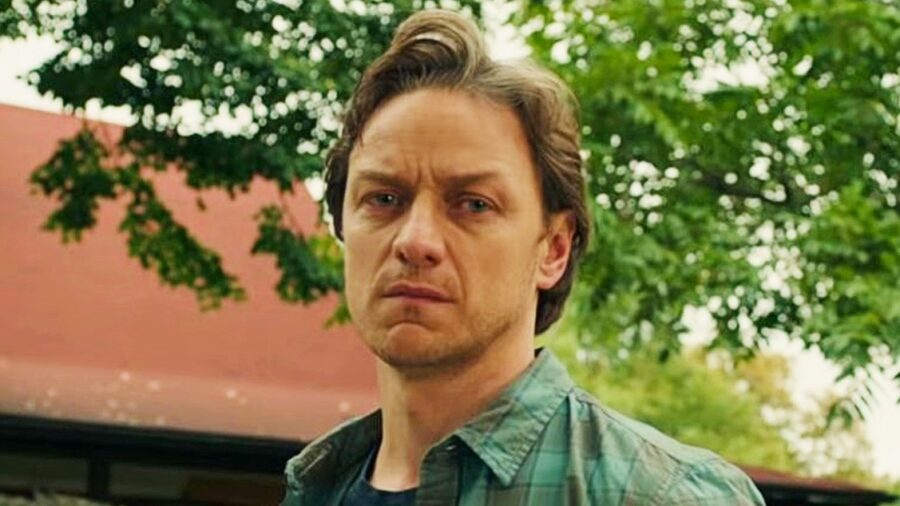
Still, he gave it the old college try on introducing himself to these people. According to James McAvoy, he tried to explain his deal as an aspiring actor, telling them “Hey, what’s up, I’m new in town.”
His Friends crush got a special greeting, though it was so dorky and obvious that McAvoy regrets it to this day. Faced with his longtime screen fantasy, all he could blurt out was “So you’re Jennifer Aniston and you’re in Friends.”
Entertainment
The Daily Show mocks Ivanka Trumps island purchase

A lot of people may be struggling with the cost of living at the moment, but Ivanka Trump and Jared Kushner are rolling in it. The couple recently announced that they’re developing a private island in the Mediterranean, and The Daily Show‘s Michael Kosta had thoughts.
“For those of you who are thinking, ‘hey, before buying a private island shouldn’t billionaires maybe read the room,’ what you don’t understand is the island doesn’t have rooms yet. They can’t lay the foundations for those rooms until they’ve burned down all those stupid trees, OK?” says the host in the clip above, before going on to play a clip of the U.S. president’s daughter speaking about the project with podcaster David Senra.
Meet The Mashable 101: Our list of the content creators shaping the internet today
“It feels more like a challenge than anything else,” says Trump. “It feels like the culmination of all of my experience in real estate, all of my travel…a lot of reflection on how I want to live, how I think people increasingly are wanting to live, and trying to really build something that’s a tangible manifestation of that.”
“Of course, ‘a tangible manifestation’ of the way people— come on lady, you’re rich, and you bought an island, just say that!” yells Kosta. “Not everything has to be a deep, spiritual journey, you know?”
Want more of the best of late night? Sign up for Mashable’s Top Stories newsletter.
Entertainment
The Sonos Beam Gen 2 is over $100 off right now at Amazon ahead of Prime Day
SAVE OVER $100: As of June 3, the Sonos Beam Gen 2 is marked down to $369 at Amazon. This is $130 off its full price of $499.
$369
at Amazon
$499
Save $130
If you spend a lot of time in front of your TV, a soundbar is a must-have for your setup to boost your sound system. While some come with hefty price tags, the good news is that Amazon already has excellent deals on select models ahead of Prime Day. The Sonos Beam Gen 2 is one of them, which has had $130 slashed off its price tag.
As of June 3, the Sonos Beam Gen 2 soundbar in black has been marked down from $499 to $369 at Amazon, which is a pretty solid price cut. Its lowest-ever price at the retailer may have been $349, according to price tracker camelcamelcamel, but that’s just a $20 difference. It’s certainly still worth grabbing at this price, and we think it’s one worth grabbing in general.
Mashable Deals
When it comes to our top picks for soundbars, the Sonos Beam Gen 2 lands as our ‘More Affordable Sonos Pick’ in our roundup of the best soundbars. This is because “it offers impressive value for the money.” It’s a soundbar that’s “incredibly easy to set up, and because it can sync with your other Sonos products, it’s easy to build a genuine home theater surround sound system.”
Speaking from experience, I definitely think the Sonos Beam Gen 2 is worth having for your TV. Whether I’m watching movies, shows, or playing games, it delivers crisp, clear sound so I can catch every detail on screen. I’ve also paired it with two Sonos Era 100 speakers to create a surround-sound setup, and the good news is those are on sale at Amazon right now as well. It’s the perfect time to scoop everything up for an audio upgrade.
Mashable Deals
Don’t miss out on this chance to save on the Sonos Beam Gen 2 at Amazon.
Want to learn more about getting the best out of your tech? Sign up for Mashable’s Top Stories and Deals newsletters today.
Entertainment
The Controversial, R-Rated Sci-Fi Thriller That’s Better Than The Book
By Joshua Tyler
| Published

In 2006, the Wachowskis, the minds behind The Matrix, poured the proceeds of their success into a lie. A lie they hoped would reveal the truth.
At first, it seemed to work. People bought tickets, critics liked it, and there was hope that their idea might lead to change on a significant scale. Now, 20 years later, the exact opposite has happened. The dark future their movie predicted is closer than ever.
This is why V For Vendetta failed.
V For Vendetta Was a Conventional Success

By any conventional measure, V for Vendetta was not a failure; it was a moderate success. It got generally positive reviews, performed solidly at the box office, and more than made its budget back.
But V for Vendetta isn’t a conventional film. So before we determine why it failed, let’s define what V for Vendetta is.
V’s Truth And His Vendetta

Based on the same-named comic series written in 1982 by Alan Moore and David Lloyd, V for Vendetta tells the tale of a near-future England run by an oppressive government and a man, known only as V (Hugo Weaving), who sets out to destroy it. V is a terrorist, and he achieves his goals by murder, subterfuge, and blowing things up. He bursts onto the scene clad in dark clothes, hidden behind a Guy Fawkes mask, and spouting dialogue so complex and full of high-dollar words that it’s nearly another language.
While skulking London’s deserted, under-curfew streets, he rescues a waifish girl accosted by Fingermen, the government’s assault-hungry secret police. The girl is Evey (Natalie Portman), and it’s the 5th of November, a day the people of Britain will remember.

V takes Evey under his wing as he embarks upon a strategy of governmental destruction. He’s a terrorist, but he’s not terrorizing the people. Instead, his goal is to awaken and empower them, while striking fear into the heart of England’s totalitarian government. “If you want to see who is responsible, look no further than a mirror,” he tells the country’s citizens. “I understand, you were afraid,” he says by way of forgiving them.
It’s the people who put Britain’s corrupt, hate-driven government in power, and it’s the people who must stop it. “People should not be afraid of their governments,” pronounces V, “governments should be afraid of their people.”

V for Vendetta is a visually rich, dark, and resonant film; one that uses style to convey substance under the guise of pure entertainment. The Wachowski brothers’ script is a faithful adaptation of its source material, tweaked just enough to update it and properly translate it to the screen.
Is the movie political? Yes, but not necessarily in a way specific to any modern political party. It was, after all, written in 1982. These are the same political paradoxes that have been plaguing man for centuries. If you’re British, you’ll almost certainly find a way to apply it to Keir Starmer or Tony Blair, but that’s only because the film’s themes are universal.

Hugo Weaving is incredible as V, acting underneath a stiff, somewhat silly mask that completely covers his face, his eyes, or anything else he might use to convey the slightest emotion. Yet somehow, V is the film’s most passionate, powerful character.
Hugo uses his voice and physicality to convey that, to bring an awkward, faceless creation to electrifying life. V calls himself an idea, and with Weaving playing him, he’s a very powerful idea.
But Natalie Portman’s Evey becomes the real heart of the movie. V is an unstoppable force; Evey is a real person, caught up in his deadly rebellion. Her conversations with V, not the movie’s one or two action bits, are the driving force of the Wachowskis’ script. Evey resists V’s crusade against oppression; her mind rebels at what he says out of fear and self-preservation. So will you.
V For Vendetta’s Forbidden Message

Referencing the still unseen film back in the days before it was released, one member of a politically minded film forum was quick to declare: “You can’t make a movie about a terrorist now without endorsing bin Laden.” It’s that mindset that makes V for Vendetta so unsettling.
Sometimes, it almost feels like you’re watching something forbidden, like you’re seeing something you shouldn’t be allowed to see. It’s shocking that a movie like this ever actually got made. It’s even more unbelievable that a major Hollywood studio made it. Would the Wachowskis have been allowed to make it if they were making it now? I doubt it.
It’s fun to accuse Hollywood of excessive activism. Most of the modern message-pushing they do isn’t bravery; it’s adopting a trend and claiming to be a rebel. Not so with V for Vendetta. It’s a purposefully uncomfortable film, one that will affect different people differently depending on what you bring in with you.

Yes, V for Vendetta is rebellious and risky, subversive and dangerous. But it’s not cynical. V’s naïve take on the world is one that believes in the basic strength and goodness of people as strongly as it believes in the intrinsic corruptness of big government. It’s a viewpoint that almost certainly has no basis in reality, but that’s alright.
What makes the film great is that you’re not asked to subscribe to its philosophy, only think about it and take note. It’s not a call to rise up against your rulers, but a warning about the way fear can be used to give a person or organization too much power. It’s an old lesson, but one that bears frequent repeating.
Why V For Vendetta Failed

“By the power of truth, I, while living, have conquered the universe.” – V’s personal motto
V for Vendetta is an idea. An idea’s success or failure must be measured by its impact on the world around it. V for Vendetta had none.
The movie planted a few quotes in the minds of those who saw it. People love repeating that “governments should be afraid of their people” one. But at no point did V for Vendetta cause anything to change.

By any measure, governments have only grown more powerful and less afraid of their people since 2006. In response, people have rushed to hand off even more power to centralized authority figures, citing safety, equity, or some other concern as justification.
Had V for Vendetta flopped and become a cult classic, people would be whispering its words in secret late-night showings. Had it been a box-office juggernaut, it would have cemented its place as a permanent fixture in our culture. It did neither, so it fades away, taking not just its message, but the message of the comic on which it’s based, along with it.
V for Vendetta’s idea has been neutered, and mid-level success was the tool used to do it.

The Daily Show mocks Ivanka Trumps island purchase
The Sonos Beam Gen 2 is over $100 off right now at Amazon ahead of Prime Day


