
Tech
What you should know about the owners of US TikTok
ByteDance, TikTok’s Chinese parent company, recently established a separate American entity to run the app’s U.S. operations. This restructuring aims to separate U.S. TikTok from its Chinese parent, addressing concerns about data privacy and foreign control.
The move came after years of pressure from lawmakers, who feared the Chinese government’s potential access to Americans’ data. In 2024, Congress enacted a law, mandating that TikTok’s U.S. operations be separated from ByteDance.
Under the new structure, about 80% of the U.S. TikTok entity is owned by non-Chinese investors, with ByteDance keeping only a 19.9% share. The newly formed entity, “TikTok USDS Joint Venture LLC,” licenses TikTok’s recommendation algorithm from ByteDance and independently manages content moderation, and oversees data protection, algorithm security, and software controls.
The managing investor group consists of Oracle, the private equity firm Silver Lake, and the investment firm MGX. Each holds a 15% stake, totaling 45% of the U.S. business. Here’s what you should know about them.
Oracle
Oracle is a leading cloud computing and database firm that collaborates with top companies, such as OpenAI. Oracle previously attempted to acquire TikTok and already provides cloud infrastructure for the app, managing its U.S. user data.
Under the new deal, Oracle serves as the security partner, auditing TikTok’s compliance with U.S. security requirements, managing data storage, and overseeing updates to the content recommendation algorithm.
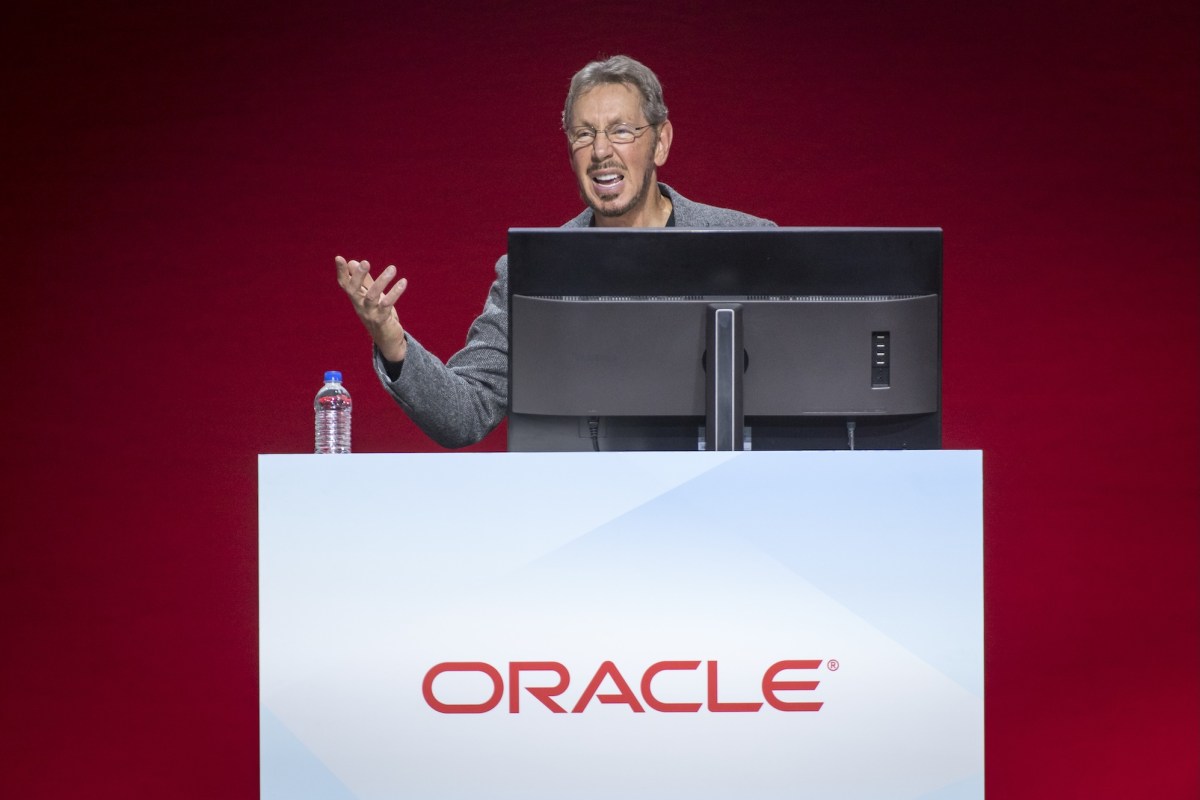
It’s important to note that Oracle co-founder Larry Ellison, now the company’s executive chairman and chief technology officer, is a prominent billionaire with known connections to President Trump.
Techcrunch event
San Francisco
|
October 13-15, 2026
MGX
MGX is an AI-focused investment firm based in the United Arab Emirates, which invests in semiconductors and data centers. The firm was created by Mubadala (Abu Dhabi’s sovereign wealth fund) and G42, an Emirati AI company.
MGX’s stake in U.S. TikTok could give the firm influence over key decisions shaping TikTok’s AI direction. The firm already backs Elon Musk’s xAI, Anthropic, and OpenAI, and contributed to a $100 billion AI data center initiative announced by President Trump, in which Oracle is participating as well.
It’s also worth pointing out that MGX has partnerships with Microsoft and BlackRock.
Silver Lake
Silver Lake, a leading U.S. private equity firm, has long invested heavily in technology companies, including Airbnb, Twitter, Dell Technologies, Tesla, and Waymo. Its role in U.S. TikTok is primarily financial and strategic, offering capital and expertise to help shape the platform’s direction.
Notably, Silver Lake has collaborated with MGX in the past, including during the acquisition of a majority stake in the software and chip company Altera last year. Additionally, Silver Lake has invested in G42 since 2021.
Other investors
- Dell Family Office: Michael Dell’s investment firm.
- Vastmere Strategic Investments: A firm affiliated with Susquehanna International Group (SIG), which is owned by billionaire Jeff Yass.
- Alpha Wave Partners: A global investment firm involved with notable companies, including SpaceX and Klarna.
- Virgo LI: The investment arm associated with Israeli tech investor Yuri Milner, who was an early backer of Facebook and Twitter.
- NJJ Capital: The family office of Xavier Niel, a French billionaire businessman who founded telecommunications company Iliad.
- Revolution: The venture capital firm founded by AOL co-founder Steve Case.
- Merritt Way: Managed by partners of Dragoneer Investment Group, a San Francisco-based investment firm.
- Via Nova: An affiliate of General Atlantic.
Tech
Ozlo’s Sleepbuds 2 build on Bose’s sleep earbud legacy

Ozlo, the sleep earbuds startup from former Bose engineers, is launching its next device. On Tuesday, the company unveiled Sleepbuds 2, an updated version of its original product that tackles key areas of improvement, including battery life, connectivity, and sound quality. The new model costs $279, a $30 increase from the original Sleepbuds, which were $249 last month with an MSRP of $349.
The launch marks Ozlo’s first major update since the release of its original device and reflects the company’s evolution from a continuation of Bose’s brand into its own sleep platform.

The original Sleepbuds, launched in late 2024, were meant to fill the hole left by Bose’s departure from the category the year prior. Ozlo’s co-founders, N.B. Patil, Brian Mulcahey, and Charlie Taylor, were Bose veterans who had been deeply involved with the Sleepbuds program and saw the potential to continue the business. They acquired and licensed the Sleepbuds research and IP for their new company, Ozlo, making its first product essentially a continuation of Bose’s earlier efforts.
The initial earbuds, which now have more than 200,000 customers, were smaller and more low-profile than AirPods. This made them more comfortable to wear at night, especially for side sleepers. They also offered built-in sleep sounds, Bluetooth streaming, passive noise blocking, an in-ear alarm, sleep tracking, and other features.
The Sleepbuds 2 promise a range of improvements, including, most notably, 14 hours of battery life instead of roughly 10 hours. Plus, the charging case can now store enough power for two to three nights of use per charge and adds a button that lets users play a sleep sound or snooze the alarm without reaching for their phone.

The update also tackles one of customers’ biggest complaints: Bluetooth connectivity, which could be flaky, although software updates improved it over time. Ozlo claims the Sleepbuds 2 offer longer Bluetooth range, a more reliable connection, and dedicated pairing controls for faster setup. The improvements come from a redesigned antenna and extender, Ozlo said.
The audio system has also been updated with a built-in amplifier for better sound masking and improved sound quality. Personalized sound tuning is new, too, optimizing audio for specific use cases such as Spoken Word, Airplane mode, and Focus mode, in addition to a Balanced mode.

Another new feature is a Sleep Shield, which will block incoming calls, alerts, notifications, and Bluetooth audio streaming. This works if the user hasn’t already enabled their phone’s built-in sleep focus mode.
Ozlo’s sleep insights have expanded to include more details around sleep patterns. The biometrics in the buds monitor breathing and movement, while the case monitors room conditions, such as the sound levels, light, and temperature. This can help wearers learn which sleep environments lead to deeper, more restorative sleep, helping them improve their sleep over time.
The company outlined its plans to become a broader platform for sleep data during an interview with TechCrunch at the Consumer Electronics Show in January, including plans to use AI to better interpret users’ sleep patterns. It is also developing an AI “sleep buddy” with which users could chat about their sleep data.
To kick off the launch, Ozlo is offering a sleep mask and travel case with each purchase for a limited time. The $279 Sleepbuds 2 also ship with four pairs of silicone ear tips in different sizes, the charging case, and a USB-C cable.
As an aside, I purchased my own Ozlo Sleepbuds after reading initial reviews of the product and found them to be an effective tool for blocking out noise and streaming sounds and music, and far more comfortable than sleeping in my AirPods. They never fell out overnight, either.
However, I found that I prefer streaming from the Calm app instead of using Ozlo’s built-in sounds. (Apparently, I’m not alone: Ozlo and Calm partnered on a co-branded case last year that included a year’s subscription to Calm’s library of sleep sounds, stories, and other sleep experiences.)
I’m looking forward to trying the new Sleepbuds 2 to see if they’re worth the upgrade for an existing Sleepbuds owner like me.
When you purchase through links in our articles, we may earn a small commission. This doesn’t affect our editorial independence.
Tech
Sam Altman is ready to decelerate
OpenAI CEO Sam Altman says that it may be time to “pace” AI development so the world will be ready for it.
“We may have to pace the rate of AI development to give ourselves enough time for society to harden around some of these new capability levels,” he told Patrick O’Shaughnessy, the host of the Invest Like the Best podcast, while also “trying to figure out how we do that in a way that does not feel like regulatory capture for anyone and also does not feel like collusion among the frontier labs.”
Both OpenAI and Anthropic came out in support of a petition circulated by employees at the frontier labs, calling on the US government to “support an international effort to develop the technical and governance tools needed to deliberately pace the frontier of automated AI development.”
Altman has avoided signing on to past campaigns to slow AI progress, calling a 2023 open letter that proposed a similar slowdown “missing most technical nuance about where we need the pause.”
Apparently, he’s softened on the idea, thanks in part to the incident where one of OpenAI’s advanced models managed to break out of a secure computing environment and hack into Hugging Face, an online model database, using several zero-day exploits.
On the podcast, the OpenAI co-founder called it an “extremely sci-fi cyber incident…[t]his is the first security incident that I have felt very viscerally.”
OpenAI researchers have paused training on that model while they work out how to keep their sandbox secure. But Altman said that as models become more powerful, the need to “pace” their development could become key to safe deployment.
While model safety and alignment has always been a concern in the AI world, the arrival of Anthropic’s highly capable Mythos model earlier this year has turned hypotheticals into real-world problems.
However, the industry has a trust problem, and challenging economics that give major players an incentive to play up the dangers of their systems in ways that experts disagree about — for example, whether or not Anthropic’s Fable model should have been briefly banned from use or not. Similarly, when Kimi K3, a large, open-weight model built in China, was released, OpenAI head of strategic futures Dean W. Ball said that it threatened the economics of frontier labs, making it difficult to separate their safety concerns from their financial interest.
“I think a lot of the talk about safety concerns is well-founded, and then a lot of it is about people that just really, even if it’s slightly subconscious, want to concentrate power,” Altman mused, in what reads as a dig at his rival, Anthropic CEO Dario Amodei, who signed the petition. “I am terrified of a world where the very real fears of AI are used as a way to say, ‘Only this small group of people can have it because it’s too dangerous, and only they understand it, but don’t worry, like, they’re gonna make the right decisions for all of us.’ I don’t believe in that.”
Still, OpenAI has pushed back against efforts to develop government rules for AI models, instead preferring an industry-led approach where AI labs would create ostensibly independent organizations that would evaluate the security of models and the safety approach of their makers.
The challenge for both that approach to regulation and any efforts to slow AI development will be getting the various players in the industry on the same page, whether they are rival frontier labs in the U.S. or competitors in China.
This story was updated to include OpenAI and Anthropic’s support of the “Pacing the Frontier” petition.
When you purchase through links in our articles, we may earn a small commission. This doesn’t affect our editorial independence.
Tech
MCP startup Runlayer accuses Rippling of stealing its product idea
Runlayer, a startup that offers a secure Model Context Protocol gateway — a standard for letting AI models and agents securely pull in outside data and tools — has filed a lawsuit against HR software startup Rippling, according to the complaint seen by TechCrunch.
The lawsuit is a cautionary tale for anyone selling AI infrastructure to enterprise customers, especially to other tech companies, that increasingly have the engineering muscle to just build the thing themselves.
In the suit, Runlayer describes an extensive product trial conducted by Rippling as a prospective customer, during which the MCP startup shared everything from its product roadmap to its actual source code. The parties signed a mutual non-disclosure agreement and Rippling signed a product trial agreement with a clause that forbade it from copying Runlayer’s intellectual property or making derivative works, which is standard boilerplate in enterprise software trials.
Runlayer says in the complaint that Rippling’s evaluation involved “nearly a year of intensive engineering collaboration.” But in the end, the two could not agree on a price, so Runlayer ended the product trial.
Shortly after that, Runlayer alleges that a “Rippling insider” texted Runlayer founder and CEO Andrew Berman to inform him of “a project internally to build essentially a clone o[f] Runlayer … it’s almost a 1 to 1 copy of Runlayer.”
Runlayer claims in the suit that Rippling’s product must have been based on the startup’s intellectual property and therefore constitutes trade secret misappropriation, unfair competition, and breach of contract.
Rippling has confirmed to TechCrunch that it is indeed launching its own MCP gateway, though a spokesperson denies Runlayer’s allegations about misusing its IP.
“Runlayer’s panicked effort to avoid competition by fabricating claims is not an effective way to deal with its business failures. Rippling is launching a superior product for connecting AI tools to business data using only our proprietary information — we have every reason to win in this market,” a Rippling spokesperson tells TechCrunch.
Runlayer has retained white-shoe law firm Sullivan & Cromwell. That doesn’t mean Runlayer will, or even should, win this suit, but the same way a marquee VC lends a startup some credibility, a marquee law firm lends a lawsuit some credibility, at least optically.
The more interesting part about this suit is really the inside peek it provides at the trials and tribulations of selling complex AI infrastructure into the enterprise, particularly to other tech companies. Enterprise sales notoriously take a long time to close, often because they hinge on this kind of deep, hands-on trial.
MCP gateways in particular are getting crowded. Anthropic launched MCP as an open source protocol in November 2024. It’s now one of the basic building blocks of AI interoperability, giving models and agents a secure way to access external data sources and services. MCP gateway products add control, security, and other features, especially for managing agents, and the field has grown considerably more competitive since Runlayer launched its product in the middle of last year and raised a total of $42 million, including from Khosla Ventures and Felicis.
Even after an intense trial, an enterprise may simply opt to build the tool in-house. Both sides are stuck between a rock and a hard place.
When you purchase through links in our articles, we may earn a small commission. This doesn’t affect our editorial independence.

The Edit: J.Crew’s August Drop
Ozlo’s Sleepbuds 2 build on Bose’s sleep earbud legacy


