
Tech
Waymo reportedly raising a $16B funding round
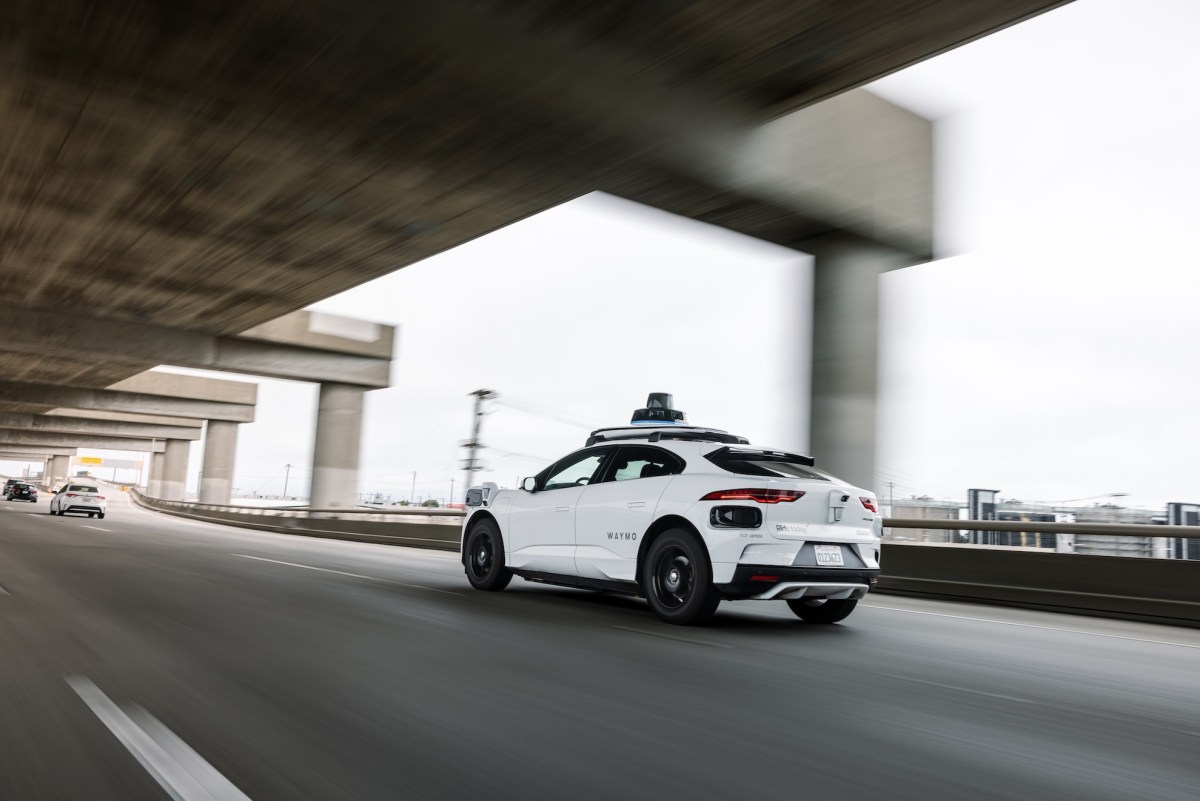
Waymo has nearly finalized a new $16 billion funding round that will value the robotaxi company at $110 billion, according to the Financial Times.
More than three-fourths of that funding will reportedly come from a source close to home — Alphabet, where Waymo is a subsidiary. (The company was incubated as part of Alphabet’s “moonshot factory” X.)
The FT reports that Waymo is bringing on new investors Dragoneer, Sequoia Capital, and DST Global, with existing backers Andreessen Horowitz and Abu Dhabi sovereign fund Mubadala also participating in the round.
When contacted by TechCrunch, a company spokesperson said in a statement, “While we don’t comment on private financial matters, our trajectory is clear: with over 20 million trips completed, we are focused on the safety-led operational excellence and technological leadership required to meet the vast demand for autonomous mobility.”
The company is expanding quickly, including with a recent launch in Miami. That growth has come with some challenges, including a number of robotaxis that stalled at traffic lights during a widespread San Francisco blackout.
Waymo has more than $350 million in annual recurring revenue, according to the FT. The company last raised a $5.6 billion Series C in 2024, valuing the company at $45 billion.
Tech
Tesla brings its robotaxi service to Dallas and Houston

Tesla is expanding its robotaxi service to Dallas and Houston, according to a social media post from the company.
The post says simply that “Robotaxi is now rolling out in Dallas & Houston 🤠” and includes a 14-second video showing Tesla vehicles driving without human monitors or drivers in the front seat.
The company now offers robotaxi service in three cities, all of them in Texas, after launching in Austin last year and starting to offer rides without safety drivers in January 2026. In a February filing, Tesla said that its Austin robotaxis have been involved in 14 crashes since launch.
It also offers a more limited ride service with human drivers in the San Francisco Bay Area.
Tesla may not be running many vehicles in either of these new markets yet, with crowdsourced data on the Robotaxi Tracker website only registering a single vehicle in each city (compared to 46 active vehicles logged in Austin).
Tech
Netflix plans to add a vertical video feed, use AI for recommendations
Netflix is going to launch a TikTok-like vertical video feed within its apps this month, and plans to use AI broadly for content creation and recommendations, the company said on Thursday.
Netflix has been testing a vertical video feed since last year. The short video feature could aid users with discovering video podcasts, along with the current slate of shows and movies. The company is also leaning more into using AI for recommendations after launching a ChatGPT-powered search feature last year.
“We have been in personalization and recommendation for two decades, but we still see tremendous room to make it better by leveraging newer technologies,” Netflix co-CEO Gregory Peters said during the company’s first-quarter conference call. “Recommendation systems based on new model architectures not only improve current personalization but also let us iterate and improve more quickly — adding support for different content types much more efficiently.”
Co-CEO Ted Sarandos said he sees AI tools improving the entire content creation process. “In general, we expect GenAI to make content better; better tools, better processes […] It takes a great artist to make great art, and AI won’t change that. But AI will give those artists better tools to bring those visions to life,” he said.
Last month, Netflix bought Ben Affleck’s AI creation company InterPositive, which, Sarandos said, has garnered interest from creators.
“With our acquisition of InterPositive, we think it accelerates our GenAI capability because it is proprietary technology created specifically for filmmakers and filmmaking, different from other GenAI video applications. While our ownership of InterPositive is very new, we have generated interest with creators who have spent time with the tools, and we are seeing momentum build around adoption,” he noted.
Netflix also mentioned that it wants to use AI to improve its ad suite, and allow for new formats and customization to get better returns. The company expects to generate ad revenue of $3 billion this year.
Techcrunch event
San Francisco, CA
|
October 13-15, 2026
Netflix reported revenue of $12.25 billion in Q1 2026, up 16.2% year-year-year, and said profit jumped 83% to $5.28 billion. Alongside the first-quarter results, Netflix said its co-founder and chair, Reed Hastings, is leaving the company’s board this summer.
Notably, the company hiked subscription prices in the U.S. late last month, which could have a positive impact next quarter. The company said it ended 2025 with 325 million paying subscribers.
Tech
Bluesky confirms DDoS attack is cause of continued app outages
Bluesky’s website and app are still struggling on Friday after experiencing service interruptions that chief operating officer Rose Wang attributed to an ongoing cyberattack.
On Thursday evening, the social media company confirmed that a “sophisticated Distributed Denial-of-Service (DDoS) attack” was to blame for the issues, which had originally started on April 15 at around 8:40 p.m. ET.
Distributed denial-of-service attacks often involve pummeling apps or websites with large amounts of junk web traffic aimed at overloading and knocking its servers offline. While these kinds of cyberattacks do not involve intrusions into a company’s systems, these incidents can still be disruptive to both the company and its users.
In a post on the Bluesky account, the company shared the cause of the problem and noted that the attack was “impacting our operations, with users experiencing intermittent interruptions in service for their feeds, notifications, threads, and search.”
Bluesky said that it has not seen any evidence of unauthorized access to private data, however.
When originally reached for comment on Thursday, Bluesky only pointed us to the status.bsky.app page and account (@status.bsky.app) for updates. The company did not provide an estimated time for a fix.
The network’s status page is currently not working, however.
Bluesky said it will provide another update on the status of the attack and its mitigation by 1 p.m. ET on Friday.

Because the outages are intermittent, the Bluesky site and app will load at times, slowly, and other times will display error messages.
For instance, switching to a particular feed within the app could display a message that says, “This feed is currently receiving high traffic and is temporarily unavailable. Please try again later. Message from server: Rate Limit Exceeded.”

Popular feeds like Discover or the official Bluesky Team’s feed often see this problem, even as users’ own personal feeds are functional.
Other times, like when trying to visit a user’s profile, the site will display an error message, forcing you to refresh and try again.

Bluesky protocol engineer Bryan Newbold remarked around 3:46 a.m. ET on Wednesday, “oof, our services are getting hit pretty hard tonight.”
Notably, the service disruptions are impacting Bluesky, but other communities, like Blacksky, that run their own infrastructure on the underlying protocol that powers the decentralized social network, are still functioning.
Blacksky’s team told TechCrunch that the Bluesky outage has led to a “significant spike” in migration requests from Bluesky users over the past 12 hours, as users, devs, and other ATmosphere founders like Sebastian at Eurosky have been promoting its services.

It was clear that Bluesky’s team was in a hectic state this week while facing these issues, as one message on its status page had a typo: ” investigating an incident with service in one of our reginos [sic].”


Ryan Gosling’s R-Rated Netflix Thriller With An MCU Budget Is Worth Its Weight In Shootouts
NBA roundup: Luke Kennard's 27 sparks Lakers past Rockets in Game 1


