
Entertainment
Unrated, Extremely Graphic Thriller Tries To Kill You But Can’t

By Robert Scucci
| Published

1978’s The Odd Job is a comedy of errors about a man who hires a janitor to kill him because he’s too much of a coward to end his own life. It’s a slapstick effort written by Graham Chapman that’s way funnier than its critical reputation suggests, and on one hand, I get it. It’s essentially the same gag repeated over and over again, with mixed results, landing if you’re a fan of the kind of irreverent humor that only somebody from the Monty Python comedy troupe could deliver with a wink and a nod.
Toying with a similar premise is 2014’s The Suicide Theory, which centers on a comparable setup but with wildly different results (namely, it’s not a comedy). In The Suicide Theory, we’re introduced to a contract killer hired by a man who no longer wants to live. The problem is that he’s given suicide the old college try on countless occasions leading up to this point and is convinced he’s invincible. While both films feature the same kind of contractual relationship in which one man wants to be eliminated from his mortal coil, The Suicide Theory is existentially heavy, focusing primarily on fate, free will, and how they’re constantly at odds with each other.
Steven And Percival’s Deadly Dynamic

The Suicide Theory wastes no time setting up its conflict when Steven (Steve Mouzakis) is tracked down by a desperate man named Percival (Leon Cain). Percival already looks worse for wear, with scars all over his face indicating that he wouldn’t be hiring a hitman if he hadn’t already tried to die, and failed miserably, countless times. Not even sure if Steven can successfully kill him, Percival hands over a large sum of cash and tells the killer that he doesn’t want to see it coming, and that since he believes he may be cursed, an attempt can only be made on his life if he looks legitimately happy.
Up to the challenge, but not one to believe Percival’s claims, Steven immediately shoots Percival in the chest three times upon making the arrangement, only for the man to wake up hours later in the hospital with no major injuries. Percival is further upset when he learns that the doctors found a massive tumor near one of the bullet wounds and were able to remove it while they were in there, meaning getting shot actually saved his life.

Fascinated by this project, Steven, who’s lost his passion for contract killing, keeps his promise and continues searching for new ways to execute Percival, none of which work. Steven, who’s been afraid of crossing streets ever since his wife was struck by a car and killed three years prior, can’t always chase Percival down due to his phobia, but has no qualms about hailing a taxi cab to help him cross the street if he needs to.
An Exploration Of Fate And Purpose
As we get to know the two principal players in The Suicide Theory, it becomes evident that they’re not so different. One man is a hardened, cold-hearted killer who’s lost his passion for the game, while the other is so deeply wounded that even multiple suicide attempts can’t put him out of his misery.

It’s almost as if he’s done something so horrible in life that his cosmic punishment is never being able to end it on his own terms. The two men become friends, if you could call it that, and come to realize they were supposed to meet each other, as if fate had been waiting for them. The reason their paths cross, when finally revealed, is the kind of gut punch that will make you wish you were watching The Odd Job instead, because it’s a brutal way to spend your time.
The Suicide Theory is not an easy watch, but it’s a rewarding one. It’s an exploration of fate and destiny taken to its most morbid conclusion, and it’s not without a dark sense of humor. It’s not “haha” funny by any stretch, but every time Percival wakes up in the hospital wondering how he made it out alive this time, you can’t help but sport a wry smile because he’s trying everything he can to not wake up ever again. Steven’s odyssey is all about finding purpose; he wants to hang up his gun for good, but knows this last job is an important one. But it’s up to you, dear reader, to figure out why.


The Suicide Theory is currently streaming for free on Tubi.
Entertainment
Vin Diesel's Perfect, R-Rated Sci-Fi Thriller Is Finally Coming To Netflix

By Jonathan Klotz
| Published

Before The Fast and the Furious, before The Last Witch Hunter, Vin Diesel was able to create a franchise out of a low-budget sci-fi horror film with barely any plot, through sheer force of personality. His deep voice, ability to show no emotion, and action star physique helped turn his role as Riddick into a star-making performance. The 2000 sci-fi horror Pitch Black is coming to Netflix on June 1, and there’s never a bad time to remind yourself why Vin Diesel became a superstar.
Riddick Is Vin Diesel’s Best Character

No one thought Pitch Black would launch a franchise when it debuted in February 2000, the dumping ground for Hollywood studios, but that’s what happened. Diesel’s Riddick makes his first appearance as a prisoner onboard a doomed shuttle crash landing on a planet about to experience a total eclipse for the first time in 22 years. That’s relevant for two convenient reasons: one, the massive horde of flying predators destroyed by sunlight, and two, Riddick had a prison doctor operate on his eyes giving him “shine,” and now he can see in the dark. Relying on a wanted criminal and known killer for salvation are the various miners (including Farscape’s Claudia Black), pilgrims, and tourists also onboard the shuttle. It’s a very simple plot but it works.
The simplicity plays to Vin Diesel’s strengths as an actor, namely, his physical presence or as the kids say, aura farming, and not his emoting. Ironically, showing the taciturn Riddick fighting against the feelings of compassion and kindness is Diesel’s best acting work. He turns the one-note tough guy character into a star-making performance with a few grunts and a single kind gesture.
Keep It Simple Stupid

Simple doesn’t always mean bad. Pitch Black wisely uses the darkness to obscure the deadly nocturnal predators as much as possible in both a budget saving move, and one that means the tension cranks up without anything actually happening on screen. Audiences loved it, earning the film over $50 million during its theatrical run before becoming a best-selling DVD release. It did so well, director and writer David Twohy reunited with Diesel for the sequel, The Chronicles of Riddick, which ditched the survival horror elements of the original film and replaced them with deep lore, dozens of characters, multiple deep space factions, and Dame Judi Dench as an Air Elemental.
The third film in the franchise, Riddick, went back to the simple survival story of Pitch Black, and again, it was a hit, reinforcing that Diesel works best in small scale films. You might be thinking, The Fast and The Furious isn’t small scale, but think back, and the entire plot centered on stealing VCRs. That’s grounded and realistic compared to what came next. Fans of Diesel’s sci-fi franchise can only hope that the upcoming fourth film, Furya, is more Pitch Black and less Chronicles of Riddick.

All three of the Riddick films are now available on Netflix. If you haven’t watched Pitch Black in decades, it’s a great time to give it a rewatch. In retrospect, the tight plot and single setting is quaint. In a good way. There was a time when an original sci-fi film with no star power behind it could go wide in theaters, earn millions of dollars, and create a new fanbase out of thin air.
Starting on June 1, you can catch Pitch Black on Netflix.
Entertainment
New Star Wars Movie Failed By Solving Marvel’s Biggest Problem
By Chris Snellgrove
| Published

Right now, it’s fair to say that Disney is a victim of its own success. The House of Mouse decided to get into the streaming game with Disney+, and they made this new platform the home of all things Marvel and Star Wars. They succeeded in containing the world’s two biggest intellectual properties under one roof, but this came at a cost. The MCU began to suffer under its own weight, and fans began to resent many of the new shows on Disney+. The most common complaint is that most of these series felt like annoying “homework” they had to watch just to understand the next big Marvel movie.
Is that criticism fair? That’s debatable. While some Marvel shows on Disney+ stand alone, some are basically required viewing if you want to follow along with the newest films. However, when watching The Mandalorian and Grogu, I couldn’t help but feel like movie writer Dave Filoni was trying to avoid comparisons to Marvel by creating a movie that required no homework whatsoever. He succeeded in making a movie that fans could enjoy even if they’ve ignored Star Wars for the last two decades. This approach backfired, though. While the latest Star Wars is amazingly accessible, it’s so disconnected from the franchise that it feels completely meaningless.
Way Too Much Homework
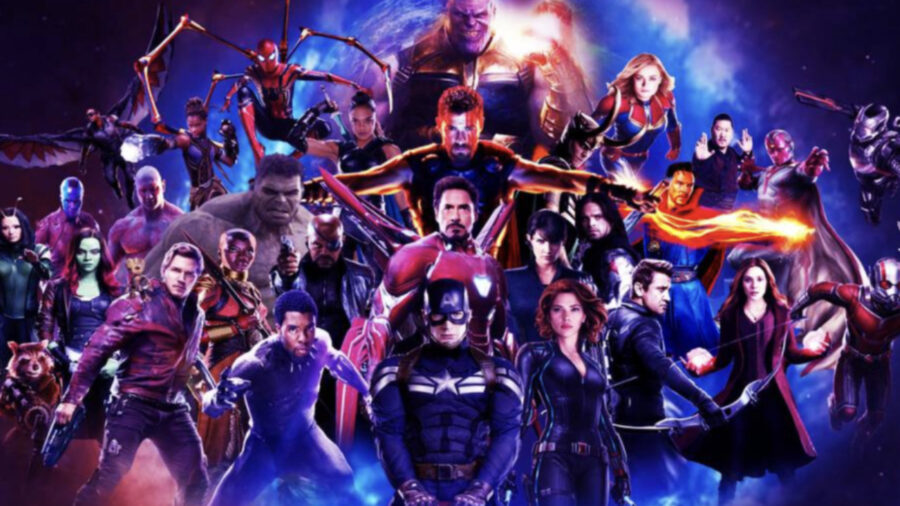
Complaints about Marvel TV shows feeling like homework are tied to broader debates about what, exactly, a movie should be. Many like the idea of a film as being a self-contained unit of entertainment unto itself. This is one (admittedly, of many) problem that certain Star Wars fans had with the Prequel Trilogy and the Sequel Trilogy: interesting characters like Count Dooku and Snoke are placed onscreen with no real introduction or fanfare. The assumption made by those in charge of Star Wars (George Lucas and, later, Disney) is that fans could simply get these characters’ backstories in various books and comics and didn’t need to see it onscreen.
The Marvel Cinematic Universe took this idea and made it much, much worse. You had to watch entire films (like the solo Iron Man, Thor, and Captain America movies) to really understand big team-ups like The Avengers. Later, Disney+ became home to shows you had to watch ahead of movies. Doctor Strange and the Multiverse of Madness makes no sense without watching WandaVision, for example, and The Marvels makes no sense without watching Ms. Marvel. This led to widespread fan complaints that Disney had basically assigned homework and that we’d need to watch eight hours of a TV show just to understand a movie.
No Homework (And No Meaning)

Initially, this wasn’t really a problem with Star Wars because The Rise of Skywalker was so bad that we went seven years before seeing a new film in the franchise. That meant that various Disney+ shows in a galaxy far, far away could mostly stand on their own. But The Mandalorian and Grogu finally brought Star Wars back to theaters, and we’ll be getting more franchise films (like Starfighter) in the coming years. Mandalorian and Grogu writer and new Lucasfilm President Dave Filoni seemingly tried to avoid the homework problem by making a movie that requires almost no prior Star Wars viewing whatsoever, a decision that became something of a double-edged sword.
On one hand, Filoni made The Mandalorian and Grogu the most accessible Star Wars film since A New Hope. If someone only vaguely remembers an episode or two of The Mandalorian Season 1, they can follow along. They know the title characters, and Din Djarin even gets a new version of his old ship back. Even if you’re a Star Wars fan who never watched the show at all, it’s easy to follow along with the plot. The Boba Fett-looking man and his Baby Yoda sidekick are the good guys, the Stormtroopers are the bad guys, and all you have to do is turn your brain off and watch.
Two Hours Of Your Life You’ll Never Get Back
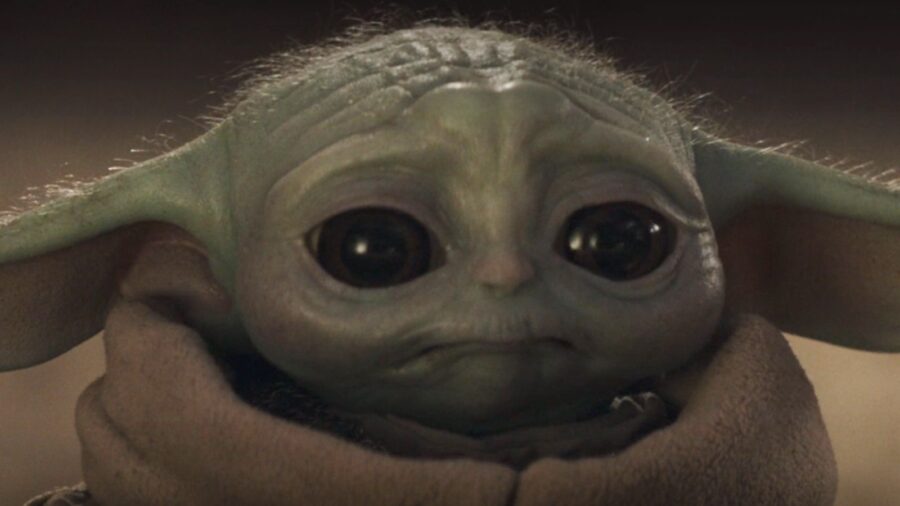
On the other hand, Filoni’s ultra-accessible writing is a big part of why The Mandalorian and Grogu failed. The movie doesn’t touch on or resolve any of the major plot points from The Mandalorian or advance Din Djarin or Grogu’s characters in any meaningful way. It’s such a disposable plot that if The Mandalorian ever gets a Season 4, you could skip the film entirely before watching the new season. If the show doesn’t get another season, though, this movie is the worst kind of finale for these characters because there are no significant payoffs to ongoing mysteries like Grogu’s past or Din Djarin’s future with the Mandalorians and the New Republic.
All of this underscores how cynical The Mandalorian and Grogu really is. Disney didn’t create this movie to provide an emotionally rewarding sendoff, and they obviously didn’t make it because the writers had a great story to tell. No, the House of Mouse just wanted to put Star Wars back in theaters with a film that would wash The Rise of Skywalker out of our mouths. The idea is to prime audiences for more Star Wars films in the coming years, but the effort backfired. If this is the best thing you can put onscreen today, why would anyone spend good money to see the crap you put onscreen tomorrow?
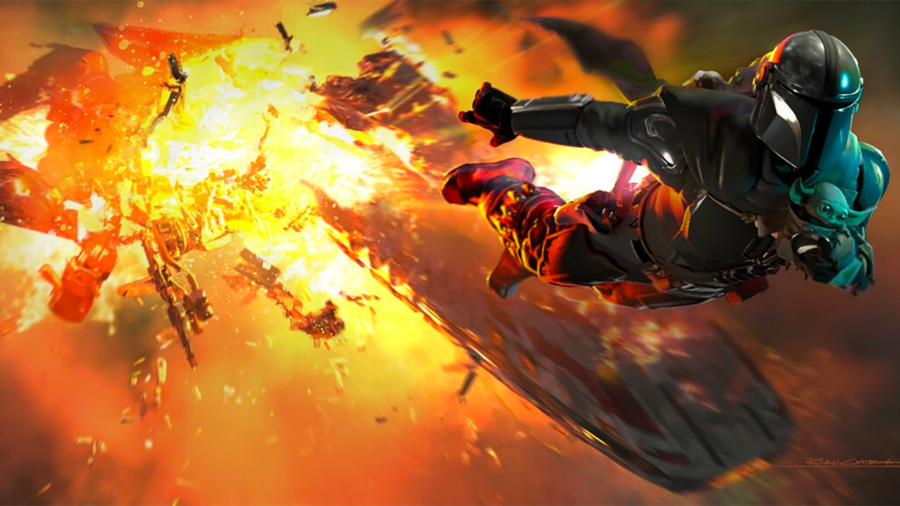
So, congrats, Dave Filoni (and cowriters Jon Favreau and Noah Kloor): you played yourself. You solved the homework problem that has plagued Marvel by creating the most accessible Star Wars film in half a century. But the result is a disconnected mess, one that pisses off fans of The Mandalorian while making everyone else wonder why this film was even made. At least failures like the prequels and the sequels were trying to tell a meaningful and impactful story. All that The Mandalorian and Grogu is telling us is that Yoda’s admonition of Count Dooku applies very much to Clone Wars showrunner Filoni: “much to learn, you still have.”
Entertainment
NYT Strands hints, answers for May 30, 2026
Today’s NYT Strands hints are easy if you’re dependable.
Strands, the New York Times‘ elevated word-search game, requires the player to perform a twist on the classic word search. Words can be made from linked letters — up, down, left, right, or diagonal, but words can also change direction, resulting in quirky shapes and patterns. Every single letter in the grid will be part of an answer. There’s always a theme linking every solution, along with the “spangram,” a special, word or phrase that sums up that day’s theme, and spans the entire grid horizontally or vertically.
By providing an opaque hint and not providing the word list, Strands creates a brain-teasing game that takes a little longer to play than its other games, like Wordle and Connections.
If you’re feeling stuck or just don’t have 10 or more minutes to figure out today’s puzzle, we’ve got all the NYT Strands hints for today’s puzzle you need to progress at your preferred pace.
NYT Strands hint for today’s theme: We’ll be there
The words are related to traits.
Mashable Top Stories
Today’s NYT Strands theme plainly explained
These words describe positive characteristics.
NYT Strands spangram hint: Is it vertical or horizontal?
Today’s NYT Strands spangram is horizontal.
NYT Strands spangram answer today
Today’s spangram is Good Friends.
NYT Strands word list for May 30
-
Reliable
-
Loyal
-
Good Friends
-
Helpful
-
Caring
-
Trustworthy
Looking for other daily online games? Mashable’s Games page has more hints, and if you’re looking for more puzzles, Mashable’s got games now!
Check out our games hub for Mahjong, Sudoku, free crossword, and more.
Not the day you’re after? Here’s the solution to yesterday’s Strands.

Vin Diesel's Perfect, R-Rated Sci-Fi Thriller Is Finally Coming To Netflix
Caddie fired after PGA starting-time gaffe finds new job


