
Entertainment
The White House may begin vetting AI models before release

White House officials are exploring official government oversight of new AI models, according to the New York Times.
U.S. officials, speaking on the condition of anonymity, told the publication that the Trump administration is forming an AI working group composed of tech leaders and government representatives. The group will be tasked with outlining potential oversight procedures for new models launching to market, including formal review processes, the Times reported.
The proposed plans were discussed at a White House meeting last week with representatives from Anthropic, Google, and OpenAI.
Mashable Light Speed
Potentially influenced by regulatory processes announced by UK regulators, which relegate AI oversight to relevant government bodies, the working group would also determine which U.S. agencies would be tasked with oversight. Some officials have suggested the National Security Agency (NSA), the White House Office of the National Cyber Director, and the director of national intelligence take the lead, while others have even suggested revitalizing the Biden-era Center for A.I. Standards and Innovation, according to the Times.
The administration has reversed its stance on AI regulation in recent months, despite announcing a federal AI action plan that pulled back on regulation of tech companies and threatened to reduce federal funding for states that impeded AI infrastructure efforts through regulation. Trump’s One Big Beautiful Bill also included limits on state governments’ AI regulation, originally proposing a 10-year moratorium on state action in favor of federal oversight.
Trump appointee and FCC chairman Brendan Carr has also advocated for a light-touch approach to AI regulation.
Entertainment
Meet the dental robot for tooth drilling
This robotic system could help make dental crown procedures faster.
on
The biggest stories of the day delivered to your inbox.
Thanks for signing up. See you at your inbox!
Entertainment
The Hottest Blockbuster Ever Made Is Secretly The World's Worst Sequel
By Chris Snellgrove
| Updated

I’m an ‘80s kid, so I come by my love of Transformers quite naturally. I absolutely mainlined the original GI cartoon, and my childhood bedroom was lined with my favorite robots, both heroic and evil. In the ‘90s, my best friends and I rediscovered the 1986 animated movie, and we hailed it as one of the best films ever made. So, when the first Transformers live-action movie came out, I was pumped, and I thought it really lived up to my expectations. Despite (or perhaps because of) director Michael Bay’s excesses and indulgent action porn, we finally had a blockbuster film to revive the Transformers brand.
If I’d had a One Wish Willow back then, I might have wished for Bay to keep making these movies. And like Bear in Obsession, my wish would have gone sideways almost right away. Bay went on to create four more Transformers films, and each of them was more painful than being eaten by Sharkticons. Why did he keep making these critically reviled films? Simple: the first sequel earned over $836 million at the box office, proving there is a market for pure slop if it has enough sexy poses and explosions in it. How bad is it? Find out for yourself: Transformers: Revenge of the Fallen (2009) is now streaming for free on Tubi.
Transform And Crash Out

The plot of Transformers: Revenge of the Fallen begins with the Autobots and humans teaming up to hunt down the remaining Decepticons on Earth. Unfortunately, an ancient Decepticon manages to resurrect Megatron, and the two embark on an insane plan: to activate a hidden Star Harvester and completely drain the sun’s energy, dooming humanity to a very cold extinction. All of this leads to a showdown in Egypt, where the sands and pyramids are the setting for a final battle that will determine the fate of the entire planet.
Transformers: Revenge of the Fallen introduces some new actors to the franchise, including Tony Todd as The Fallen. However, the cast is mostly comprised of returning actors from the first film. This includes original G1 voice actors Peter Cullen (who has spent a lifetime voicing Optimus Prime) and Frank Welker (the original Megatron voice actor who voices several major Decepticons in this movie). Hugo Weaving once again plays live-action Megatron, while Shia LaBeouf, Josh Duhamel, and John Turturro play humans who are caught up yet again in this war of the worlds. Oh, and Megan Fox returns to play the hottest eye candy this side of Cybertron (Bay decided this sexy siren is better seen than heard).
A Blockbuster Rerun

The actors do their best with what they are given; unfortunately, what they are given is a hot mess. Transformers: Revenge of the Fallen’s story was mostly based on a quick treatment that was penned in only two weeks and handed in right before a Writers’ Guild strike; it then got expanded by Michael Bay, who locked three writers (Ehren Kruger, Roberto Orci, and Alex Kurtzman) for four months until the final script was completed. The result was a complete disaster: despite its bloated, 2.5-hour runtime, all Revenge of the Fallen does is rehash the first film’s tired “gotta find the alien Maguffin” plot.
Of course, rehashing an old plot isn’t that bad if you make something interesting; Star Trek: The Motion Picture was basically a big-budget adaptation of a forgotten Original Series episode, but it added enough nuances to give the film its own identity. Unfortunately, Revenge of the Fallen doesn’t have nuance. In its place, we get the kind of humor edgelord teens might have enjoyed back in the ‘90s. Most of it comes from two new robots designed as jive-talking, racist caricatures, complete with (deep sigh gold teeth. The film also includes a visual gag about Devastator’s balls (talk about more than “meats” the eye).
The Worst Of Both Worlds

Plus, it feels like the entire back half of Transformers: Revenge of the Fallen is just characters jabbering about the plot in one bizarre exposition dump after another. From a storytelling standpoint, this is the worst of both worlds. Hardcore Transformers fans don’t need extensive lore about the Primes and about various bits of Autobot arcana because they already know it. Meanwhile, casual audiences don’t care about endless exposition because it gets in the way of the cool fight scenes. It’s an insane narrative choice that pisses off everyone watching, which would only be so bad if it didn’t take up (once more for the cheap seats) like 50 percent of the film!
The final major problem with Transformers: Revenge of the Fallen is that so many characters are completely unlikeable. This is true of The Fallen, a Big Bad with less charisma than Megatron has in his little finger. It’s also true of Sam Witwicky, an audience surrogate who does nothing but whine the entire film. Most depressingly, it’s especially true of Optimus Prime, who oscillates from “guy who gives useless speeches” to “guy who violently rips his enemies apart.” Honestly, before the credits roll, you’ll find yourself rooting for the OG Decepticons because they at least manage to be consistently interesting.
Bad Movies Are The Right Of All Sentient Beings
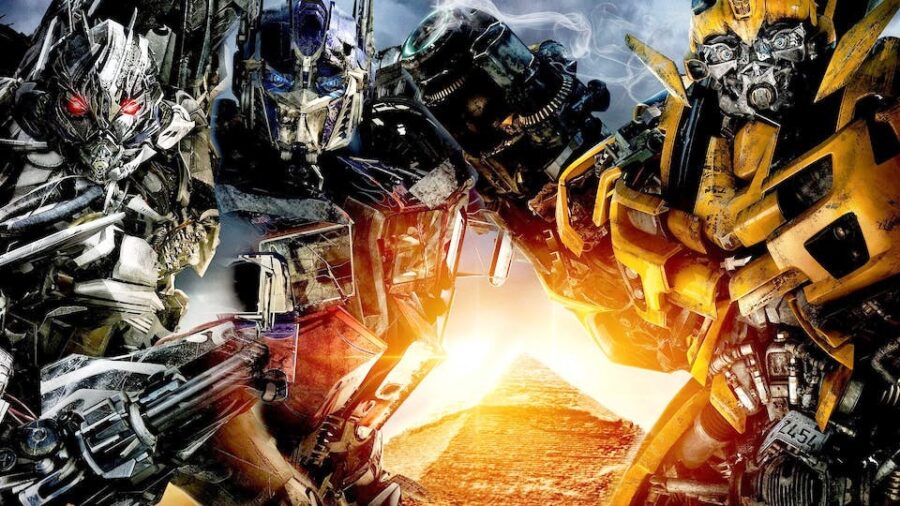
Unfortunately, quality doesn’t matter when it comes to modern-day Transformers films. Revenge of the Fallen was a critical abomination, but it earned over $836 million, leading to three sequels that might as well be war crimes. Years later, Transformers One, the best film in the entire franchise (yeah, I said it!), became a box office bomb that killed any hope of a sequel. Are you ready to share your pain with me? Do you want to drink your way through the worst Transformers movie ever made or stare at Megan Fox? Maybe you just want to return to a simpler time, when the worst thing you’d discover on any given day was that Michael Bay made a racist robot sequel?
No judgments here, friend. No need to transform and roll out; just go stream Transformers: Revenge of the Fallen for free on Tubi.
Entertainment
The Star Trek Episode That Took Its Cue From Seinfeld
By Chris Snellgrove
| Published

Star Trek: Voyager and Seinfeld couldn’t be more different. One is about a Starfleet vessel stranded halfway across the galaxy, trying to find its way home. The other is about a comedian and his neurotic friends navigating the trials and tribulations of New York City. Normally, the only thing these shows have in common is a few shared cast members. For example, Sarah Silverman once served as a love interest for both Kramer and Tom Paris. George Costanza actor Jason Alexander had his own memorable Voyager cameo. Oh, and George’s boss, Mr. Wilhelm, was played by Richard Herd, who went on to have an ongoing Trek role as Paris’ father.
However, one Star Trek: Voyager episode took its storytelling cues from Seinfeld rather than its actors. That episode is “Persistence of Vision,” in which Captain Janeway and her erstwhile crew have to deal with weird hallucinations being caused by a malicious alien with telepathic powers. It’s an episode that Paramount hated because it was so weird, but it ended up being surprisingly effective and popular. This is ironic because showrunner Michael Piller once pointed out that “Persistence of Vision” is a bit like any given Seinfeld episode; that is, it was a show about nothing!
Is Chakotay Spongeworthy?

“Persistence of Vision” begins with a fairly typical early Voyager plot. Captain Janeway must negotiate with some weird aliens for safe passage through their territory in the Delta Quadrant. However, things go sideways almost immediately when she and other crew members end up experiencing bizarre hallucinations. It’s a huge mystery that leads to a rather disappointing reveal: all of this mischief has been caused by a telepathic alien who did it for no reason and who isn’t even really there. Arguably, this resolution is frustrating because it emphasized how this loose episode was really just an excuse for some entertaining character acting.
Because of this, showrunner Michael Piller was pleasantly surprised by how the episode turned out, including how well fans received it. In an interview with Cinefantastique, he summed his feelings up by saying, “The show turned out particularly well, yet it’s not a show that is about anything.” As a lover of all things ‘90s, his phrasing here really tickled me. Piller seemed genuinely shocked that a show that’s not really about anything could resonate with audiences. However, that was Seinfeld’s claim to fame from the very beginning: that it was “a show about nothing.”
You Had To Replicate The Big Salad!

Seinfeld gained its “show about nothing” reputation early on for throwing out traditional sitcom storytelling in favor of weird (and sometimes, weirdly realistic) plots. A prime example of this is “The Chinese Restaurant,” an episode that takes place in real-time. Normally, sitting down for dinner would be the start of a story, or at least, just one element of it. However, this episode took place entirely at the restaurant and captured the hilarious frustration of simply waiting to be seated. According to Jason Alexander, the network thought this episode was “sacrilege,” but he sees it as “the defining beginning of the anarchy of Seinfeld.”
In its own way, “Persistence of Vision” was very similar. The network hated the script because it was so weird, and they wanted to add more aliens and more fight scenes. However, writer Jeri Taylor stuck to her guns and created an episode that arguably helped define the series’ creative legacy. In that same Cinefantastique interview, Michael Piller noted how desperately the show needed to start exploring new, buzzworthy ideas. He claimed this episode “marked the beginning of the turn” and that “We started building on that momentum, and I think if you look from that show on, we consistently started doing interesting things.”
They’re Real, And They’re Honorable

In other words, Star Trek: Voyager fans owe the improved quality of their favorite sci-fi show to an episode where B’elanna Torres wants to get down and dirty with Chakotay, her resident father figure. Paging Dr. Freud to the holodeck! With any luck, nobody on the ship started a bet with the chief about who’s really the master of their domain.

Eury Perez tosses 7 perfect innings, Marlins hold off Athletics
Olivia Miles, Natasha Howard guide Lynx into 2-game set with Sun


