
Entertainment
The Tragedy That Gave Us Star Trek’s Greatest Guest Star
By Chris Snellgrove
| Published

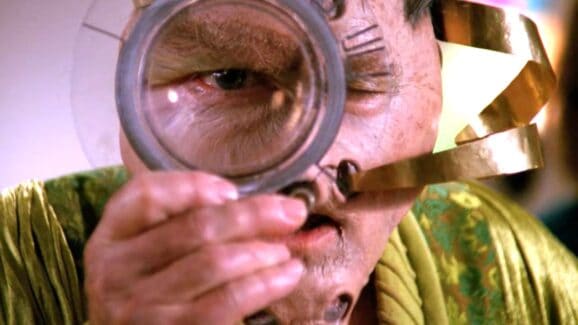
One of the best episodes of Star Trek: The Next Generation is “The Most Toys,” in which Data gets kidnapped by a collector obsessed with owning the rarest items in the galaxy. That collector is played by Saul Rubinek, who arguably gives one of the best guest performances in the entirety of this beloved franchise. However, it’s a performance rooted in tragedy because Rubinek only got the role because the actor originally performing his part nearly died!
In “The Most Toys,” Rubinek plays Kivas Fajo, an amoral collector who kidnaps Data, making the advanced android his most prized possession. When the episode came out, however, many fans were confused by the appearance of Star Trek’s latest villain. That’s because David Rappaport was originally cast in this role, and Paramount had already distributed promotional photographs of him as a very different-looking Fajo.
The Toys Are Back In Town

Why, though, did Star Trek: The Next Generation have to replace Rappaport in the first place? “The Most Toys” director Timothy Bond is quoted in Captain’s Log: The Unauthorized Complete Trek Voyages that “[T]here was a story going around that they had found him in his car with a tube running from the exhaust.” This created a major liability for the network, and the stress of filming might have contributed to a potential act of self-harm, so the director ended up replacing Rappaport with Saul Rubinek.
Sadly, David Rappaport continued to sink further and further into depression after he was ejected from the role. Only two months later, he was found dead in a Los Angeles park from what was apparently a self-inflicted gunshot wound. It was a tragic end to a troubled life, creating a permanent stain on one of the best episodes of Star Trek: The Next Generation.
Hailing Frequencies Open

Fortunately, Timothy Bond was able to quickly find a replacement for Rappaport, and he was able to refilm all scenes featuring the deceased actor’s character with equal speed. How, though, was he able to recast the important role of Kivas Fajo so quickly? As it turns out, everything started with a phone call from an old friend!
At just the right time, Bond received a phone call from Saul Rubinek, an old schoolmate who was passing through town to film Bonfires of the Vanities, a movie that would later flop. As luck would have it, the actor was a huge fan of Star Trek: The Next Generation, and he asked Bond if he might be able to swing by and visit the sets. Knowing that he had to recast the crucial role of Kivas Fajo, Bond responded with a question of his own: “How much do you want to see these sets?”
A Fanboy’s Dream Come True
The director formally offered the role to Rubinek, and the actor happily accepted the opportunity to become part of the show he loved so much. If he hadn’t been a fanboy, he might have otherwise declined the offer. As Bond (quoted in Captain’s Logs: The Unauthorized Complete Trek Voyages) noted, “He never does guest spots on television, but I persuaded him to do it.”

The recasting worked well for a number of reasons, including the fact that Rubinek is much taller than David Rappaport. This helped him look more physically intimidating onscreen, which is always an important quality for a villain. That quality is so important that Bond came up with a crazy idea back when Rappaport had the part: to shrink all the Kivas Fajo sets down so they had four-foot ceilings, essentially forcing everyone who visited the short actor’s character to bow down before him!
Firing Rappaport meant that the producers didn’t have to do anything so drastic, and Bond remains eternally grateful that they hadn’t already made any changes to the sets. Rubinek went on to do an amazing job as Kivas Fajo, one that effectively straddled the line between menacing and charming. However, what most fans don’t know is that we would not have gotten Rubinket (the greatest guest star in Star Trek: The Next Generation history) if not for the tragic mental illness and eventual death of David Rappaport, a gifted performer who was ultimately unable to overcome his personal demons.
Entertainment
One AI hub, fewer tabs — 1min.AI’s lifetime plan costs $99.99

TL;DR: A $99.99 lifetime license to 1min.AI bundles AI tools for writing, images, PDFs, audio, and video in one place.
Anyone who handles writing, visuals, research, and document work on a Mac or PC knows how quickly even small tasks can add up. Switching between tools, copying files, and rewriting prompts can eat up time that could be better spent on big ideas. The 1min.AI Advanced Business Plan streamlines those steps by bringing together multiple AI-powered tools, and its lifetime subscription is now available for $99.99 (reg. $540).
Rather than locking users into a single assistant, 1min.AI lets you choose among several leading AI models, including GPT-4o, Claude 3, Gemini Pro, and others, based on the task. That flexibility is key when tone, structure, or output style changes from project to project. One model may excel at long-form blog posts, while another may be better for summarizing dense PDFs or generating social media copy.
Mashable Deals
The platform leans heavily into efficiency. Writing tools cover blog generation, keyword research, rewriting, summarizing, grammar checks, and brand voice creation. Image tools handle upscaling, background removal, object edits, and prompt generation. Document features allow users to chat with PDFs, translate files, and extract answers without manual skimming.
All functions run on a monthly credit system, which resets every month and includes four million credits for flexible use. For context, generating a 1,000-word article or upscaling several images uses only a fraction of the monthly allotment.
Customization is another great benefit. Users can save and reuse prompts in an unlimited prompt library, fine-tune instructions for specific outputs, and switch models mid-project without starting over. For teams, the Advanced Business Plan supports up to 20 members with shared access, collaboration tools, and centralized management.
Mashable Deals
For those looking to reduce tool-switching and speed up repetitive work across writing, visuals, and documents, the 1min.AI lifetime deal makes the platform far less intimidating. Get it today for $99.99 (reg. $540) for a limited time.
StackSocial prices subject to change.
Topics
Artificial Intelligence
Entertainment
The Bizarre Star Wars Lie Mark Hamill Has Been Trying To Debunk For Nearly Half A Century
By Chris Snellgrove
| Published

“Crazy thing is, it’s true,” Han Solo memorably utters in The Force Awakens. “The Force, the Jedi, all of it. It’s true.” To a younger generation of would-be heroes, this smuggler legend was casually confirming that the most fantastic tales they had heard about space wizards and magical energy fields were completely true.
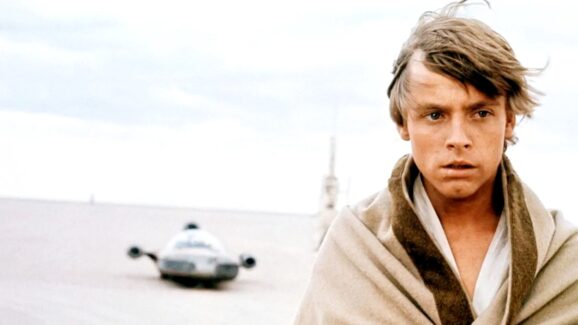
Ironically, though, the actors behind your favorite Star Wars characters typically have the opposite experience: fans have developed so many tall tales about the production of these iconic films that the stars spend their whole lives trying to debunk various myths. For Mark Hamill, the biggest myth in question is that he accidentally blurts out Carrie Fisher’s first name in the penultimate scene of the first Star Wars movie. Fortunately, the Jedi Master has taken to social media on many occasions to explain what really happened and why so many fans are wrong about this iconic scene.
Brother And Sister Hug It Out

The scene in question occurs after Luke Skywalker successfully blows up the Death Star, saving the Rebels and, by extension, countless billions of lives. Back on Yavin IV, he hops out of his X-Wing and fiercely hugs Princess Leia. At this point, Luke says something that fans have been debating about for nearly half a century.
You see, many fans are absolutely convinced that he blurts out “Carrie,” calling his costar by her first name rather than her character’s name. If true, this would mean that there is an insanely blatant mistake hidden (and not hidden very well) in the most influential blockbuster ever made. Furthermore, it’s a mistake that would make Mark Hamill look bad for making it and make director George Lucas look bad for not actually catching it.
A Smuggler And Secret Hugger

However, Hamill is adamant that he never said the word “Carrie.” Previously, the Star Wars icon has taken to the social media platform X to set the record straight. According to him, he says “there she” (a partial phrase, as in “there she is”) before he is cut off. He also told the fans who think that he says “Carrie” that this is absurd because 1) the lines were dubbed, so it’s not like he suddenly flubbed anything during filming, and 2) George Lucas would have instantly caught such an error.
Normally, the mystery would end there; Hamill is the man who said the line, and he would know better than any fan what did or did not happen on set. However, even with the actor’s correction, many Star Wars fans admit that what Luke Skywalker is saying doesn’t really sound like “there she.” Among these skeptical fans, the general consensus is that Luke is saying something more monosyllabic, like “hey,” or giving an excited shriek.
Dazed, But Not Confused

Ironically, the fact that this line is so hard to make out is a big part of why this lie about Mark Hamill has stayed alive so long. It’s all about the power of suggestion: since the line in the final film isn’t very clear, it’s easy for pranksters to tell gullible fans, “here’s what he really said.” Those fans are likely to believe the tale and spread it to others because, no matter how many times they rewatch the scene, it’s difficult to independently confirm what the actor is saying.
As for us, though, we’re more than content to take Mark Hamill’s word for what he said while shooting this legendary film. Hopefully, we’ve done our own small part to destroy the lie that has been vexing the actor for nearly 50 years. Should that lie come back to life like Palpatine, though, we’ll just have to leave its fate in the hands of the Jedi Master!
Entertainment
Everyone Wins In Disney CEO Shakeup, Except You

By Jennifer Asencio
| Published

This week, to almost no one’s surprise, Josh D’Amaro was named the successor to Bob Iger as CEO of The Walt Disney Company. He was voted to the position unanimously by the company’s Board of Directors and will begin on March 18, 2026.
While entertainment is Disney’s primary business, a lot of people forget that the majority of the company is invested in theme parks, resorts, and the cruise line, as well as movies, television, and streaming. D’Amaro was previously the head of Disney Experiences, the umbrella under which all these Disney properties fall.
Ever since Bob Iger announced weeks ago that he was stepping down, D’Amaro has been expected to be named his successor. This is despite criticism for decisions such as raising park prices. The only thing that’s really “news” about this part of the story is that it was announced so quickly. It wasn’t expected to be decided until later in the year.
The Real Boss Isn’t D’Amaro
The real news about this story is Dana Walden. She was the runner-up for the position after successfully managing first Fox Entertainment and later Disney Entertainment. Although she wasn’t awarded the top position, she was promoted to President and Chief Creative Officer of The Walt Disney Company.
This means she oversees Disney movies, cartoons, and streaming shows. She has always been in charge of television, including ABC and ABC News, but now her role has been expanded to include all Disney output. She reports directly to D’Amaro.
One area of Disney that Walden will not have creative control over is Lucasfilm. Dave Filoni and Lynwen Brennan are responsible for all things Star Wars, with Disney only managing marketing and distribution for the film studio. The company will also not deviate from serving in the same capacity for Marvel Studios, with Kevin Feige continuing to serve as President there.
Disney’s New Entertainment Head Is Deeply Involved In Politics
Walden has occasionally found herself caught up in political turmoil, which some have blamed for her being passed over as Disney’s first female CEO.
She publicly supported Kamala Harris and appeared in photographs with the Presidential candidate. However, she was also the executive who made the decision about pulling Jimmy Kimmel after the ABC night show host made inferences about the Charlie Kirk shooter.
This move was criticized as bowing to pressure from the FCC and censoring free speech because of criticism of President Trump and his base. Kimmel was eventually reinstated through Walden’s efforts and negotiation with the FCC and has returned to television to freely talk about our fascist government.
Although Walden has had to navigate issues like the Jimmy Kimmel affair, it is fair that she wasn’t promoted to CEO of the entire company. Her experience as Co-Chairman of Disney Entertainment is substantive, but it doesn’t quite add up to D’Amaro’s as former Chairman of Disney Experiences, nor has she been with the company for as long as his 28 years. The promotion she received, however, is a consolation prize for her work and sets her up to perhaps be D’Amaro’s successor if his tenure lasts as long as those of his predecessors.
Disney’s Rotating CEO Problem
The last two CEOs of Disney, Bob Chapek and Bob Iger, served for only three years apiece, as the company was led into rising streaming prices, lackluster movies, and other financial failures, such as the Star Wars: Galactic Starcruiser hotel. Chapek was handpicked by Iger to replace him in 2020, but did such a terrible job that Iger had to come back in 2022.
D’Amaro is also a protégé of Iger’s at a time when Disney desperately needs to change course. The hope is that he won’t turn out to be another Chapek and that Iger chose better this time. If not, we may be back in three years to break the news of Walden’s promotion to CEO.


Falcons LB James Pearce Jr. arrested on battery charges

No. 10 Michigan State outlasts No. 5 Illinois in OT


