
Entertainment
The Star Trek Character Secretly Killed By Anime

By Chris Snellgrove
| Published

Over the years, Star Trek has boldly gone where no franchise has gone before by exploring different ways of telling killer sci-fi stories. We’ve had movies, live-action TV shows, 3D cartoons, 2D cartoons, all of which have been supplemented by entire libraries of books, magazines, and comics. The latter includes some surprisingly good Star Trek manga. Despite that quality, however, we’ve never gotten an official anime. But that didn’t keep the writers and producers of various shows from sneaking in countless references to their favorite shows!
Most of those references are hidden where fans can’t easily see them. For instance, references to shows like Dirty Pair were often written in Okudagrams or on computer monitors in Star Trek: The Next Generation. In one grisly instance, however, an homage to an anime classic was hidden in plain sight. In the episode “Yesterday’s Enterprise,” Enterprise-C Captain Rachel Garrett is killed, leaving shrapnel sticking out of her body. Look very closely, and you’ll notice something wild about the most prominent piece of shrapnel: it’s the wing from a Super Dimension Fortress Macross model kit.
Death By Anime

In “Yesterday’s Enterprise,” the Enterprise-C accidentally travels forward in time to the present day instead of getting destroyed. This changes reality, making it so that Starfleet is in the midst of losing a war with the Klingons. Picard convinces Enterprise-C captain Rachel Garrett to return to the past, sacrificing herself in the hopes of saving the future. However, Tasha Yar has to take command of the older ship after a Klingon attacks the Enterprise-C. This kills Rachel Garett, and in a notably gruesome scene, we can see her lifeless body pierced by shrapnel.
Believe it or not, that shrapnel has its own bizarre story. According to Star Trek: The Next Generation art department illustrator Rick Sternbach, the shrapnel in Garrett’s head was the wing of a VF-1 Valkyrie model kit from the popular anime series The Super Dimension Fortress Macross. Interestingly, this wasn’t even the first time this model secretly appeared in the show. It was also used (albeit in multiple scales) to create both the desktop version and studio film model of the Constellation-class ship. That’s the same type of ship as the Stargazer, the vessel Picard commanded before becoming captain of the Enterprise-D.
The Most Requested Anime In The Holodeck
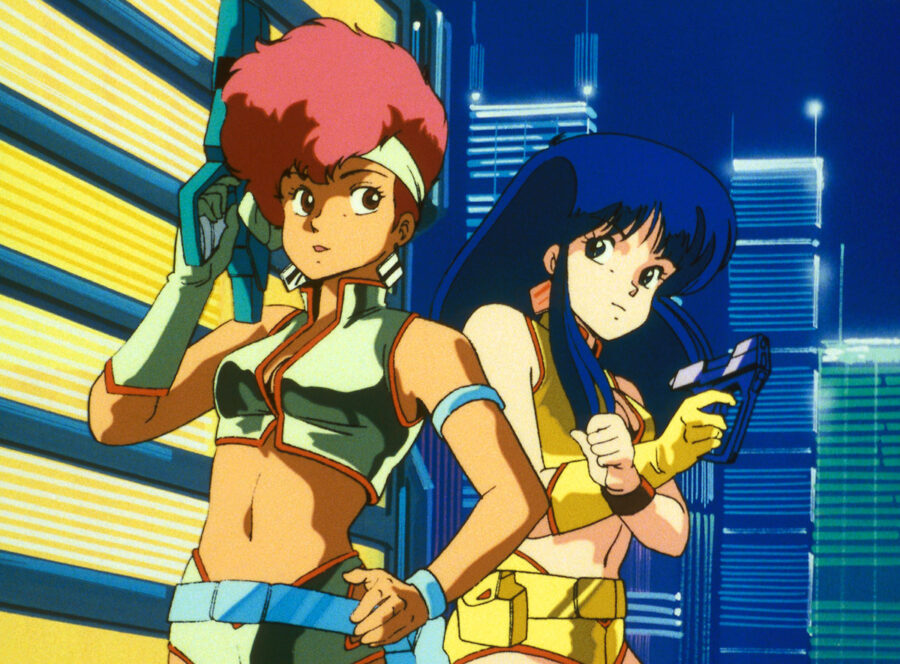
While this trivia might seem a little strange, it’s not really that surprising that an anime model kit made multiple prominent Star Trek appearances. The Next Generation writers were big fans of Japanese animation and often hid references to their favorite shows within random episodes. For example, both “A Matter of Perspective” and “Peak Performance” had references to Dirty Pair, a popular anime about a pair of plucky female consultants with a reputation for causing Demolition Man levels of destruction wherever they go. Such Easter eggs reveal how the Trek writers loved anime about a decade before its popularity exploded in the West.
“Yesterday’s Enterprise” may be the best episode of Star Trek: The Next Generation. It’s an episode that pulls no punches, killing popular characters like Riker in ways that seem downright shocking. Nobody got a more brutal death than Rachel Garrett, whose body was destroyed by shrapnel. It can be hard to watch, but maybe knowing that she’s got an anime model kit sticking out of her face will make things better. It’s a surreal detail that calls to mind Trek icon William Shatner’s famous episode of The Twilight Zone. “There’s someone on the wing,” he cried. “Something on the wing!”
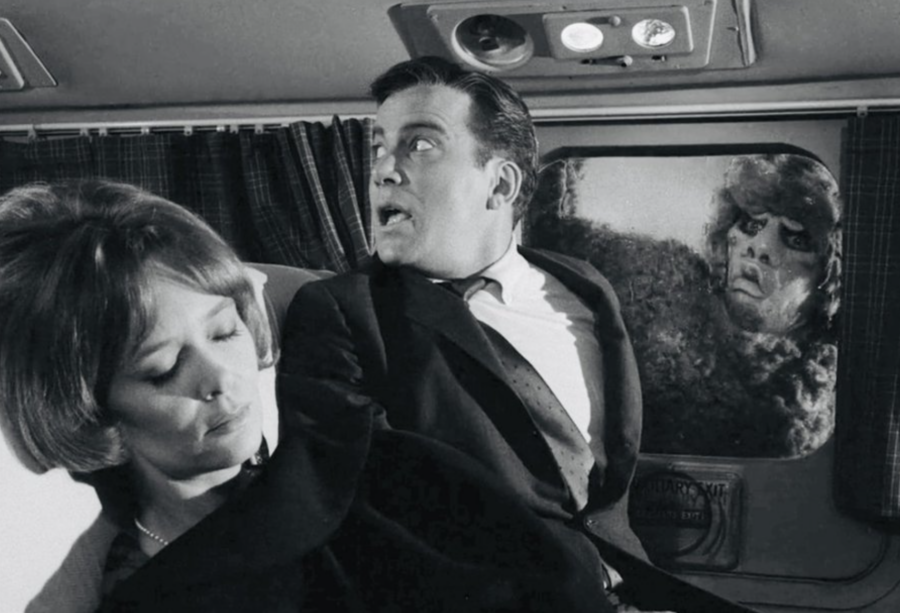
Yeah, there’s something on the wing, alright: Rachel Garrett’s face!
Entertainment
Samsung confirms new foldables will be revealed July 22 with new Flex Titanium display tech
It’s an open secret in the tech world that Samsung will likely debut the Galaxy Z Flip 8, Z Fold 8, and new Z Fold Wide at its Galaxy Unpacked event in London on July 22.
And on Tuesday, the company confirmed in a press release that its next-gen Galaxy foldable devices will debut soon with a new Flex Titanium display structure. In its announcement, Samsung said the new Flex Titanium technology will provide foldable phones with “enhanced durability and reduced crease visibility.”
“The new Flex Titanium technology will debut with Samsung’s next-generation Galaxy foldable devices. Further details will be unveiled at Galaxy Unpacked on July 22,” the press release stated. The announcement all but confirms the long-rumored focus of the Galaxy Unpacked event, which lines up with Samsung’s previous foldable phone launch timeline.
Mashable Light Speed
As the name suggests, Flex Titanium uses titanium components to support bending displays.
Specifically, the new hardware tech employs a titanium-alloy film underneath the OLED panel, as well as a titanium plate underneath the film. Samsung said the titanium film sits “below the OLED panel” and offers “20 times greater mechanical stiffness than plastic films while measuring less than 30% the thickness of a human hair, enabling a slimmer display panel.” In Samsun said theaddition, the titanium plate supports “the display module from beneath, eliminating air gaps between the module and adhesive for more stable support when unfolded, while retaining the flexibility needed for repeated folding.”
The idea is to make phones that can withstand thousands of folds over multiple years, while providing a quality viewing experience for users who don’t want to see a big, ugly crease in the middle of the screen. For what it’s worth, in the last couple of years, flagship Samsung foldables have mostly fixed the crease problem already, but we’re still excited to see how Samsung can alleviate it further.
It hopefully won’t be long before we get a real first look at those devices, as the London Unpacked event is just one week away.
Entertainment
Lucky review: Anya Taylor-Joys con woman drama is slick summer fun with little substance
Lucky puts its cards on the table too early.
The new Apple TV limited series, starring and executive produced by Anya Taylor-Joy, kicks off with its titular protagonist (Taylor-Joy) on the run from an FBI agent. Sporting a bleached bob and a Caesars Palace jacket, she scrambles through a maze of parked trucks, desperately crawling under wheels and slamming around corners until her fate finally catches up with her. It’s a fairly thrilling action sequence, but soon, all too predictably, Lucky flashes back to the fateful hours leading up to this high-octane chase.
The move is an all-too common one in film and TV, meant to give viewers a tantalizing taste of what’s to come. Often, though, it feels like titles that use this tactic aren’t confident that viewers will buy into their story without the promise of action. With Lucky, that unfortunately proves to be the case. A crime drama bursting with clichés, Lucky works best when its characters are getting out of serious scrapes, and less so when they’re actually talking.
What’s Lucky about?

Anya Taylor-Joy in “Lucky.”
Credit: Apple TV
As we learn in the first of Lucky‘s many flashbacks, the woman on the run in the show’s opening is Lucky Armstrong, con woman extraordinaire. Together with her husband, Cary (Drew Starkey), she’s just pulled off a $10 million heist that should have her set for life. The pair spend a sweet night celebrating in Las Vegas, but by the morning, Lucky wakes to find herself alone, penniless, and at the top of the FBI’s most-wanted list.
So begins one of Lucky‘s most tense sequences. As the FBI descends on Caesars Palace, she must use all her wiles to escape from a seemingly impossible trap. It’s an electrifying cat-and-mouse game, following an increasingly desperate Lucky through crowded casino floors and winding hotel rooms.
Mashable Top Stories
The Caesars Hotel sequence is just the first of many thrilling set pieces throughout Lucky‘s run, including shoot-outs, car chases, and one desert-set escape that sees Taylor-Joy channeling the same fierce drive to survive she weaponized so well in 2024’s Furiosa: A Mad Max Saga. In all these scenes, Lucky is operating at her most desperate, which means we get to see her full bag of tricks, learned from her imprisoned father, John (Timothy Olyphant), at work. As she manipulates mark after mark, Taylor-Joy brings an effortless cool to Lucky. Sometimes, though, that cool can be overpowering, and we lose the fear and anger that’s driving Lucky in her quest to set things right. (It doesn’t help that, even after going through hell, Lucky’s bob remains chic as ever, making it hard to buy into the character’s gritty struggles.)
Outside of these sequences though, Lucky loses its steam. Its overreliance on flashbacks leads to some extremely on-the-nose moments, like when Lucky pulls a con at a birthday party, all while remembering a conveniently similar job she and her father pulled years ago. Elsewhere, story beats feel oddly familiar. At one point, Lucky pretends to be drunk while meeting a man at a bar, leading to a scene eerily reminiscent of one in Promising Young Woman.
Annette Bening is an ice-cold scene stealer in Lucky.

Annette Bening in “Lucky.”
Credit: Apple TV
Lucky weaves a larger web of crime and shady syndicates that pales in comparison to the more immediate drama of Lucky’s smaller cons. However, there’s one huge saving grace to that more overarching crime tale, and that’s Annette Bening as fearsome mobster Priscilla Masterson.
Always rocking the coolest glasses and coats the show has to offer, Bening’s Priscilla takes over every scene she’s in with an icy power. At times, she’s calculatedly nonchalant, with even her most casual comments oozing with threats. At others, she’s a laugh riot thanks to her dry disdain for everyone around her. She makes a great foil for Taylor-Joy’s often-harried Lucky, as she’s almost always in control. When she’s not, it’s because she’s under the thumb of the menacing Wayne Whittaker (William Fichtner). You can imagine that as Lucky grows older, she could find herself in a similar troubling situation: still living a life of crime, still expected to take the fall.
Lucky hopes to examine how Lucky could get off that path, the one her father set her on when she was a child. Its conclusions and twists along the way are fairly predictable, but it offers up some slick summer fun in the meantime. When you’re done, though, Lucky‘s impact is like that of a good con man: gone before you even know it.
The first two episodes of Lucky premiere July 15 on Apple TV, with a new episode every Wednesday.
Entertainment
The Ultimate Musical Icon Almost Became Spider-Man’s Greatest Villain
By Chris Snellgrove
| Published
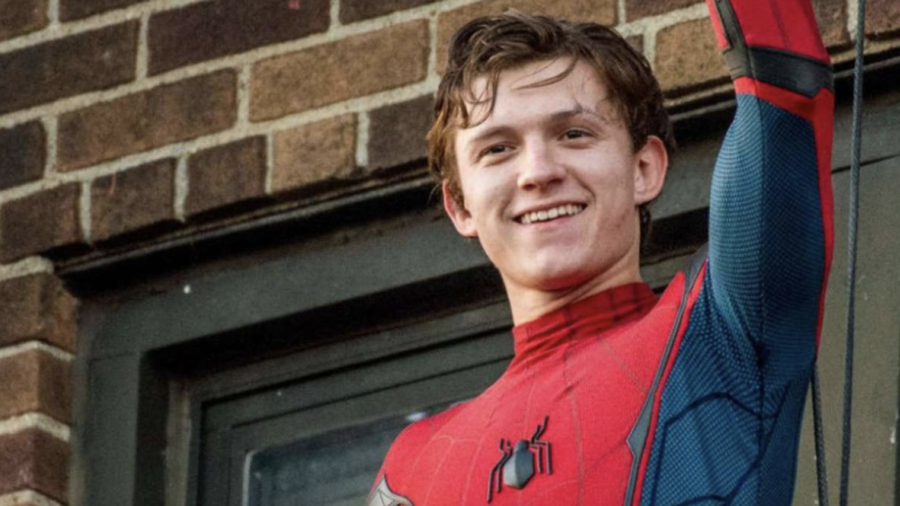
From the very beginning, the strongest aspect of the Marvel Cinematic Universe was its casting. Without the talent of performers like Robert Downey Jr. and Chris Evans, the public would never have embraced characters like Iron Man and Captain America. MCU guru Kevin Feige is well aware of this, and he often takes a personal hand in casting. That’s especially true with films like Spider-Man: Homecoming, which involve some of Marvel’s most popular comic characters. In that film, Tom Holland made for the perfect onscreen hero; the challenge was finding someone suitable to be an equally perfect onscreen villain.
Michael Keaton got the job, and he absolutely nailed the role of the Vulture by channeling his experiences as both Batman and (fittingly enough) Birdman. As it turns out, though, this former Caped Crusader wasn’t Marvel’s first choice for this character. Feige personally offered the role to the last person you’d expect: Lin-Manuel Miranda, the creator and star of the insanely popular musical Hamilton. Had he squared off with Spidey back in Homecoming, it’s fair to say the MCU would never have been the same.
He Threw Away His Shot

This shocking revelation comes to us straight from Lin-Manuel Miranda. Recently, the Hamilton star appeared on Josh Horowitz’s Happy Sad Confused podcast. According to the musical legend, Kevin Feige personally offered him the role, so no audition was required. Had he said “yes,” Miranda would have gotten a healthy payday and very likely have become a mainstay of the Marvel Cinematic Universe. However, he declined the offer, and he did so for a reason many who are reading this can understand: he wanted to keep his wife happy!
In speaking with Horowitz, Miranda admitted he “would have been so miscast.” He made up his mind about the offer, asking when filming for Spider-Man: Homecoming would begin. Feige’s answer was, “Basically, the moment you step offstage in Hamilton.” Miranda replied, ‘Well, I love these movies, but I would really like to stay married, so I cannot do this.’” He is married to Vanessa Nadal, and they have two children together. Miranda had been looking forward to spending more time with his family once he stopped playing Hamilton, but playing the Vulture in Homecoming would mean being insanely busy for another year while being contractually tied down to future Marvel appearances.
Yes, Father. I Shall Become A Vulture

Looking back, Miranda has no regrets about his decision. He told Horowitz that he “needed a vacation so badly” after Hamilton and reiterated that “I would’ve been deeply miscast.” It’s hard not to disagree with this assessment. Part of why Michael Keaton was so great in the role is that his Vulture practically oozed menace whenever he was onscreen. By contrast, Miranda has spent a lifetime positioning himself as an affably goofy music guy. His Vulture would likely be a comedic character, and that wouldn’t work; since Spidey himself is so silly, it’s important for him to have a genuinely scary villain to bounce off of.
Lin-Manuel Miranda became a household name thanks to the success of Hamilton. He could have pivoted and become a Marvel icon, but he was very happy to “throw away his shot” at starring in Spider-Man: Homecoming. In retrospect, this was the right decision, and Miranda is the first to admit that he would’ve made a terrible villain. At least, a terrible onscreen villain. To everyone who ever got sick of their family blaring the Hamilton soundtrack at all hours of the day and on every single road trip, this guy will always be an archenemy for life!

Samsung confirms new foldables will be revealed July 22 with new Flex Titanium display tech
Mystics dominate second half to beat Tempo for 3rd time


