
Entertainment
The Simple Change That Could Have Fixed The Worst Star Wars Movie

By Chris Snellgrove
| Updated

While the franchise lingered on in the form of shows like Andor and The Mandalorian (and, unfortunately, The Acolyte), the Star Wars we know and love effectively ended with The Rise of Skywalker. After the critical and commercial failure of that film, the franchise seemed dead. That left just one question: what killed it? Certainly, all of the sequels were filled with some big missteps, but the final nail in the coffin was ROTS revealing Rey was secretly Palpatine’s granddaughter. It was weird enough that the Emperor came back with no real explanation as to how he even survived; now we had to deal with the newest Jedi being Space Hitler’s granddaughter.
Since The Rise of Skywalker came out, however, fans have proposed a singular theory about what would have saved that final sequel film and, by extension, saved Star Wars. If Rey simply had to be related to a famous character from the Original Trilogy, she should have been Obi-Wan Kenobi’s granddaughter. This would explain Obi-Wan’s voice in The Force Awakens, deepen connections to The Clone Wars, and even gently retcon the worst narrative mistake of the prequels. Just how would this narrative change do all that? Pour yourself a tall glass of blue milk, kid, because this is gonna be one heck of a tale!
Search Your Feelings, You Know It To Be True

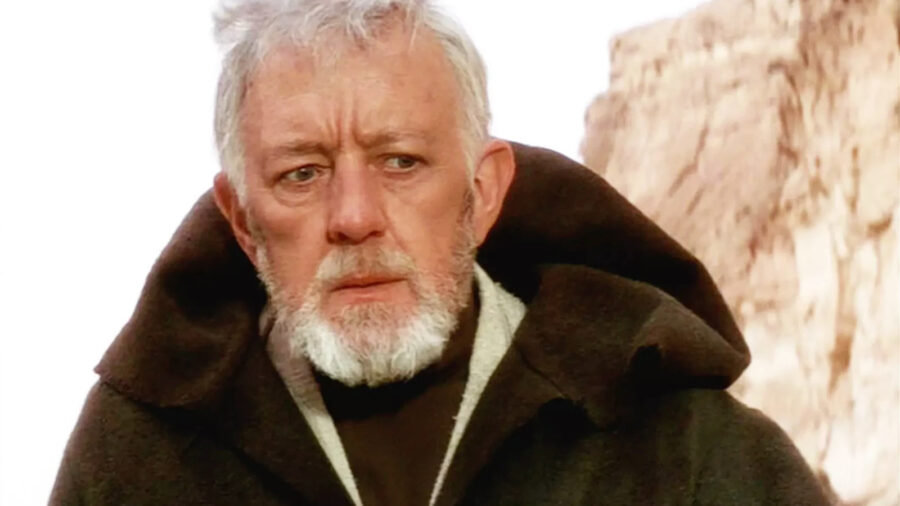
The first reason Rey should have been the granddaughter of Obi-Wan Kenobi in The Rise of Skywalker is that it would have explained one of the biggest mysteries of The Force Awakens. In that first sequel, when Rey touches Luke Skywalker’s lightsaber, she receives a weird Force vision filled with sights and sounds from every era of Star Wars. In this vision, we hear the original voice of Obi-Wan (Sir Alec Guinness) distinctly say the name “Rey.” When TFA first came out, fans wondered how the Jedi Master would know the name of this new hero and if they might be connected by blood.
If The Rise of Skywalker had revealed Rey to be Obi-Wan’s granddaughter, it would explain why he was calling her name and perhaps watching her via the Force. It would also explain some of the confusion about who Rey’s parents are. Because of how the Jedi were hunted, it would make sense for Rey’s parents to keep their distance, lest their own connection to Obi-Wan get this young girl killed. Also, Obi-Wan’s child was presumably Force-sensitive; they might have used the Force to make it harder to detect the truth about her, explaining why Kylo Ren thought she was a nobody.
Jedi Hero, Secret Daddy
Additionally, Obi-Wan Kenobi hooking up with Satine (something hinted at in The Clone Wars) and having a kid would explain why he was so willing to look the other way about the secret marriage between Anakin Skywalker and Padme Amidala. Given what a stickler for the rules Obi-Wan is, it never made sense that he was cool with his former apprentice leading a secret double life. But if Obi-Wan secretly had a lovechild of his own, it would make sense that he wouldn’t admonish Anakin. For one thing, he’d feel shame; for another, Anakin might very well sense that shame via the Force if they had an open discussion about his relationship with Anakin, which would put Kenobi’s future granddaughter in danger.
Arguably, Rey being Obi-Wan Kenobi’s granddaughter could have given more meaning to her final fight with Emperor Palpatine. That fight always seemed a little hollow because there were no emotional stakes; it was a fight between someone we barely knew and someone we thought long dead. But if Rey carried Obi-Wan Kenobi’s bloodline, though, it would be like a very belated victory for the Jedi Master. Once, Palpatine killed all of his friends and forced him on the run; now, Obi-Wan’s granddaughter would make sure that the man behind Order 66 would never hurt anyone, ever again.

This isn’t a perfect solution to the failures of the Sequel Trilogy, of course. But giving Rey such a powerful connection to a beloved Star Wars character would fix some of the sequels’ narrative mistakes while deepening their connection to the prequels and adding some emotional heft to the big climax of The Rise of Skywalker. It would even give the Obi-Wan Kenobi show something else to explore in future seasons. Unfortunately, Lucasfilm making the character a secret Palpatine rendered Rey a much more confusing character, which may ultimately hurt the franchise once she becomes the anchor character for the next era of Star Wars films.
Entertainment
Avengers, Disassemble? The Doomsday Trailer Is Finally Here
By Chris Snellgrove
| Published

Last year, Marvel tried building hype for Avengers: Doomsday by releasing a series of different teasers, each focused on different characters. It was an interesting strategy, but it didn’t work out: not only were the teasers intended for theaters leaked early online, but the only one that really got people excited was the one with the X-Men. Sure, these teasers raised awareness about the upcoming blockbuster movie, but they arguably did a poor job of generating hype, especially for fans who have felt burnt out on the MCU since the credits rolled on Endgame.
Now, Marvel surprised everyone by dropping the first proper trailer for Avengers: Doomsday. Previously, many assumed they’d be unveiling a trailer at San Diego Comic-Con this week. Maybe the studio feared another leak, or maybe they have something bigger and better to show off at SDCC. Either way, you can now watch the trailer for yourself with the click of a button. No need to get Wong to open a portal; below, we’ve got the full trailer and a breakdown of what everything in it means for your favorite characters.
Doomsday Is Finally Here
The Avengers: Doomsday trailer begins at the X-Men’s home, where Xavier is watching an incursion event (more on this later). The whole thing is narrated by Doctor Doom, whom Robert Downey Jr. gives a gloriously thick accent. The villain discusses how “something’s coming…something we may not be able to deter. Before this day is done, we will be faced with an unthinkable decision.” After that, we see various heroes gathering (including Avengers, Thunderbolts, the Fantastic Four) while Thor gives a speech about how he’s fought alongside far stronger warriors who died fighting foes that scare him far less than this new threat.
During Thor’s cheerful speech, we see various shots, including Namor on a throne, Black Panther and her fellow Wakandans, Shang-Chi fighting Gambit, and Thor walking towards Doctor Doom. There’s a brief shot of Loki looking at a TVA card and of the Wakandans teaming up with the other heroes, with M’Baku shaking Thing’s hand. We see Yelena fighting Mystique, who shapeshifts to look like her foe. There’s also an emotional shot of a tearful Xavier holding Magneto’s hand. We then get an action montage that culminates with Doom stopping a blow from Stormbreaker while Thor’s speech ends with him saying they’d need “a miracle” to win.
It’s Hammer Time

As if on cue, we see Thor, carrying Mjolnir, encounter Steve Rogers, who greets the god with a soft, “Hey, pal.” Thor says, “it’s not possible” and holds his hammer out, testing if this is the real Captain America. Steve holds his hand out, and Mjolnir comes right to him, and America’s greatest hero smiles at his old friend. After that, we get the title card, a reminder of the release date (December 18), and one of the countdown clocks that we first saw in the earliest teasers for Avengers: Doomsday.
This first trailer doesn’t really tell us much about the story of Doomsday. What’s really going on here? Basically, different realities are colliding. Normally, this destroys both universes, but one universe can survive if it destroys the other. The bright explosion Xavier is looking at is one of those realities (most likely the Tobey Maguire Spider-Man universe) getting destroyed. This is the “unthinkable decision” Doom speaks of: to save everything and everyone they have ever known, our heroes must be willing to doom countless lives in another universe. In all likelihood, Thor’s speech is referring to the incursions themselves and how they’d need a miracle to avoid this “kill or be killed” scenario.

So far, fan reaction to the trailer has been mixed. Many are just happy to see familiar faces (especially Patrick Stewart’s Xavier and Chris Evans’ Steve Rogers) back onscreen again. Others are disappointed that the trailer tells us so little about the plot and does very little to establish who Doctor Doom is and why we should care about him as a villain. Here’s hoping Marvel can generate a little more hype for Avengers: Doomsday before the movie comes out. Otherwise, the movie intended to reenergize the entire fandom may end up destroying the MCU.
Entertainment
Sopranos Creator Is Cooking Up The Best Sitcom Idea Of All Time
By TeeJay Small
| Updated

Since The Sopranos concluded back in 2007, series creator David Chase has remained mostly quiet. Sure, he’s stepped outside for anniversary events, wrote the Sopranos sequel film The Many Saints Of Newark, and even directed a very underwhelming family drama titled Not Fade Away in 2012. Mostly, though, he’s remained as cryptic and shadowed as possible, coasting on the success of TV’s greatest show. Things seem to be changing, however, now that Chase is promoting his new miniseries Project: MKUltra.
Per Variety, David Chase began openly toying with some new project ideas during a recent appearance at the Karlovy Vary Film Festival in the Czech Republic. While addressing the crowd, the seven-time Emmy winner explained “I’d like to do a story … about four people, Italian Americans, going back to the old country, and what surprises they have in store for them.” This idea was apparently inspired by Lorraine Bracco, who portrayed Dr. Melfi in The Sopranos, after she purchased some extremely cheap property in Italy.
A Fish Out Of Water Scenario

Chase says he’s interested in exploring this idea, where a group of Sopranos-style guidos moves overseas to capitalize on cheap Italian real estate, only to learn that they’re not as authentically Italian as they thought. “This happens a lot lately,” Chase said to the crowd, “Italian Americans who buy property in Italy … all kinds of Americans are buying these houses and moving there because things in our country are questionable.” He even stated that he’s interested in joining forces with some of his previous collaborators, including John Magaro, Jack Huston, Will Brill and Bella Heathcote.
If you’re a Sopranos super-fan, this premise should sound all too familiar. Chase previously explored themes of clashing Italian-American identity in the Sopranos season 2 episode “Commendatori.” During that episode, Tony Soprano, Paulie Gualtieri, and Chris Moltisanti pack their bags and head to the boot for the very first time, hoping to close a few new deals with their connected friends from overseas. In doing so, they experience some serious culture shock, trip over their Americanized Italian accents, and meet Furio, who later joins the North Jersey crew.

Ironically, David Chase himself has a cameo in the “Commendatori” episode. He plays a snooty Italian who sticks his nose up at Paulie outside of an espresso shop. This interaction, and several others like it, make Paulie feel like a complete fish out of water, even though he’s identified as an Italian all his life. By the time the mobsters return home, they’re shocked to learn that they find more comfort in the presence of McDonald’s Golden Arches and Exxon Mobil gas stations than they do in front of Mount Vesuvius and the Trevi Fountain.
Personally, I’d really like to see David Chase follow through on this idea. I have my doubts about it turning out as groundbreaking as The Sopranos, but I’m certain there are millions of fans across the world that would love to get Chase’s comedic take on the state of modern politics and the cultural divide between ‘real’ Italians and the gang you’d find pumping their fists on the Jersey Shore boardwalk.
Entertainment
The Best Couch Gag In Simpsons History Was Extremely Dark And Nearly Got The Episode Pulled By Fox
By TeeJay Small
| Updated

Since The Simpsons first kicked off back in 1989, couch gags have been an iconic episode-opening staple. Over the years, the team behind the show has collaborated with numerous writers, animators, and artists, creating surprising crossovers with other popular works. While every couch gag holds a special place in my heart, I’d argue that the most memorable iteration came from 2010’s “MoneyBart,” as part of a collaboration with the cryptic political artist Banksy.
Even if you’re not familiar with Banksy by name, you’ve surely crossed paths with his work. The anonymous British artist has delivered numerous thought-provoking pieces, often providing some cutting social commentary or political undertone. He’s about as anti-establishment as an artist can be, so you can understand why it came as a shock when he agreed to collaborate with one of the most well-known cartoons in the history of the world. After all, tagging your name on a Fox branded series doesn’t exactly scream “down with capitalism.”

A brief glance at the intro sequence, which has been making the rounds on social media lately, will quickly clear up any questions you might have about Banksy’s agenda. Rather than using the platform to deliver a fun, simple gag about the yellow family kicking their feet up in front of the TV, Banksy offered an extremely dark critique of the animation industry, the network, and the nature of mass-produced art on the whole. The full gag is nearly two minutes in length, but it feels like a lifetime as you watch in twisted horror at the scathing repudiation of mainstream television.
Not Your Average Couch Gag
The couch gag opens on the usual cloud-first drop into Springfield, but quickly goes off the rails. As soon as the Simpson family takes to the couch, we zoom out to see individual cartoon frames being animated in an Asian sweatshop. Miserable workers toil in squalid conditions, as children paste the film together using vats of toxic waste. Beneath the sweatshop, we see that Simpsons merchandise is made under similar soul-crushing conditions, with adorable kittens being woodchippered to stuff mass-produced Bart plushies.
Other instances of animal abuse are rampant in the supply chain, with panda bears being whipped, decapitated dolphins applying packing tape, and a shackled, sickly unicorn used as a crude method of cutting DVDs to size. The whole thing is deeply disturbing, uncomfortably funny, and uniquely self-reflective, even by Simpsons standards. It all wraps up with a 20th Century Fox logo surrounded by barbed wire fences and dystopian watchtowers, à la George Orwell‘s 1984.
Series executive producer and longtime showrunner Al Jean described the process of linking up with Banksy during a 2010 interview with The New York Times, and revealed the ways in which Fox was apprehensive about airing the segment. Despite arguing that “Fox has been very gracious about us biting the hand that feeds us,” Jean explained that the network demanded several changes “for taste.” When asked what specifically was cut before the segment made it to air, the Harvard alumnus said, “It was even a little sadder. But I would have to say almost all of it stayed in. We were thrilled. It was funny, I watched Mad Men last night, and I wondered if this was my Don Draper letter to The New York Times. I knew just how he felt.”

The original storyboards for the couch gag are available to view on Banksy.blog, so you can see for yourself exactly what was changed before animation. The most notable change is the absence of the propaganda poster depicting Fox founder Rupert Murdoch. Al Jean claims that axing the jab toward Murdoch was the only non-negotiable point for the network, while he himself objected to the unicorn dying on camera.
Luckily, the episode eventually made it to air without any serious threats of cancellation, and Al Jean still works as a writer and producer on The Simpsons to this day. Still, it seems unlikely that Disney will allow any returning Banksy collabs of this sort in the near future.

Avengers, Disassemble? The Doomsday Trailer Is Finally Here
Inference startup Infinity raises $15M from Touring Capital, OpenAI and Anthropic researchers


