
Tech
The price gap between Waymo and Uber is narrowing
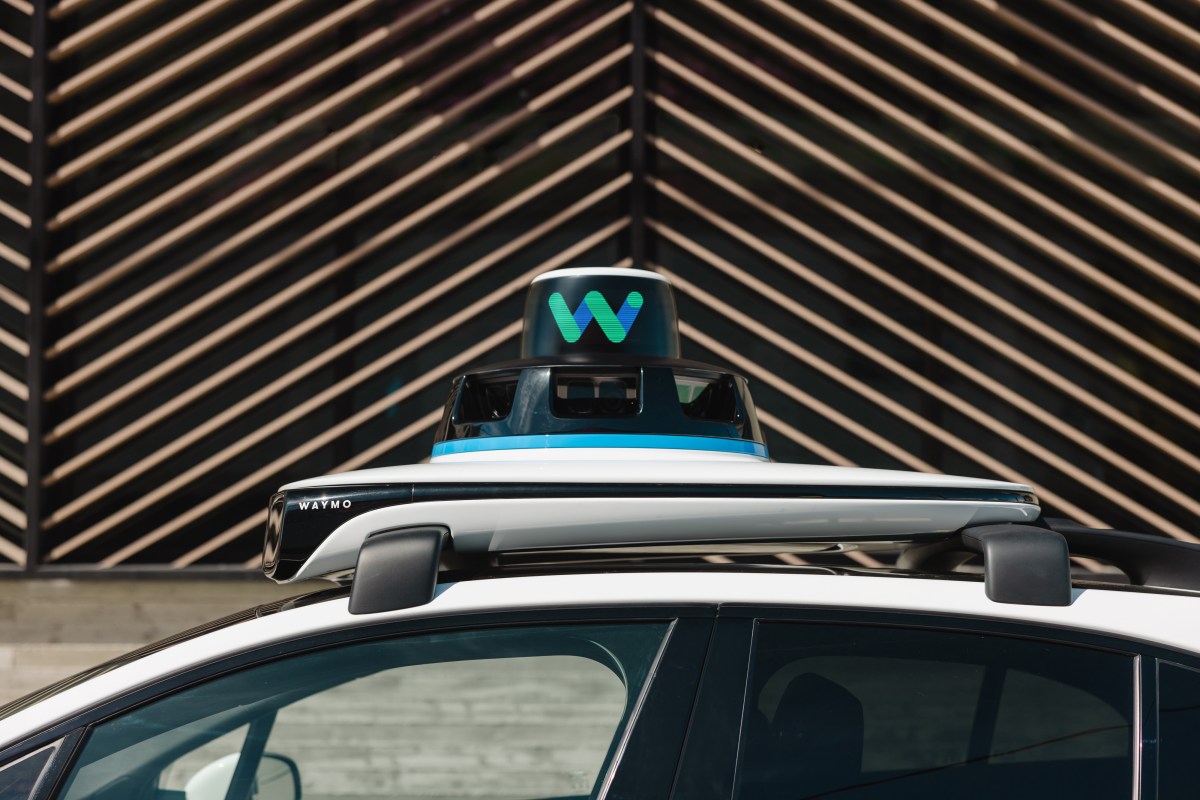
A trip in a Waymo robotaxi still costs more, on average, than a comparable ride in a human-driven Uber or a Lyft. But that gap is narrowing, according to new data published Tuesday by Obi, a company that aggregates real-time pricing and pickup times across multiple ride-hailing services.
Two factors, working together, are behind the change. Waymo has lowered its pricing, at least in the San Francisco Bay Area where the data was pulled, while traditional ride-hailing rides on the Uber and Lyft networks have risen, according to Obi.
The new data was collected between November 27 and January 1, with Obi simulating more than 94,000 ride requests in the Bay Area. The company found that Waymo rides cost an average of $19.69, while Uber rides were slightly cheaper at $17.47. Lyft rides across the same period averaged $15.47.
In June, Obi released its first report analyzing robotaxi versus ride-hailing data. The data, which was taken from rides in April 2025, showed Waymo rides averaged $20.43, Uber landed at $15.58, and Lyft rides evened out at $14.44. Compared to these figures, Waymo’s average cost has dropped 3.62%, while Uber’s went up 12%, and Lyft’s climbed 7%.
Obi CEO Ashwini Anburajan told TechCrunch she believes this is a trend to watch because, while last April’s data implied customers were willing to pay a higher price to ride in a Waymo, the “novelty is wearing off for people in the Bay Area.” That means Waymo will likely keep having to price its offering more competitively, she said.
The wild card: Tesla
The wild card in Obi’s new report is that it collected data on Tesla’s burgeoning robotaxi service, which appears to be far cheaper than these other three offerings. But there are a number of important caveats.
For one, Tesla isn’t technically operating a robotaxi service in the San Francisco area, where the data was sampled. Tesla doesn’t have the permits required to operate a driverless commercial robotaxi service in the state. Nor does it have a transportation network company permit like Uber or Lyft. Instead, Tesla has a transportation charter permit from the California Public Utilities Commission, which means the company uses employees to drive the company’s vehicles equipped with its Full Self-Driving software.
Techcrunch event
San Francisco
|
October 13-15, 2026
Tesla’s Bay Area fleet is also modest. Crowdsourced data from the website Robotaxi Tracker has helped log around 168 vehicles in Tesla’s ride-hail fleet, though not all of those cars are active all the time. (Obi notes in the report that only 156 were spotted by the crowdsourced website at the time the company ran its data sampling.)
That smaller fleet has driven by wait times. Of the four services surveyed, Tesla had the longest wait time with an average ETA of 15.32 minutes. Waymo’s average wait time was 5.74 minutes (up from 4.28 minutes last April), while Lyft and Uber came in at 5.14 minutes and 3.15 minutes, respectively.
These inputs — fleet size, human drivers, wait times — could have affected how Tesla prices rides at true scale, and it’s hard to say when and how that might happen. Tesla only just recently pulled safety monitors out of a handful of cars in Austin, Texas.
If Tesla can scale its robotaxis — which rely on camera inputs alone — the company should theoretically be able to price rides lower than competitors like Waymo, which integrates its self-driving software into modified vehicles equipped with several different kinds of sensors.
Popularity contest
Anburajan thinks there’s value in Tesla operating a ride-hailing service, ahead of any attempt at operating true robotaxis.
“It’s not really an autonomous vehicle at the moment. It has a safety driver in it. They’re building brand familiarity. They’re building brand preference for people that already like Teslas and people who are inclined to like Tesla,” she said.
There’s some evidence of this in the report Obi released Tuesday.
Along with the ride requests sampled in the Bay Area, Obi surveyed 2,000 people in California, Nevada, Arizona, and Texas on a number of issues related to robotaxis and ride-hailing. Over half of those respondents who had taken an autonomous vehicle ride said they’d ridden in a Tesla robotaxi. And when asked which autonomous brand they preferred the most, respondents chose Tesla 31% of the time.
Waymo was still the most preferred, with 39.8% of respondents choosing the Alphabet-owned brand. But this strong preference for Tesla, despite the company not operating a real robotaxi service at any scale yet, hints at future demand.
That strong preference for Tesla is also being driven in large part by a particular group: men. Women who were surveyed by Obi were essentially evenly split when it comes to choosing Waymo or Tesla, with Zoox a distant third at 8%. But 56% of men surveyed preferred Tesla to Waymo (25%) or Zoox (7%).
What’s next?
Obi’s report offers a good baseline ahead of a year that’s sure to see many developments in the world of autonomous vehicles. Waymo is rapidly expanding into new cities, even partnering with Uber and Lyft in some of them. Those ride-hail companies are bringing many other autonomous vehicle partners onto their platforms, too. And Tesla will likely look to prove its robotaxi approach works in order to expand its nascent offering.
Waymo is also about to start offering rides in a new van-like vehicle that it is building with Chinese company Zeekr. That vehicle, known as Ojai, is expected to have a lower up-front cost for Waymo and could allow the company to get more aggressive on pricing.
One thing is clear to Anburajan, though: Real competition is coming. Other companies are preparing to launch their own robotaxi services. Nuro is supplying its self-driving system to modified Lucid Gravity vehicles as part of a premium robotaxi network that will be operated by Uber. Hyundai-backed Motional has rebooted its efforts and plans to launch a commercial robotaxi service in Las Vegas before the end of the year. And other companies like Avride have partnered with Uber to bring robotaxis to other U.S. cities.
“It’s still very early in the game, so no one’s a late entrant, right?” she said. “We’re in this new era, so who’s gonna capture market share and move fast to win consumers over?”
Tech
One fallen power line exposed a growing AI data center problem. Here’s how to fix it.

A power line went down outside of Washington, DC, this week. Normally, the grid would only need a few seconds to recover from such an event. But this one took more than 10 minutes because more than 3 gigawatts of data centers stopped drawing power nearly simultaneously.
The event caused voltage across the PJM grid to spike from Northern Virginia to Chicago, according to data collected by Ting Labs, a startup that runs an IoT sensor network out of people’s electrical sockets.
The event didn’t cause a blackout, but it did cause lights across the region to flicker. The incident demonstrated the effect that data centers can have on the grid — an outcome that experts believe will become more frequent.
Northern Virginia, which is in PJM’s territory, is home to the highest concentration of data centers in the world.
“It’s the canary in the coal mine,” Ricardo de Azevedo, CTO at ON.Energy, told TechCrunch. These sorts of events involving large loads like data centers are “happening more and more,” he added.
The event echoes one that happened two years ago, also on PJM’s grid, and it could foreshadow larger events if data centers aren’t built to more elegantly handle disruptions to power supplies. The PJM Interconnection manages grids from New Jersey to Illinois and serves 67 million customers, making it the largest grid operator in the United States.
When the power line went down this week, it triggered data centers to switch to backup power, and about 3.1 gigawatts of load vanished in about 30 seconds, according to PJM data. The grid appeared to recover somewhat, but a short time later additional loads dropped off. At its peak, PJM’s grid had an extra 3.49 gigawatts of electricity on it. It took another 11 minutes before it stabilized. The disconnected data centers represented around 3% of total demand on PJM at the time, according to Reuters.
A few percent may not sound like much, but the electrical grid needs to operate in a state of near-perfect balance, with supply and demand closely matched. If they don’t, voltages can sag or spike. The grid and devices connected to it can tolerate small fluctuations, but if those fluctuations grow too large, they’ll trigger failsafes within the grid or within individual facilities, causing them to disconnect.
When data centers in Northern Virginia sensed the fluctuation caused by the failed power line, they switched to backup power, which removed their load from the grid. As more data centers made the switch, they removed greater amounts of load from the grid. What started as a relatively small drop in supply became an even larger drop in demand, sending supply surging and causing light bulbs to flicker.
Most data centers make decisions in a split second, and those that disconnected this week appear to be no different. When the voltage dip reached them, they all decided to disconnect within a few seconds of each other, Ali Zain Banatwala, senior market models specialist at the Independent Electricity System Operator, told TechCrunch.
“We need to figure a way for these loads that are located next to each other to sequentially either disconnect or reconnect,” he said. A more orderly process would allow grid operators to develop more robust procedures in advance.
Alternatively, data centers could be built to absorb disruptions and not turn their backs to them. One startup, ON.Energy, has been working on a product to help data centers — and the grid — ride through events like the one that occurred this week.
The company has developed an uninterruptible power supply for an entire data center campus, covering not just servers but also chillers and other equipment. The company essentially hides the data center behind a bank of batteries connected to sophisticated power conversion equipment. All the grid “sees” is one consistent, well-behaved load rather than the peaks and valleys from each individual part of the data center. ON.Energy’s system allows data centers to ramp computing workloads up and down, including AI training, without bothering the grid.
Perhaps more important, it also means that data centers can absorb power fluctuations from the grid. Rather than disconnecting from the grid, ON.Energy’s system can use any extra power to charge its batteries, and if the flow dips, the system can dispatch power to servers. Plus, it can follow the grid’s lead within milliseconds, preventing sags or surges like the ones that caused this week’s problem for PJM.
ON.Energy is currently installing a total of 3 gigawatts worth of its systems at four different data center campuses, de Azevedo said.
Grid managers have also woken up to the problem.
ERCOT, for example, is going to require large loads like data centers to “ride through” disruptions, de Azevedo said.
The clock is ticking, though. The mass disconnection this week was twice as large as a similar event in 2024, when 60 data centers simultaneously disconnected, pulling 1.5 gigawatts of load from the grid. Back then, data centers accounted for about 6% of PJM’s load, according to Synapse Energy Economics. By 2040, they are expected to make up 24%. If the problem isn’t addressed soon, things could get a lot worse.
When you purchase through links in our articles, we may earn a small commission. This doesn’t affect our editorial independence.
Tech
Librarians are hosting viral ‘Avoiding AI’ workshops for people who are fed up with Big Tech
“Everybody’s on their phone at my program!” joked Charlie Bailey, a librarian in South Philadelphia. He’s just asked his audience to pull out their phones so that he can walk them through the steps of disabling Apple Intelligence and Gemini.
Bailey stands at the front of a library classroom that’s outfitted for children – the focal point is the vibrant rug he’s standing on, which reminds us that M is for “moon” and Z is for “zebra.” But the 20-odd adults in the room aren’t here to learn about the alphabet. They’re at a workshop called Avoiding AI, which, in this context does not stand for “apple” and “igloo.”
“I was inspired by the feeling of people’s frustration with AI tools being kind of forced onto them, and feeling like AI tools we didn’t ask for are suddenly everywhere in our lives,” Bailey told TechCrunch.
Bailey starts the hour-long workshop with an overview of how AI chatbots and other consumer AI tools work, explaining why people might want to use these products, and why they might opt to abstain. Then, he walks through all of the most popular tech platforms and devices, showing step-by-step instructions on the projector to guide people through turning off specific features.
“As a librarian, I think it’s important to see this as advancing digital literacy and helping people reclaim their autonomy over whether they want to use AI tools,” Bailey said. “It’s important, especially when it can be so difficult not to use them, and when the design seems to force adoption.”

Bailey got the idea for the Avoiding AI workshop from Hannah Cyrus, a librarian in Maine. He was one of dozens of librarians from around the world who contacted Cyrus after she published a journal article about developing her own workshop.
“This has never happened before with anything I’ve worked on,” Cyrus told TechCrunch. “Nobody has ever been emailing me like, ‘Can you give me your Intro to Computers slides?’”
At the Bangor Public Library, patrons turn to Cyrus when they need help with anything involving technology.
“More and more, I was getting questions about, ‘How do I turn this [AI] stuff off? Why is it trying to write my emails for me? Why is it trying to summarize my one-sentence email that I can easily read?’” Cyrus said. “I just decided that with so much media hype out there about AI products, it would be a good opportunity to teach people about the basics of what is happening when you’re using this technology, and then getting into how to turn it off if you don’t want to use it.”
Usually, Cyrus’ classes like Intro to Computers get about a dozen attendees. But so many people expressed interest in her first Avoiding AI workshop that she had to cut off registration at 30 people, open a waitlist, and share the workshop on Zoom. Including the livestream, about 70 people attended each of Cyrus’ first two workshops.
When Bailey followed Cyrus’ lead to host a workshop in Philadelphia, the reception was similarly unprecedented. The library’s Instagram post about the “Avoiding AI” event got over 2,000 likes and 220 shares, whereas most of the library’s posts don’t get more than a few dozen likes. He scheduled a second program because the first got too many registrations.
“As an information professional, it feels good to see people skeptical of AI,” Bailey said. “It felt really good to see how many people share this feeling.”
There’s a sense of camaraderie among the room of strangers during the workshop. When Bailey invites attendees to share their own tips, one person explains that when you append “&udm=14” to a Google Search, it will hide AI results. Bailey writes the string of characters down on a whiteboard next to the log-in credentials for the teen Wi-Fi server.
“You have to go through all the trouble to buy a home in today’s world, and two years from now, there could be a data center next to your house,” one workshop attendee named Johnny says.
“I keep getting AI shoved down my throat at work, and every time I see it, I think about the environment,” another attendee named Gabrielle adds. But she’s also not writing off AI as a technology altogether. “I’m not against AI in terms of medical breakthroughs.”
AI naysayers know that this technology is far broader than just chatbots and deepfake apps. Cyrus mentioned how useful optical character recognition is for scanning old documents at the library. But for her and the people who go to her workshops, the anti-AI movement isn’t about rejecting technology altogether so much as it is about advocating for more control, agency, and freedom in how people use technology.
“I think the forced adoption of AI on people’s devices might be the straw that’s breaking the camel’s back in some ways,” she said. “The awareness has been growing for a long time that these products and these companies that make them have an outsized influence over us, and that we’re not really using these products in the way that we would like to.”
When you purchase through links in our articles, we may earn a small commission. This doesn’t affect our editorial independence.
Tech
Kalshi demands Netflix take down trailer for ‘Prediction Games’ documentary
Prediction market Kalshi sent Netflix a cease-and-desist letter on Friday demanding that the streaming service take down the trailer for an upcoming documentary. In the letter, Kalshi claimed the trailer is “defamatory” and contains “both fabricated documents and false and misleading statements.”
“Instadocs: The Prediction Games” is a documentary about the rise of prediction markets. According to Netflix, the film — part of the streamer’s “Instadoc” series of fast-turnaround documentaries — features interviews with both Polymarket CEO Shayne Coplan and Kalshi CEO Tarek Mansour.
The trailer, however, focuses on a recent party in Las Vegas, where men who have “made millions of dollars on prediction markets, probably eight figures, just over the course of the World Cup” have gathered to watch the World Cup final. One of the guests declares, “I like betting on Kalshi,” while another shows off an apparent $5,000 bet on their phone.
However, Kalshi is currently banned from operating in Nevada due to a court order. In its cease-and-desist letter, Kalshi said the bet shown on the phone is actually a screenshot of a bet made on May 16, 2025 — long before the ban. But the company argued that in the trailer, Netflix “misled its millions of customers into believing this individual was able to successfully trade sport event contracts in Nevada on July 19, 2026.”
In its letter, Kalshi also said that it recently spoke to a Netflix employee who “agreed not to feature the receipt in the documentary when it is released” on Sunday, July 26.
“However — despite Kalshi demonstrating to this employee that the claims in the video were demonstrably false — Netflix inexplicably refused to remove the receipt from the trailer currently circulating on the homepage of the Netflix app,” the company said.
Netflix doesn’t dispute that the screenshot is of a bet from 2025, but a spokesperson told The Hollywood Reporter that none of the documentary footage was fabricated.
“The footage was filmed at the Winible World Cup Watch Weekend in Las Vegas on July 17, 2026,” the spokesperson said. “The featured trader with the trade on Spain showed us a screenshot of his bet, that was made in May 2025 prior to any Nevada court order. Any specific trades or bets referenced during that weekend are between the individual and the app in which they placed the trades.”
When you purchase through links in our articles, we may earn a small commission. This doesn’t affect our editorial independence.

The Hello Nancy Lem vibrator is the perfect summer treat
How to pre-order Samsung Galaxy Z Fold 8, Z Flip 8: See preorder deals


