
Tech
The price gap between Waymo and Uber is narrowing
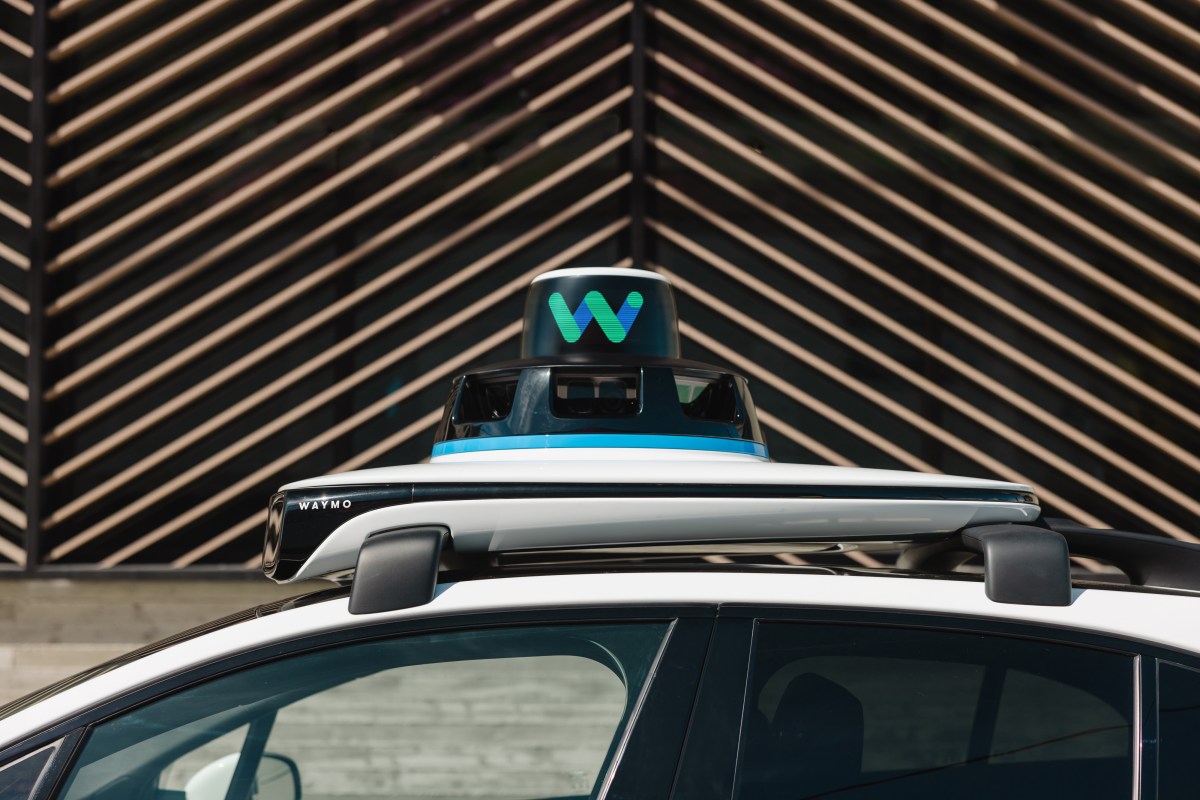
A trip in a Waymo robotaxi still costs more, on average, than a comparable ride in a human-driven Uber or a Lyft. But that gap is narrowing, according to new data published Tuesday by Obi, a company that aggregates real-time pricing and pickup times across multiple ride-hailing services.
Two factors, working together, are behind the change. Waymo has lowered its pricing, at least in the San Francisco Bay Area where the data was pulled, while traditional ride-hailing rides on the Uber and Lyft networks have risen, according to Obi.
The new data was collected between November 27 and January 1, with Obi simulating more than 94,000 ride requests in the Bay Area. The company found that Waymo rides cost an average of $19.69, while Uber rides were slightly cheaper at $17.47. Lyft rides across the same period averaged $15.47.
In June, Obi released its first report analyzing robotaxi versus ride-hailing data. The data, which was taken from rides in April 2025, showed Waymo rides averaged $20.43, Uber landed at $15.58, and Lyft rides evened out at $14.44. Compared to these figures, Waymo’s average cost has dropped 3.62%, while Uber’s went up 12%, and Lyft’s climbed 7%.
Obi CEO Ashwini Anburajan told TechCrunch she believes this is a trend to watch because, while last April’s data implied customers were willing to pay a higher price to ride in a Waymo, the “novelty is wearing off for people in the Bay Area.” That means Waymo will likely keep having to price its offering more competitively, she said.
The wild card: Tesla
The wild card in Obi’s new report is that it collected data on Tesla’s burgeoning robotaxi service, which appears to be far cheaper than these other three offerings. But there are a number of important caveats.
For one, Tesla isn’t technically operating a robotaxi service in the San Francisco area, where the data was sampled. Tesla doesn’t have the permits required to operate a driverless commercial robotaxi service in the state. Nor does it have a transportation network company permit like Uber or Lyft. Instead, Tesla has a transportation charter permit from the California Public Utilities Commission, which means the company uses employees to drive the company’s vehicles equipped with its Full Self-Driving software.
Techcrunch event
San Francisco
|
October 13-15, 2026
Tesla’s Bay Area fleet is also modest. Crowdsourced data from the website Robotaxi Tracker has helped log around 168 vehicles in Tesla’s ride-hail fleet, though not all of those cars are active all the time. (Obi notes in the report that only 156 were spotted by the crowdsourced website at the time the company ran its data sampling.)
That smaller fleet has driven by wait times. Of the four services surveyed, Tesla had the longest wait time with an average ETA of 15.32 minutes. Waymo’s average wait time was 5.74 minutes (up from 4.28 minutes last April), while Lyft and Uber came in at 5.14 minutes and 3.15 minutes, respectively.
These inputs — fleet size, human drivers, wait times — could have affected how Tesla prices rides at true scale, and it’s hard to say when and how that might happen. Tesla only just recently pulled safety monitors out of a handful of cars in Austin, Texas.
If Tesla can scale its robotaxis — which rely on camera inputs alone — the company should theoretically be able to price rides lower than competitors like Waymo, which integrates its self-driving software into modified vehicles equipped with several different kinds of sensors.
Popularity contest
Anburajan thinks there’s value in Tesla operating a ride-hailing service, ahead of any attempt at operating true robotaxis.
“It’s not really an autonomous vehicle at the moment. It has a safety driver in it. They’re building brand familiarity. They’re building brand preference for people that already like Teslas and people who are inclined to like Tesla,” she said.
There’s some evidence of this in the report Obi released Tuesday.
Along with the ride requests sampled in the Bay Area, Obi surveyed 2,000 people in California, Nevada, Arizona, and Texas on a number of issues related to robotaxis and ride-hailing. Over half of those respondents who had taken an autonomous vehicle ride said they’d ridden in a Tesla robotaxi. And when asked which autonomous brand they preferred the most, respondents chose Tesla 31% of the time.
Waymo was still the most preferred, with 39.8% of respondents choosing the Alphabet-owned brand. But this strong preference for Tesla, despite the company not operating a real robotaxi service at any scale yet, hints at future demand.
That strong preference for Tesla is also being driven in large part by a particular group: men. Women who were surveyed by Obi were essentially evenly split when it comes to choosing Waymo or Tesla, with Zoox a distant third at 8%. But 56% of men surveyed preferred Tesla to Waymo (25%) or Zoox (7%).
What’s next?
Obi’s report offers a good baseline ahead of a year that’s sure to see many developments in the world of autonomous vehicles. Waymo is rapidly expanding into new cities, even partnering with Uber and Lyft in some of them. Those ride-hail companies are bringing many other autonomous vehicle partners onto their platforms, too. And Tesla will likely look to prove its robotaxi approach works in order to expand its nascent offering.
Waymo is also about to start offering rides in a new van-like vehicle that it is building with Chinese company Zeekr. That vehicle, known as Ojai, is expected to have a lower up-front cost for Waymo and could allow the company to get more aggressive on pricing.
One thing is clear to Anburajan, though: Real competition is coming. Other companies are preparing to launch their own robotaxi services. Nuro is supplying its self-driving system to modified Lucid Gravity vehicles as part of a premium robotaxi network that will be operated by Uber. Hyundai-backed Motional has rebooted its efforts and plans to launch a commercial robotaxi service in Las Vegas before the end of the year. And other companies like Avride have partnered with Uber to bring robotaxis to other U.S. cities.
“It’s still very early in the game, so no one’s a late entrant, right?” she said. “We’re in this new era, so who’s gonna capture market share and move fast to win consumers over?”
Tech
Call for speakers: TechCrunch Founder Summit 2026

Have real-world scaling experience? The TechCrunch Founder Summit 2026 stage is calling.
On June 23 in Boston, this annual founder-focused event will bring together 1,100+ founders and investors to explore the realities of scaling startups across every stage. We’re seeking experienced founders, VCs, and startup operators to lead interactive roundtable discussions rooted in practical, real-world insight.
Experienced leaders from across the startup ecosystem will convene to host interactive roundtable sessions designed to spark real conversations. This is where founders get honest guidance, tactical takeaways, and clarity on the challenges that come with growth. Apply here to get started.
Apply to lead a roundtable session
Roundtables at TC Founder Summit are built for depth, not decks. Each session is a 30-minute, informal discussion led by up to two speakers, with no slides or video — just meaningful dialogue and practical insight. These intimate conversations create space for founders to ask real questions and connect directly with experts who’ve been there before.
To apply, click Apply to Speak on the event page, submit your proposed topic, and share your experience as a scaling expert. TC Founder Summit is the ideal platform to contribute to the next generation of startup leaders.

Speaker benefits
Speaking at TC Founder Summit is more than visibility. It’s full access to the experience. Along with elevating your authority and brand, you’ll gain premium entry to breakout sessions, roundtables, and curated networking with founders seeking guidance and VCs scouting what’s next.
Plus, TechCrunch will amplify your participation through:
Techcrunch event
Boston, MA
|
June 23, 2026
- Event agenda placement on the web and mobile app.
- Inclusion in a shared TechCrunch.com article.
- Social media promotion across TechCrunch channels.
Make your impact by applying today
Lead the conversation. Share what you’ve learned. Help founders navigate the highs and lows of scaling, and strengthen your reputation as a trusted voice in the startup community.
Apply early. TC Founder Summit takes place on June 23, but speaker applications close well before then. Submit now and be part of TechCrunch’s annual founder bootcamp.
Tech
Uber to buy delivery arm of Turkey’s Getir
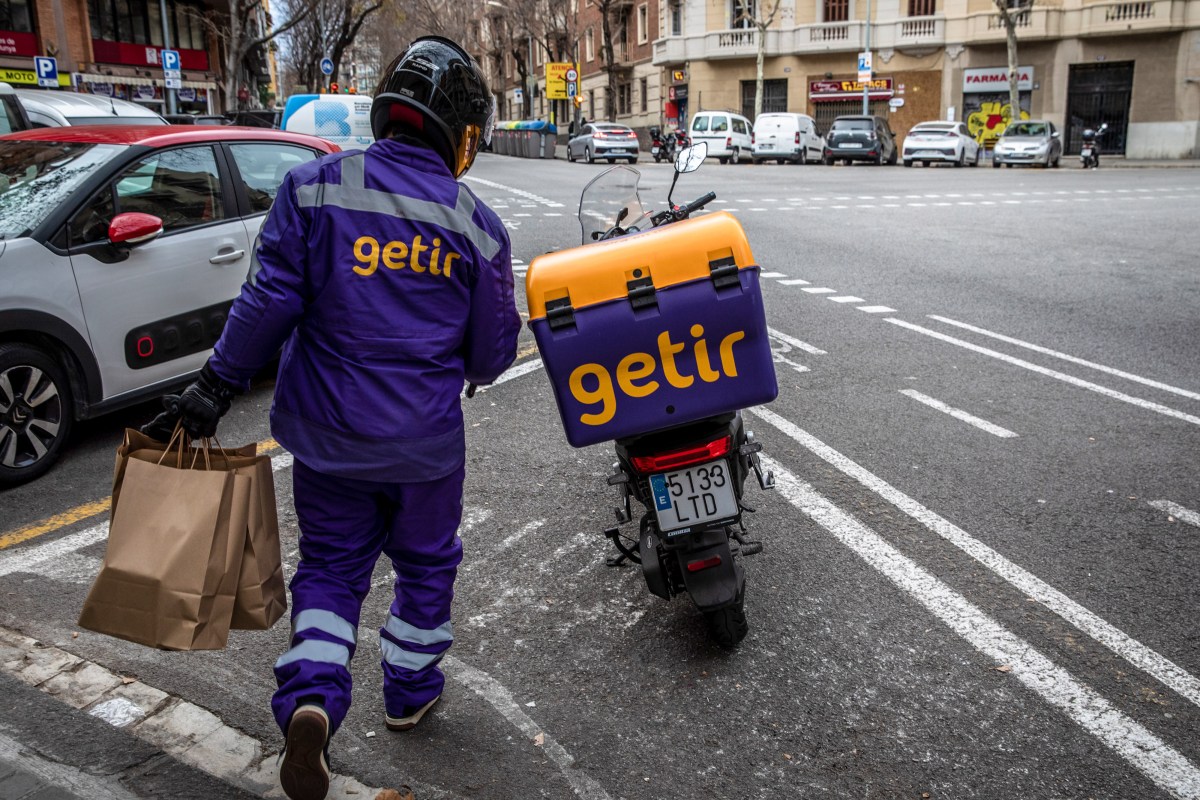
Uber has agreed to acquire the delivery business of Turkey’s Getir, once one of the biggest success stories of the country’s startup ecosystem, the company announced on Monday.
The deal will see Uber paying $335 million at the outset to purchase Getir’s food delivery business. The ride-hailing giant will also pay $100 million for a 15% stake in Getir’s grocery, retail, and water delivery business, and said it would complete the acquisition of the division over the next few years.
Uber is buying the business from Getir’s biggest shareholder, the Emirati sovereign wealth fund Mubadala. The investment firm was reportedly seeking to sell its stake in the company last year.
The deal comes after a turbulent few years for Getir, which once enjoyed a valuation of $12 billion, that saw the startup scale down its operations massively. The company launched to great traction in 2015, and invested aggressively to expand its operations in the U.S. and Europe, both organically and via acquisitions, especially during the pandemic.
But after the pandemic lockdowns eased, broader consumer demand for food and grocery delivery also wavered, and Getir chose to cut its losses in 2024, shutting shop and laying off thousands of staff in the U.S., U.K., and Europe in order to focus on business back home.
Nearly a year ago, the company went through a struggle for control over a restructuring plan proposed by Mubadala. The plan was opposed by one of Getir’s co-founders, who eventually sued to fight the “illegal coup,” but a Dutch court rejected the founder’s appeals.
The company has raised a total of $2.40 billion so far, according to PitchBook. Documents filed by Getir in court last year show the company valued its group assets at $374 million.
Techcrunch event
Boston, MA
|
June 23, 2026
“This transaction reflects the strength of the business and the progress it has made, particularly over the last year,” Waleed Al Mokarrab Al Muhairi, deputy group CEO at Mubadala, said in a statement.
Uber said it would combine the new unit’s services with Trendyol Go, a food and grocery delivery service in Turkey that the ride-hail giant bought for $700 million last May. Uber said Getir’s food delivery business alone recorded gross bookings of more than $1 billion in 2025, up 50% from a year earlier.
The deal follows a strong showing by Uber’s delivery business in the fourth quarter, reporting revenue of $4.89 billion, up 30% from a year earlier. The company said Europe, the Middle East, and Asia proved the fastest-growing regions for the business in 2026.
Tech
Discord to roll out age verification next month for full access to its platform
Discord is rolling out age verification globally starting next month, the company announced on Monday. All users will be put into a “teen-appropriate experience” by default unless they prove they’re adults. Age verification will be required to change certain settings and access age-restricted content.
Discord users will need to be confirmed as adults in order to unblur sensitive content or turn off the setting, and only adults can access age-restricted channels, servers, and app commands. Additionally, messages from people a user may not know are routed to a separate inbox by default, and only verified adults can modify this setting.
People will receive warning prompts for friend requests from users they may not know, and only adults will be able speak onstage in servers.
To complete age verification, users need to either complete a facial age estimation or submit an ID to Discord’s vendor partners. The platform plans to add more options in the future. Discord notes that some users may be asked to use multiple methods when additional information is needed to assign an age group.
The facial age estimation requires video selfies, which Discord says never leave your device. Additionally, the company says IDs submitted to its vendor partners are deleted quickly and, in most cases, immediately after age confirmation.
It’s worth noting that Discord disclosed last October that around 70,000 users may have had sensitive data, such as their government ID photos, exposed after hackers breached a third-party vendor that the platform uses for age-related appeals. The breach reflected digital rights activists’ concerns over the use of age checks as a way to make the internet “safer.”
Discord’s global launch of age verification follows the company’s decision to establish age checks for users in the U.K. and Australia last year.
Techcrunch event
Boston, MA
|
June 23, 2026
“Rolling out teen-by-default settings globally builds on Discord’s existing safety architecture, giving teens strong protections while allowing verified adults flexibility,” said Savannah Badalich, head of product policy at Discord, in a press release. “We design our products with teen safety principles at the core and will continue working with safety experts, policymakers, and Discord users to support meaningful, long term wellbeing for teens on the platform.”
The announcement mirrors similar moves made by other online platforms, reflecting growing international efforts to strengthen child safety. Most recently, Roblox introduced mandatory facial verification for access to chats on its platform. Last July, YouTube launched its age-estimation technology in the U.S. to identify teen users in order to provide a more age-appropriate experience.
Discord’s age-verification changes will begin in early March, and both new and existing users will need to verify their age to access age-restricted content.


Amazons early Presidents Day deals include discounts on Apple, Roborock, and more

When will Wicked: For Good be streaming? What to know to watch it at home.


