
Entertainment
The Perfect Political Satire That's Exactly What We Need Right Now

By TeeJay Small
| Published

In these bizarre times, it almost feels like satire is dead. Even South Park has struggled to make sense of American politics and societal trends, with mixed results. If you’re concerned that topical comedy might never be funny ever again, there’s one film that you need to watch today: 2017’s The Death of Stalin.
Despite being a period piece centered on the fall of the Soviet Union’s most enigmatic leader, the movie manages to make some extremely prescient points about unchecked power, lines of succession, and the lack of consequences for wealthy oligarchs.
A True Story, Mostly

The Death of Stalin centers on, well, exactly what it sounds like. The film begins during the final days of Joseph Stalin’s life, as he presides over a nation gripped by fear. Over the course of three decades, Stalin has ruled as a totalitarian dictator, murdering anyone suspected of suspicious activity. In the Soviet leader’s endless paranoia, Stalin has created a council of sycophants who kiss up to him at every turn, each prepared to destroy the others if they dare to step out of line. So, when the supreme leader drops dead in the middle of his private quarters, there’s a massive power vacuum left in his absence.
History buffs will know going in that Nikita Khrushchev (played by Steve Buscemi) is destined to take on the mantle, but this isn’t obvious in the first act. In fact, most of the narrative of The Death of Stalin centers on other real life soviet politicians attempting vain power grabs, all while wrangling Stalin’s insufferable adult children. Though the film takes a lot of liberties to tell the actual true story of the USSR following Stalin’s death, the broad details are generally accurate, including some of the off-the-wall comedic beats. Somehow, The Death of Stalin manages to take this dark and twisted true story, and make it easy to watch, simple to grasp, and laugh-out-loud funny.
Politics Are Funnier In The Rear View

I won’t get too political here, but surely we can all admit that American politics have become a circus in the last decade or so. Whether you love Donald Trump more than life itself, or hate his guts like you’ve never hated anyone before, it’s hard to ignore how unusual things have become.
For that reason, it’s nearly impossible for comedians to lambast our politicians for any one gaffe, blunder, or controversy, as the media cycle struggles to keep up. Does anybody remember the “Covfefe” tweet, or the “little tiny rocket man” comments, or the entire existence of Anthony Scaramucci at this point? The Death of Stalin shows that sometimes, you need to wait for the absurdity to come and go before you make an attempt to comment on it, because you never know what will actually stick in the public consciousness.
The Death Of Stalin Is A Must See Movie

No matter your political leanings, I think The Death of Stalin is an excellent movie that everyone can enjoy. The movie is also based on a French graphic novel of the same name, which is a must-add to the bookshelf of any aspiring political satirist. For those interested in giving this one a spin, The Death of Stalin is currently streaming on Hulu.

Entertainment
A Little Help From My Friends

I was on my fourth radiation session. I was sitting across from my friend Rachel’s husband, Rob. He was holding a paperback, dog-eared copy of The Stories of John Cheever. Rob was my driver that day.
When we’d first arrived at the medical center, Rob found a seat in the waiting room, while I went to the dressing room. I carefully took off my clothes, peeled a rectangle of gauze from my chest, and pulled on a white gown. The Maine Med radiation oncology department is on the basement level, and the cold air felt uncomfortable on my bare arms. But pain had taken on an unanticipated psychological dimension: Feeling it meant I was still here to feel it.
Then I took a photo of myself in the dressing room, smiling. I’d taken one before each session since starting treatment, as a way of marking the weeks. As always, I sent the photo to my husband Dan, and to my friend Rachel. I was here. This happened. Then I left the dressing room to join Rob on the blue chairs.
Two weeks earlier, it was Rachel who had come up with the plan: my radiation buddy system. I’d gone in for my final pre-treatment CT scan, and sitting in my car afterward, I felt my courage abandon me. The aloneness of cancer is existential. You and only you go into the strange room with the beeping machines. You alone wake with a start in the middle of the night, thinking: I have breast cancer. Life will never be the same. I called Rachel from the parking lot and told her: I wasn’t sure I was brave enough to drive to radiation by myself. She paused, then replied, “I’ll figure this out.”
Within a few days, she had. Recruiting four female friends and three of their husbands, Rachel made a schedule of my radiation drivers, all of whom had gladly signed up. Since Rachel’s work schedule wouldn’t allow her to drive me herself, she served as coordinator, and texted me the night before each appointment with the plan. Tomorrow, your driver is Merry. She’ll be there at 9:15 a.m.
On that Monday, four days into treatment, the skin on my breast was already starting to sting. Rob sat across from me, and I asked him about the book he was reading. He told me about finding the paperback at the swap shop at our local dump. I told him I loved Cheever’s stories, too — especially “The Swimmer.” After my session, Rob drove me home, and I got out of the car feeling lighter.
When you’re preparing for radiation, the doctors will tell you that you can drive yourself. It’s easy; it’s only 20 minutes. But it’s not easy — and it’s never only 20 minutes. Perhaps I could have managed the actual mechanics of driving, but I know it was those rides from my friends that got me through the treatment.
When my friend Nora brought me to my appointment, she came into the exam room and asked questions. On Leah’s days, we’d have breakfast first at my house — a Dutch baby with raspberries. Emma cried with me when we saw a boy, the same age as my younger son, arriving at the radiation center for treatment. Merry showed up on her driving days with bouquets of flowers from her garden. Surrounded by longtime friends — chatting, the way we’d done for years — I was able to see cancer as only a part of my larger life.
On my last day of radiation, in mid-July, my husband, Dan, brought doughnuts for the radiation team at Maine Med. After my session, everyone gathered and clapped as I rang the cowbell to announce that I was done. When I got home, our older son was standing in the dining room with a Lazy Daisy cake he’d baked, covered with candles.
It’s now been almost a year since those appointments, and I still remember them clearly: my breast swelling to the size of a watermelon; my nipple bleeding and my areola peeling off; the instructions coming through the loudspeaker, reminding me to hold my breath and stay still.
But I can’t recall the pain anymore. What I can still feel is my friend Jess’s leg against mine on the waiting-room sofa; the relief that rolled through me when I left the treatment room and found Emma or Rob or Dan waiting for me. More than anything, I feel a deep sense of worthiness. During those five weeks of driving — with conversations about books and teenagers and what goes best on Dutch babies — I learned how it felt to be truly cared for. I realized that love can take on many shapes: flowers, cakes, spreadsheet schedules.
Sometimes it was as simple as a friend in the waiting room holding a paperback, ready to talk about it all the way home.
Caitlin Shetterly is a journalist, editor, and author. Her new novel, The Gulf of Lions, was published in May. She lives in Maine with her husband and two sons.
P.S. “9 life lessons I learned after my cancer diagnosis,” and what does it mean to think about cancer as a battle?
(Photo by Ángela Rober/Stocksy.)
Entertainment
Khloé Kardashian Says Daughter True Thompson Has an 'Elevated' Way of Wearing Her XO Blue Perfume
Like mother, like daughter! Khloé Kardashian’s new XO Blue perfume has already earned the approval of daughter True Thompson.
Ahead of the launch party in Malibu, California on June 16, The Kardashians star shared that Thompson, 8, is already taking after her in one unexpected way.
“She doesn’t wear fragrance on a daily basis, but she has the Squishmallows fragrance, which is so cute and age-appropriate, and then she has all of mine on her counter, and sometimes she sprays herself, and sometimes she doesn’t, but they’re into scents, these kids,” she explained during a virtual press day.
When Kardashian’s daughter does decide to borrow one of the reality television star’s favorites, she has her own way of doing things.
“I do let her use it, but it’s everything in moderation and she’s so great. She sprays her clothes and not herself, which I’m like, ‘Okay, elevated.’ I love when kids are smarter and more creative than we are. So, she doesn’t spray her body, which I’m fine with.”
It’s a far cry from Kardashian’s own spritzing habits growing up.
“When I was younger, it was Bath and Body Works. … I mean, we doused ourselves in the most potent of stuff.”
These days, though, Kardashian is chasing vacation vibes with her signature scent.
“XO Blue is very tropical, in my opinion. I think when you put it on, you immediately get this woody coconut. I feel very transported onto a beach with a piña colada. … It’s still something that you can wear, but I just love where it transports me to.”
And for the Khloé In Wonder Land podcast host, the appeal goes beyond an island getaway.
“I just want you to feel the sexiest at your core, and that doesn’t have to be this aesthetic thing.”
“For me, that’s all energetically. I just want you to feel just super sexy and feminine and that you can manhandle anyone and do whatever you want to do, and you’re just that girl. … You want to be in a summer dress or a tank top. It’s so silly that that’s how I feel when I’m wearing it, but I feel like the less clothes, the better.”
The Khloud founder is just as passionate about what goes into her body as what goes on it.
“I love peptides. I don’t know if that’s a secret. I feel like everyone takes a peptide. … I take injections, which I love, and they just make you feel good and you look good. … I’m also a big vitamin girl and just staying active. There’s not one thing that’s gonna make anything all better.”
RELATED CONTENT:
Entertainment
Set Phasers To Fun: The Year Of Star Trek Video Games Is Here
By Chris Snellgrove
| Updated

Star Trek has been entertaining sci-fi fans for 60 years through TV shows, movies, books, and comics. There’s only one entertainment sector where the franchise historically falters: video games. If we’re being honest, there have only ever been a handful of really good Star Trek games, and the best ones came out literally decades ago. Because of that, any Star Trek fans looking to lose themselves in a good video game would be forgiven for giving a Bones-like prognosis to the state of modern Trek titles: “it’s dead, Jim!”
However, all of that is changing. We already got Star Trek: Voyager—Across the Unknown, a game that puts us in command of Voyager as the crew tries to make it back home from the Delta Quadrant. Later this year, we’ll be getting a SimCity-style game (Star Trek: Outposts Unknown) as well as a digital, customizable card battler (Star Trek Warp). Next year, Star Trek: Shadow Frontier will put us in control of Ro Laren, with Michelle Forbes reprising her role from The Next Generation. So, what’s the deal with all these games? What are they about, and when can you play them? Keep scrolling to replicate answers to all these questions!
Finally, You Can Kill Tuvix Yourself
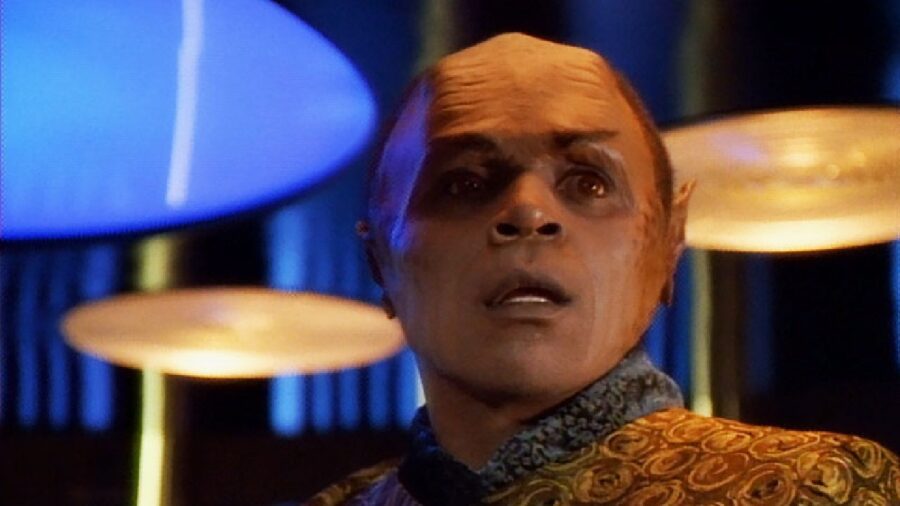
The first game to kick off the Star Trek video game renaissance is Star Trek: Voyager—Across the Unknown, and it takes the franchise where it has never gone before. You take control of Voyager after it is zapped into the Delta Quadrant, and like Captain Janeway, you must help everyone find their way back home to the Alpha Quadrant. Much of the game is spent managing finite resources and using your best judgment of which systems to prioritize. Speaking of judgment, you’ll have to make snap calls in several adventures (including recreations of iconic Voyager dilemmas, like whether to kill Tuvix) that can save the day or possibly get everyone killed.
The general consensus on Star Trek: Voyager—Across the Unknown (which is out now on console and PC) is that it’s good but not great. The most notable thing about it is arguably its sandbox nature and its emphasis on resource management. Historically, many Star Trek games have been shooters, real-time strategy games, and RPGs filled with bonkers puzzles. This was the first game to focus extensively on both resource management and narrative choices, making it arguably the best Starfleet captain simulation since the 2002 title Star Trek: Bridge Commander.
Two More To Beam Up

Surprisingly enough, we’re going to get two more Star Trek games this year. One of them is Star Trek: Outposts Unknown (which will be released for PC and console sometime this year). This game is designed like SimCity, but with a Trek twist. Basically, you are trying to build, maintain, and defend an outpost on a distant planet. That means exploring strange new worlds, gathering resources, and defending everyone from the planet’s most hostile creatures. While not exactly a cozy game, the Outposts Unknown demo (which is out on Steam) proved surprisingly relaxing, which may be good news for players who don’t like the intensity of games like StarCraft.
The other big Star Trek video game of 2026 is Star Trek Warp. This title is described as a “card battler” that lets players “choose characters from a huge roster of Star Trek legends, heroes, and villains, and deploy them at iconic locations like Ten-Forward and the Warp Core.” With seven virtual lanes to defend, this game is designed to keep you on your toes; the title also features both PvE and PvP modes. Overall, Warp sounds like the weird lovechild of League of Legends (what with the lane defense) and the old Star Trek Customizable Card Game. That might just help it appeal to both young fans and older fans.
A New Strategy And An Old Legend
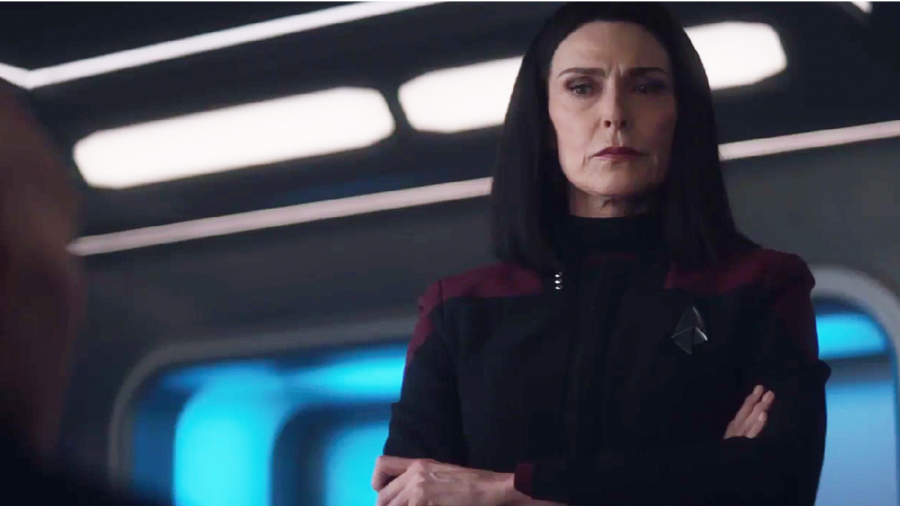
The most exciting new Star Trek game won’t be coming out until next year. Star Trek: Shadow Frontier is a survival horror title where a Starfleet officer must survive on a mysterious planet. The twist? That officer is Ro Laren, who once left the Enterprise-D to join the Maquis before making her way back to Starfleet. Since her surprise appearance in Picard, fans have been wondering how she went from being a principled rebel to being a good, rule-abiding officer. Shadow Frontier may very well give us that explanation. If nothing else, it will give us something unique: a Silent Hill-type game set in the Star Trek universe.
So, what’s up with this sudden influx of Star Trek video games? The smart money is that Paramount is continuing to throw everything at the wall with this franchise to see what sticks. No Star Trek show is currently in development, and the only definitive thing on the horizon is a movie intended to give this universe its second huge reboot. Trek games (particularly those featuring characters like Ro Laren and Tuvok) are a way of appealing to older fans who like the IP and younger fans who just like gaming. By seeing what sells, Paramount can finally get to the bottom of a decades-old question: what the heck Star Trek fans actually want.

Datadog veterans launch AI coding startup Niteshift on a bet against Big AI lock-in
Why enterprise AI will be a major focus at VivaTech 2026


