
Entertainment
The Perfect '80s Zombie Comedy Streaming For Free On Tubi
By Chris Snellgrove
| Published
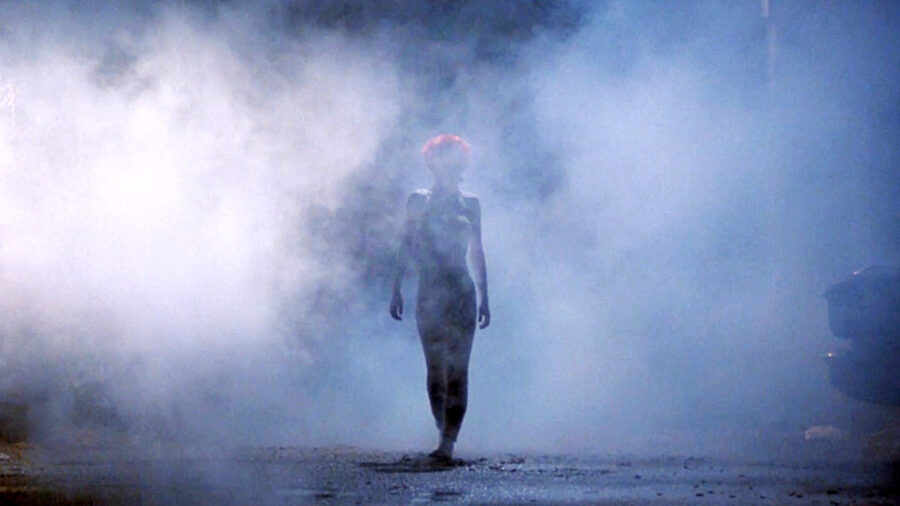
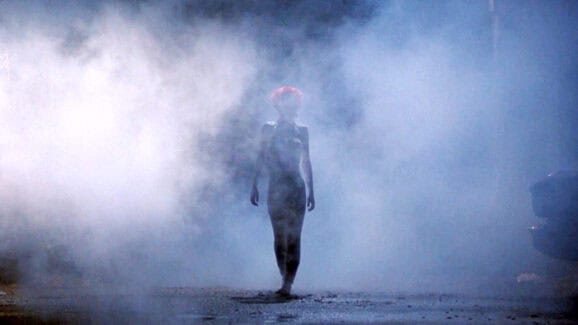
Horror comedy is the pineapple on pizza of film…that is, some people don’t think they go together, but these tastes (both in cinema and in slices) make for a perfect pair. Unfortunately, horror comedies often fall flat because they lean too far in either direction, resulting in films that are either scary without being very funny or silly without being very spooky. Fortunately, one film got the ratio right decades ago and you can now watch it for free: Return of the Living Dead, a zombie classic now streaming on Tubi.
Return Of The Living Dead On Tubi
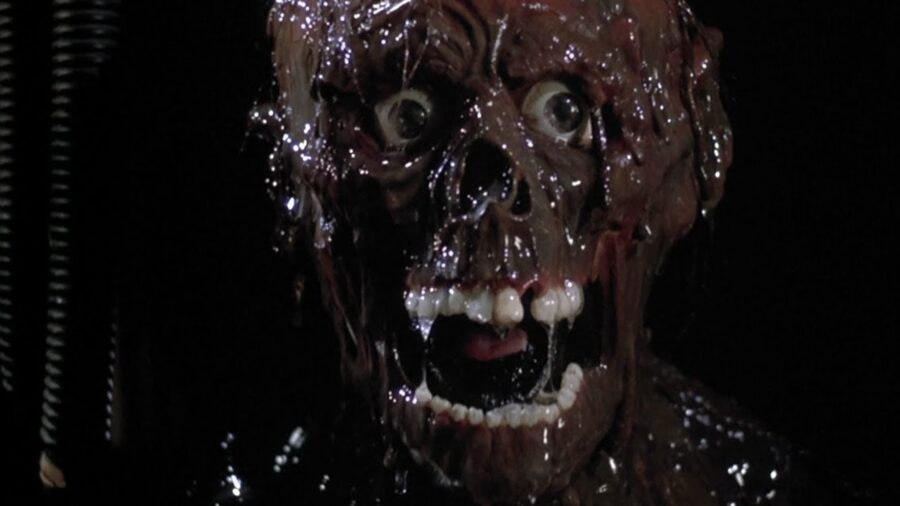
If you’ve never seen it, you should know that Return of the Living Dead has a hilariously thin plot, even by the standards of Tubi horror movies. This film follows the misadventures of a mob of movie misfits dealing with zombies who have been transformed into monsters by toxic gas. As the walking dead increase in number, it becomes a race against time for our protagonists to save the day before they get bitten and become the very monsters they are struggling to fight.
While Return of the Living Dead doesn’t have that much of a plot, it certainly has a better cast than you usually see from Tubi’s eclectic collection of horror. For example, the film stars Clu Gulager (best known to horror fans for starring in A Nightmare on Elm Street 2: Freddy’s Revenge) and Thom Matthews (best known for playing Tommy Jarvis in Friday the 13th: Part VI). It also stars beloved scream queen Linnea Quigley, an icon known for starring in films like Night of the Demons, Silent Night, Deadly Night, and Sorority Babes in the Slimeball Bowl-O-Rama.
Fortunately for Orion Pictures and director Dan O’Bannon (who wrote Alien and worked on genre classics ranging from Star Wars: A New Hope to Total Recall), Return of the Living Dead was a major box office success decades before Tubi was even a twinkle in an executive’s eye. The film went on to earn $14.2 million against a budget of $3-$4 million. This modest profit was enough to greenlight a sequel, and the franchise now includes five films, with a reboot slated for release later this year.
Incredibly, Return of the Living Dead even managed to impress critics like Roger Ebert who are historically unimpressed with the horror genre. On Rotten Tomatoes, the film has a critical rating of 91 percent. In general, critics lauded the film for its fresh, punk-centric take on zombie films as well as its balance of humor and horror.
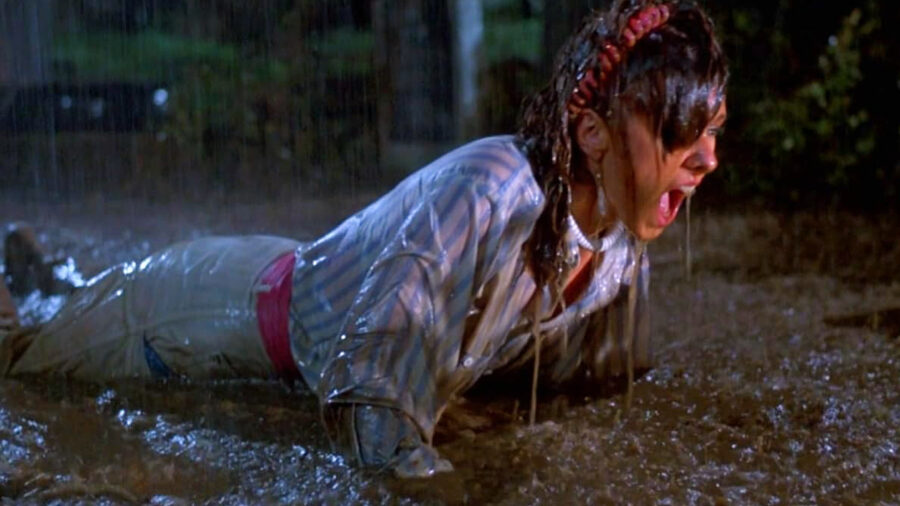
Plus, if you’re a horror fan who hasn’t seen it, you should check out Return of the Living Dead on Tubi so you can appreciate all the cheesy moments that have made it a genre classic. For example, the film is full of crazy dialogue like “Trash is taking off her clothes again,” a line that precedes Linnea Quigley stripping down in a graveyard. Just think of this as one of those movies that perfectly embodies Joe Bob Briggs’ standards of drive-in horror cinema due to its delicious combo of blood, breasts, and beasts.
Additionally, Return of the Living Dead has its roots in some slightly complicated horror history. The name is similar to Night of the Living Dead because the story loosely adapts a novel of the same name written by John Russo, who co-wrote the aforementioned George Romero classic and retained the rights to make films with the term “Living Dead” in them. Fortunately, Dan O’Bannon only agreed to direct the film if he could dramatically rewrite it, which is why the story feels fresh and daring rather than feeling like a Romero retreat.

Will you find Return of the Living Dead the perfect horror comedy as I did, or is this one film you’d rather toss back into the graveyard (next to Trash’s clothes, naturally)? You won’t know until you stream it for yourself. By the time the credits roll, you’ll be wondering why more directors don’t follow in Dan O’Bannon’s steps and do something fresh with zombie cinema, a genre that has been just as rotten and decayed as its monsters for years.
Entertainment
How did WWDC 2026 feel this year?

Was WWDC 2026 a turning point for Apple leadership?
on
The biggest stories of the day delivered to your inbox.
Thanks for signing up. See you at your inbox!
Entertainment
Tech experts analyze Siri and Apple Intelligence updates from WWDC 2026
Experts break down Apple’s latest AI upgrades and what they really mean.
on
The biggest stories of the day delivered to your inbox.
Thanks for signing up. See you at your inbox!
Entertainment
The Milky Ways black hole may have formed this curious tunnel in space
Suddenly, the Milky Way’s central black hole is starting to look a little less like a weirdo.
Astronomers have discovered a large cone-shaped void in gas surrounding Sagittarius A*, the galaxy’s supermassive black hole, that could solve a longstanding mystery.
All active black holes should blow winds or jets of material back into space while they’re feeding, according to theory. That process is how supermassive black holes shape the galaxies around them. But no matter how hard astronomers have looked, they haven’t seen our black hole, dubbed Sgr A* for short, pushing anything back out.
New images from a Northwestern University-led research team now suggest this cone tunneling through a fog of cold gas is evidence of that missing wind. It was almost literally an arrow pointing back at the black hole, said Mark Gorski, who co-led the study.
“This is the first time we’ve had a clean enough view to see the wind’s imprint,” Gorski said in a statement. “We looked at the data and said, ‘There it is. There is the thing that everybody’s been looking for for 50 years.'”
In reality, the discovery wasn’t that straightforward of an a-ha moment. Only after the team had overlaid their picture with data from NASA‘s Chandra X-ray Observatory did their observations begin to make sense. That gave them confidence the odd cone wasn’t just an imaging artifact, they said.
“When you find something that no one has seen before, the first thought that runs through your mind is not ‘Oh my God, we made a discovery,'” said coauthor Elena Murchikova, in a statement. “It’s ‘Oh my God, what’s wrong with my analysis?'”
Mashable Light Speed

Astronomers combined radio and X-ray data from the ALMA and Chandra-X telescopes to study the cone-shaped void near the Milky Way’s central black hole.
Credit: NASA / CXC / Northwestern / M. Gorski / ESO / NAOJ / NRAO / ALMA / K. Arcand and P. Edmonds
Scientists believe virtually all large galaxies have a supermassive black hole at their core. These are regions millions to billions of times more massive than the sun. In fact, so much mass is packed into these small spaces that gravity becomes strong enough to prevent anything from escaping — even light.
These black holes don’t just sit around, waiting for gas, dust, and stars to fall in, but they influence how their galaxies evolve around them by sucking in material and also blowing material that comes near their boundary — called the event horizon — back out.
By taking high-resolution observations with Atacama Large Millimeter/Submillimeter Array in Chile over about five years, the team was able to map cold gas near the black hole in unprecedented detail. This ALMA image is 100 times deeper and 80 times sharper than previous maps, according to the researchers.
The cone stretches one to three light-years away from the black hole. The simplest explanation after careful consideration, according to the team’s findings published in The Astrophysical Journal Letters, is that a fast, energetic stream of hot material has launched out of the black hole’s region, shoving colder gas in its path out of the way.

The ALMA radio telescopes in Chile spent five years observing the Milky Way’s central region to create high-resolution maps of surrounding cold gas.
Credit: ALMA /S. Longmore et al. / ESO / D. Minniti et al.
The team determined it would take more energy than could be provided by all the stars in that area to create the conic gap. The researchers estimated the wind has probably been blowing for 20,000 years or more.
Based on the image, the direction of Sgr A*’s wind seems somewhat tilted and uneven, which suggests it may be weak and mangled by surrounding gas as it travels.
How this feature has escaped the notice of previous researchers is not too surprising, the researchers said. In order to see into our own galaxy’s center, astronomers have to look through the plane of the Milky Way, which is thick with gas, dust, and ionized structures. Sgr A* may also be in a quieter lull, making the distant activity harder to spot.
Some scientists have previously suggested that the lack of wind or jets could mean Sgr A* is an exotic black hole — an outlier among hundreds of billions of others like it. If anything, Murchikova is now convinced of the opposite.
“It shows that our black hole is not unique, and our place in the universe is not unique,” she said.

How did WWDC 2026 feel this year?
Tech experts analyze Siri and Apple Intelligence updates from WWDC 2026


