
Entertainment
The Must-See 1970s Series Responsible For Modern Sci-Fi And Marvel's Best Movies

By Jonathan Klotz
| Updated

The two most popular sci-fi franchises in the world, Star Trek and Star Wars, tackle the genre from opposite directions; the former envisions a utopian future, while the latter is more of a fantasy, but both include clear distinctions between good and evil.
A third way emerged thanks to the influential British series, Blake’s 7, which made the heroes criminals and rough around the edges, showing a sci-fi universe in which the line between good and evil is blurred. With a focus on multi-episode storylines and a dark, gritty tone to its world, the BBC series also laid the groundwork for later shows like Babylon 5, Firefly, Farscape, and the Battlestar Galactica remake.
Not Good Guys, Not Bad Guys
The Blake of Blake’s 7 is Roj Blake (Gareth Thomas), leader of the rebellion against the Federation, brainwashed, unbrainwashed, and then framed for crimes he didn’t commit and sent to a prison planet. A born leader, Blake helps other prisoners escape by commandeering The Liberator, a mysterious vessel run by an advanced A.I. computer named Zen. The thing is, though Blake is the Captain by default, he has his hands full keeping his rowdy compatriots in line as they try to take down the Federation.
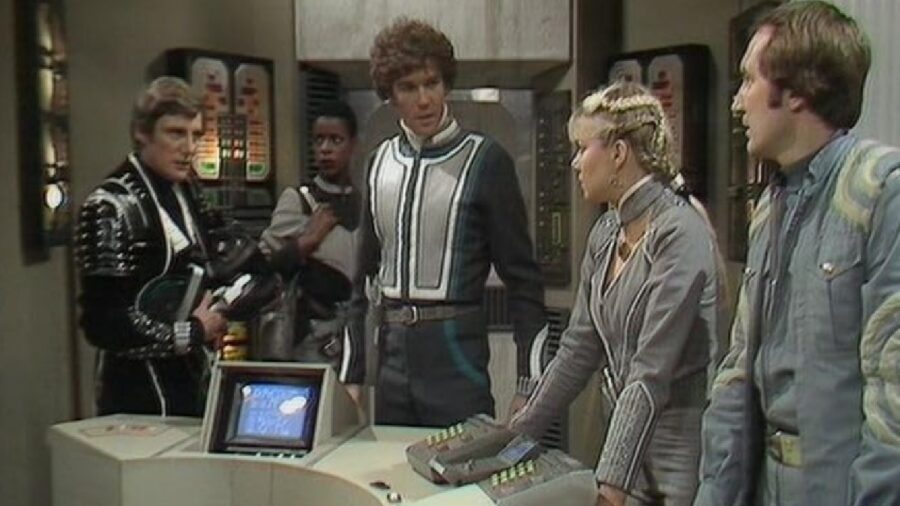
Alongside Blake are Avon, the computer genius who lives by a code of logic and reason, which sounds Spock-like, except he’s also greedy and willing to sacrifice his shipmates to save his own skin, Vila, the cowardly thief with a fondness for booze, Jenna Stannis, a smuggler and skilled pilot, is the closest thing to a loyal crewmember, and even that takes a few episodes.
The other half includes Cally, a telepath with a death wish, Olag the giant bruiser with a device implanted in his brain to keep him calm and docile, and Zen, the sentient computer. The crew in Blake’s 7 would never be confused for the officers of the Enterprise, or even the Rebel Alliance, but they are, arguably, a precursor to the crew of the Moya in Farscape.
Laying The Groundwork For A New Way Forward
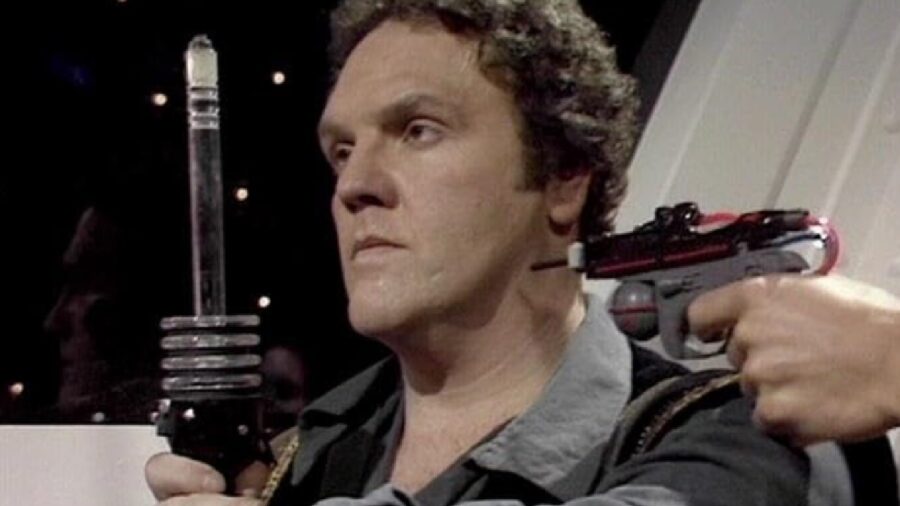
Blake’s 7 follows the usual format of British television, with four shortened seasons of 13 episodes each, but in an unusual twist for sci-fi, the entire first season was written by the show’s creator, Terry Nation, a feat that would not be topped until J. Michael Straczynski wrote Babylon 5. The first two seasons play out like the precursor to another modern classic, Battlestar Galactica, with the Federation constantly at the heels of The Liberator and the ragtag crew dealing with a foe that has them outnumbered and outgunned. This is why, even though the British series debuted in 1978 with a budget that would today be considered nonexistent, it’s still a beloved fan favorite hailed as decades ahead of its time.
Watch 30 seconds of the show, and you can tell that it had no budget, but it did have a strong sense of its characters, putting the emphasis not on spectacular special effects, but on how all seven abrasive personalities bounce off one another in different combinations to the point where it seems every few episodes, someone threatens to leave the Liberator for good.

Terry Nation wrote a space opera about horrible people, steeped in the same cynicism and anti-government attitude roiling England during the 70s, and yet it manages to retain a sense of fun throughout. No matter the decade of its release, Blake’s 7 would be hailed as a creative, bold new take on sci-fi.
The most impressive part of the show is how it pulls everything together for one of the most jaw-dropping finales of any series. In a world with shows that end on cliffhangers and others that are set up to launch spin-offs or revivals, it’s refreshing to know that Blake’s 7 finishes the story.

If you’re bored with Star Trek’s Federation and have seen too many Star Wars characters whoa re supposedly the worst of the galaxy turn out to be teddy bears, then it’s well worth your time to fire up Britbox (available on its own or as part of Amazon Prime Video), and enjoy a sci-fi series that broke the mold and proved to sci-fi fans there’s more than one way to explore a glaaxy far, far away.
Entertainment
Did Star Trek Secretly Inspire Marvel’s Greatest Villain?
By Chris Snellgrove
| Published

Most actors relish the challenge of playing a villain, the kind that audiences absolutely love to hate. However, some performers do their job a little too well and become something else: the kind of villain that makes audiences say, “wait, I can fix him.” A great example of this is Loki, a one-note Thor villain that Tom Hiddleston transformed into the most charismatic baddie of the Marvel Cinematic Universe. Audiences loved him so much that he just kept coming back, first as the Big Bad of The Avengers and later as big brother Thor’s fiercest frenemy in Thor: Ragnarok.
Heck, Hiddleston’s Loki was so popular that he transcended death: the character was killed off in Avengers: Infinity War and then resurrected in Avengers: Endgame before headlining his own TV series on Disney+. In tracing Loki’s slow arc from supervillain to reluctant hero, many Marvel fans have compared this bad guy to Q, the godlike chaos agent of Star Trek: The Next Generation. Like Loki, Q had his own slow-burning transformation from the ultimate villain to the most unexpected hero. In an ironic twist, however, one of Trek’s best writers resisted humanizing Q because she wanted him to be more like the nefarious Loki of Norse mythology.
Right On Q
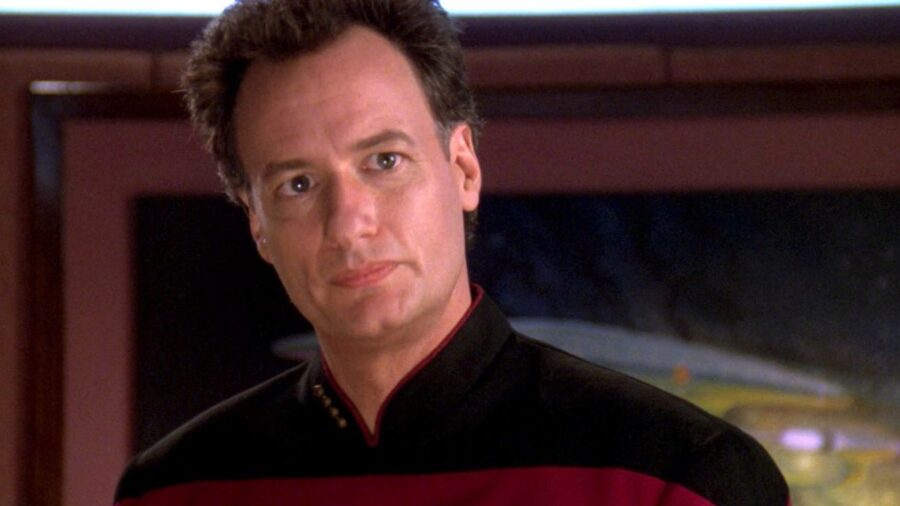
Originally, Q was created as a matter of convenience. When Star Trek creator Gene Roddenberry needed to stretch the first episode of The Next Generation into a two-parter, he created Q, a godlike alien that could easily overpower the entire Enterprise crew with his fantastic powers. Q was very important to Roddenberry: not only did he name the character after a fan, but he ignored the objections of former Original Series writers who insisted this “new” villain was just a reskinned Trelane, the bad guy who clashed swords with Captain Kirk in “The Squire of Gothos.”
Since he is a cosmic trickster figure, fans have compared Q to Loki (the mythic Norse figure later adapted into a Marvel comics villain) from the very beginning. Later, though, things would come full circle. By the time Loki became a major player in the MCU, fans kept comparing him to Q!
Keeping It Loki
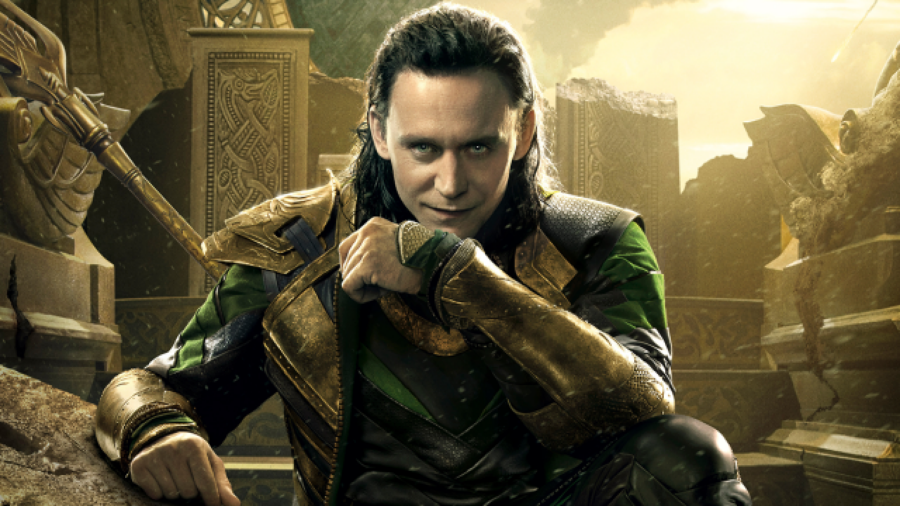
Loki became a major player in the Marvel Cinematic Universe. He was originally written as a standard-issue villain in the first Thor movie, but Loki actor Tom Hiddleston added a remarkable amount of nuance and charisma to the role. Correspondingly, he served as the headline villain in The Avengers and then a reluctant hero in Thor: The Dark World and Thor: Ragnarok. Fans were sad to see him killed by Thanos in Avengers: Infinity War, but a version of him escaped the timestream in Avengers: Endgame. After that, Loki had his own TV series that chronicled his transformation from cosmic trickster to full-blown hero.
Once Hiddleston’s Loki became a franchise mainstay, MCU fans began comparing him to Q. To be clear, nobody involved with Marvel has ever confirmed that their version of Loki was inspired by this iconic Star Trek villain. Why the constant comparisons? Both characters are godlike tricksters whose chief pleasure in life is messing with mortals. Each has traveled the cosmos and traveled to alternate realities. Finally, each had an unexpected transformation from villain to hero. Loki went from trying to rule humanity to saving humanity in every possible timeline. In “Deja Q,” Q began to soften, eventually becoming a character who would help save all of humanity in (wait for it) multiple timelines!
Everything Comes Full Circle
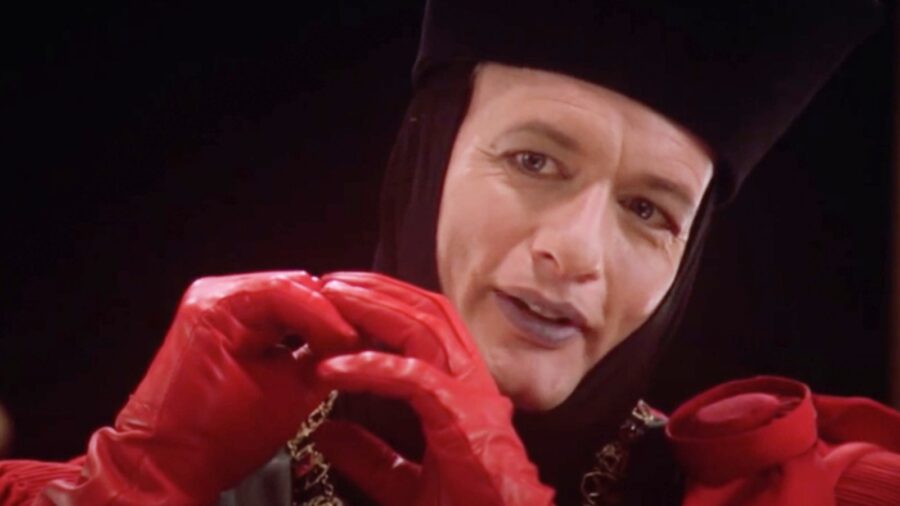
Weirdly enough, this roller coaster ride has one more loop, and it’s a doozy. The reason that Q began to soften in “Deja Q” is that he was stripped of his powers; he learned enough about humanity to try to sacrifice himself for the Enterprise crew, an act so noble that the Q Continuum restored his powers. However, according to Captain’s Logs: The Unauthorized Complete Trek Voyages, TNG staff writer Melinda Snodgrass wanted the character to stay mean because of a certain Norse deity.
“I always think of Q as Loki. He’s chaos. Maury Hurley always thought Q was here to teach us a lesson, to guide and instruct us,” she said. “I can understand that to some extent, but I really see him as a mischief maker. He really just wants to foul Picard’s head.” How’s that for chaos? One of TNG’s best writers hated humanizing Q because she wanted him to be more like the ruthless Loki. However, when the MCU made Loki a main character, they humanized him so much that fans constantly compare him to Q!
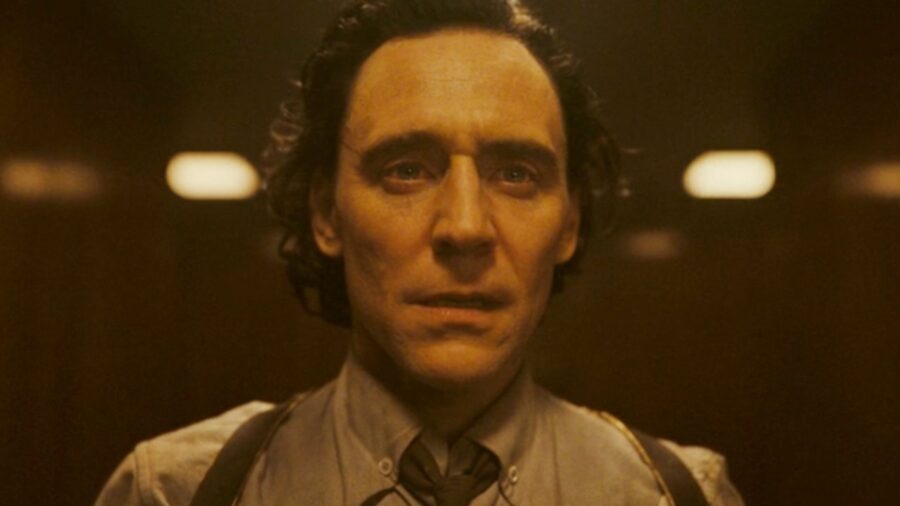
Sadly, I can’t give you the awesome cosmic powers wielded by either Q or Loki, and I can’t burden you with glorious purpose. However, I can do the next best thing: just like that, you have been burdened with glorious trivia.
Entertainment
Doctor Who’s Greatest Creator Just Admitted He Lied To Fans
By Chris Snellgrove
| Published
Every fandom has its wildly polarizing figures. In Star Trek, for example, many fans revere William Shatner as an acting legend, but others see him as an egomaniac who’d phaser his costars in the back if it meant getting an extra minute or two of screentime. In Doctor Who, very few of the actors are quite as polarizing (not counting John Barrowman and his alleged problematic sexploits onset), but the same can’t be said about the showrunners. When the show goes off the rails, the fandom tends to blame the man at the top, which is why Chris Chibnall gets so much heat for Jodie Whittaker’s subpar seasons as the Doctor.
Historically, Russell T. Davies was one of the most beloved showrunners. He was in charge during the first four seasons of the 2005 Doctor Who revival, essentially turning this venerable ‘60s franchise into something hip and sexy enough to win over younger fans. But Davies became significantly more controversial when he returned to Doctor Who nearly two decades later, and his run was canceled after two bad seasons that barely anyone watched. That was bad enough, but fans are now ready to take out their pitchforks because Davies took to Instagram and confirmed that he had been lying about working on a Christmas special, which was, seemingly, also a complete fabrication!
A Timey Wimey Rise And Fall
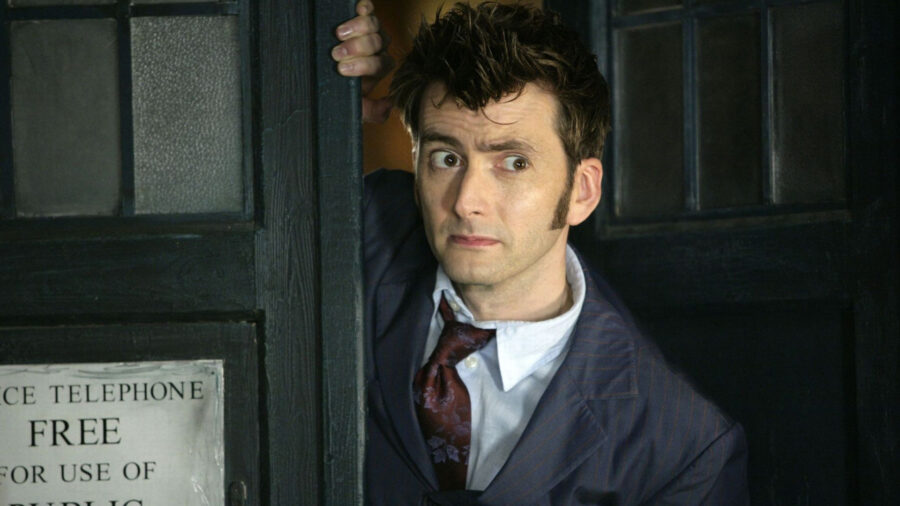
Once upon a time, Russell T. Davies’ return to Doctor Who was hailed as a return of the king. The original series had fizzled out in 1989, and an attempt to bring it back as a made-for-TV movie in the ‘90s was dead on arrival. Davies was the showrunner for the 2005 reboot, which was an unqualified success: with exciting stories and beloved actors like David Tennant, NuWho filled the sci-fi TV void that was left by the early cancellation of Star Trek: Enterprise. He eventually left the franchise, leaving it in the capable hands of Steven Moffat, a showrunner who added a distinctly movie-like feel to almost every episode.
When Moffatt left the franchise in 2017, the series got a new showrunner: veteran Doctor Who writer Chris Chibnall. Unfortunately, things went downhill, as fans were divided on new Doctor actor Jodie Whittaker and controversial changes to franchise lore. Eventually, the BBC threw a Hail Mary, partnering with Disney and bringing back Russell T. Davies as showrunner. Sadly, the new show failed to gain much of a viewership and was canceled after two seasons. Davies previously mentioned writing a script for an upcoming Christmas episode that fans hoped would tie everything together. Incredibly, though, Davies hopped onto Instagram to verify that he made up the Christmas special and had never written anything for it!
Everything Falls Apart
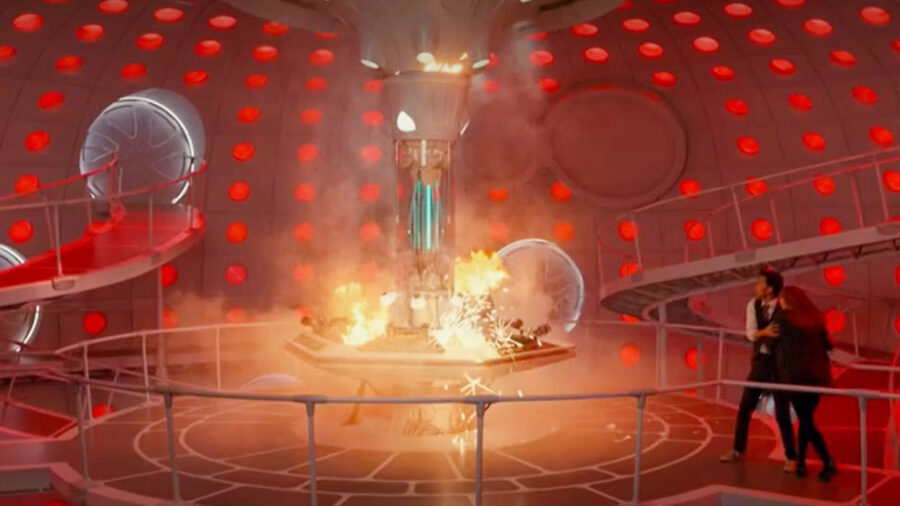
While Russell T. Davies’ Instagram post was long-winded, it got to the point relatively quickly. He verified that he was saying “GOODBYE” to Doctor Who and that the BBC is “putting the show out to tender.” After that, Davies clarified that “there won’t be a Christmas Special–we only cooked that up to guarantee a future when no one knew what would happen, but now we do know, there’s no need for it.” Following on the heels of that rather stunning admission about the Christmas Special, he added, “For the record: there was no script, I never wrote it, and no actor was ever approached to play the next Doctor.”
Fans were salty about Davies’ admissions for several different reasons. First, he had claimed to be writing the script in December of 2025, a claim that had seemingly been backed up by Doctor Who composer Murray Gold. Taking his Instagram post at face value, we can’t help but wonder why Davies was comfortable just straight-up lying to fans about this Christmas special. Even more incredibly, it seems he is saying that the special was never in any level of active development and was simply announced as a last-ditch attempt to keep the franchise alive.
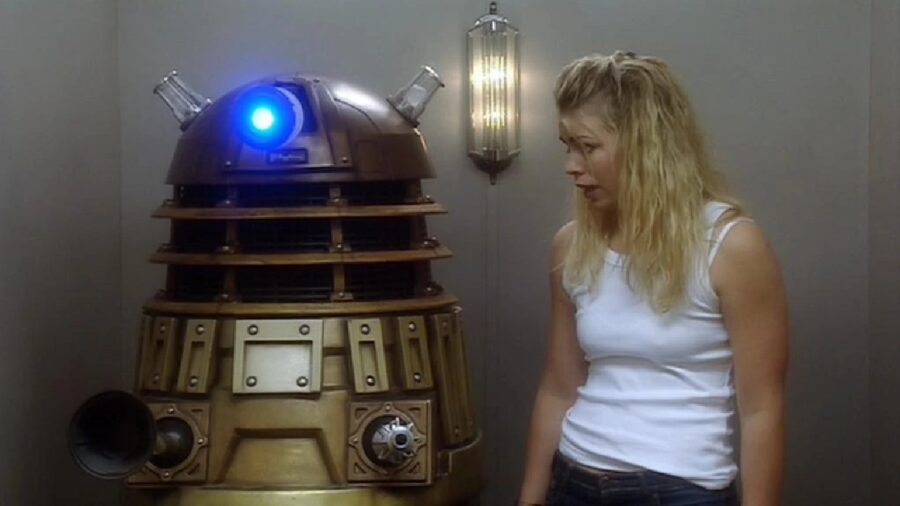
Adding insult to injury, no script development and no attempt to cast a new lead means that even Davies (the man in charge!) had no idea how to wrap up the cliffhanger in which Ncuti Gatwa’s Doctor somehow regenerated into the body of Billie Piper’s Rose Tyler, a former Companion. When the episode aired, some cynical fans thought that bringing this sexy, beloved actor back was a last-ditch attempt to save the show. Now, that theory seems accurate, given that Rose was apparently plonked back into the franchise with no real idea of how to use her character. Now, that will be a problem for another showrunner, assuming that Doctor Who ever comes back.
The Crankiest Doctor Is Now Validated

Amid the hate spurred on by Russell T. Davies’ Instagram posts, more and more Doctor Who fans came to a simple conclusion: Christopher Eccleston was right! Eccleston played the Doctor for the first season of the 2005 revival; when fans asked why he left the show, the actor responded that he had concerns about how the crew was treated and that he was told to ignore these concerns. After leaving, he claimed that he had lost all trust in Davies. More recently, when Eccleston was asked at a fan convention what it would take for him to return to Doctor Who, he bluntly responded, “Sack Russell T Davies…and I’ll come back.”
For a long time, it was easy to dismiss some of Eccleston’s claims as sour grapes. Now, though, Davies returned to Doctor Who only to run it into the ground, and on his way out, he gloated about lying to fans about a Christmas special that will never come to be. In the rest of his Instagram post, he alternates between being weirdly defensive and mildly snarky. Now, it seems increasingly clear that Eccleston was right about the other man. However, we’re left with one silver lining: with Davies now sacked, Eccleston is one step closer to returning to the franchise that made him a household name!
Entertainment
The Star Trek Icon Who Suddenly Stripped Naked On Set
By Chris Snellgrove
| Published
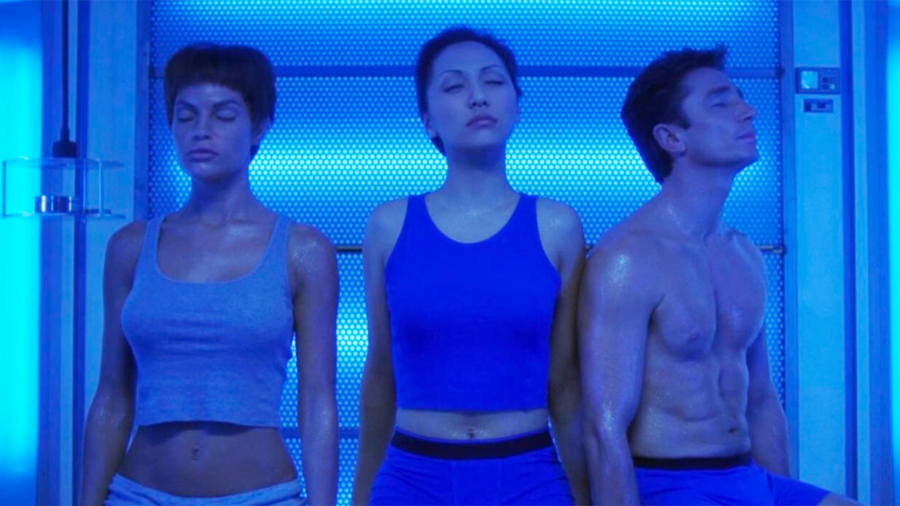
From the very beginning, Star Trek has been a franchise about exploring strange new worlds. Often, that’s literal, with our intrepid crews learning about new life and new civilizations on one planet after another. More often than you might think, however, the most interesting explorations were more metaphorical, as our characters discovered new facets of their own humanity. However, there was one final frontier this franchise never explored for decades: nudity!
Until its more recent pivot to streaming, Star Trek had always premiered on network television. That meant that it had to abide by certain broadcast standards and practices. As you might imagine, there are plenty of restrictions regarding nudity, most of which focus on how much skin can be shown. That’s why, when Q showed up naked in The Next Generation episode “Deja Q,” we only see so much: one cheek, no crack, and (perhaps most importantly) no genitals. No matter how much they wanted it otherwise, fans could only see so much of Q actor John de Lancie’s body. The actors, however, saw everything because de Lancie stripped completely naked on set!
The Naked Now

“Deja Q” is the Next Generation episode where Q loses all of his godlike powers and is rendered human. He is being punished by the Q continuum for abusing those powers to torment various alien beings who can’t fight back. Aboard the Enterprise-D, Q is attacked by an alien race that he had preyed on before (the Calamarain), and they end up damaging Data. Realizing that he is putting the entire crew at risk, Q steals a shuttle and tries to sacrifice himself to the aliens to keep everyone else safe. Impressed by altruism, the Q Continuum ultimately restores all of Q’s powers.
In previous appearances, Q had always made himself look imposing by dressing like a judge, a soldier, and even a Starfleet captain. To visually underscore that his powers had been stripped, the Star Trek: The Next Generation producers stripped him, and Q showed up completely nude on the bridge. To make that happen, John de Lancie was given a g-string to protect his modesty. According to visual effects supervisor Dan Curry, de Lancie decided to forego the g-string, and nobody else knew until the actor showed up on set.
Star Trek Icon Bares It All

As recorded in Star Trek: The Next Generation 365, Curry said, “The script said ‘Q appears nude.’ We planned to have John de Lancie lay on a wooden board that couldn’t be seen due to Patrick Stewart’s position in the shot.” However, things soon went off-kilter in the most hilarious way. “As we were prepping the shot, John showed up on the set with his bathrobe on. When we were ready to go, he dropped his bathrobe, and he was stark naked. That caused… ummmm… a bit of a stir.”
Curry didn’t elaborate further, so we can only imagine what costars like Patrick Stewart and Brent Spiner felt about seeing the full de Lancie. However, the visual supervisor did note that despite (or perhaps because of) the actor’s unexpected antics, the scene went exactly as planned. “It’s one of the few shots we’ve done that came out looking exactly like the storyboard. I’d picked the spot for the camera in advance, and the scene played out just as I drew it.”

In Star Trek: The Next Generation, Q is a chaotic trickster god, and you never know exactly what he’s going to do next. Now, you know that John de Lancie has the same temperament as his omnipotent onscreen alter ego. While the actor doesn’t, sadly, have his character’s fantastic cosmic powers, he did demonstrate one astonishing ability on the set that day: just like that, he transformed “Deja Q” into a special after-hours rerun: “The Naked Now.”

Did Star Trek Secretly Inspire Marvel’s Greatest Villain?
Why Andrew Yang is building instead of waiting for Washington


