
Entertainment
The Most Horrifically Tortutured Man In Science Fiction And His Final Reward

By Joshua Tyler
| Published
Science fiction is often at its best, when unusual sci-fi circumstances are used to highlight real world issues. One of the best examples of this is the way Science fiction handles PTSD and the horrific realities of the practice of torture.
Star Trek in particular, has never shied away from dealing with torture. One of Star Trek: The Next Generation’s very best episodes, “Chain of Command”, revolves around it, and has spawned numerous discussions about the counting of lights. Yet, as much as characters like Picard or Kirk have suffered, no one in the franchise, and maybe not in the history of the entire human race,vhas suffered more than one pivotal sci-fi character.
He wasn’t an officer. He wasn’t a scientist. He’s an enlisted man without any rank. He’s a man who rolls up his sleeves and gets to work in the dirt.
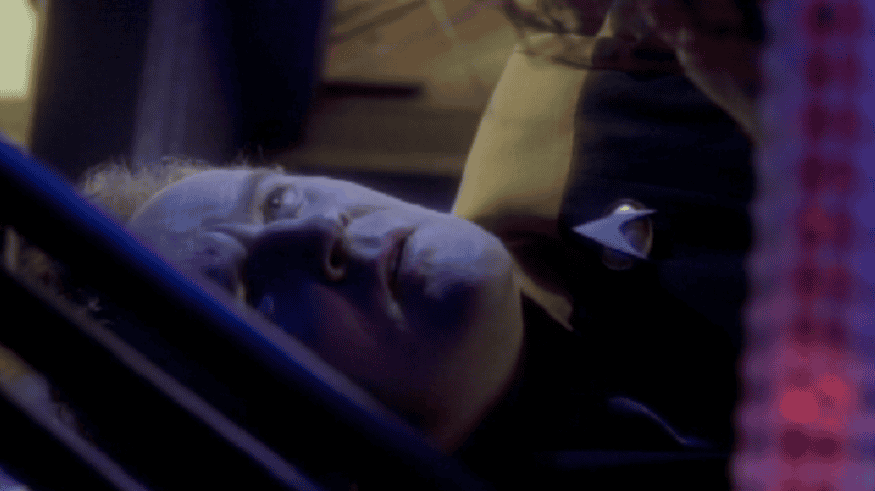
His name, is Miles O’Brien. And he’s a union man.
Miles Edward O’Brien (Colm Meaney) was introduced in Star Trek: The Next Generation’s very first episode and returned as a recurring, supporting cast member. He was regularly featured throughout The Next Generation’s run as the Enterprise’s transporter Chief.
His workmanlike position endeared him to both fans and the creators of the show. So, when the time came for Star Trek’s first spinoff, Star Trek: Deep Space Nine, O’Brien was chosen as the character that would act as that show’s Chief of Operations. I suspect he never would have accepted the transfer, had he known the hell that was about to follow.
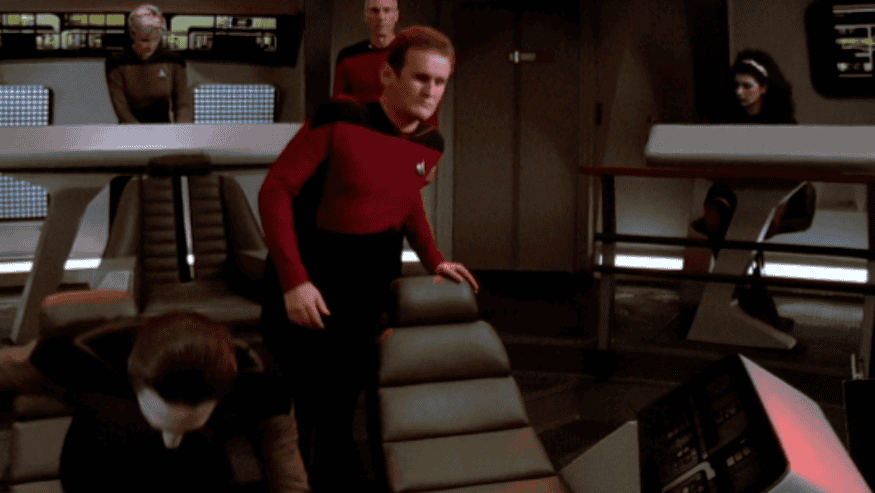
After his arrival in the first episode, Star Trek: Deep Space Nine quickly embarked on a week-after-week mission to break Miles O’Brien’s body, his spirit, and his mind. There were even times when the show succeeded, though he usually bounced back. Mostly.
At first his torments were more minor annoyances like the station always breaking, constant nagging from his wife, or being forced to go hunting through crawlspaces for Voles. However, the torture of Miles O’Brien, soon took on a much darker tone. After seeing his complete character arc, now there’s no question that Miles O’Brien is the most tormented person in the history of the Federation. And maybe in all of fiction.

What follows is an account of the most horrific ways in which this lovable working stiff was viciously persecuted.
And no, we’re not talking about being married to Keiko. Though, that would be pretty bad.
THE TORMENT OF MILES O’BRIEN
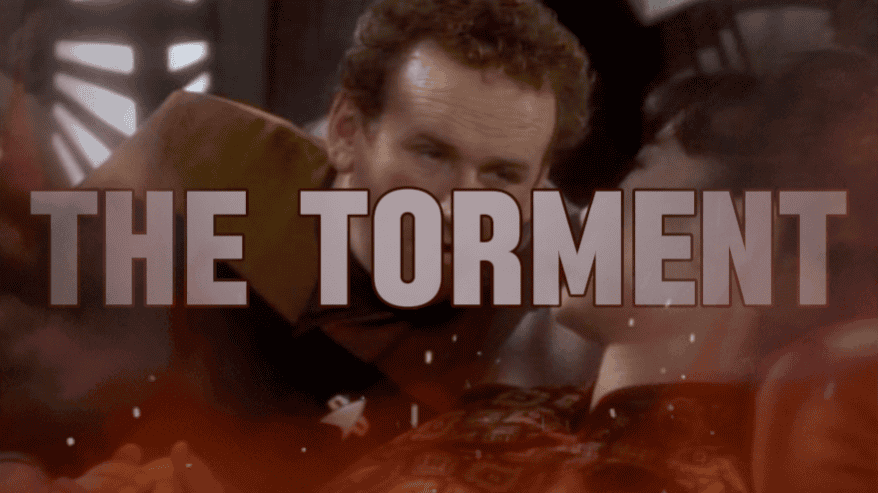
A Visionary Hell

In the Star Trek: Deep Space Nine season 3 episode “Visionary,” Miles ends up running into a future version of himself, before actually dying. Again, actually, dying.
This wasn’t one of those fake sci-fi show, he’ll be ok in the end deaths. Deep Space Nine fully kills Miles off. Then to add insult to injury, he’s replaced by his future self. From then on, everyone pretends the real Miles, the Miles who was killed, never existed.
The Miles that replaced him likely endures constant, existential dread. He’s doomed to spend the rest of his life wondering whether he’s really the person everyone thinks he is, or if he’s just a freaky future clone of himself.
A Tribunal Of Humiliation And Pain
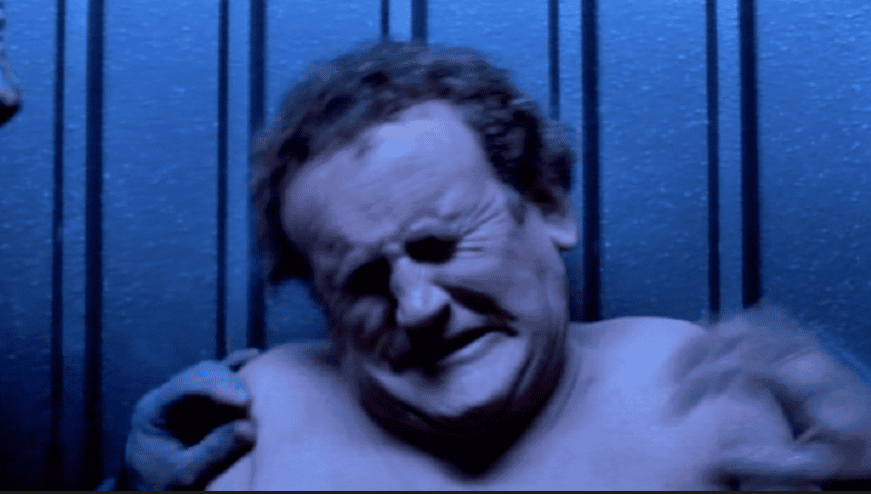
In the Deep Space Nine Episode “Tribunal,” it starts out seeming like Miles has finally caught a break. He’s off on a nice vacation with his wife, at least until he’s tortured and falsely imprisoned by the Cardassians.
The Cardassians are especially good at torture, and they do all they can to make Chief O’Brien suffer. It culminates in the hapless Starfleet officer, having one of his teeth ripped out with pliers, before being told he’s already been declared guilty and will soon be executed.
Eventually, his friends prove that he’s been framed and free him, but the fact that he spends an entire week being physically abused in Cardassia’s brutal prison system, while expecting to die, all because he wanted to go on a vacation, had to leave some sort of lasting, psychic damage.
Time’s Orphan Makes The Chief Watch His Daughter Destroyed

Sometimes the torture Miles endures, is due to what happens to others. Miles O’Brien, prides himself on being a devoted family man and an excellent father. So, of course, in the season 6 episode “Time’s Orphan,” his daughter Molly falls into a time portal.
By the time Miles gets Molly back, she’s aged ten years and spent that time living alone as a feral animal. His little girl is gone and in her place is some sort of crazed barbarian. He’s forced to send her back into the time portal and accept her as dead, becaus she’s so damaged she can no longer live in the normal world.
In the end, a younger version of Molly comes out of the portal, and Miles gets her back, but he still had to spend weeks dealing with the psychotic older version and going through the anguish any parent would suffer when they realize their child is gone.
Demented Whispers
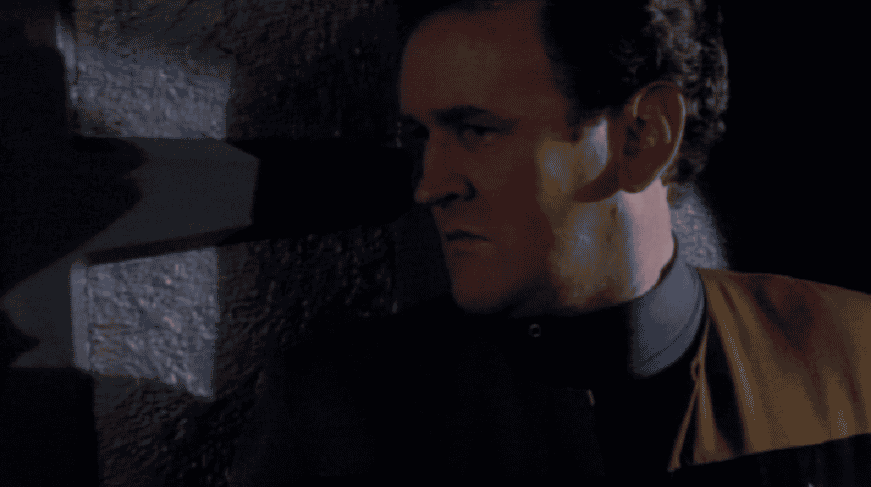
In the Star Trek: Deep Space Nine season 2 episode “Whispers,” Chief Miles O’Brien returns to the space station after completing an engineering job on another planet, only to discover that his crewmates and family are behaving strangely towards him. Everyone is oddly distant and suspicious.
O’Brien’s no fool and he quickly notices subtle changes in the station’s operations. As he tries to uncover the reason for this sudden shift, his paranoia grows, driving him to investigate further.
The tension escalates, when O’Brien decides to flee the station in a runabout, convinced that everyone is part of a plot to replace or harm him. Pursued by his own friends, he heads to a meeting of Federation ambassadors, believing he must warn them of a potential infiltration on DS9.
However, in a dramatic twist, it is revealed that O’Brien is actually a replicant, created by an unknown entity, and the real Chief O’Brien is safely undergoing surgery back on the station. The episode ends tragically for the replicant O’Brien, who is fatally shot just as he begins to understand his own identity.
That episode might sound like a rare win for the real O’Brien, but it’s not. O’Brien is left deeply unsettled by the whole ordeal. He’s particularly affected by the replicant’s desperate attempts to connect with his family and the crew, highlighting a struggle for identity and belonging. The real Miles, tries to reconcile the fact that his duplicate, although not truly him, shared many of his memories and emotions while interacting with the people he cares about.
20 Years Of Torment In Hard Time
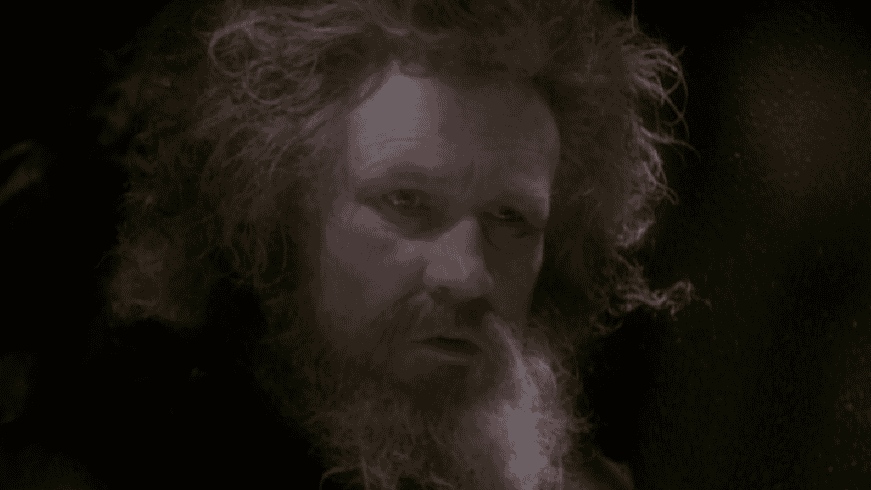
What Miles O’Brien endures in the season 4 Deep Space Nine episode “Hard Time,” may be the worst torture anyone has ever experienced.
It kicks off when Chief O’Brien shows interest in some alien technology and ends up wrongly accused of espionage. He’s sentenced to 20 years and thrown in prison.
In case you haven’t noticed, Miles spends a lot of time in prison. This time he doesn’t get out.
Over the course of that episode, we watch the decades go by as the now former Operations Chief lives out the rest of his life in a horrific jail cell. He’s often on the verge of starvation. He’s not allowed visitors or contact with the outside world. His only socialization is with another prisoner, who eventually becomes his best friend.
Conditions become so bad, both O’Brien and his friend start to lose their minds. The guards abandon them and stop feeding them On the edge of total starvation, with their wits already half gone, Miles and his friend start fighting over the few scraps of food they have left. In the ensuing struggle Miles intentoinally and brutally kills his best friend.
That sounds bad enough, but this isn’t a normal prison. It’s a prison simulation, that only happens in his mind. What seemed like decades to Miles was in fact only a few seconds in reality.
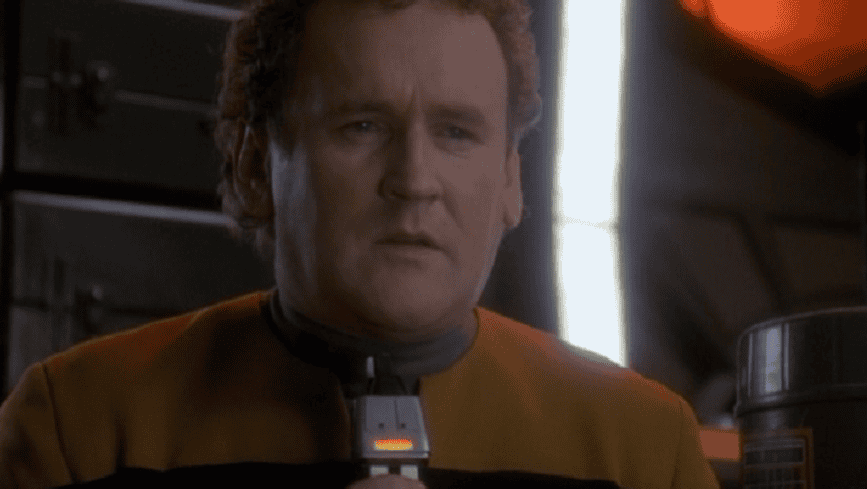
To Chief Miles O’Brien it’s utterly real, and always will be. Yet, the twenty years he spent there weren’t real, and when its over he’s thrust right back into his normal life like it never happened. Only, to him it did happen.
The things he believes he did and endured, feed intense PTSD, causing him to attempt suicide rather than continue on. Doctor Bashir, talks him down and gets him in therapy, but Miles O’Brien is never quite right again.
Chief O’Brien’s Endless Torment

We could turn this into an entire book, there are so many horrible things in the Chief’s story.
There was that time Starfleet intelligence forced Miles into going undercover and pressured him into intentionally getting his friend killed.
There’s his distant past which is already haunting and tormenting him before we even meet him. Before we knew Miles on TNG, he was a soldier fighting in brutal conflicts against the Cardassians, barely surviving to tell the tale. So of course he ends up being forced to serve on an old Cardassian space station and make friends with the enemies who killed off his comrades.
There’s more. Like the time he almost died from an ancient biogenic weapon
Or that bizarre incident when an alien takes control of his wife’s body and threatens to kill her, unless he sabotages the station. Miles is left protecting his daughter from her own mother, a horrifying prospect for any father to endure.
Chief O’Brien Is The Most Important Person In Star Trek
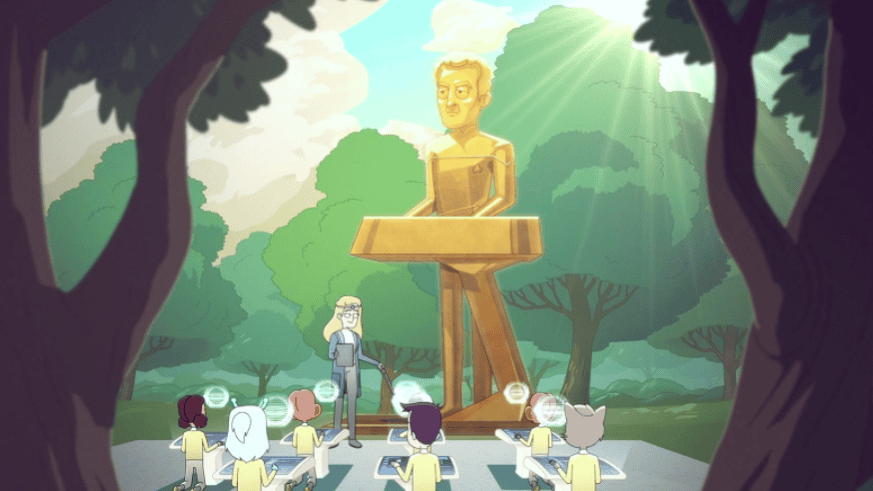
If there’s any solace to be had here, it’s that it seems Miles was eventually recognized for his bravery and perseveerence. In the far off future beyond Star Trek: Deep Space Nine, Miles O’Brien is recognized as one of the most important people in Starfleet history.
He’s immortalized in the third Star Trek: Lower Decks episode, “Temporal Edict”, during a scene in “the far future” where a classroom learns about noteworthy people in Federation history. The scene ends with the reveal of a huge golden statue, immortalizing Chief O’Brien as one of Starfleet’s greatest figures.
Why was O’Brien chosen for this honor? It’s never stated, but it may very well be, that surviving all these many torments ends up making him into the perfect Starfleet officer.
Or it could just be that he’s the best, because Miles O’Brien, like his ancestor Sean, is more than a hero. He’s a union man.
Entertainment
Tinder responds to viral video about tricking facial scan

Earlier this month, journalist Christophe Haubursin published a YouTube video called “Something very weird is happening on Tinder.” In the video, which has over 1.5 million views as of this publication, Haubursin described a way to workaround to Tinder’s Face Check feature — the facial recognition that is now required for all U.S. users as of Oct. 2025.
What Haubursin and his interviewees discovered is a bunch of profiles that appeared normal, but the last photo on each profile was…off. It was usually a digitally-altered image of a different person in a weird scenario, like on a billboard or in a Victorian painting. And if someone matched with this person and asked about the image, they dodged the question. Instead, they asked to move the conversation to WhatsApp, where it became clear they were romance scammers.
But how did they evade Face Check? Haubursin found that Tinder and Hinge, both owned by Match Group, only need one photo for the facial recognition software. So these people may be the actual person in that odd image, and able to pass the face scan. Then, they could grift images of other people from the internet to use for the bulk of their profile.
Hookup apps for everyone
AdultFriendFinder
—
readers’ pick for casual connections
Tinder
—
top pick for finding hookups
Hinge
—
popular choice for regular meetups
Products available for purchase through affiliate links. If you buy something through links on our site, Mashable may earn an affiliate commission.
Tinder didn’t respond to Haubursin’s request for comment, but it did respond to Mashable’s.
“We’re aware of the concerns raised about our Photo Verification and Face Check features. In recent weeks, we’ve taken action to strengthen our Photo Verification badging logic, including requiring greater consistency across profile photos and additional reviews to achieve higher confidence in cases that warrant extra scrutiny,” a Tinder spokesperson told Mashable. “Face Check, our more recently launched verification system, builds on Photo Verification to help confirm accounts belong to real users. We are committed to continuously improving and investing in our systems to keep Tinder safe and authentic for our users.”
Mashable Trend Report
Mashable also recently spoke with Hinge’s Chief Product and Technology Officer, Ben Celebicic, about this, as Haubursin also replicated this on Hinge (which began implementing Face Check after Tinder). Celebicic hasn’t seen Haubursin’s video, but he did say that there’s a constant battle between trust and safety teams and policy-violating actors.
“They’ll find new ways,” he said. “We’ll find ways to prevent them from accessing the platform.”
There’s not going to be a single product the team builds that will fully prevent people from bypassing our solution, Celebicic continued. He said they have a big team working on these issues, and they’re in tune with new ways bad actors try to penetrate the platform and work to fix them.
Around one-third of Hinge’s workforce is dedicated to trust and safety, the app told Mashable, and Match Group invests $125 million annually in this area.
Trust and safety is a major concern for dating apps. In Sept. 2025, two senators sent a letter to Match Group CEO Spencer Rascoff, urging him to do something about romance scammers on the platforms. In Dec., a class-action lawsuit against Match Group claimed that a serial rapist was allowed on Tinder and Hinge after several women reported him.
Facial recognition scans have boomed recently thanks to the influx of age-verification laws, which require a robust method of proving someone’s age in order to access certain content, usually explicit content. These methods include uploading a government ID to a platform, using a credit card, or in other cases, scanning your face. But, like with Face Check, people have found workarounds to evade the scan and see the content they want to see.
Entertainment
The Unhinged, Raunchy 80s Robot Sci-Fi Almost No One Saw
By Robert Scucci
| Updated

When I fired up 1987’s Robot Holocaust on Tubi, I was expecting a Mad Max-style scenario with a bunch of clankers running amok and wiping out humanity. Instead, I got a weird, loincloth-laden odyssey where the most expensive special effects are red lights, and the villain is basically a giant, walking, talking Dr. Zoidberg from Futurama. I know I’m being anachronistic by comparing a 1987 film to a character that didn’t exist until 1999, but that’s the comparison I’m making, and I’m sticking with it.
Let me have this, because the other reality I have to live with is that this movie is pretty rough. There are barely any robots, and what transpires hardly qualifies as a holocaust. The male-to-female buttcheek ratio sits at a clean 50:50, and the nudity isn’t even the good kind. Everybody’s wandering around in punishing heat all day, so you just know the smell is so bad you can almost taste it.
It’s Listed As A Sci-Fi But It’s More Of A Fantasy Quest

The best way to describe Robot Holocaust is an ill-fated cross between Mad Max and the original Star Wars trilogy. You’ve got a ragtag group of city-dwelling slaves living under the thumb of the Dark One, with his laws enforced by Torque (Rick Gianasi), the robot who looks like Zoidberg.
These wasteland slaves are trying to overthrow the Dark One, and their plan mostly involves a lot of unsexy walking as they run into enemies, obstacles, and, occasionally, robots.

Leading the charge is Neo (Norris Culf), a New Terra drifter accompanied by his C-3PO-esque companion, Klyton (Joel Van Ornsteiner). Along the way, he links up with Deeja (Nadine Hart), Nyla (Jennnifer Delora), Bray (George Gray), and Kai (Andrew Horwath), all of whom are fed up with the Dark One’s evil machinations and willing to trudge half-naked through asphalt and overgrown wasteland to do something about it.
Alliances and wills are tested, but the goal stays the same. Our heroes, and there are too many of them to really invest in, especially given their almost aggressive lack of charisma, need to find the Power Station where the Dark One resides and wipe out him and his goons once and for all.
Amateur Hour, But Not Without Its Charm

While Robot Holocaust mostly plays like a college film project with no budget, I can appreciate what writer-director Tim Kincaid was going for with limited resources. Most of the exterior shots look like people wandering around the outskirts of NYC, and most of the interior scenes feel like they were filmed inside a Spirit Halloween. A lot of my enjoyment came from the production notes I made up in my head, like, “Places, everybody! This fog and these fake spiderwebs set us back $25, making it the most expensive scene we’re shooting!”
That said, I’ve got to give the cast credit for committing to the vision, even if they’re reaching pretty far to get there. The robot costumes actually look decent from a distance, but the illusion falls apart in the close-ups, which we get way too often.

At the end of the day, Robot Holocaust is perfect home-viewing material. It’s only 79 minutes long and packed with a healthy dose of camp. It doesn’t make much sense, and when the primary antagonist is finally revealed, it’s basically just a guy dressed like an egg. For that reason alone, it’s worth a watch because it’s just so random.

As of this writing, you can stream Robot Holocaust for free on Tubi.

Entertainment
Apple TV IS Quietly Becoming The Best Streaming Option
By TeeJay Small
| Updated

When Netflix first made their pivot from DVDs-by-mail to home streaming, they revolutionized the way that people consume media. At the time, consumers were raving about a seemingly unlimited library of movies, TV shows, and even some proposed original programming. This came with zero ads, for a monthly subscription fee that cost less than the price of a single movie ticket. Streaming exploded in popularity, so much so that numerous studios and production companies rushed to develop platforms of their own.
In 2026, there are dozens of streamers, mostly offering small libraries of mindless junk sandwiched between more ad space than Times Square. The golden era of streaming might be dead for the likes of Netflix, but some streamers are still new and fresh, providing a glimpse into that short, sweet period when prices were low and production values were high. For my money, I’d say Apple TV+ is one of the best streaming services currently on the market.
A Worthwhile Loss Leader
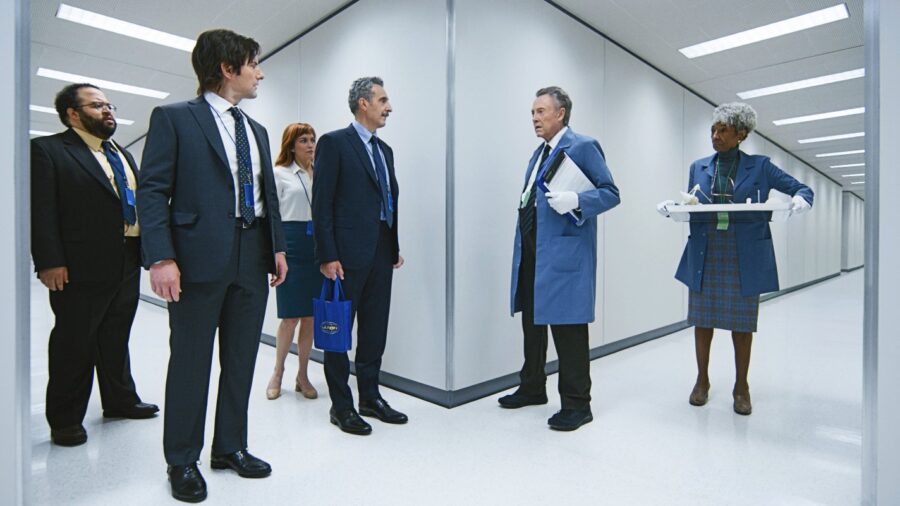
Apple TV+ was first launched back in 2019. At the time, the streamer had very few original projects, and needed to quickly establish itself as a worthwhile investment. To do this, they priced their subscription at just $4.99 per month. They also included a free one-year subscription with the purchase of any new Apple hardware.
Over time, Apple producers began snatching up fresh, original IPs with reckless abandon, spending hundreds of millions on projects such as Oprah’s Book Club, The Banker, The Greatest Beer Run Ever, The Problem With Jon Stewart, Ted Lasso, and more. They even courted famed auteur directors like Martin Scorsese to opt for Apple exclusive premieres over the more traditional full theater release.

Today, Apple TV+ is rapidly becoming the premiere streamer for fresh new sci-fi shows. Severance is probably the most popular example of this, but Apple also has projects like Silo, Monarch: Legacy of Monsters, and Pluribus, created by Vince Gilligan. While this suite of high-quality shows is impressive, Apple’s real value is in their propensity to reinvent what a streaming platform is capable of. They’ve integrated the now-defunct iTunes Store into the streamer, so you can rent or purchase movies that aren’t streaming anywhere else. They also host podcasts, behind-the-scenes featurettes, and myriad other forms of bonus content.
There’s a larger reason why Apple TV+ is so good right now, and unfortunately, it’s sort of doomed to disappear. The truth is, the entire service is a loss leader. This term usually refers to things like $5 rotisserie chickens or Costco’s $1.50 hot dog meal, but it applies just as well to the landscape of streaming media. Apple TV+ is designed to get you invested in other aspects of the tech company, and they can afford to take a loss on it because they sell millions of iPhones each year. Netflix was also capable of burning through capital in its infancy, which is why we all fondly remember when it didn’t have ads and didn’t cost twice as much as a trip to the theater.

Right now, Apple TV+ costs $12.99 per month. That’s still a great price when compared to other streamers, and it’s well worth the price for Severance alone. While I have no doubt that Apple execs will tighten the leash on the streamer down the line, the service is currently in its experimental era. The bottom line is that it’s always good to get in on the ground floor of something. Streaming services seem to have a distinct life cycle, and Apple is currently living in the sweet spot.

Rafael Jodar continues ATP poll climb with win in Madrid debut
Mets' Francisco Lindor (calf) exits vs. Twins


