
Entertainment
The Extremely R-Rated James Cameron Sci-Fi Being Unfairly Forgotten

By Robert Scucci & Joshua Tyler | Published

As streaming providers continue cutting costs to increase profits, and studios stop releasing physical copies due to a lack of interest, some of the best sci-fi movies ever made are on the verge of being lost forever. In 1995, a sci-fi movie tried to issue a warning about the future, and no one listened. It flopped at the box office, and despite a positive response from the few who saw it, the film was soon lost to the mists of history. Now, it’s hard to find on streaming and totally out of print on physical media. But we think it’s worth seeing.
This is why Strange Days failed.
One of the hardest things about enjoying dystopian sci-fi is how time continues to march forward, and suddenly we’re looking back at 1995’s Strange Days in the year 2026, knowing full well that Y2K’s initial threat never came close to living up to expectations. It’s easy to write off films like Strange Days for this reason alone because we all lived to see another day, despite the many kernels of truth peppered throughout the film’s premise. It’s worth noting, though, that the film isn’t nearly as dated as you might think, as it taps into present-day issues like police brutality, government overreach, device addiction, and a general sense of technology-driven apathy and malaise.
One of the unfortunate realities about Strange Days is that it’s nearly impossible to watch online. However, this isn’t due to some grand Orwellian conspiracy once you look at the numbers. Since it’s not easy to watch online, I probably should explain what kind of movie Strange Days is.
One SQUID To Rule Them All

Strange Days opens with a literal bang as we witness a Chinese restaurant getting held up at gunpoint. It’s shot from a frantic first-person perspective, and the robbery quickly goes off the rails. The building is surrounded by police, there’s a frenetic chase sequence, and after trying to jump from one city rooftop to the next, the person whose head we’re living in loses his grip and falls to his death, which introduces us to our protagonist, Lenny Nero, played by Ralph Fiennes.
Lenny is a former LAPD officer turned black market purveyor of the highly illegal, highly addictive SQUID (Superconducting Quantum Interference Device), a sort of virtual reality technology that allows its users to live somebody else’s memories as if they were their own. Lenny gets a kick out of watching the memories, which are stored on small CD-ROMS, when he retrieves them from his hookup, Tick, before selling them off for a profit. He’s essentially a drug dealer because people become addicted to the dopamine rush that comes from living vicariously through somebody else’s memories and experiencing every sensation as if they were their own.

In between his black market business ventures, Lenny often throws on discs featuring memories with his rock band fronting ex-girlfriend Faith, played by Juliette Lewis, while downplaying his obsession whenever he’s around Angela Bassett’s Mace. Mace is a limo driver and bodyguard who doesn’t like how deep into the SQUID technology he’s getting. She doesn’t want to see him go off the deep end because when he was a cop, he functioned as a father figure to her young son after her abusive boyfriend was arrested and Lenny was the officer on the scene.
When a SQUID disc depicting a murder is dropped through the sunroof of Lenny’s car by a frightened prostitute, Lenny, Mace, and private investigator Max, played by the late great Tom Sizemore, try to figure out exactly what’s going on. While this initial murder investigation is underway, a far more sinister plot emerges involving Faith’s new record executive boyfriend and the recently murdered rapper and activist he used to manage.

Laid out like that, this plot sounds like a tangled mess, but in the context of the film, it all fits together. That makes sense given the talent behind it. James Cameron and Kathryn Bigelow are masters of the craft.
When Cyberpunk And Neo-Noir Aesthetics Collide

As in most dystopian films, everything looks simultaneously modern and run-down, and the LA backdrop does so much heavy lifting in Strange Days. Really, all you need to make the imagery pop is wet streets and plenty of neon, and there’s no shortage of either here. Throw in police-state chaos and a murder mystery that slowly unfolds through the voyeuristic SQUID technology as Lenny finds more discs pointing him in the right direction, and you have a solid neo-noir plot where nobody can be trusted because everybody’s up to something.
Lenny and Mace keep the whole film grounded because they trust each other, but with everybody else whispering in their ears, they’re truly going it alone, which becomes terrifying once you consider Lenny’s increasing dependence on SQUID and Mace’s unwillingness to watch somebody she loves destroy himself.

Everything about Strange Days still holds up today if you ignore the whole Y2K angle, but in my mind, that just makes it a time capsule from a very specific moment in history. The SQUID technology is more relevant than ever because it hints at the kind of media addiction we live with today. The Jeriko One storyline points to much larger systemic issues involving racism and the horrors of living in a police state where every officer is corrupt and pushing some sort of ulterior agenda.
What makes Strange Days a truly timeless piece of cinematic art is its gritty aesthetic, shifts in perspective, and willingness to hold back major reveals until absolutely necessary, layering the mystery that rewards multiple viewings. Strange Days is uncomfortable, addictive, and, at its core, a thrilling mystery that slowly unravels across 145 minutes without ever skimping on style or favoring it over substance.
Why Strange Days Failed

James Cameron was right to pen the screenplay with director Kathryn Bigelow in mind because she clearly understood the assignment. That should have paid off in a big way at the box office, but it didn’t.
Many critics, like Roger Ebert, gave Strange Days a perfect four-star rating, and the film currently boasts only a 71 percent critical score on Rotten Tomatoes. 71 percent is good, but not great. Which means most people liked it, but they didn’t REALLY like it. That also likely means there wasn’t a lot of word of mouth out there pushing people to see it when Strange Days came out. So, Strange Days was a total box office wipeout.

Kathryn Bigelow’s cyberpunk thriller reportedly cost around $42 million to make, but earned only about $8 million domestically after opening wide in 1,691 theaters with a weak $3.7 million weekend. Even allowing for some international grosses, the movie came nowhere close to recouping its budget, making it one of 1995’s more painful sci-fi failures.
It was an expensive studio movie with the commercial instincts of a cult movie, and at the time of its release, most blamed the flop on the film’s confusing marketing campaign. The movie was hard to explain in one clean hook: it was sci-fi, but not fun sci-fi; action, but not a simple action movie; political, but wrapped in a lurid techno-thriller. The result was especially brutal because Strange Days had prestige talent behind it, including Bigelow, James Cameron, Ralph Fiennes, Angela Bassett, and Juliette Lewis, but none of those names were huge draws on their own back then, and audiences simply did not show up.
Why Strange Days Is Hard To Find On Streaming

In other words, Strange Days, despite its modest acclaim, is still very much in the red, and when you consider the complicated, longstanding rights issues associated with the film, it’s not exactly a high-priority IP for streaming platforms to pick up. Still, there are a lot of failed movies on streaming, so you’d think it would be easy to find out there. It isn’t.
After not being online for a long time, it briefly surfaced on HBO Max in 2023 and then disappeared again. Strange Days is, as of this moment, only very recently available on Hulu, and who knows how long that will last.

The best way to watch the film is to track down a used physical copy on Amazon or keep your eyes peeled the next time you’re at the thrift store. Even then, you might have a hard time finding it because it’s been out of print for quite some time.
It’s worth watching if you can find a copy. If you get one, hang on to your physical media version. They aren’t making more of them.
Entertainment
Moon phase today: What the Moon will look like on July 18
After days of almost complete darkness, the Moon is finally illuminated enough to spot some features on its surface once again. What can you see when you look up tonight?
What is today’s Moon phase?
As of Saturday, July 18, NASA’s Daily Moon Guide tracker tells us the Moon phase is in Waxing Crescent phase, with 19% of its surface visible.
Without any visual aids, tonight you can spot the Mares Crisium and Fecunditatis. With binoculars or a telescope, you’ll also add the Endymion Crater to your view.
When is the next Full Moon?
The next Full Moon will take place on July 29.
What are Moon phases?
The Moon completes one full cycle around Earth in about 29.5 days, moving through eight different phases along the way, NASA explains. Although the same side of the Moon always faces our planet, the amount of sunlight reflecting off its surface changes as it travels around Earth. This changing angle of illumination is what makes the Moon appear to transform throughout the month, from a thin crescent to a half-lit Moon and eventually a fully illuminated Full Moon, before starting the cycle again.
New Moon – The Moon is between Earth and the sun, so the side we see is dark (in other words, it’s invisible to the eye).
Mashable Light Speed
Waxing Crescent – A small sliver of light appears on the right side (Northern Hemisphere).
First Quarter – Half of the Moon is lit on the right side. It looks like a half-Moon.
Waxing Gibbous – More than half is lit up, but it’s not quite full yet.
Full Moon – The whole face of the Moon is illuminated and fully visible.
Waning Gibbous – The Moon starts losing light on the right side. (Northern Hemisphere)
Third Quarter (or Last Quarter) – Another half-Moon, but now the left side is lit.
Waning Crescent – A thin sliver of light remains on the left side before going dark again.
Entertainment
Forgotten Stephen King Sci-Fi Series Is One Of The Most Fun Shows Of The 2010s
By Jonathan Klotz
| Updated
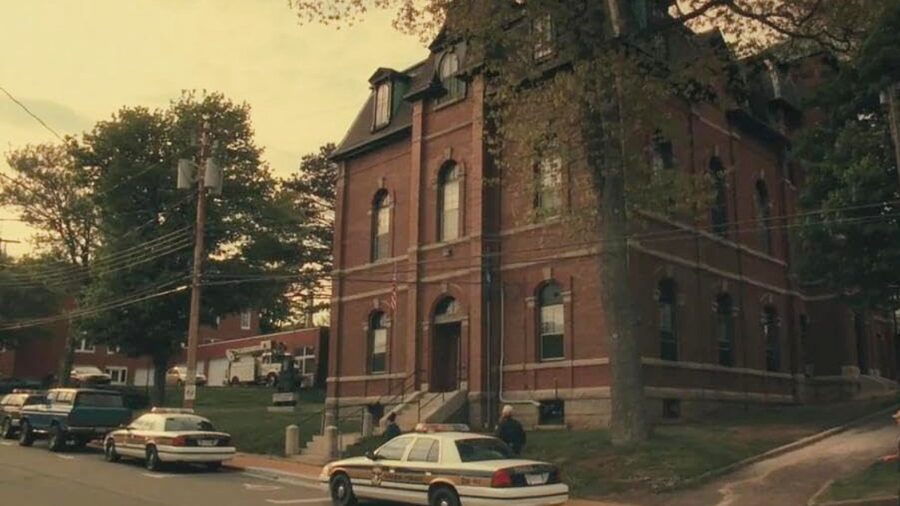
Stephen King and “light-hearted sci-fi procedural” don’t sound like they go together, and honestly, Haven, a SyFy original series, is only loosely based on a King novella, The Colorado Kid. The book is about a mysterious death in a small town in Maine investigated by two local newspaper reporters, while the series includes a mysterious death but surrounds it with a town full of supernatural events that defy explanation.
If Buffy and NCIS got together and had a kid, it would be this show, which is impossible to take seriously but is one of the lightest, breeziest binge-watches available today.
The Troubles
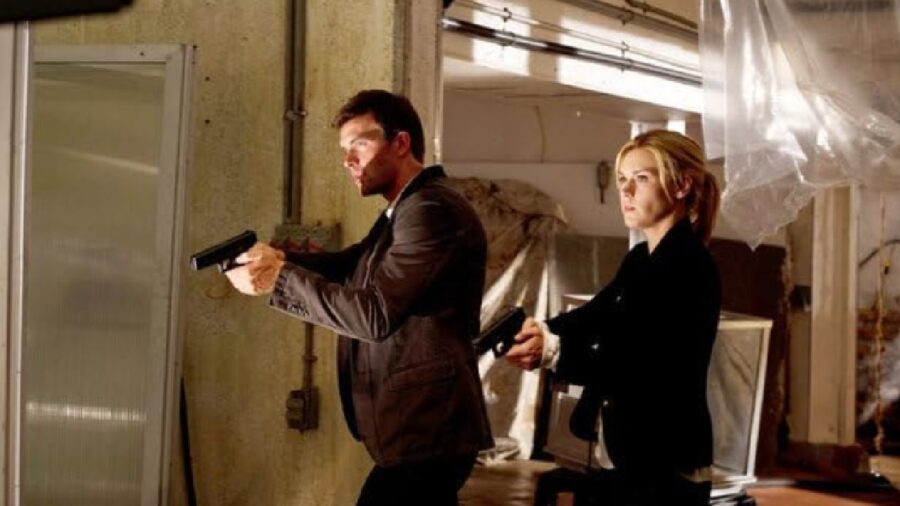
The town of Haven has been beset by what the residents refer to as “The Troubles,” a sudden burst of paranormal activity that manifested in strange powers taking hold of citizens. A typical “Case of the Week” format centers around something strange, from mysterious murders in the dead of night to an earthquake or a pyrokinetic on the loose. Investigating these cases is the new-in-town Audrey Parker (played by Emily Rose), joined by local officer Nathan Wournos (Lucas Bryant), and starting in Season 2, WWE Hall of Famer Edge aka Adam Copeland, and what starts simple (for a strange outburst of superpowers) quickly spirals into a generations-spanning mystery.
It takes a while for the big picture to become clear, and by then, the show has gone wildly off the rails into secret organizations, different dimensions, and the same people playing their own evil twins in the most soap opera twist possible. Yet even The X-Files and Battlestar Galactica ended up losing the plot in their final seasons, and at least with Haven, it’s a fun ride to get to the end.
The Last Of Its Generation

And there is an ending. Haven aired for five seasons on SyFy, telling a complete story between all of the “Case of the Week” episodes, bottle episodes (an early one paying homage to Agatha Christie’s And Then There Were None is a standout), and a parade of guest stars. Among the familiar faces that pass through the town are Colin Ferguson (from the SyFy series Eureka), William Shatner, Edge’s best friend forever and world’s greatest Dad, Christian, aka William Reso, 90s heartthrob Jason Priestly, and Battlestar Galactica’s Michael Hogan.
I was a sucker for this generation of SyFy originals, from Eureka and Warehouse 13 to Sanctuary and Haven, for being light, easy watches that don’t demand much of the viewer. The equivalent of a bag of potato chips, none of these shows will fill you up or have deep, philosophical messages to get across, but what they are is incredibly entertaining from start to finish. Of course, as SyFy originals, the crew had to get creative with their budgets, and the shows can look a little … cheap … compared to the million-dollar streaming shows of today, but that’s part of the charm.

You can’t compare Haven to a straight Stephen King series adaptation like Rose Red, Castle Rock, or The Stand, even though it is filled with small references to his vast catalog of work, but it’s also still better than The Langoliers and Under the Dome. If you’re in the mood for a new sci-fi show to binge, you can stream it for free on several platforms, including YouTube, Pluto TV, Amazon Prime Video, and The CW. It’s also streaming ad-free on Peacock if you have a subscription.
Entertainment
The 70s Sci-Fi Cult Classic Student Film That Accidentally Created A Massive Franchise
By Jonathan Klotz
| Published
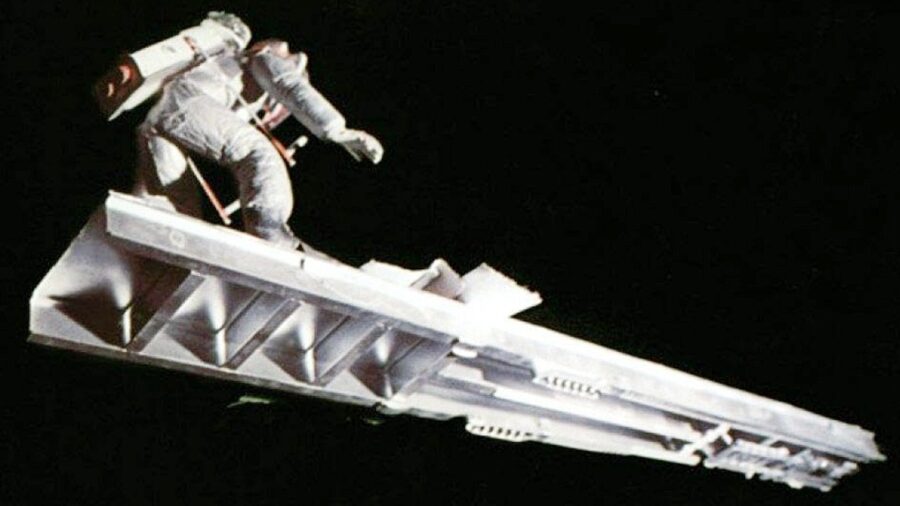
John Carpenter is known today as the Master of Horror, but he got his start with Dark Star, an offbeat sci-fi comedy that started as a student film while he attended the University of Southern California. He also happened to be friends with Dan O’Bannon, who helped him write the script for the film. While Carpenter would go on to make Halloween and The Thing, O’Bannon was inspired by the reaction to their low-budget sci-fi comedy to write a sci-fi horror that you might know: Alien.
Dark Star may be a cult classic today, but when it was upgraded from student film to feature film and released in 1974, audiences had no idea what they were watching, and most of the humor was missed. O’Bannon noticed this and shared his thought process in later interviews, “If I can’t make them laugh, then maybe I can make them scream.”

Once it was available on VHS, the film found its audience, including Quentin Tarantino, the creator of the Metal Gear games, Hideo Kojima, and Doug Naylor, the creator of Red Dwarf. Fittingly given Carpenter’s musical talents, multiple bands have used voice samples or paid tribute to the film in their songs.
Cabin Fever INNNN SPACEEEEEE!!!
The connections between Dark Star and Alien are apparent from the very beginning, with both films taking place on ramshackle spaceships that share the same retro-futuristic style, and the crews are composed of characters that don’t fit into the typical sci-fi hero mold. Dark Star, as a parody of 2001: A Space Odyssey, cranks the crew’s personalities to 11, which somehow works. As a result, it feels like frat bros trapped in space together, and they don’t get along, but they have to.

The crew’s mission is to find potentially dangerous planets and blow them up, but the catch is that after a massive malfunction, a thermostellar bomb develops a personality and tries to blow up ahead of schedule. The captain of the Dark Star, a former surfer, has to talk the bomb into not blowing up.
It’s a fantastic parody of sci-fi that engages in deep philosophy, and was purposely designed to be a parody of HAL. That’s part of the humor that O’Bannon was frustrated with, which went over the head of the audience, but it’s the bizarre beach ball alien that became the proto-Xenomorph.
The Comedy Routine That Became Alien
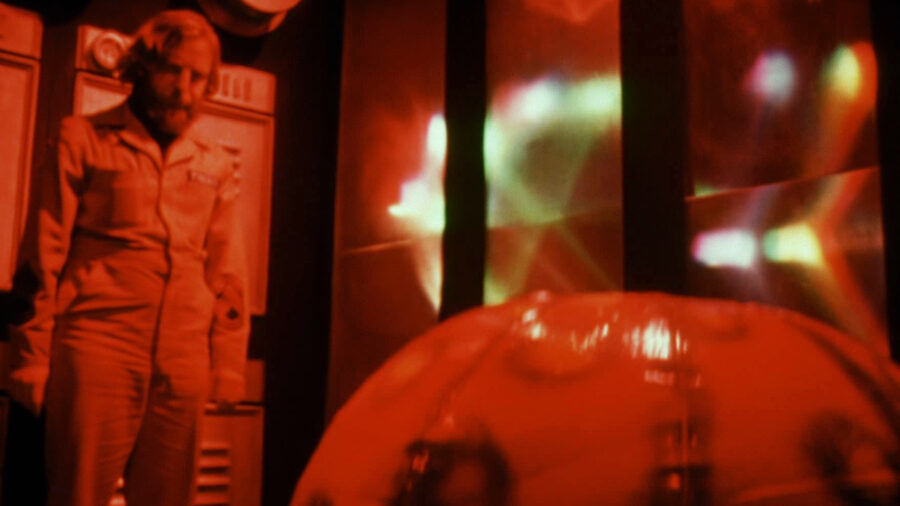
Working under tight budget restrictions, the alien in Dark Star is a painted beach ball with floppy claws loosely attached to it. Sergeant Pinback, played by O’Bannon, tries to keep the alien contained in a storage room, but it keeps escaping and attempts to murder him, and eventually, Pinback accidentally causes it to pop and explode. The entire sequence, played here for laughs with some absurd physical humor, is what directly inspired Alien.
Replacing the adorable but slightly murderous prankster beach ball with the H. R Giger design of the terrifying, very murderous Xenomorph but maintaining the similar setting and feeling of claustrophobia provided the recipe for a genre-defining hit. Dark Star, it should be noted, is also rated “G,” which gives you an idea as to the level of physical humor that O’Bannon brought to his role. Yet, given how the film ends, it’s only suitable for kids if you want to inflict a NeverEnding Story level of trauma on them.

If you’ve never seen Dark Star, it is well worth your time, even today, because it’s an absolutely bonkers take on sci-fi that nails the exact tone they wanted. It’s streaming for free on Tubi, Pluto TV, YouTube, and Plex, and is also part of Amazon Prime.

Orlando City reunite with F Daryl Dike
Moon phase today: What the Moon will look like on July 18


