
Entertainment
That wild Scarpetta ending, explained

After eight time-jumping, case-blending episodes, Scarpetta ends with a bang. Well, more of a bludgeon.
The Prime Video series based on Patricia Cornwell‘s books — namely, the first Dr. Kay Scarpetta book, Postmortem (1990), and Autopsy (2021) — finishes up its first season with some answers, but then leaves major question marks and red herrings flapping about in the air.
Let’s get into what happened, what Scarpetta (Nicole Kidman/Rosy McEwen) found out, and what burning questions we have for Season 2 (which Amazon has confirmed is coming). Obviously, spoilers ahead.
Who is killed in Scarpetta?

Nicole Kidman as Scarpetta.
Credit: Connie Chornuk / Prime
Scarpetta could have really given us more information about the murder victims.
In 2026, there are two women murdered: Gwen Hainey, biomedical engineer at Thor Labs, who was selling U.S. biotech secrets to Russia, and runner Cammie Ramada, whose death was ruled as “accidental” despite being anything but.
In 1998, there are five women murdered: ER surgeon Lori Petersen’s killing begins the series, after the murders of Cecile Tyler, Brenda Steppe, and Patty Lewis. Then, journalist Abby Turnbull’s (Sosie Bacon) sister, Hannah, is also murdered.
Who is the killer in Scarpetta?

Jake Cannavale as Pete Marino, Rosy McEwen as Dr. Kay Scarpetta.
Credit: Connie Chornuk / Prime
There are two killers in Scarpetta, one in the past and one in the present.
1998 killer: Roy McCorkle
Through glittery government soap and emergency call records, ’90s Scarpetta figured out the identity of the serial killer she, homicide detective Pete Marino (Jake Cannavale), and FBI profiler Benton Wesley (Hunter Parrish) had been investigating. The killer is Roy McCorkle (Martin De Boer), a local 911 dispatcher who had chosen his victims based on their voices.
2026 killer: August Ryan
In the present, the murderer is revealed to be a copycat. Officer August Ryan, the braces-wearing cop Scarpetta has worked with since the ’90s murders, is the killer of Gwen Hainey and Cammie Ramada.
Scarpetta first meets Officer Ryan at the murder scene of Lori Peterson in Berkley Heights in 1998. “I was never the first on a scene before, of a grisly murder,” he tells her, visibly affected by the violence. This murder ignited Ryan’s penchant for violence but his traumatic past also played a part (more on that below). Later, at the scene of McCorkle’s death, Ryan calls him a “murdering bastard,” and scorns “what he did to those women,” despite those being actions he will repeat 28 years later.
In 2026, Ryan is the first person Scarpetta talks to at the crime scene where Gwen Hainey is found in episode 1. Ryan leads Scarpetta to the victim, pretending to have just encountered the scene he created. Ryan then meets Scarpetta and Marino at the condo where Gwen Hainey was attacked — he even smugly declares that he “found” the murder weapon and reports that Matt Peterson’s fingerprints are all over it (Lori Peterson’s husband, the main suspect of the 1998 murders), which sends Scarpetta and Marino off course. In episode 4, Ryan does it again, leading medical examiner Dr. Debbie Kaminsky (Ashley Shelton) to Cammie Ramada’s body, a crime scene he also created.
Motive? “I did it to impress just the right gal,” Ryan says in the finale, referring to Scarpetta herself.
What’s with the 3D-printed organ business?
In Scarpetta, Thor Labs is a tech company that 3D prints human organs. And though the storyline goes off on a tangent with dead astronauts, the most important thing is that the company links the murder victims in 2026.
Mashable Top Stories
Gwen Hainey and Cammie Ramada both bear skin grafts, pieces of biosynthetic skin made by Thor Labs. Remember, Hainey was a biomedical engineer there, working on the Thor Orbiter Project (3D printing human organs in space). In the finale, Scarpetta receives a call from Officer Blaise Fruge (Tiya Sircar) saying there was a third person in Thor’s skin test group, but Fruge is cut off before naming them.
“That’s how he met them,” Fruge says. “They were in the same group.”
That person? August Ryan, who, as a child, burned his arm on a train track the night he witnessed his uncle committing sexual assault. Presumably, Ryan was after a skin graft. As to the pennies? Ryan’s uncle distracted him with a penny during his crime, one the kid was trying to retrieve from the hot track when he was burned; pennies were left at the murder sites of Gwen Hainey and Cammie Ramada, and Scarpetta finds a penny on her dining room table.
What’s the deal with Maggie and Reddy?
Maggie Cutbush (Stephanie Faracy/Georgia King) spends the present-day storyline basically being a creep and an anti-feminist pain in the ass, but there’s more going on here than meets the eye.
In the ’90s, Maggie was appointed Scarpetta’s assistant when her computer was hacked for information about the Peterson case. Scarpetta wrongfully accused Maggie and fired her. However, the culprit was Dr. Elvin Reddy (Alex Klein), Scarpetta’s professional rival, who also tampered with evidence to discredit Kay.
Now, Dr. Reddy is a piece of work. He wanted Scarpetta’s job of Virginia’s chief medical examiner back in the ’90s, so always had a chip on his shoulder. Reddy hires Maggie as his own assistant, and the show suggests an abuse of power and sexual harassment. In episode 4, Scarpetta looks into Cammie Ramada’s death, ruled as “undetermined” by medical examiner Kaminsky. But Scarpetta finds out that Reddy (chief medical examiner by this point) had shown up at the autopsy with a bunch of FBI agents (the crime scene goes across federal and district lines) and essentially bullied Kaminsky to rule Cammie Ramada’s death an accident.
In the present, Maggie is deployed again as a “direct line” between Scarpetta’s office and Reddy, now health commissioner (and Scarpetta’s boss). Importantly, Reddy and Maggie know Scarpetta’s secret: She killed McCorkle in self-defense in the ’90s — and Marino covered it up for her. Scarpetta did the autopsy, then lied about the findings, but notably, Reddy came into the morgue and indicated he knew there was more to the killer’s death than Marino’s bullets.
In the finale, Maggie flips the script telling Scarpetta she has proof to bring their dodgy boss down. “Pick a crime,” she says. “I’ll get you everything you need to nail the bastard. Leave me out of it, and I’ll leave you out of it.”
What’s going on with Benton Wesley?

Simon Baker as Benton Wesley.
Credit: Connie Chornuk / Prime
Scarpetta’s cardboard husband, Benton Wesley, has dark secrets. We know he left his wife and kids for Kay, and is having an affair with his FBI cybercrime partner Sierra Patron (Anna Diop). We also know he had a traumatic childhood involving neurodivergence and reading disturbing material before his career as a serial killer profiler.
In the finale, Scarpetta tracks Wesley to his definitely illegal interrogation truck at home using Find My Friends, and he warns her to stop investigating Gwen Hainey and Cammie Ramada “before it’s too late” without elaborating. He’s also sent hacker Jinx Slater (Luke Jones) to jail for his girlfriend Gwen Hainey’s murder, presumably to keep the FBI’s Thor Orbiter investigation under wraps.
However, during the scene, Wesley gets…creepy, saying he has some “strange behaviours” and that “there are some creatures that I enjoy to watch suffer,” which seems like he’s about to confess to his “real self” being real dark. We all saw him watch that fly die in pain, and we won’t forget his creepy childhood lair in the basement. But then he simply asks for a divorce. What a fake-out.
Is Matt Peterson actually innocent?
Matt Peterson (Graham Phillips/Anson Mount), the husband of Lori Peterson, appears to be Scarpetta‘s red herring. He’s the guy Marino (Bobby Cannavale) suspected and punched, who runs a cultish grief farm (where Lucy inexplicably ends up in the finale — girl, wyd). But is he actually as innocent as he seems? Sure, he just happened to meet Gwen Hainey in a bar trying to bring his wife back to life with 3D-printed organs. But in episode 1, when a young Marino is interviewing a young Peterson, the suspect mentions one of the first things he noticed meeting Lori in college was her “contralto” voice. “Stopped me in my tracks,” he says. “Its actual tone was perfection.” Marino counters, asking, “You notice a thing like that, huh?” How did McCorkle choose his victims? Their voices. Still a red herring?
Who “killed” Janet?

Ariana DeBose as Lucy Farinelli-Watson.
Credit: Connie Chornuk / Prime
Both Kay and Dorothy (Jamie Lee Curtis) say they didn’t “kill” Janet, the AI version of Lucy’s (Ariana DeBose) wife that she’s been talking to daily since her real death, but she’s sure one of them did it. So, was it one of them? Or was it, say, Blaise Fruge, who wanted to exact a little bit of revenge on her lover for walking out during their argument about Blaise losing her job thanks to Lucy’s “joy ride” to The Orchard? Or perhaps Janet did find a code back door to walk out of…
Don’t miss out on our latest stories: Add Mashable as a trusted news source in Google.
Who’s at the door?
In the final moments of Scarpetta, we see that Kay has absolutely baseball-batted Ryan to death. Then, someone arrives at the door, sees everything, and Scarpetta’s reaction is one of pure shock: “Oh no.”
Who could it be? Is it Lucy coming home from her grief session? Is it Marino coming back to declare his feelings? Is it Fruge, following her partner Ryan’s whereabouts? Or is it someone we haven’t met yet?
Scarpetta is now streaming on Prime Video.
Entertainment
Grandma Anne’s Secret Jell-O


I love making food that people appreciate — the kind of meal that makes the whole table go quiet at the first bite. But you know what I kind of love more? Making food that makes the whole table shriek like kids chasing the ice-cream truck.
So, when I happened upon a “secret Jell-O” recipe in chef Hillary Sterling’s new cookbook, Ammazza! — titled for the Roman slang term, which roughly translates to “wowee!” — I knew I had to share.
“This was the defining treat of my childhood,” explains Hillary. Growing up, her Grandma Anne always kept a bowl of Jell-O in the fridge. “She added halved grapes, and they’d hover in the middle while it ‘jellified.’ It tasted so cool, refreshing, and delicious.” As adults, Hillary and her sister tried to replicate it, but never managed to get the taste just right. That’s when their grandpa clued them in to Grandma Anne’s secret ingredient: sweet liqueur. “Turns out, our favorite childhood dessert was one part Grandma, one part frat party.”
Hillary’s own adaptation is a little more cocktail-party than frat, but just as festive: a ruby-red confection, studded with plums and served in a champagne coupe. Plus, it’s incredibly simple, with less than 10 minutes of active cooking time. And while I’ll give Grandma Anne the benefit of the doubt, and say she probably wasn’t trying to inebriate her grandchildren, this recipe has almost a shot’s worth of brandy per serving (wowee, indeed!). So, let’s maybe keep it at the grown-ups table.
Grandma Anne’s Secret Jell-O
from Ammazza! by Hillary Sterling
Serves 4
1/2 cup (115 g) prunes*
3/4 cup (180 ml) brandy
1 85-gram package cherry gelatin
*It’s true, prunes are dried plums. Here, they’re essentially rehydrated in the cooking process.
In a small pot, combine the prunes and 1/2 cup (120 ml) of the brandy. Bring to a boil, then turn the heat low, and cook until the prunes absorb all the liquid (about 5 minutes). Set aside. In a separate small saucepan, bring 1 cup (240 ml) of water to a boil. Place the gelatin in a heatproof bowl, then pour the hot water over it, whisking until fully dissolved (about 2 minutes). Stir in the remaining 1/4 cup (60 ml) of brandy and 1 cup (240 ml) of cold water.
Divide half of the gelatin mixture evenly among four glasses, filling them about halfway. (“This is the time to break out your heirloom wine glasses or champagne coupes,” says Hillary. “Style and presentation meant everything to my grandmother.”) Arrange the glasses on a small sheet pan for stability. Refrigerate, uncovered, until just set (about 1 hour).
Finally, divide the steeped prunes evenly among the glasses, gently placing them on top of the set layer. Top each glass with the remaining gelatin — the fruit will “float” as it sets. Cover and refrigerate until firm but still jiggly (about 1 hour more). Serve, and enjoy!

Thank you so much, Hillary! And congratulations on your beautiful cookbook.
P.S. More fun party recipes, including a chaotic pavlova and a pasta cake.
(Photos by Kelly Puleio. Excerpted with permission from Ammazza!, on sale now from Scribner, an imprint of Simon & Schuster. Copyright © 2026 by Hillary Sterling)
Entertainment
The Bradley Cooper Horror Movie That Will Break Your Brain
By Sean Thiessen
| Published
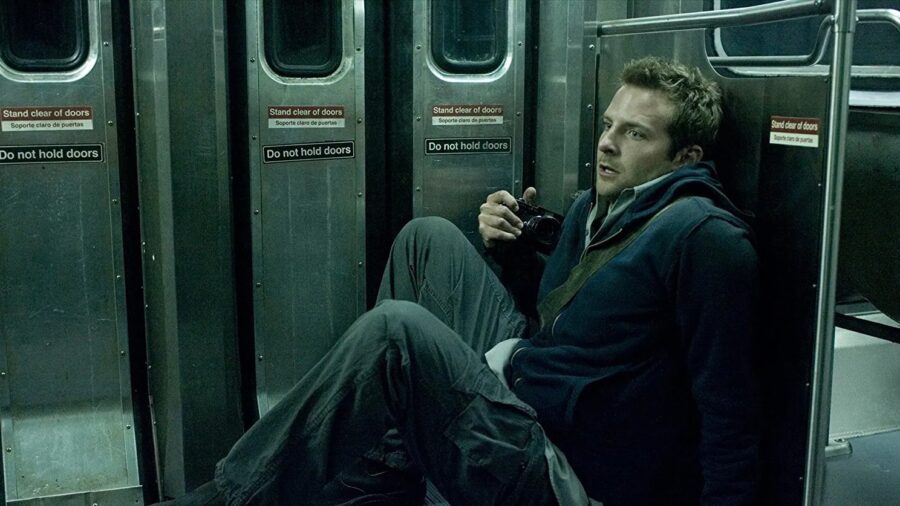
What do you get when you cross Bradley Cooper with a Clive Barker horror story? The answer: 2008’s gory cult classic The Midnight Meat Train. Though a slashed theatrical release buried the film, this disturbing bloodbath has finally been unearthed on Tubi.
Riding The Rails Has Never Been More Dangerous
Bradley Cooper leads The Midnight Meat Train as Leon Kaufman, a photographer keen on capturing the grit of city life. After his portfolio is rejected by a high-profile gallery owner for being too safe, Leon ventures out in search of danger. Spoiler alert: he finds it.

Leon captures a brutal act of violence on a subway and becomes obsessed with tracking down a serial killer who has been enacting carnage on the late-night train for years. Leon spirals down a tunnel of mystery that slowly unravels a conspiracy that goes all the way to the bottom. He struggles to gain the support of the police and even his own girlfriend, portrayed by actress Leslie Bibb. The Midnight Meat Train speeds toward a sinister conclusion that is a must-see for horror fans.
This Bradley Cooper film is unlike any other. The Midnight Meat Train was adapted from Barker’s short story by Pet Sematary (2019) screenwriter Jeff Buhler and directed by Japanese filmmaker Ryûhei Kitamura. The result is a dark, tense, and revolting horror mystery, complete with the hyper-stylized sensibilities of 2008.

The film was originally set as the feature directorial debut of Patrick Tatopoulos, a special effects wizard and production designer who cut his teeth on movies like Independence Day, I, Robot, and Underworld. It was scheduled to shoot in New York City in 2005.
Tatopoulos was replaced by Kitamura and, in an effort to cut costs, Bradley Cooper and the rest of the gang shot The Midnight Meat Train in the Los Angeles metro system. Production finally began in the spring of 2007.

Lionsgate distributed the film but only opened the movie in the secondary theatrical market, limiting the release to about 100 screens. It was then quickly released on DVD, much to the filmmakers’ dismay. Clive Barker openly criticized Lionsgate’s Joe Drake for burying other films in order to venerate The Strangers, for which Drake was a producer.
Critics twho saw The Midnight Meat Train generally liked it, praising the acting from Bradley Cooper, Leslie Bibb, Vinnie Jones, and the rest of the cast. The film carries a 70 percent critical score on Rotten Tomatoes on the consensus that it delivers the thrills, scares, and gore its target audience seeks.
Bradley Cooper’s Career Took Off After Midnight Meat Train

Bradley Cooper jumped from Midnight Meat Train into the following year’s breakout hit The Hangover. That film launched Cooper from a solid supporting actor to a bankable leading man. The Hangover spawned a lucrative trilogy of comedies that provided a steady stream for Cooper as he expanded to dramatic horizons.
Cooper has since led an exciting and successful career as an actor, director, and producer. His performance in 2012’s Silver Linings Playbook earned the actor his first Oscar nomination, which he followed up with nominations for his work in American Hustle, American Sniper, and A Star is Born. As a producer, his films Joker, A Star is Born, American Sniper, and Nightmare Alley were nominated for Best Picture.

Bradley Cooper’s horror background with Midnight Meat Train paired with the gnarly sensibilities of director James Gunn to bring about Rocket Raccoon in the Guardians of the Galaxy trilogy. The character may be Cooper’s most iconic, but it is easy to forget that such a high-profile actor lurks beneath the CGI surface of the lovable a-hole.
The evolution of Cooper’s career is a fascinating one, and The Midnight Meat Train is an important piece of the puzzle. It stands out among his list of comedies, dramas, and action films, and the film’s troubled release leaves it begging for rediscovery.
Now, nearly 20 years after its release, fans of Bradley Cooper can head on over to Tubi and ride The Midnight Meat Train all the way to the end of the bloody line.
Entertainment
R-Rated, Netflix Original Action Thriller Is A Violent, High-Stakes Protection Job
By Robert Scucci
| Published

One unfortunate reality about most action movies is that the person who needs a bodyguard the most is often the most annoying, insufferable person you could ever encounter. 2019’s Close is no exception, but we eventually learn that the spoiled heiress in question can’t help being totally clueless about how the world works or how people operate. In this case, it leads to a satisfying character arc because our clueless damsel in distress eventually decides to take control of her situation with the help of one of the most badass hired guns money can buy.
Your Typical Protection Job
The dynamic in Close is about as simple as it gets when we’re introduced to Zoe Tanner (Sophie Nélisse), the spoiled heiress of Hassine Mining. Zoe’s stepmother, Rima Hassine (Indira Varma), is horrified to learn that her late husband, Zoe’s father Eric Hassine, left all his shares in the company to his daughter, causing immediate tension within the family. Rima, the acting CEO of Hassine, a company founded by her family, asks Zoe to tag along on a trip to Morocco, where she intends to close a billion-dollar mining deal.

Now that we have the brat out of the way, we can talk about Sam (Noomi Rapace), the close protection officer hired to keep an eye on Zoe at the fortified family compound while Rima is out handling business. As you would expect in a movie like Close, the house is raided by armed intruders, and Sam has to not only win Zoe’s trust, but also figure out who sent these hired goons to the private residence to shake things up.
Rima’s business dealings begin to go south during this all-guns-blazing odyssey because her daughter has been reported missing by every news media outlet, and she’s implicated in the murder of a police officer, causing Hassine Mining’s share prices to plummet. There are plenty of shots of Rima sitting in an empty boardroom looking at market reports involving her mining company and Sikong, the mining company competing with it to drive this point home.

Since global market reports typically involve more than two companies in the real world, it’s reasonable to believe that the board members of Sikong have something to do with Zoe’s abduction and the events that transpire shortly thereafter. Or maybe, perhaps, this is Rima’s way of reclaiming the company that she believes she deserves full ownership in. It’s one of those things that happens in modern movies because people are only half paying attention, so really obvious visual cues are pretty much a requirement.
Good Gunplay With A Forced Girl Power Arc
Like most action thrillers released exclusively by Netflix, Close has the same flat lighting and muted color grading you’ve seen a hundred times before. Generic visuals notwithstanding, the action sequences are tight, controlled, and grounded enough to make you want to stick around. They’re not so over-the-top that you have to suspend an insane amount of disbelief, and the overall conflict is simple enough to sink your teeth into on an intellectual level.

Within this framework, I actually liked the chemistry between Sam and Zoe, which is adversarial at first, naturally, but warms up once they spend some time together. What works really well is how Sam treats this whole thing like a job because, to her, that’s all it is, which humbles Zoe on more than one occasion. Sometimes, all a spoiled brat with no real concept of how the world works needs to hear is, “I don’t care about you, this is just work,” in order to be truly put in her place. I liked this dynamic a lot, but also understood that whatever character development happens here eventually has to move beyond that initial setup because the movie needs somewhere to go.
What really pissed me off, however, was the third-act moment when Zoe stops Sam and asks why she never told her about her estranged daughter. It’s a weird, entitled “we’re supposed to be besties who tell each other everything” moment that comes out of nowhere and makes no sense.

At this point in the film, Sam comes off as a hardened veteran who’s seen some things. Her ability to size up a room and plan alternate escape routes on the fly is beyond impressive, and she’s able to adapt to every scenario with barely a moment’s notice. She straight up told Zoe earlier that this is a professional relationship, and even though their dynamic changes throughout the film, it’s reasonable to assume Sam rightfully has qualms about telling some trust fund baby she barely knows about the child she put up for adoption when she was 16.
The movie doesn’t benefit from exchanges like this, but it’s certainly made worse by them. On one hand, I get it. Zoe is a rich kid who’s had basically no parental supervision her entire life, and she’s trying to make a human connection during an extremely heightened situation. But maybe you shouldn’t ask personally invasive, potentially upsetting questions to the person hired to protect you, especially when you’re caught in the middle of a hail of gunfire. I’m no bodyguard, but I believe the better approach is: survive now, chat about missed, life-altering opportunities later.


Close is just another girl power John Wick kind of thing, and after a while they all start to blend together. So do the male-driven ones, relax. If you want something similar but better, you can stream Gunpowder Milkshake on Netflix or Atomic Blonde on Hulu. If you eventually want to see them all, though, you’ll probably circle back around to Close, which is currently streaming on Netflix.

Pete Alonso helps power Orioles past Marlins
Royals' Cole Ragans leave game with triceps, elbow soreness


