
Entertainment
Stephen King Tried To Warn Us About Toxic Fandom Decades Ago

By Brian Myers
| Published

Sometimes the terror inked from the pen of Stephen King strays from supernatural horror and personifies the worst in human nature. When the legendary author published Misery in 1987, he not only introduced readers to the human monster Annie Wilkes but also proved himself to be a sort of unwitting prophet.
The novel, and the 1990 film adaptation that followed, were grim predictors of fan behavior in the coming digital age. King’s work was a forerunner of what some social scientists refer to as “toxic fandom,” playing out on the page and on screen with chilling accuracy.
Toxic Fandom Depicted In Misery

For those who need a refresher, Misery follows romance novelist Paul Sheldon as he finishes the manuscript for what he hopes will be his first success in another genre. Shortly after leaving the remote mountain cabin where he was working, he loses control of his car on an icy road and crashes. He is rescued by the reclusive Annie Wilkes, who pulls his unconscious body to safety and takes him to her nearby house to recover. With a snowstorm closing off the area, Paul is stranded with Wilkes as she nurses him back to health. She reveals that she knows who he is and proclaims herself his “number one fan.” But when the final book in his romance series is read by Wilkes, her treatment of her snowbound patient takes a dark and twisted turn.
Annie flies into a mad rage when the principal character of the series dies at the end. During a long rant at his bedside, she tells the writer that no one knows he is there and that he is stuck with her. Determined that the latest romance novel will not be the final entry, Annie forces Paul to write a new installment featuring the same main character (aptly named Misery Chastain), while also coercing him into burning the only copy of his new manuscript.
Destroying A Life Is Fair Game

Annie’s treatment of her captive author turns savage quickly. She withholds pain medication as punishment and breaks both of his ankles with a sledgehammer in an act she refers to as “hobbling.” In the novel, her punishment is much more brutal and irreversable. As the story progresses, Paul discovers he is being held prisoner by a former nurse whose license was revoked after the deaths of infants in a local hospital.
No spoilers on the ending here. But what can be gleaned from Annie’s attitude and actions seems to mirror, symbolically anyway, the toxic fandom culture that exists across multiple forms of media and is prevalent in film franchises and the music industry. A rabid fan feels disenfranchised by the direction their beloved book series has taken and decides to assert herself to change the artist’s mind.

In the days before social media, Annie took a literal hands-on approach to fulfill this ideology, with devastating consequences. In the book and the film, the toxic fan is the maniac with the sledgehammer (or axe) and fairly easy to identify. But how do you recognize toxic fandom in today’s real world when you see it?
Toxic Fandom Could Be Cured By Touching Grass
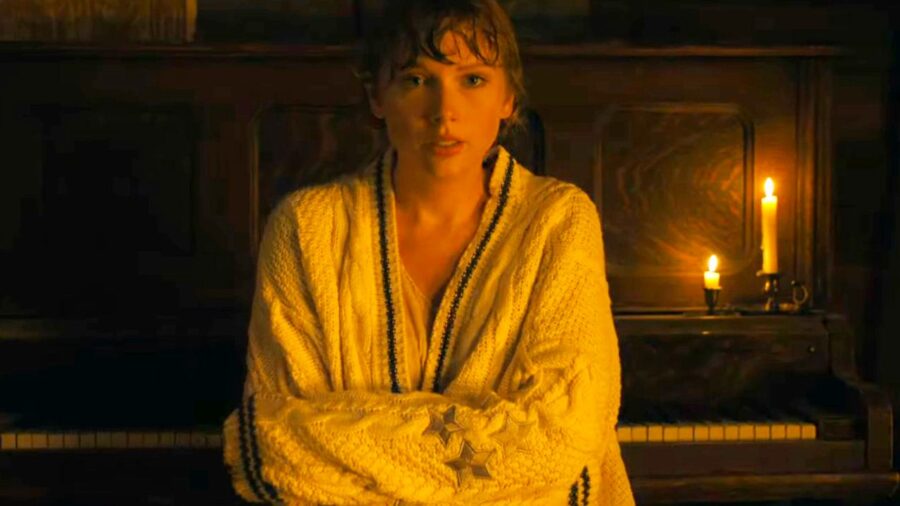
Very Well Mind defines toxic fandom as a group of fans who “work to display negative and harmful behaviors, often online,” which often leads to targeted harassment of other fans, creators, and studios. While many fans consider their love and devotion to a particular film franchise or entertainer part of their identity, a toxic fan base dedicates itself to bullying others, mostly online, in an attempt to accomplish one of two things: assert authority over others and/or change the direction of the creator’s intent.
The last decade has been full of stories about the subset of Taylor Swift followers that turn toxic. Likewise, the worst offenders who have dedicated their adult lives to the Star Wars franchise reared their ugly heads immediately after the 2017 release of Star Wars: The Last Jedi, taking bullying and harassment to new levels.

Some toxic fans, angered by the film, launched petitions to have the installment removed from the official Star Wars canon, arguing that it ruined earlier entries. Others demanded a total do-over. But the worst behavior was the sexism and racism that toxic fandom unleashed on the film’s co-star, Kelly Marie Tran. The Vietnamese American actress was harassed so relentlessly on social media by trolls that she left the platforms altogether. Her character’s entry on Wookieepedia was also edited by toxic fans with remarks that were horribly misogynistic, racist, and extremely vulgar. Tran quickly gained support from her fellow cast members and other celebrities, but the damage had already been done.
Stems From An Overly Entitled Sense Of Self

Toxic fans have no respect for the art or the artist. Rather than appreciate, or respectfully disagree with, what has been presented to them for entertainment, they allow their perceived fan superiority complex to take over rational thought and go into attack mode. While they aren’t literally taking sledgehammers to the ankles of writers, the actions they take online are just as violent symbolically. Threatening to derail an entire franchise because of an installment they didn’t feel was up to snuff, or because they don’t care for the casting choices, is ludicrous and speaks to the overly entitled sense of self at the core of toxic fandom.
Most anyone who has followed a film series, a TV show, or a musician has felt some level of disappointment along the journey. Die-hard Seinfeld and Game of Thrones fans can bond over their hatred of their respective finales, early Metallica fans are still fuming about how 1991’s The Black Album took the band in a direction they hated, and, to be quite honest, the powers that be behind the Police Academy films really should have stopped after the third installment.

What separates a normal fan from a toxic one is how each reacts to and acts on disappointment. A normal fan will still love the remainder of the art and move on. The toxic fan will make that disappointment part of their identity and refuse to let it go.
In the end, it’s all just for entertainment purposes. Why take any of it so seriously?
Entertainment
Project Hail Mary Is Coming To The Last Streaming Service You'd Expect
By Jonathan Klotz
| Updated

It made over $700 million in theaters and proved that audiences will come out for hard science fiction. It reminded the world that Ryan Gosling can carry a film. It’s coming to MGM+. That’s right, Project Hail Mary, 2026’s biggest sci-fi hit to date this year is coming to the channel people only subscribe to for From, on June 16. This flies in the face of pundit expectations that surely, a hit this big would be on Amazon Prime Video, which it has to be noted, shares the same parent company as MGM+.
The Complicated Relationship Between MGM And Amazon

No matter the streaming platform, Project Hail Mary is going to be a smash hit once it’s available. Based on the Andy Weir novel of the same name, everyone’s been waiting for this film since The Martian, also based on a novel by Weir, turned into a blockbuster. The question wasn’t “will this make money” it was “how much?”
Money is the reason why Project Hail Mary is heading to MGM. The studio wasn’t acquired by Amazon until 2022, two years after MGM had paid $3 million for the rights to Project Hail Mary and started pre-production work on the film. Both services are technically part of Amazon, but as the Christopher Miller and Phil Lord directed film predates the merger, it has to stay with MGM. There’s tax implications, monopoly concerns, what it comes down to is having to keep MGM projects away from Amazon, for now.
Ryan Gosling’s One-Way Trip

Project Hail Mary is worth the time to stream, and at $9.99 per month, it’s cheaper to stream through MGM+ than it is to pay for a digital rental through Prime Video. Ryan Gosling plays Ryland Grace, a teacher and molecular biologist on a suicide mission to a distant star in order to help save humanity from the astrophage, a bizarre, unicelled organism slowly killing the Sun. Along the way, he docks with an alien ship, and the surviving crewmember resembles a sentient pile of rocks, so Grace dubs him “Rocky,” learns to communicate, and together, they set about saving their home planets.
That’s all you should know about Project Hail Mary when going in, because like The Martian, it’s not as simple as it should be to complete the mission. The two films have a lot in common, namely the use of hard science to drive the plot, characters more interested in using their brains to solve a problem instead of any type of external conflict, and they are gorgeous. With a 94 percent fresh critic rating on Rotten Tomatoes and a 95 percent audience rating, it’s the rare film that everyone fell in love with at first sight.
Project Hail Mary is the type of science fiction we need more of from Hollywood. It’s smart, thought-provoking, and dares to be different by breaking the blockbuster mold. That’s why the streaming platform doesn’t matter as much as it would with any other movie. MGM+ or Amazon Prime Video, makes no difference, the audience will find it wherever it is and make it another streaming success.
Entertainment
Did Star Trek Secretly Inspire Marvel’s Greatest Villain?
By Chris Snellgrove
| Published

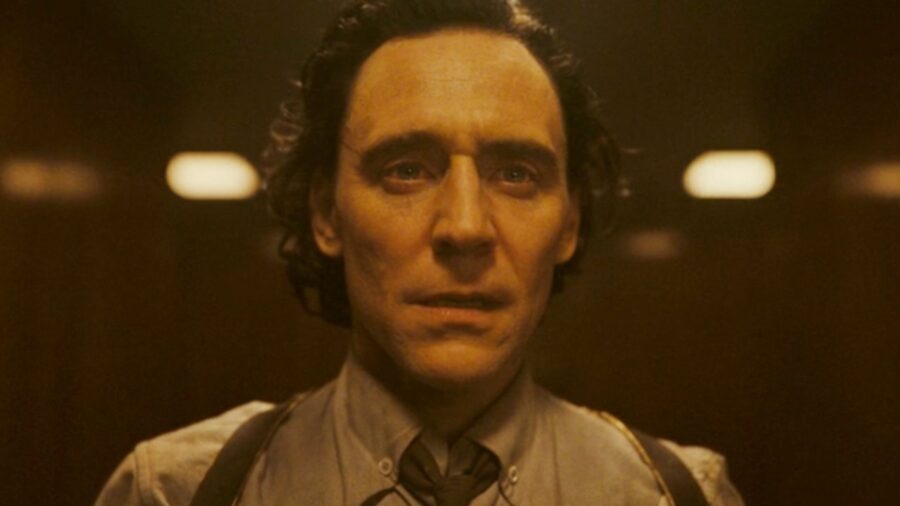
Most actors relish the challenge of playing a villain, the kind that audiences absolutely love to hate. However, some performers do their job a little too well and become something else: the kind of villain that makes audiences say, “wait, I can fix him.” A great example of this is Loki, a one-note Thor villain that Tom Hiddleston transformed into the most charismatic baddie of the Marvel Cinematic Universe. Audiences loved him so much that he just kept coming back, first as the Big Bad of The Avengers and later as big brother Thor’s fiercest frenemy in Thor: Ragnarok.
Heck, Hiddleston’s Loki was so popular that he transcended death: the character was killed off in Avengers: Infinity War and then resurrected in Avengers: Endgame before headlining his own TV series on Disney+. In tracing Loki’s slow arc from supervillain to reluctant hero, many Marvel fans have compared this bad guy to Q, the godlike chaos agent of Star Trek: The Next Generation. Like Loki, Q had his own slow-burning transformation from the ultimate villain to the most unexpected hero. In an ironic twist, however, one of Trek’s best writers resisted humanizing Q because she wanted him to be more like the nefarious Loki of Norse mythology.
Right On Q
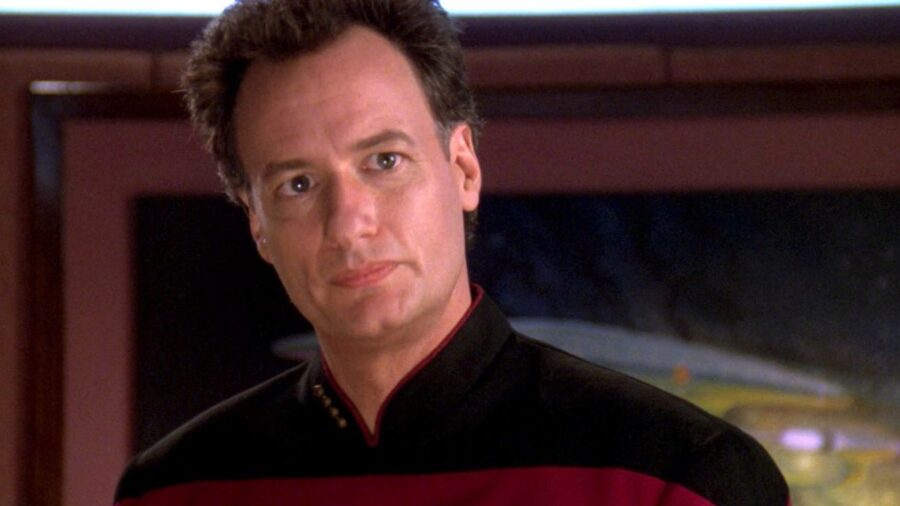
Originally, Q was created as a matter of convenience. When Star Trek creator Gene Roddenberry needed to stretch the first episode of The Next Generation into a two-parter, he created Q, a godlike alien that could easily overpower the entire Enterprise crew with his fantastic powers. Q was very important to Roddenberry: not only did he name the character after a fan, but he ignored the objections of former Original Series writers who insisted this “new” villain was just a reskinned Trelane, the bad guy who clashed swords with Captain Kirk in “The Squire of Gothos.”
Since he is a cosmic trickster figure, fans have compared Q to Loki (the mythic Norse figure later adapted into a Marvel comics villain) from the very beginning. Later, though, things would come full circle. By the time Loki became a major player in the MCU, fans kept comparing him to Q!
Keeping It Loki
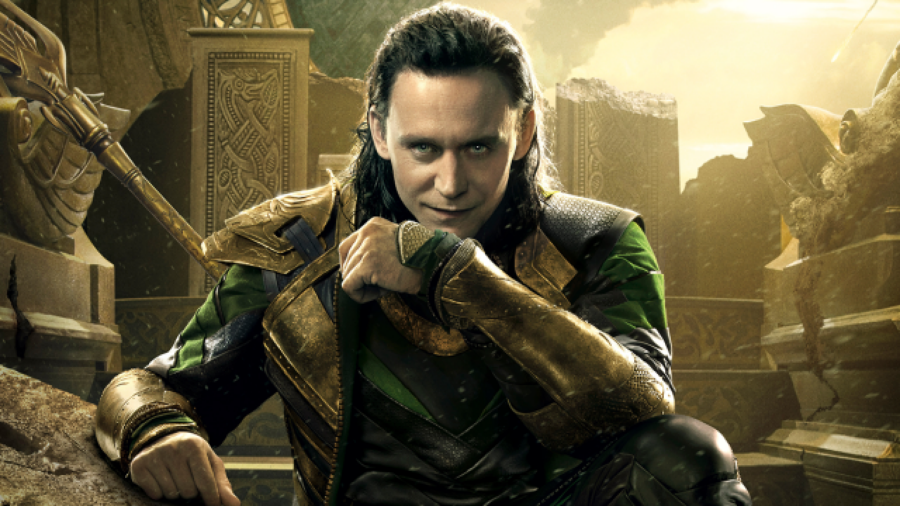
Loki became a major player in the Marvel Cinematic Universe. He was originally written as a standard-issue villain in the first Thor movie, but Loki actor Tom Hiddleston added a remarkable amount of nuance and charisma to the role. Correspondingly, he served as the headline villain in The Avengers and then a reluctant hero in Thor: The Dark World and Thor: Ragnarok. Fans were sad to see him killed by Thanos in Avengers: Infinity War, but a version of him escaped the timestream in Avengers: Endgame. After that, Loki had his own TV series that chronicled his transformation from cosmic trickster to full-blown hero.
Once Hiddleston’s Loki became a franchise mainstay, MCU fans began comparing him to Q. To be clear, nobody involved with Marvel has ever confirmed that their version of Loki was inspired by this iconic Star Trek villain. Why the constant comparisons? Both characters are godlike tricksters whose chief pleasure in life is messing with mortals. Each has traveled the cosmos and traveled to alternate realities. Finally, each had an unexpected transformation from villain to hero. Loki went from trying to rule humanity to saving humanity in every possible timeline. In “Deja Q,” Q began to soften, eventually becoming a character who would help save all of humanity in (wait for it) multiple timelines!
Everything Comes Full Circle
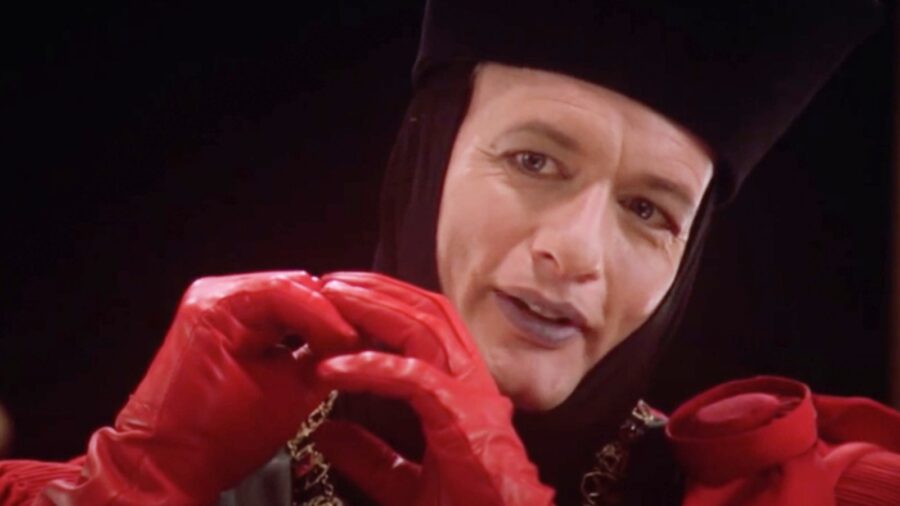
Weirdly enough, this roller coaster ride has one more loop, and it’s a doozy. The reason that Q began to soften in “Deja Q” is that he was stripped of his powers; he learned enough about humanity to try to sacrifice himself for the Enterprise crew, an act so noble that the Q Continuum restored his powers. However, according to Captain’s Logs: The Unauthorized Complete Trek Voyages, TNG staff writer Melinda Snodgrass wanted the character to stay mean because of a certain Norse deity.
“I always think of Q as Loki. He’s chaos. Maury Hurley always thought Q was here to teach us a lesson, to guide and instruct us,” she said. “I can understand that to some extent, but I really see him as a mischief maker. He really just wants to foul Picard’s head.” How’s that for chaos? One of TNG’s best writers hated humanizing Q because she wanted him to be more like the ruthless Loki. However, when the MCU made Loki a main character, they humanized him so much that fans constantly compare him to Q!
Sadly, I can’t give you the awesome cosmic powers wielded by either Q or Loki, and I can’t burden you with glorious purpose. However, I can do the next best thing: just like that, you have been burdened with glorious trivia.
Entertainment
Doctor Who’s Greatest Creator Just Admitted He Lied To Fans
By Chris Snellgrove
| Published
Every fandom has its wildly polarizing figures. In Star Trek, for example, many fans revere William Shatner as an acting legend, but others see him as an egomaniac who’d phaser his costars in the back if it meant getting an extra minute or two of screentime. In Doctor Who, very few of the actors are quite as polarizing (not counting John Barrowman and his alleged problematic sexploits onset), but the same can’t be said about the showrunners. When the show goes off the rails, the fandom tends to blame the man at the top, which is why Chris Chibnall gets so much heat for Jodie Whittaker’s subpar seasons as the Doctor.
Historically, Russell T. Davies was one of the most beloved showrunners. He was in charge during the first four seasons of the 2005 Doctor Who revival, essentially turning this venerable ‘60s franchise into something hip and sexy enough to win over younger fans. But Davies became significantly more controversial when he returned to Doctor Who nearly two decades later, and his run was canceled after two bad seasons that barely anyone watched. That was bad enough, but fans are now ready to take out their pitchforks because Davies took to Instagram and confirmed that he had been lying about working on a Christmas special, which was, seemingly, also a complete fabrication!
A Timey Wimey Rise And Fall
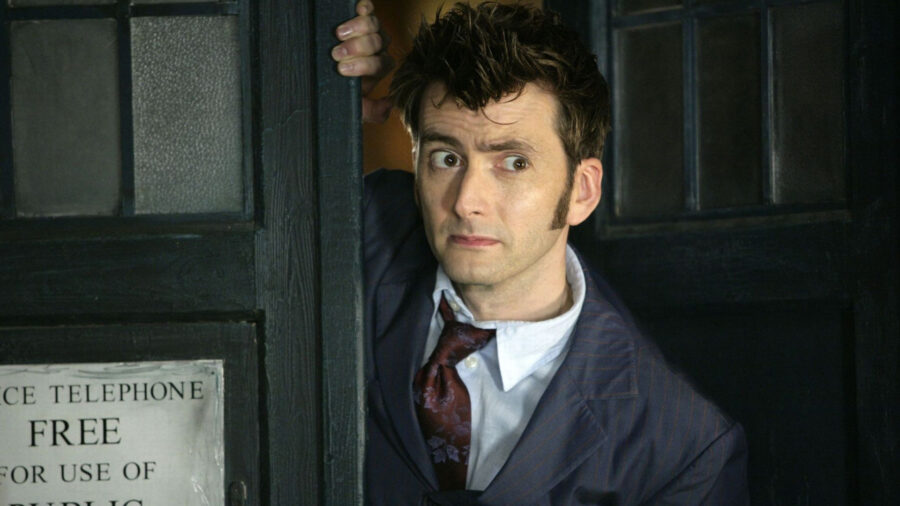
Once upon a time, Russell T. Davies’ return to Doctor Who was hailed as a return of the king. The original series had fizzled out in 1989, and an attempt to bring it back as a made-for-TV movie in the ‘90s was dead on arrival. Davies was the showrunner for the 2005 reboot, which was an unqualified success: with exciting stories and beloved actors like David Tennant, NuWho filled the sci-fi TV void that was left by the early cancellation of Star Trek: Enterprise. He eventually left the franchise, leaving it in the capable hands of Steven Moffat, a showrunner who added a distinctly movie-like feel to almost every episode.
When Moffatt left the franchise in 2017, the series got a new showrunner: veteran Doctor Who writer Chris Chibnall. Unfortunately, things went downhill, as fans were divided on new Doctor actor Jodie Whittaker and controversial changes to franchise lore. Eventually, the BBC threw a Hail Mary, partnering with Disney and bringing back Russell T. Davies as showrunner. Sadly, the new show failed to gain much of a viewership and was canceled after two seasons. Davies previously mentioned writing a script for an upcoming Christmas episode that fans hoped would tie everything together. Incredibly, though, Davies hopped onto Instagram to verify that he made up the Christmas special and had never written anything for it!
Everything Falls Apart
While Russell T. Davies’ Instagram post was long-winded, it got to the point relatively quickly. He verified that he was saying “GOODBYE” to Doctor Who and that the BBC is “putting the show out to tender.” After that, Davies clarified that “there won’t be a Christmas Special–we only cooked that up to guarantee a future when no one knew what would happen, but now we do know, there’s no need for it.” Following on the heels of that rather stunning admission about the Christmas Special, he added, “For the record: there was no script, I never wrote it, and no actor was ever approached to play the next Doctor.”
Fans were salty about Davies’ admissions for several different reasons. First, he had claimed to be writing the script in December of 2025, a claim that had seemingly been backed up by Doctor Who composer Murray Gold. Taking his Instagram post at face value, we can’t help but wonder why Davies was comfortable just straight-up lying to fans about this Christmas special. Even more incredibly, it seems he is saying that the special was never in any level of active development and was simply announced as a last-ditch attempt to keep the franchise alive.
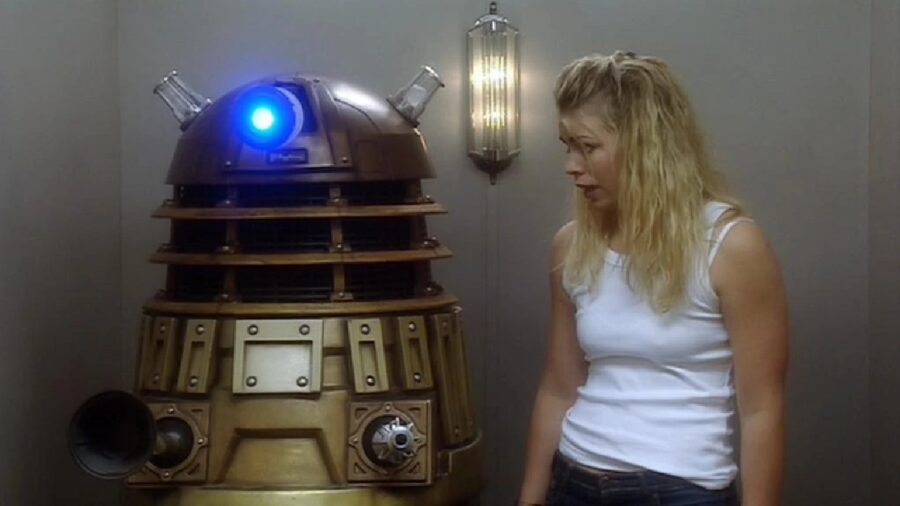
Adding insult to injury, no script development and no attempt to cast a new lead means that even Davies (the man in charge!) had no idea how to wrap up the cliffhanger in which Ncuti Gatwa’s Doctor somehow regenerated into the body of Billie Piper’s Rose Tyler, a former Companion. When the episode aired, some cynical fans thought that bringing this sexy, beloved actor back was a last-ditch attempt to save the show. Now, that theory seems accurate, given that Rose was apparently plonked back into the franchise with no real idea of how to use her character. Now, that will be a problem for another showrunner, assuming that Doctor Who ever comes back.
The Crankiest Doctor Is Now Validated

Amid the hate spurred on by Russell T. Davies’ Instagram posts, more and more Doctor Who fans came to a simple conclusion: Christopher Eccleston was right! Eccleston played the Doctor for the first season of the 2005 revival; when fans asked why he left the show, the actor responded that he had concerns about how the crew was treated and that he was told to ignore these concerns. After leaving, he claimed that he had lost all trust in Davies. More recently, when Eccleston was asked at a fan convention what it would take for him to return to Doctor Who, he bluntly responded, “Sack Russell T Davies…and I’ll come back.”
For a long time, it was easy to dismiss some of Eccleston’s claims as sour grapes. Now, though, Davies returned to Doctor Who only to run it into the ground, and on his way out, he gloated about lying to fans about a Christmas special that will never come to be. In the rest of his Instagram post, he alternates between being weirdly defensive and mildly snarky. Now, it seems increasingly clear that Eccleston was right about the other man. However, we’re left with one silver lining: with Davies now sacked, Eccleston is one step closer to returning to the franchise that made him a household name!

Jose Siri's walk-off helps Angels outlast Astros
Project Hail Mary Is Coming To The Last Streaming Service You'd Expect


